What do you know about Ellis Island? Most people think of the Immigration Museum, which preserves the stories of people who arrived in America. But the island has another side: an abandoned hospital complex that has been closed to the public for more than 60 years. The only way to explore it is on the Hard Hat Tour. Wearing a hard hat, you’ll walk through the old hospital buildings and discover areas hidden from ordinary visitors.
Ellis Island is an island in New York Harbor that once housed the main immigration processing center in the United States. On its southern side lies an abandoned hospital complex where newly arrived immigrants were treated.
Interesting Facts About Ellis Island
- Part of the proceeds from the tours goes toward preserving and restoring the abandoned buildings. By taking part, visitors help protect an important part of the history of immigration to the United States.
- For many immigrants, Ellis Island became known as the “Island of Hope,” where they began a new life in America. But for those who were denied entry or sent into quarantine, it was the “Island of Tears.”
- The abandoned hospital buildings have been closed to the public for more than 60 years. They remained inaccessible for decades because it was unsafe to enter them.
- Today, the hospital complex can only be explored on a guided tour with hard hats. Some tours are limited to groups of no more than six people, giving visitors time to examine the details and ask the guide questions.
- To reach Ellis Island, you need to take a ferry from Manhattan or New Jersey. Depending on the ticket you choose, the ferry fare and admission to the Immigration Museum may already be included.


History of Ellis Island
The immigration station on Ellis Island opened in 1892. The first immigrant to be officially registered there was Annie Moore, a 17-year-old girl from Ireland.
At the time, New York was growing rapidly. In 1890, the city had a population of 1.5 million; by 1900, that number had reached 3.4 million, and by 1910, it had grown to 4.8 million. Around 80% of all immigrants arriving in the United States passed through New York, making Ellis Island the first place many of them encountered upon arrival. The ancestors of approximately 40% of Americans today passed through the island.
“My great-grandmother first arrived in the United States aboard a steamship exactly 100 years ago today, and she came through this very island,” a woman on the tour explains.
The station’s first buildings were made of wood, but a fire destroyed them in 1897. A new main building was constructed in their place and opened in 1900. Over time, the island itself was also expanded using reclaimed land, including soil excavated during the construction of the New York City subway. This created two artificial land extensions where the hospital complex was built.
Medical examinations were one of the main stages of the immigration screening process. Doctors examined people right in the queues and sent anyone suspected of having an illness for further testing. By some estimates, around 10% of arriving immigrants suffered from infectious diseases, including tuberculosis, trachoma — an eye infection — and typhus. Illnesses often spread during the journey itself: in the cramped lower decks of ships, passengers in third class passed measles, influenza, and other infections to one another.
To treat these patients, a large, state-of-the-art hospital for its time was built on the island. More than a million immigrants received treatment there. Doctors and nurses cared for the patients and kept detailed records of their observations, sometimes falling ill themselves. Today, these records help researchers understand how the hospital operated and what newly arrived immigrants went through.
For many, Ellis Island became the “Island of Hope,” a place where a new life began. But for those who were denied entry or held in isolation for extended periods because of illness, it became the “Island of Tears.” Even decades later, descendants of immigrants continue to visit the island to learn about their family histories.
During World War II, the island served purposes beyond immigration processing. Detainees were also held there, including people of Japanese ancestry. In 1954, the immigration station closed, and the hospital ceased operations. The buildings on the southern side of the island were subsequently abandoned. For more than 60 years, they remained closed to the public, gradually deteriorating under the effects of rain, wind, and time.
In 1990, the restored main building reopened as the Ellis Island National Museum of Immigration. However, the former hospital complex on the island’s southern side remained derelict. Today, visitors can explore it on a special Hard Hat Tour, wearing hard hats as they follow a guide through the abandoned buildings and discover the history of a place that remained hidden from tourists for decades.

Architecture of Ellis Island
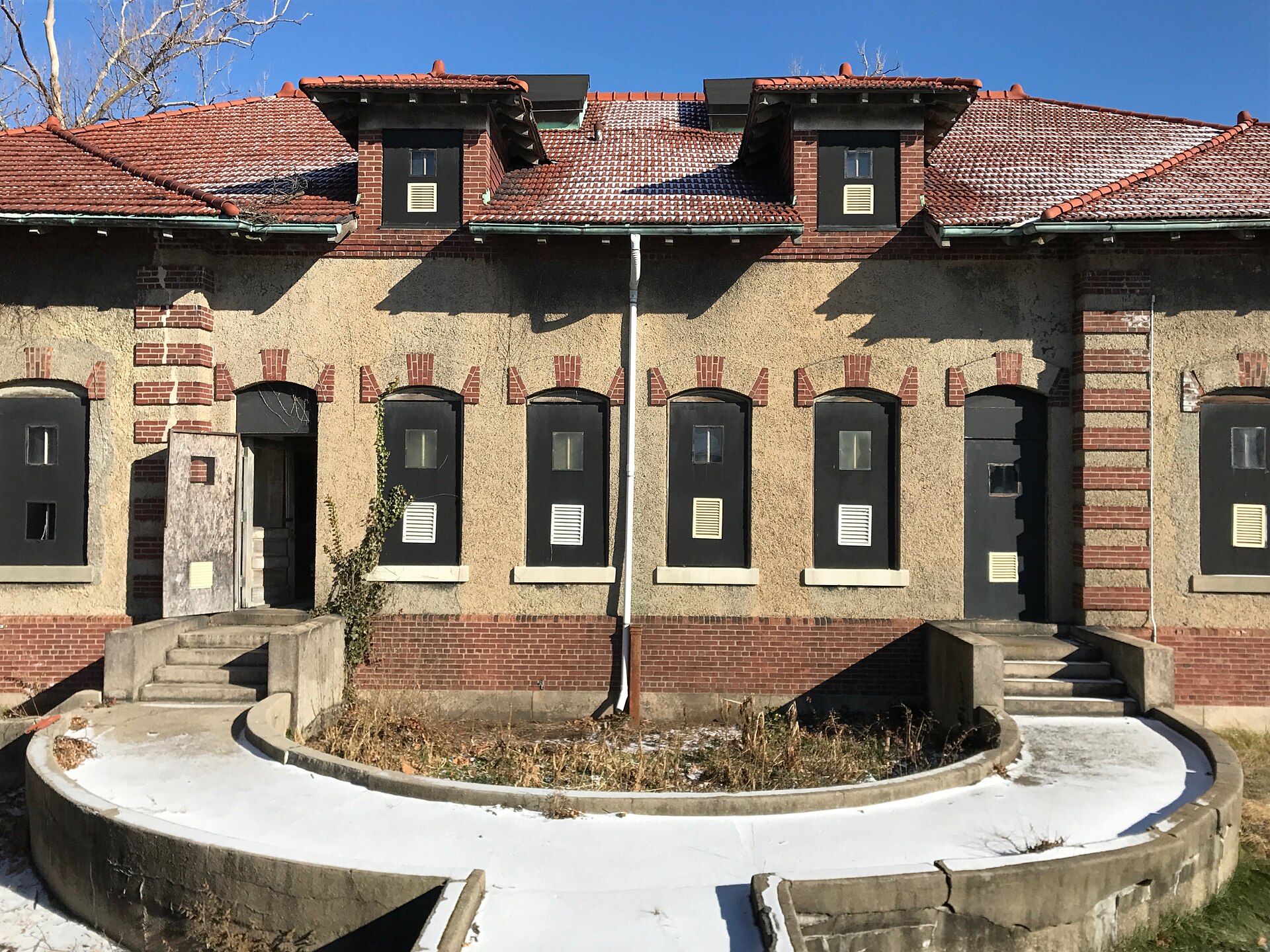
While the main building on Ellis Island resembles a grand railway station with an enormous hall, the hospital complex on the island’s southern side is much simpler and more austere. Its brick buildings, large windows, long corridors, and spacious wards were designed with the hospital’s primary requirements in mind: cleanliness and protection against infection. For this reason, the wards for patients with contagious diseases were kept separate from the rest of the complex.
There are 29 unrestored buildings on the southern side of the island. They once housed wards for patients with infectious diseases, autopsy rooms, laundries, and living quarters for medical staff. The complex is located very close to the ferry landing, yet most tourists walk right past it on their way to the main Immigration Museum building.
Today, the buildings have survived in varying conditions. In some places, the brickwork is crumbling; in others, old tiles and window frames are still visible. During the tour, visitors see the hospital without extensive restoration or attempts to conceal the signs of decay. That is why everyone is given a protective hard hat before entering.
What You’ll See on the Ellis Island Tour
The main attractions on this tour are the abandoned buildings themselves. You’ll walk through old hospital wards and long corridors, seeing peeling paint, old tiles, shattered windows, and massive steel doors from autoclaves once used to sterilize medical instruments and linens. The route also takes you through the laundry, autopsy rooms, and living quarters where doctors and nurses once stayed. Your guide will explain how the hospital operated and what happened to the immigrants who were brought there for treatment.
One of the most striking features is Unframed — Ellis Island, an art project by French street artist JR. He placed enlarged photographs from the island’s historical archives on walls, windows, doors, and pieces of furniture. The images show people who once passed through the hospital. Their faces seem to bring the abandoned corridors back to life, helping visitors imagine what patients experienced many years ago.
After the tour, you can visit the National Museum of Immigration in the island’s main building. Its exhibits include suitcases, documents, clothing, and personal belongings that tell the stories of immigrants and their journeys to America. The ferry ride and a walk around Ellis Island itself offer another way to understand the history of the millions of people who came to the United States in search of a new life.