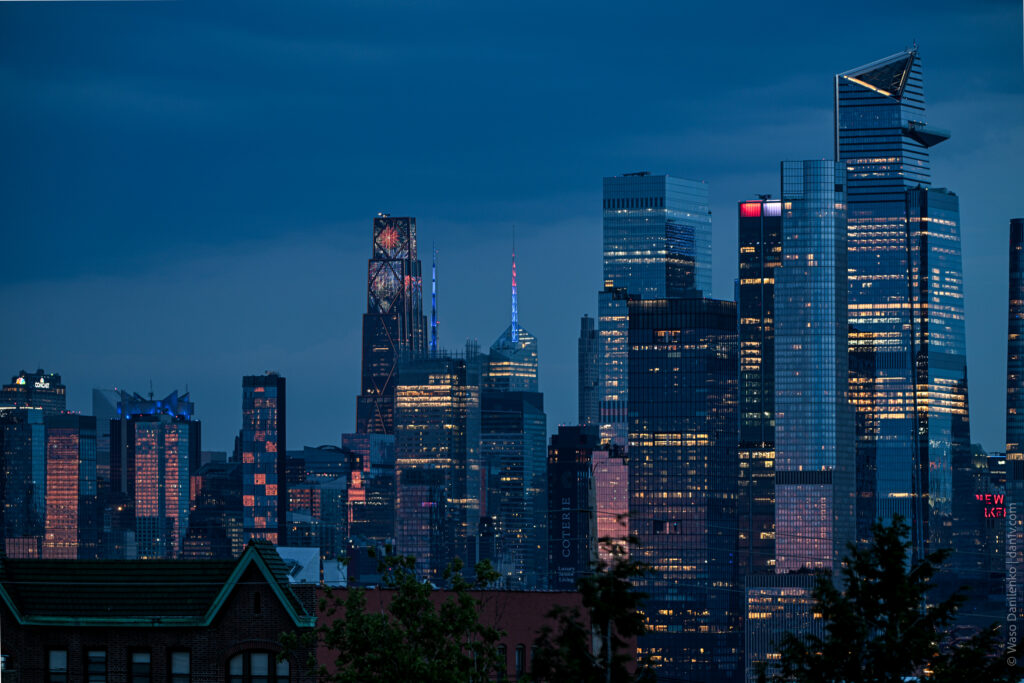
Not long ago, we wrote about a new high-tech skyscraper in the US — the JPMorgan Chase Tower — which became the most expensive building in the world built without direct government funding.
The tower didn’t just add another silhouette to the New York skyline — it fundamentally changed how the city looks at night, pulling visual focus toward itself thanks to a dynamic, almost living light facade.
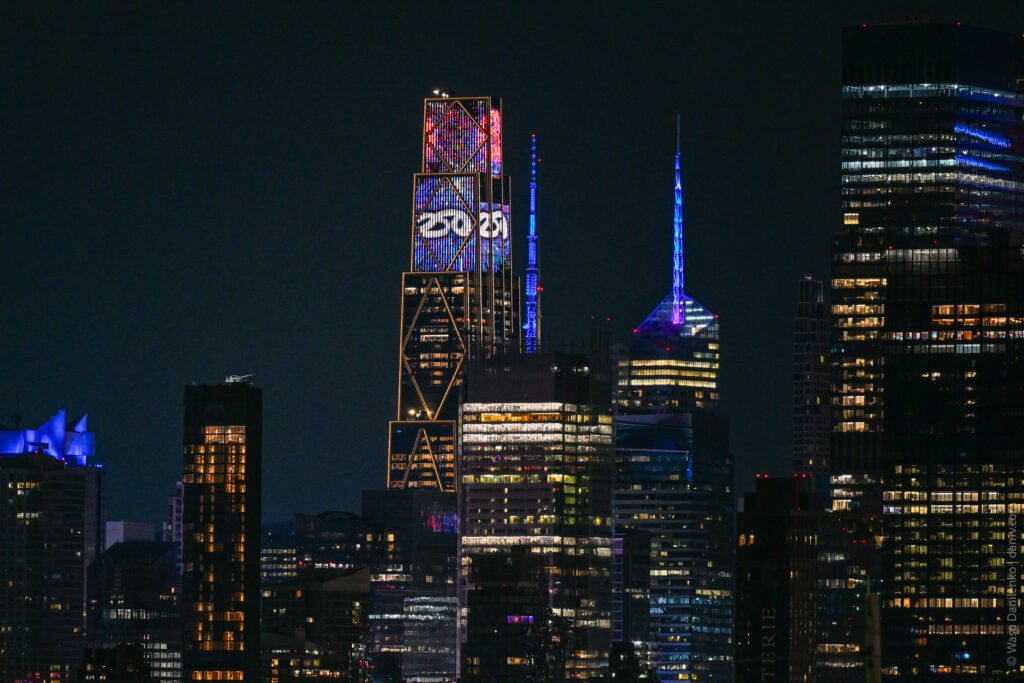
Celestial Passage is the largest light installation in the United States and one of the most inventive in the world. It occupies roughly the top 30 floors of the new tower.
It’s obviously smaller and far less bright than the massive LED screen on the Burj Khalifa in Dubai and that’s exactly the point.
Celestial Passage isn’t «lighting» and it’s not a media facade in the usual sense. It’s a transitional zone between the city and the sky. The light moves slowly, dissolving into layered patterns that overlap, sometimes freezing in place, sometimes barely pulsing.

This is one of those things people mean when they say: better to see it once than hear about it a hundred times.
The effect comes from a few key technical choices:
- The installation is made up of 181,200 individually controlled modules, each about 1×6 inches (2.5 × 15 cm);
- Each pixel contains 8 LEDs, for a total of nearly 1.5 million LEDs;
- Most of the light is directed outward, but some of it reflects back onto the facade, creating depth and an additional visual layer;
- Behind all of this light are regular office floors, yet employees at the world’s largest bank barely see the installation at all — brightness is capped at around 25 percent so it doesn’t interfere with work inside.
This enormous, intelligent light source isn’t run by a technician, but by an artist!

Leo Villareal is one of the leading light artists of our time, known for working at the intersection of architecture and digital algorithms. One of his most famous projects is The Bay Lights on the San Francisco–Oakland Bay Bridge.
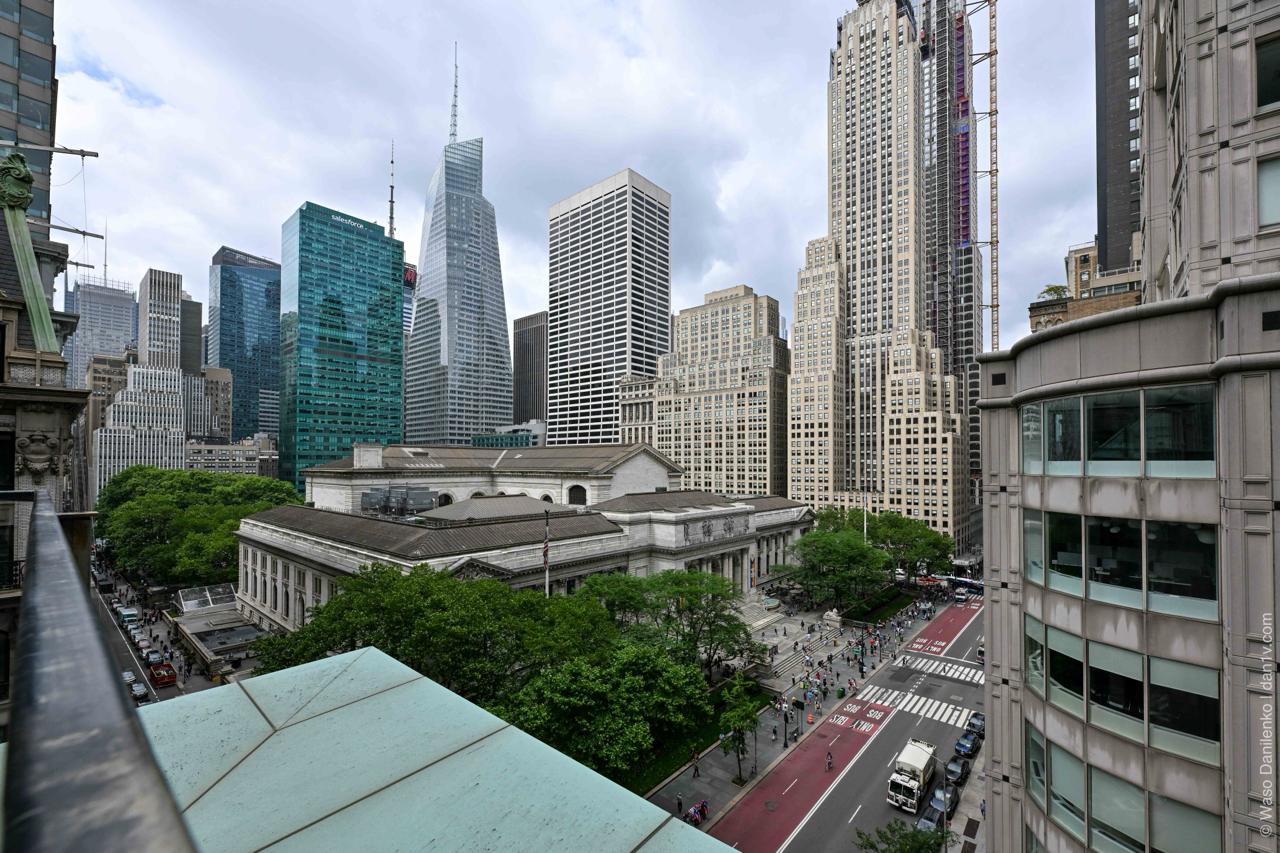
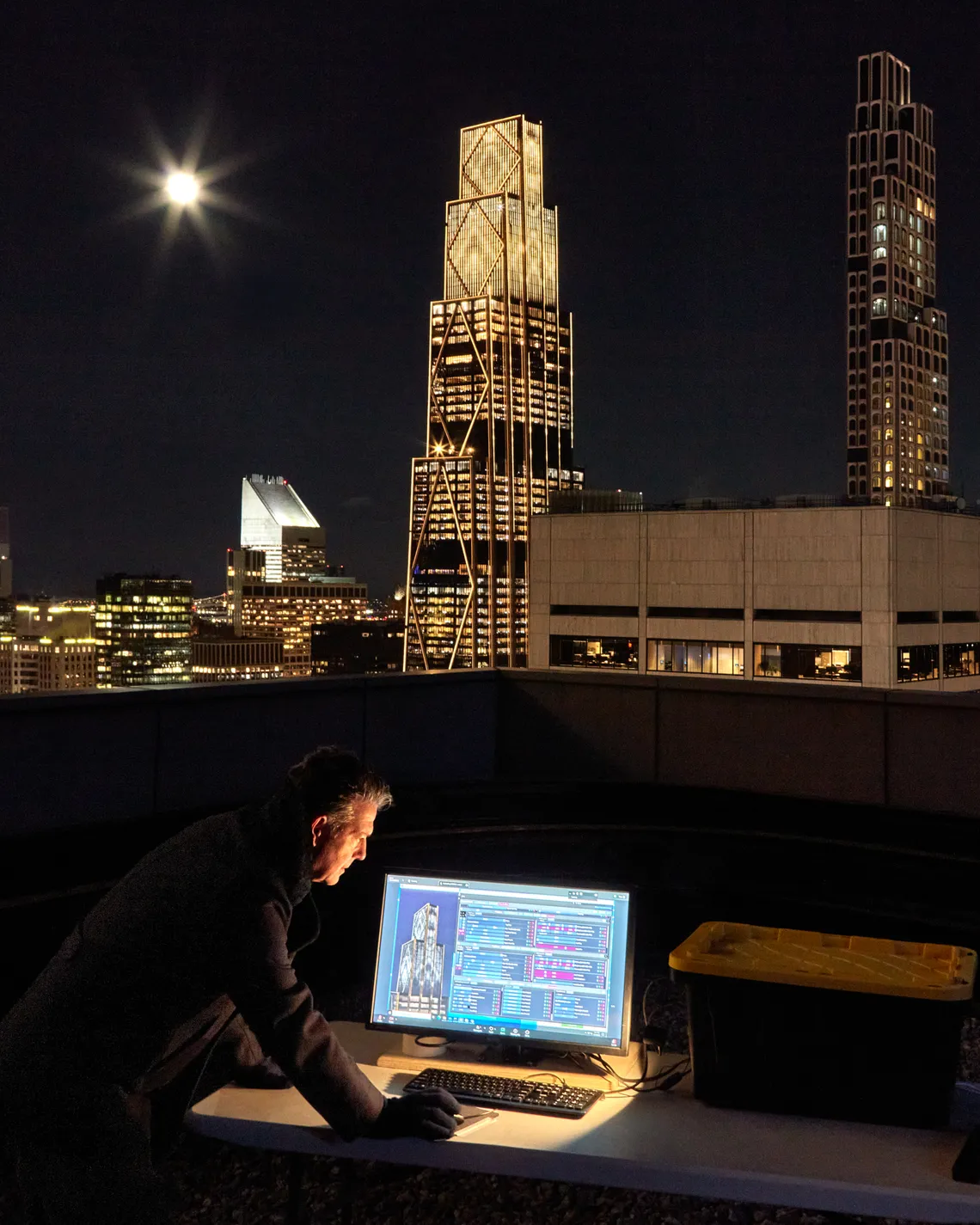
To make it possible for him to turn the top of a banking tower into a piece of art, he was given an entire room in a building across the street, near Bryant Park. From there, using custom-built software, he can see and control the 230-meter-tall installation in real time.
He even has access to a rooftop, so he can take his laptop and a chair outside and run what’s essentially a DJ set, except instead of seven musical notes, he’s working with eight LEDs per pixel. There’s a short video of this on his Instagram.
Like many New York skyscrapers, the JPMorgan Chase tower facade responds to major holidays and events. During Hanukkah, candles appeared across Celestial Passage; during the Christmas season, festive patterns took over; and on July 4, the installation displayed a massive American flag.
📍 Address: JPMorganChase’s global headquarters / 270 Park Ave, New York, NY 10017
p.s.1 Celestial Passage of JP Morgan Chase Tower on July 4th 2026