The Staten Island Museum is officially the oldest cultural institution on the island, and the only remaining general-interest museum in all of New York City. That last distinction matters more than it sounds. Most museums specialize — contemporary art, natural history, a single culture or era. The Staten Island Museum does something increasingly rare: it covers everything. Art, natural science, local history, anthropology, and community memory, all under one roof.
Interesting facts about Staten Island Museum
- The Mummified Cat is the museum’s most beloved and slightly unsettling object. It is a near-perfectly preserved mummified cat, discovered in the 1930s by museum founder Charles Leng.
- There are over 500,000 insect specimens in Staten Island Museum, including cicadas.
- The archives hold the authentic wax seals of Charles II and William III, as well as a military document signed by William Howe, Commander in Chief of the British Armies during the Revolutionary War.
- The museum’s co-founder, Nathaniel Lord Britton, went on to become the first director of the New York Botanical Garden.
- Staten Island Museum helped create the Staten Island Zoo.
- Among the natural science highlights are preserved fish, reptiles, amphibians, and birds displayed in Victorian-era bell jars — a style of preservation that feels like stepping into a 19th-century cabinet of curiosities.
What to see and do in Staten Island Museum
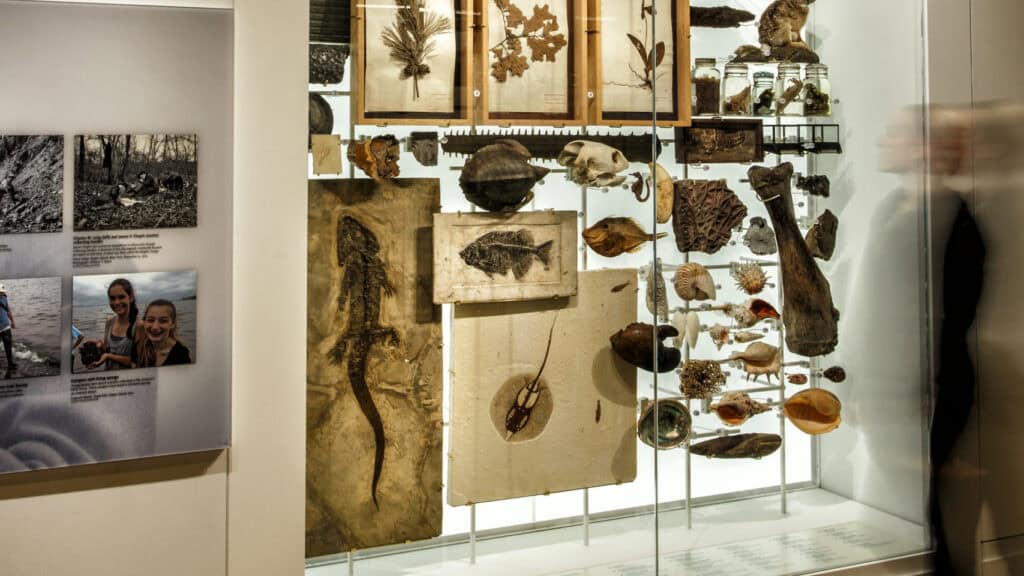
The Natural Science Collection
More than half a million botanical, biological, anthropological, and mineral specimens fill the collection — bird nests and eggs, mounted animals, fossils, shells, and that extraordinary insect archive. The natural science halls tell the story of Staten Island’s biodiversity across centuries, functioning as an irreplaceable scientific record of what has lived here and what has been lost.
The Art Collection
The art holdings are wider-ranging than most visitors expect. The collection spans from ancient Egyptian sculpture and Italian Renaissance paintings to Hudson River School landscapes, Japanese woodblock prints, Chinese snuff bottles, Pre-Columbian ceramics, and Native American artifacts.
There are prints by Rembrandt, Goya, Piranesi, and Audubon. There are canvases by Andy Warhol and John Sloan. A group of Samuel H. Kress Italian Renaissance paintings gives the collection a depth rarely seen outside major institutions. And, uniquely, the Staten Island Museum is the only museum actively collecting works by contemporary Staten Island artists.
The History Archives & Library
This is one of the most underappreciated resources in New York. The history collections contain artifacts and documents reaching back to the 17th century: early films, maps and atlases, audio recordings, photographs, ephemera, archival documents, and those famous royal wax seal land grants. Nine bound ledgers of interviews conducted with Staten Islanders between 1840 and 1865 preserve firsthand recollections of the Revolutionary War. The oldest photographs of Staten Island, taken in 1859, are held here.
Rotating Exhibitions
The museum is not a static collection. Temporary exhibitions bring new perspectives on local history, environmental change, community life, and contemporary art. Past shows have spotlighted forgotten moments in Staten Island’s history, celebrated local artists, and explored biodiversity themes that connect the natural science collections to present-day concerns.
Programs and Events
Workshops, family programs, lectures, and community events run throughout the year. Since 1908, the museum has conducted annual bird counts alongside the Audubon Society — one of the longest-running citizen science programs in New York. The museum participates each December in the New Brighton Holiday Stroll, bringing together artists, craftspeople, and local businesses.
History of Staten Island Museum
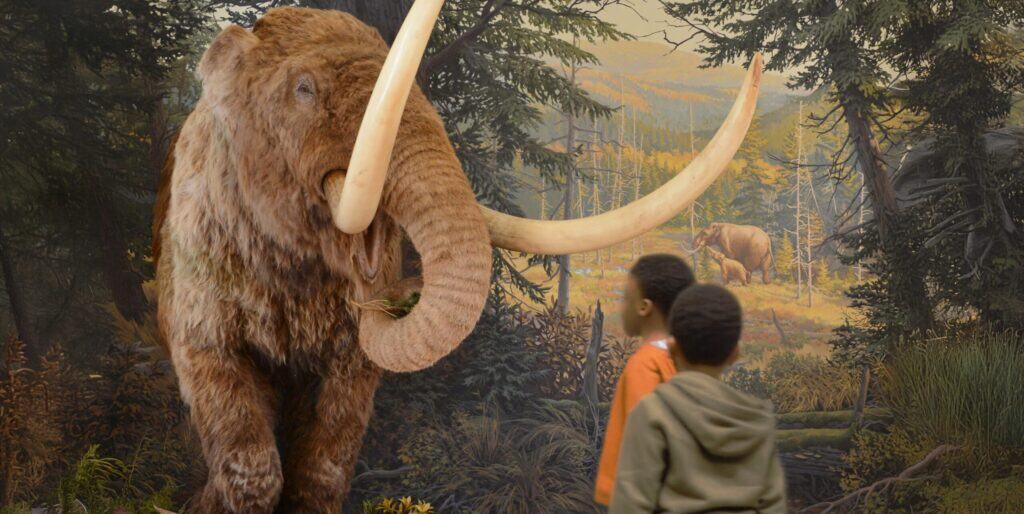
The museum was born in 1881, when fourteen young naturalists on Staten Island decided to do something radical: pool their personal collections and preserve them for the public. Their motivation was surprisingly modern. They were worried that the rapid development of their community was destroying the island’s natural environment faster than anyone could document it.
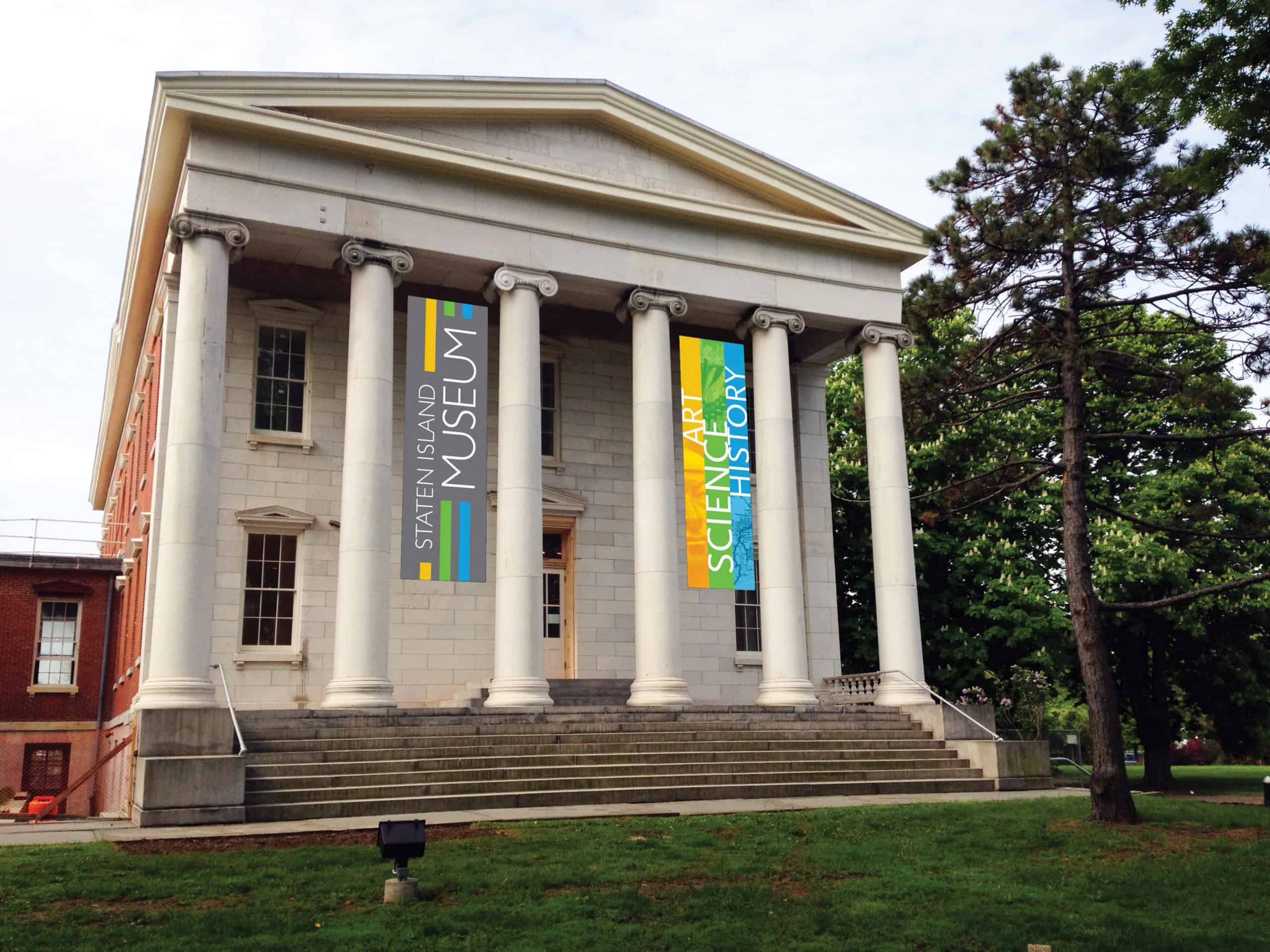
Over the following decades, the collecting focus expanded beyond plants and animals to include art, historic documents, and cultural artifacts. By 1919, the institution had been formally incorporated as the Staten Island Institute of Arts & Sciences — a name that signaled its broader ambitions. It moved through several homes in St. George before making its most consequential move in 2015, when it relocated to the stunning Greek Revival Building A on the grounds of Snug Harbor Cultural Center & Botanical Garden.
The building itself deserves a moment. Originally constructed in 1879 as a dormitory for retired sailors, it is a city, state, and federal landmark — and now a LEED-certified, climate-controlled museum tucked inside a 19th-century shell. Museum members actually helped save it from demolition back in 1965. The building has been waiting ever since to fulfill a greater purpose.
Visitor Information
📍 Staten Island Museum / 1000 Richmond Terrace, Building A, Staten Island, NY 10301
Hours: Wednesday through Sunday, 11:00 AM – 5:00 PM. Closed Monday and Tuesday.
Admission: The museum operates on a suggested admission model. Adults: $5; students and seniors: $3; children under 12 and members: free.
Website: statenislandmuseum.org
The Snug Harbor campus surrounding the museum is itself worth exploring — 26 landmarked Greek Revival buildings, botanical gardens, the Noble Maritime Collection, and the Staten Island Children's Museum are all within walking distance. Plan for a full day.