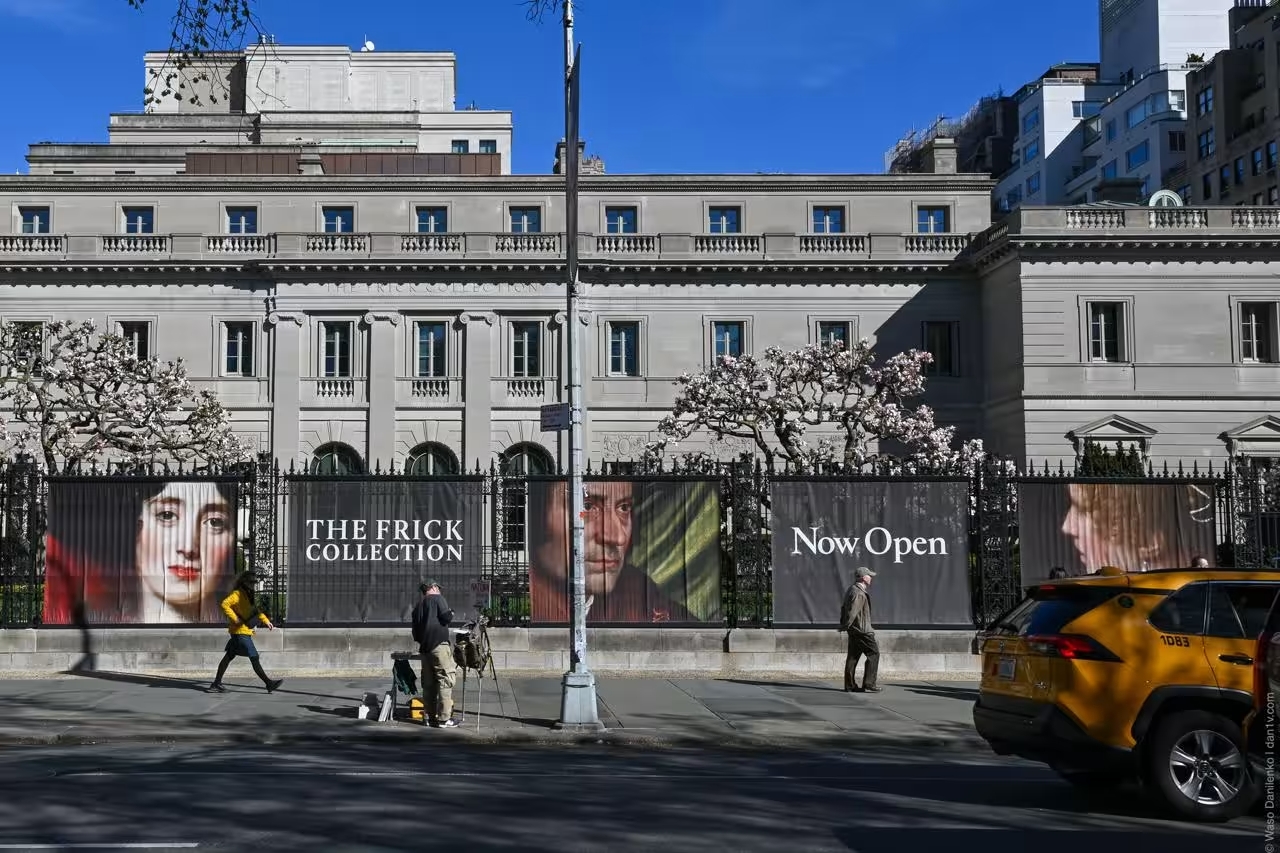
After nearly five years of renovation, the legendary Frick Collection on Fifth Avenue has reopened its doors. Restored and expanded, yet still retaining the spirit of a “house filled with masterpieces,” the museum once again offers visitors not only its celebrated art but also the architectural vision of Henry Clay Frick himself. For the first time, guests can ascend the grand staircase to the former private rooms of the Frick family — now transformed into galleries that combine intimacy with museum-level depth.
Interesting Facts About The Frick Collection
- Steel magnate Henry Clay Frick built a luxurious mansion on Fifth Avenue designed by Thomas Hastings, one of the architects of the main building of the New York Public Library. Today, the museum is housed in this very mansion.
- In 1892, Frick survived an assassination attempt: anarchist Alexander Berkman burst into his office, shot him several times, and stabbed him with a knife. Frick survived and, according to accounts, returned to work the same day.
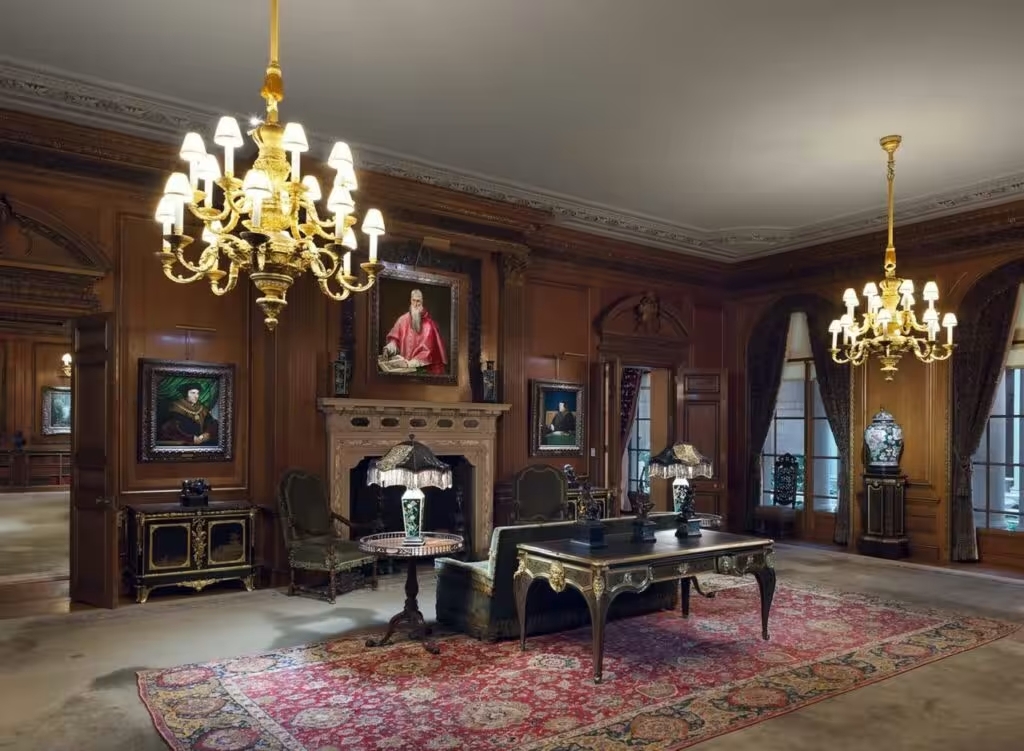
- The museum has preserved the atmosphere of a private home: paintings are displayed alongside furniture, clocks, porcelain, and bronze objects. This makes the collection interesting not only as an art collection but also as the interiors of a wealthy New York mansion.
- In the Great Room, portraits of Thomas More and Thomas Cromwell by Hans Holbein the Younger hang facing each other. The two men were enemies: Cromwell played a role in the political persecution of More, who was eventually executed.
- The Frick Collection has three paintings by Vermeer: Mistress and Maid, Officer and Laughing Girl, and Interrupted Music Lesson. Only about 35 of his paintings have survived worldwide.
- A separate room is devoted to Fragonard’s Progress of Love series. The artist created it for Madame du Barry, the mistress of Louis XV, but she rejected the paintings. Frick acquired the series in 1915 and installed it in a specially designed room.
- Among the museum’s masterpieces are St. Francis in the Desert by Giovanni Bellini and The Polish Rider by Rembrandt.
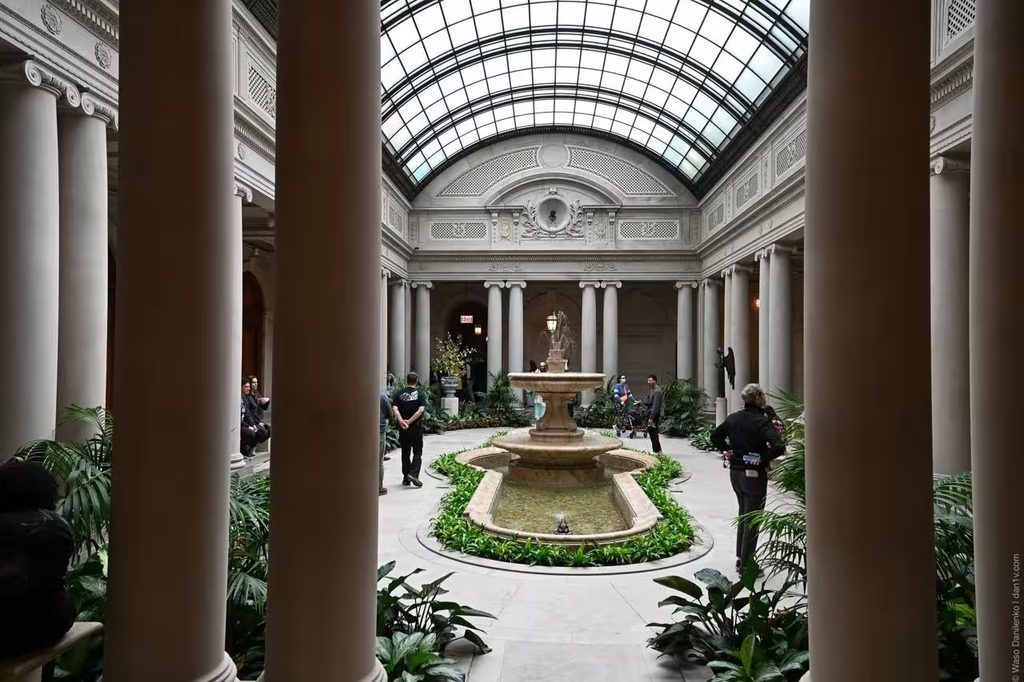
- At the center of the mansion is an inner courtyard with a fountain and plants.
History of The Frick Collection
The Frick Collection is an art museum in New York City, housed in the mansion of industrialist and collector Henry Clay Frick. Built in 1913–1914 by architect Thomas Hastings, the Fifth Avenue residence was designed as both a family home and a showcase for Frick’s growing art collection. Upon his death in 1919, the house and its contents were bequeathed to the public and officially opened as a museum in 1935.
When coal magnate Henry Clay Frick moved into his new mansion in 1914, he brought with him a trove of masterpieces by Rembrandt, Velázquez, Titian, Turner, Whistler, and many others. He cared little for categories of style or era—Frick simply acquired works that he considered great and displayed them as he pleased. Later, his vision was shared with the public.
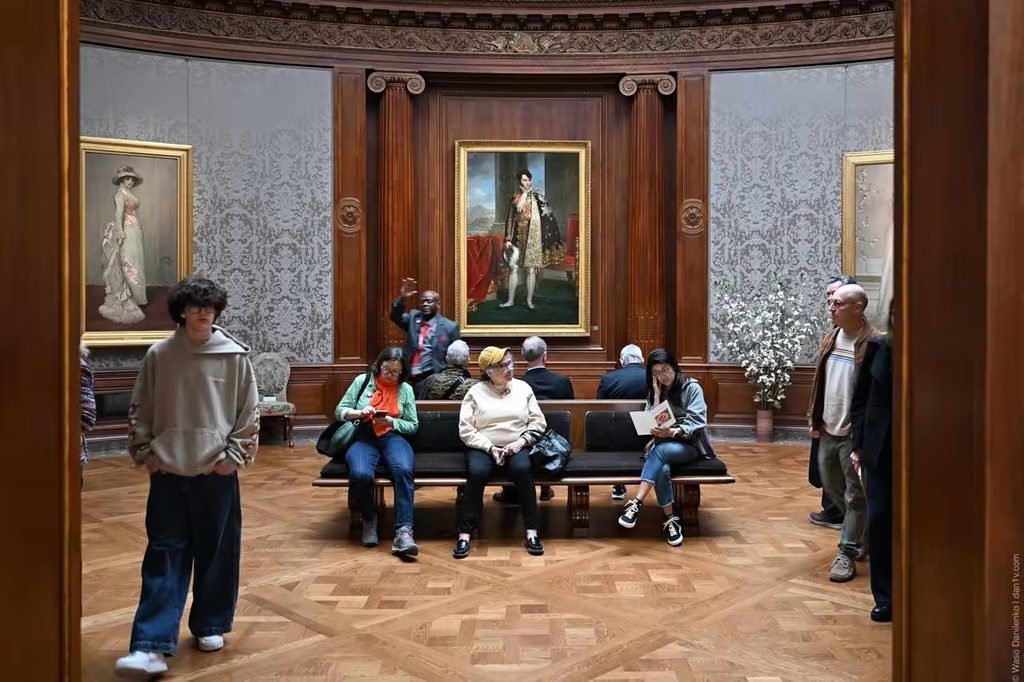
At its core, the museum features outstanding works of European painting (Rembrandt, Vermeer, Goya, El Greco), as well as sculpture, decorative arts, and 18th-century furniture. Over time, the collection has grown through acquisitions and gifts, while preserving its refined, almost private character. Today, the Frick is regarded as one of the world’s most distinguished small museums, prized not for the breadth but for the quality and atmosphere of its holdings.
In 2020, during the COVID-19 pandemic, the Frick closed for a major renovation. Its treasures were temporarily displayed at the former Met Breuer building on Madison Avenue, known as Frick Madison, from 2021 to 2024. On April 17, 2025, the Fifth Avenue mansion reopened, unveiling restored interiors, new galleries, a purpose-built auditorium, and enhanced amenities for visitors.
Architecture of The Frick Collection
The Henry Clay Frick House was built in 1913–1914 by Thomas Hastings of the renowned New York firm Carrère and Hastings, best known for the New York Public Library.
Designed in a neoclassical style inspired by late 18th-century French architecture, the mansion combines elegance with monumental presence, reflecting Frick’s wealth and cultural ambitions.
Key Features:
- Facade: limestone, symmetrical, restrained in ornament—its sober exterior contrasts with the opulence inside.
- Layout: centered around an interior garden court with a fountain, creating a palatial yet intimate atmosphere.
- Interiors: marble staircases, oak-paneled rooms, carved fireplaces, coffered ceilings—all crafted to enhance the display of art.
- Garden: landscaped by Frederick Law Olmsted Jr., the private garden forms a green buffer from busy Fifth Avenue.
During the 2020–2025 restoration, Selldorf Architects and Beyer Blinder Belle added about 10% more space, improved accessibility, introduced new lighting, a café, an auditorium, and a gift shop—all while preserving the historic character of the house.
Highlights of The Frick Collection
Paintings
- Rembrandt: Self-Portrait, The Polish Rider
- Johannes Vermeer: Officer and Laughing Girl, Mistress and Maid
- Diego Velázquez: Portrait of Philip IV
- Titian: Portrait of Pietro Aretino
- Plus works by El Greco, Goya, Gainsborough, Turner, Whistler.
Sculpture & Decorative Arts
French bronzes, Italian Renaissance reliefs, marble busts, clocks, tapestries, and exquisite 18th-century furniture, including pieces by André-Charles Boulle.
The Frick Art Reference Library
Founded by Frick’s heirs, this world-renowned research center is one of the leading art history libraries globally.
Exhibitions at The Frick Collection
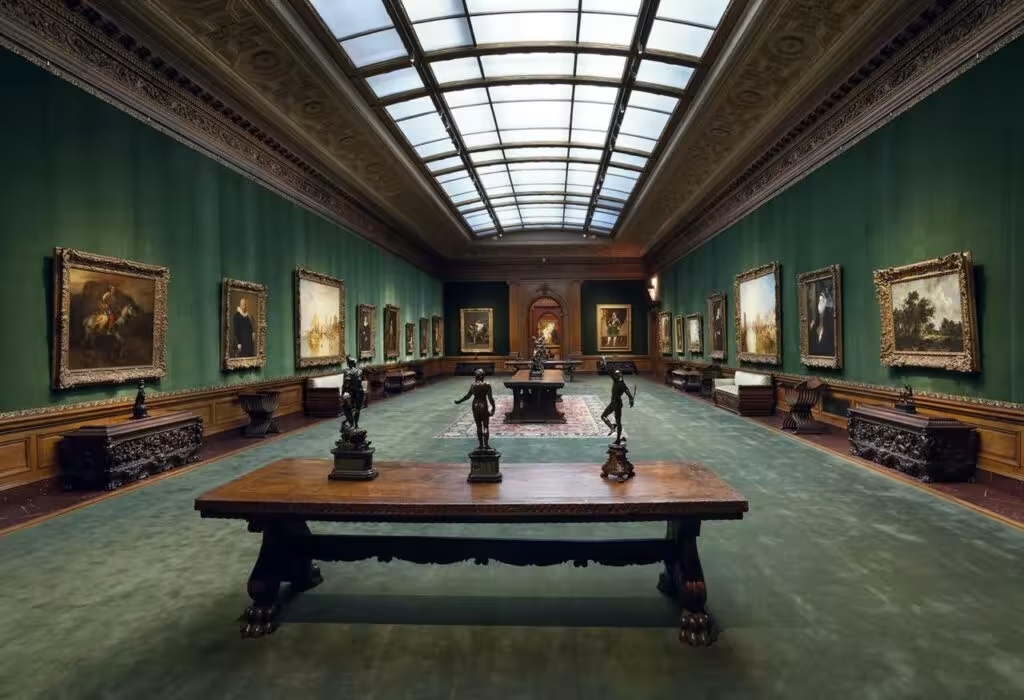
In addition to its permanent collection, the Frick hosts carefully curated temporary exhibitions. These often highlight:
- Monographic shows of artists such as Vermeer, Rembrandt, and Goya.
- Comparative displays, placing works from other museums in dialogue with the Frick’s masterpieces.
- Focus exhibitions on decorative arts, from porcelain to furniture and sculpture.
The newly renovated spaces, including second-floor galleries, offer expanded opportunities for exhibitions and programming.
Unlike larger institutions, the Frick maintains the feel of a house museum: visitors encounter world-class art in an intimate, contemplative setting, making each visit unforgettable.