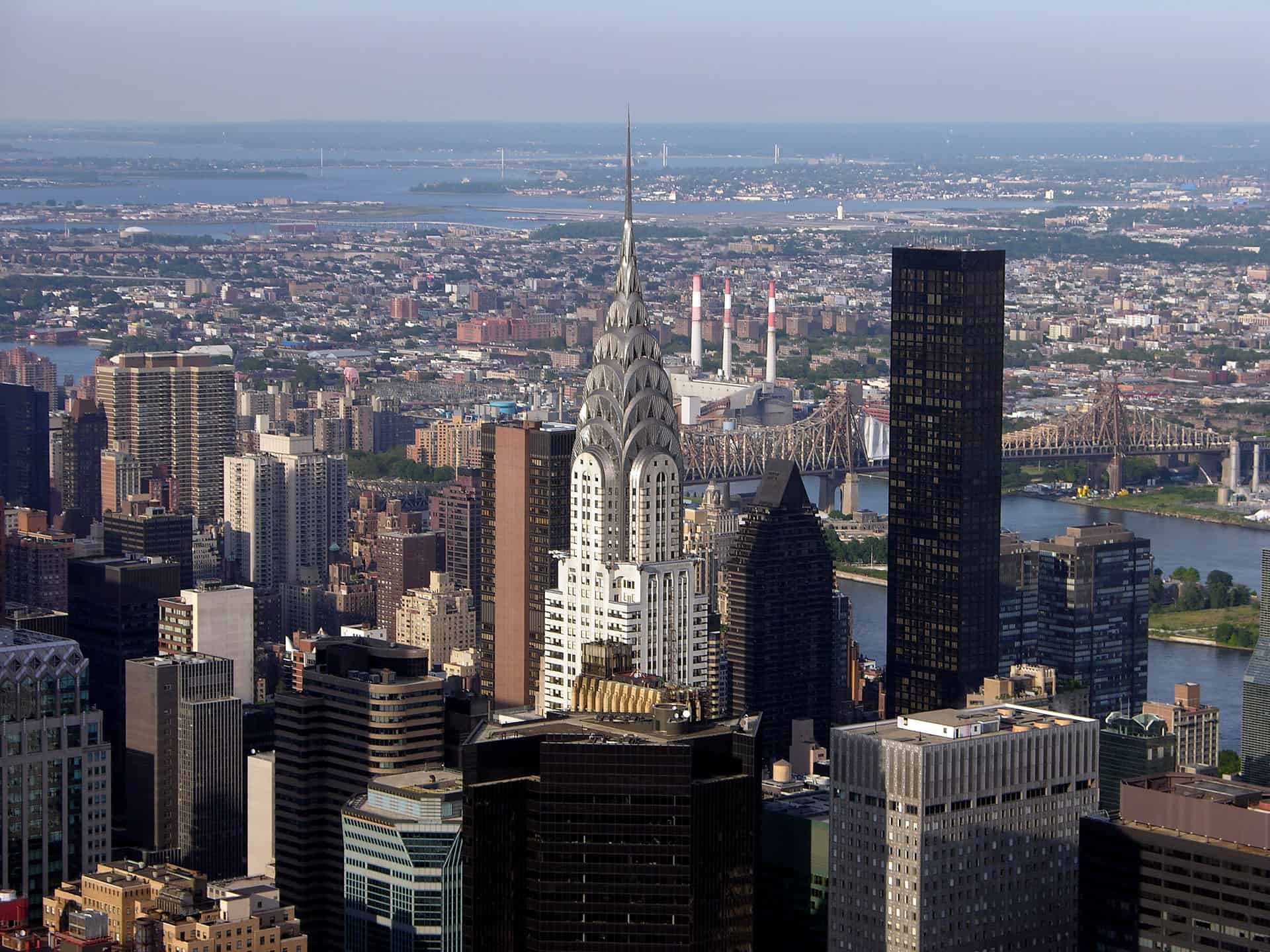
In 2005, the Skyscraper Museum conducted a poll to identify ten New York skyscrapers most beloved by city residents. First place went to the Chrysler Building. It is one of the finest examples of Art Deco architecture in New York, the skyscraper built for the Chrysler automobile corporation in 1930, and one of the city’s most recognizable symbols. Let us take a closer look at this remarkable building.
Interesting Facts About the Chrysler Building in New York
- For 11 months after its completion, the building was the tallest in the world.
- Its 56-meter spire was assembled in secret so competitors could not build anything taller.
- While the Bank of Manhattan was still under construction, the Chrysler Building’s spire literally “rose” in just 90 minutes and surpassed it by 37 meters.
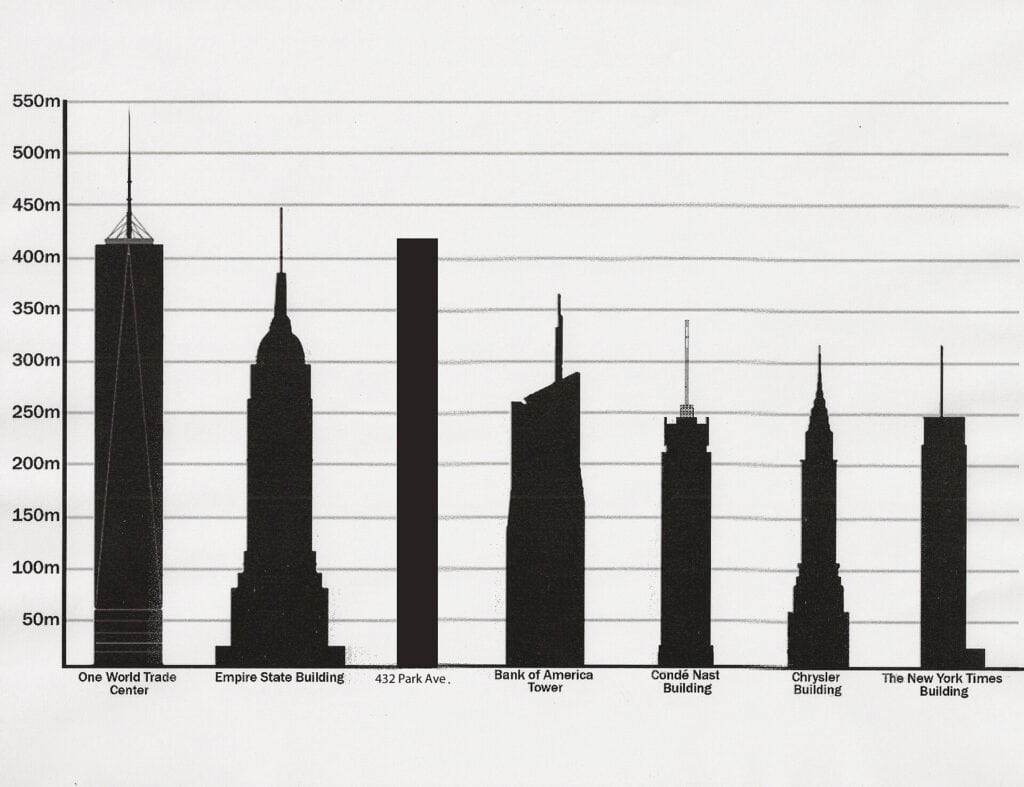
- The 319-meter tower was completed in only 20 months, at a pace of approximately four floors per week. This remains one of the fastest skyscraper construction records in history.
- In 1979, the Chrysler family sold the building for symbolic $2, while the actual payment was transferred privately.
- In 2019, the building was purchased by Austrian company SIGNA for 150 million dollars.
- The Chrysler Building stands on land that its owners do not own but lease from the educational institution Cooper Union.
- Ground rent costs the owners tens of millions of dollars annually, significantly affecting the building’s profitability.
- In surveys of architects and architectural historians, the Chrysler Building consistently ranks among the five most beautiful buildings in the world, despite no longer being among the tallest.
- It is often called “the perfect Art Deco skyscraper” and “the pinnacle of vertical architecture.”
- The building has appeared in hundreds of films, including Spider-Man, Godzilla, and My Big Fat Greek Wedding.
Architecture of the Chrysler Building
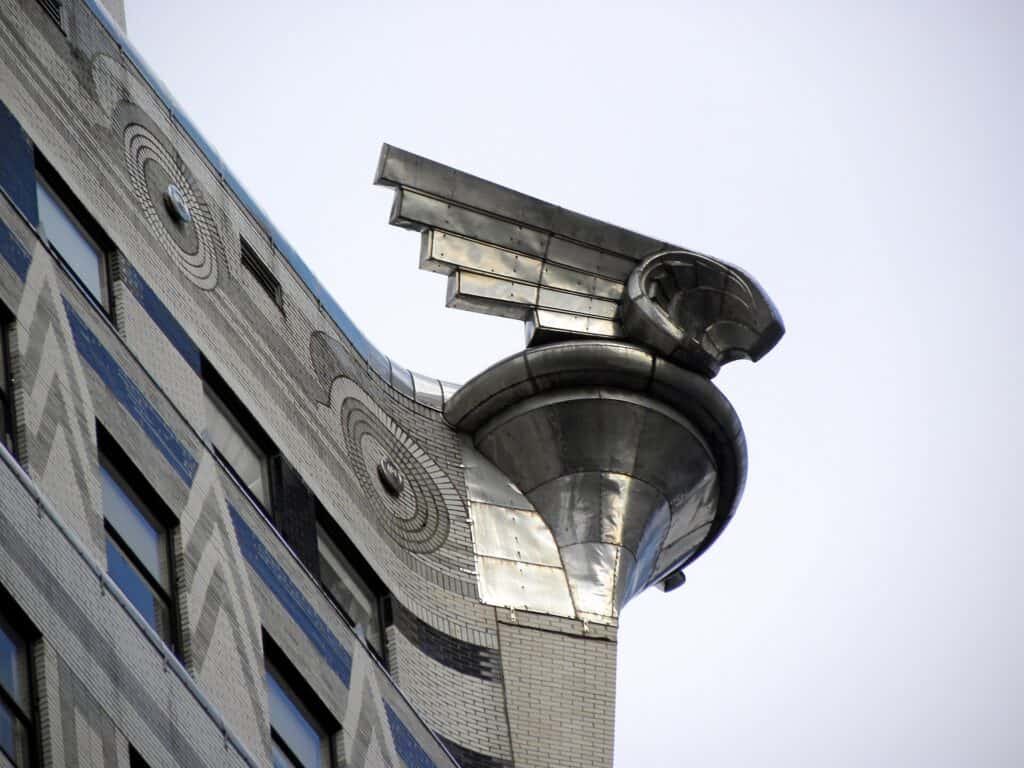
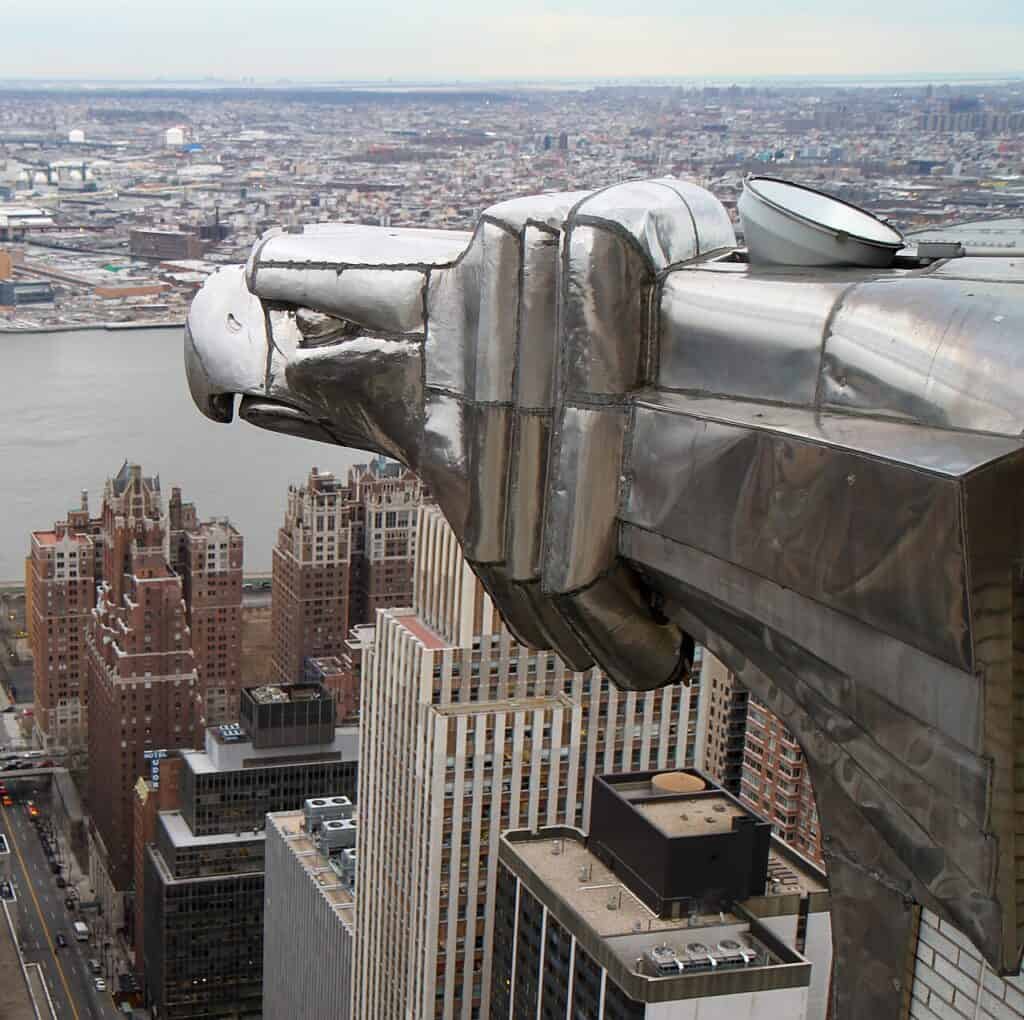
The Chrysler Building combines Art Deco geometry and luxury, machine-age aesthetics, and handcrafted detailing. Architect William Van Alen created not merely a building, but the ultimate advertisement for an automobile company built into the city skyline. At the 61st floor, four giant eagles project from the corners of the building, one on each side, modeled after Chrysler hood ornaments.
The crowning feature of the Chrysler Building is its seven-tiered stainless steel spire composed of arches made from Enduro KA-2 steel manufactured by Krupp. The material does not rust and retains its mirror-like shine without paint, which is why the spire looks almost exactly as it did on opening day nearly one hundred years later. The spire is pierced with many small windows that allow sunlight in during the day and make the crown glow from within at night.
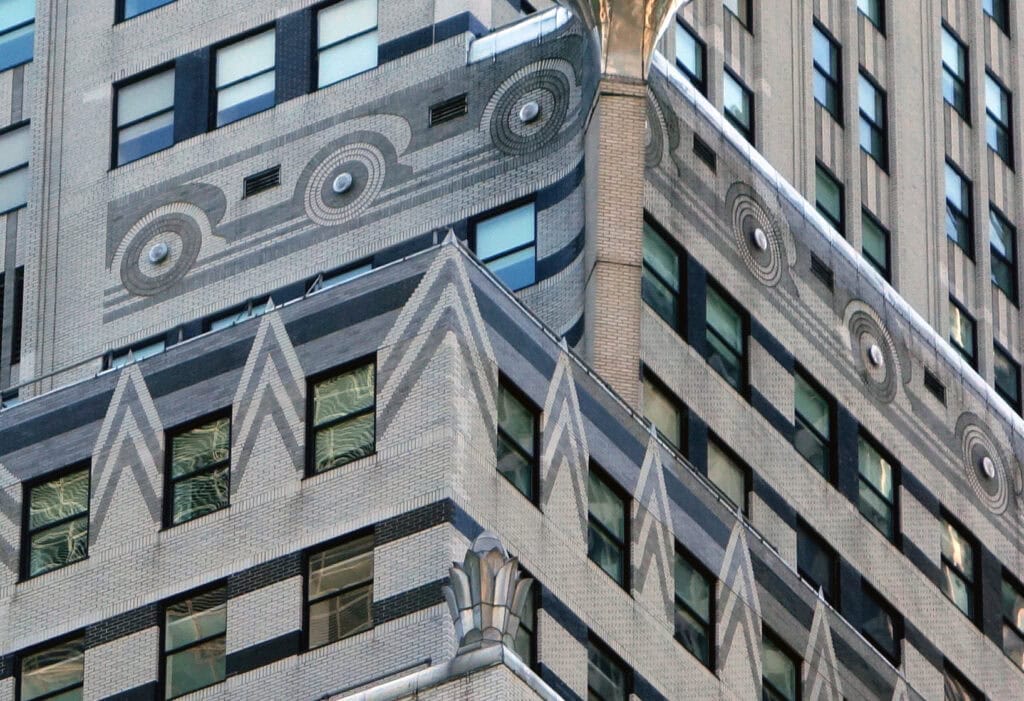
Walter Chrysler insisted that the architecture directly reference his automobiles. In addition to the eagles, the façade features wheel hub motifs. The frieze on the 29th floor is made up of stylized Chrysler wheels. Decorative ornaments throughout the façade repeat automotive details of the era, transforming the skyscraper into a giant vertical showroom for the brand.
Interiors of the Chrysler Building
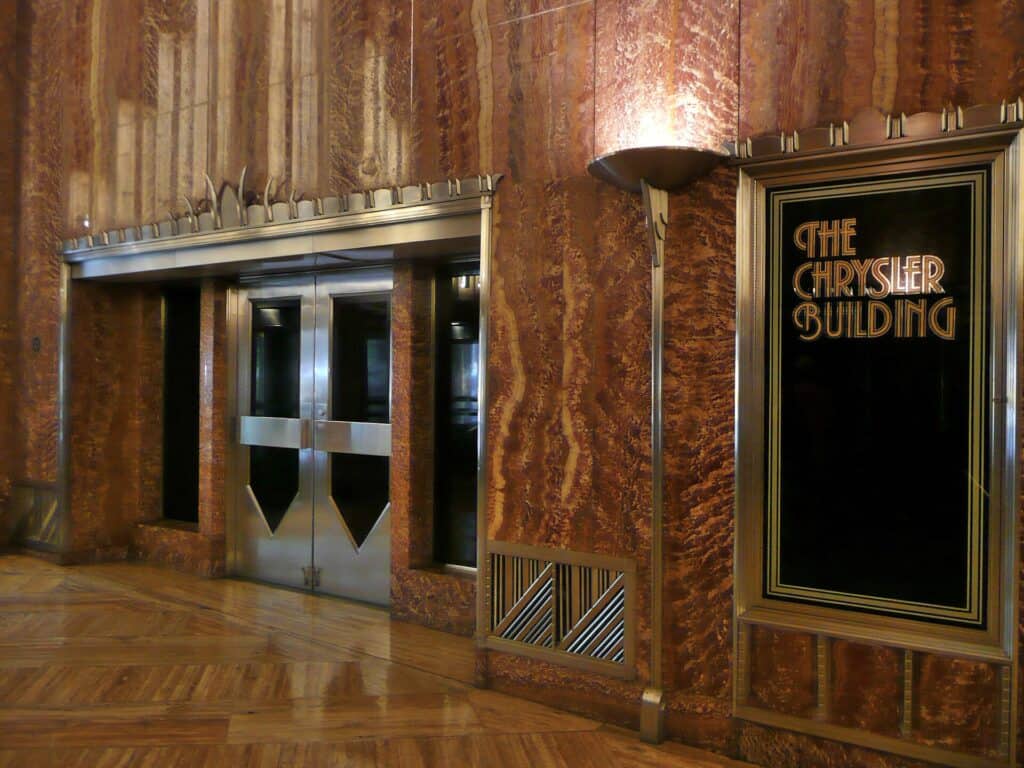
Today, the Chrysler Building functions as an office tower. Tourists are allowed only into the lobby; access to upper floors and observation decks is not permitted. However, the lobby alone is worth the visit. Its walls are clad in rare Moroccan onyx in three shades. The ceiling features a monumental mural depicting workers constructing the building, airplanes, Chrysler automobiles, and scenes of industrial progress. The artist was Edward Trumbull.
The elevator doors deserve special mention. Each of the 32 original elevator cabins is decorated with wood marquetry made from 12 species of wood, and no two cabins are alike. They are arguably the most beautiful elevator doors in the world.
From 1930 to 1979, the famous Cloud Club occupied the 66th floor. It was a private gentlemen’s club for New York’s business elite, frequented by politicians, industrialists, and executives. After the club closed, the space was converted into offices and remains inaccessible to tourists today.
On the 77th floor, just below the spire, Walter Chrysler created private apartments—not for living, but for meetings and receptions. His mineral and rock collection was also kept there. According to legend, the view from this floor was so spectacular that Chrysler visited regularly simply to admire New York.
Construction History of the Chrysler Building: The Race for Height
In the late 1920s, several of the wealthiest men in America simultaneously decided to build the tallest building in the world. One of them was Walter Chrysler, founder of the Chrysler automobile corporation. He hired architect William Van Alen and instructed him to build higher than everyone else. Chrysler financed the project entirely with his own money, without taking a single loan, and intended it to be a personal monument to his era rather than merely an office building.
Here is the chronology of events:
- In 1928, Walter Chrysler purchased the site at Lexington Avenue and 42nd Street. Construction began immediately.
- In 1929, work began on the future Bank of Manhattan building, Chrysler’s main competitor. Its architect, Craig Severance, also intended to build one of the tallest towers in the world.
- In November 1929, it became clear that the Bank of Manhattan would rise to 282 meters—the exact height of Chrysler’s original plans. Secretly, inside the building, Van Alen assembled a prefabricated 56-meter steel spire. In just 90 minutes, it was hoisted into place and secured externally.
- On April 27, 1930, the Chrysler Building officially opened as the tallest building in the world at 319 meters. The Bank of Manhattan was left 37 meters shorter.
- In April 1931, the Empire State Building opened at 443 meters, pushing the Chrysler Building into second place.
Craig Severance, Van Alen’s former business partner, was in fact the architect of the competing Bank of Manhattan project. The two former colleagues were effectively racing each other without knowing the exact final height of the other’s building. It was not merely a skyscraper race—it was a personal vendetta between two architects.
After defeating his rival, Chrysler reportedly behaved less than honorably: he refused to pay Van Alen his full fee, accusing him of accepting kickbacks from contractors. Van Alen sued and won, but he never again received another commission of similar scale.
The Chrysler Building in Popular Culture
The Chrysler Building, its spire, and its steel arches appear regularly in films. A single shot is enough for viewers to understand that the story is set in New York.
The building appears especially often in superhero and science fiction films. In multiple Spider-Man adaptations, it can be seen in skyline shots alongside the Empire State Building and other Manhattan skyscrapers. In the 1998 film Godzilla, the monster destroys part of the building’s spire during the final battle, and in Armageddon, the Chrysler Building appears in disaster scenes as one of the city’s most recognizable landmarks.
Visitor Information
📍 Chrysler Building / 405 Lexington Ave, New York, NY 10174, near Grand Central Terminal
Metro: Grand Central – 42nd Street Station (Lines 4, 5, 6, 7, S), 3-minute walk
Lobby: Open on weekdays from 8:00 AM to 6:00 PM, free admission
If you want to see the eagles on the 61st floor up close, bring binoculars or a telephoto lens. From street level they appear small, but zoomed-in photographs turn out spectacular.