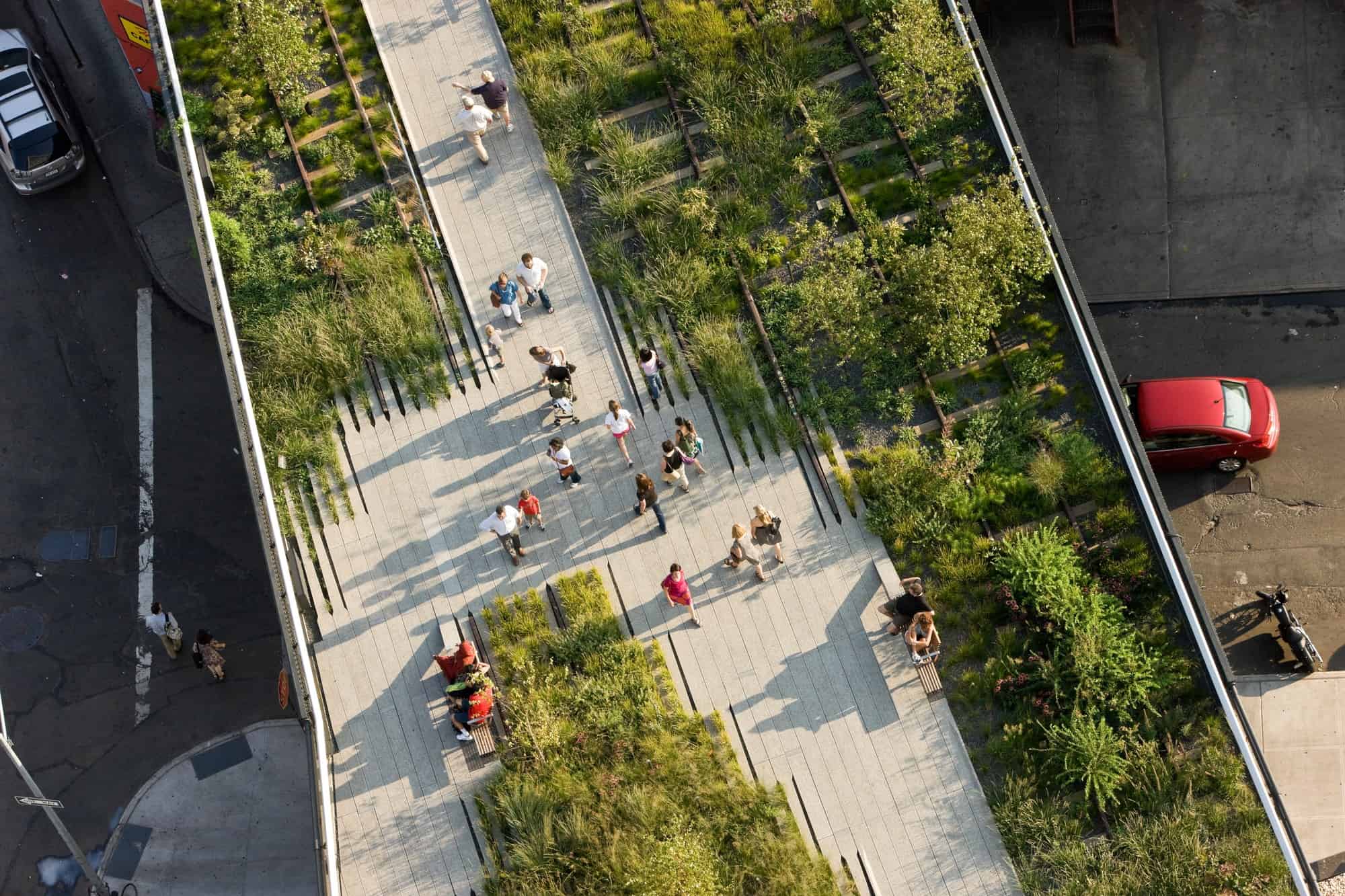
The High Line is a park built on an abandoned freight railway in New York City. What makes it especially fascinating is that it runs 9 meters above the streets of Manhattan.
Today, people come here to walk, take photos, and eat ice cream with views of the Hudson River. You can also unexpectedly come across contemporary art installations. Entry to the High Line is free, it’s open almost year-round, and it’s arguably the best free walking route in New York City.
Interesting facts about the High Line park in New York
- The last train ran on the High Line in 1980 and, according to legend, carried three cars of turkeys for Christmas. Some of the plants in the park are direct descendants of those that grew naturally on the abandoned tracks.
- The High Line inspired dozens of cities around the world to create similar “elevated parks,” including in Paris, Seoul, and Rotterdam.
- In its first year of operation in 2009, the park welcomed around 2 million visitors.
- Land prices around the High Line rose so sharply that it sparked discussions about “park-driven gentrification,” as rising rents began to push out local residents.
The history of the High Line: from “Death Avenue” to a beautiful park
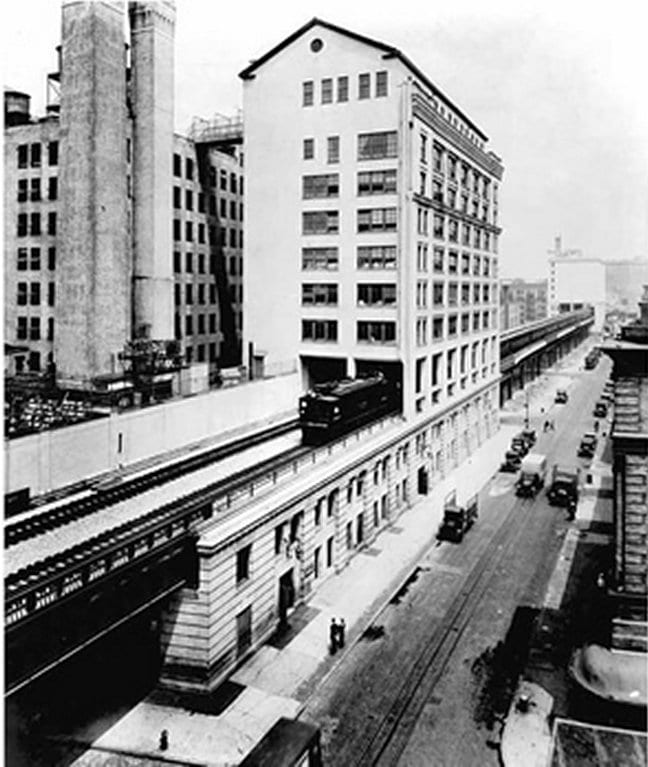
To understand why the High Line exists, we need to go back to the 1930s. In the Meatpacking District on Manhattan’s west side, meatpacking plants and warehouses were operating, and freight trains ran directly along 10th Avenue. The problem was that they frequently struck pedestrians — the avenue was even nicknamed “Death Avenue.” A man on horseback would ride ahead of each train waving a red flag to clear the way.
The solution came in the 1930s: the trains were elevated. In 1934, the West Side elevated line opened, running directly through buildings — literally through factories and warehouses — so goods could be loaded and unloaded inside, without ever going out onto the street. It was an engineering revolution for its time.
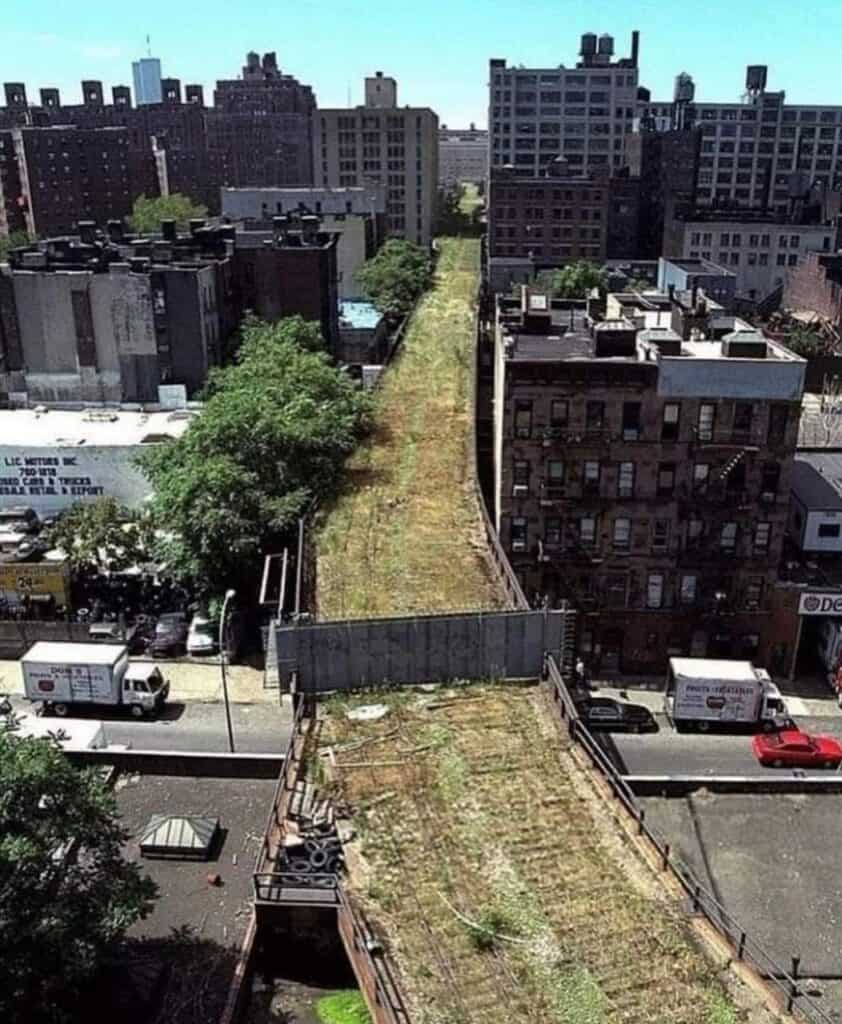
By the 1960s, however, trucks had replaced trains. The last train ran in 1980, carrying turkeys for Christmas. For the next twenty years, the elevated structure was abandoned, and nature took over. Trees and grasses grew over the tracks, inspiring the future park’s designers.
The structure was nearly demolished — property owner Julian Lennon secured demolition approval under Mayor Giuliani’s administration — but local residents prevented it. In 1999, two neighborhood residents, Joshua David and Robert Hammond, founded the nonprofit Friends of the High Line.
In 2003, Mayor Bloomberg supported the project to preserve and transform the structure. An international design competition was held, and the winning team was Diller Scofidio + Renfro, together with landscape architects Field Operations and garden designer Piet Oudolf. The first section of the park opened in 2009, the second in 2011, and the third and final section in 2014.
How the High Line park in New York is designed
Diller–von Furstenberg Sundeck (between 14th and 15th Streets)
The southernmost wide square features wooden lounge chairs and views of the surrounding neighborhood. In summer, people come here to sunbathe and read right in the middle of Manhattan.
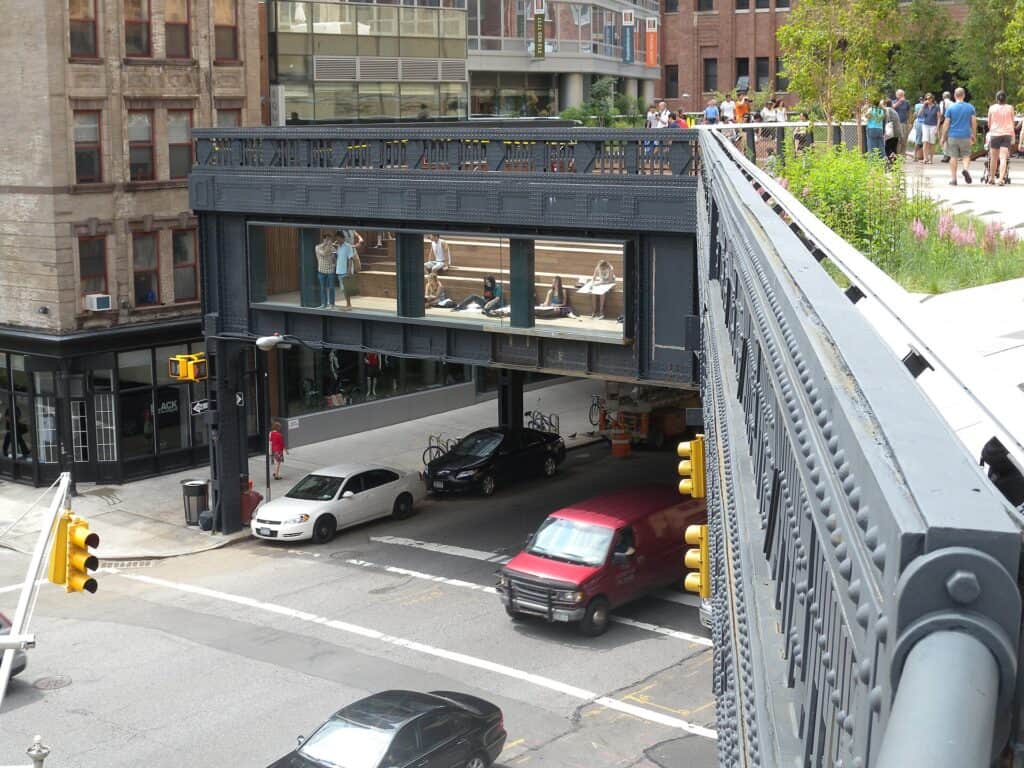
10th Avenue Square (17th Street)
The famous “window into New York” — an amphitheater above a glass wall overlooking the avenue. It’s always crowded, but worth it.
Chelsea Thicket (between 20th and 22nd Streets)
The densest and darkest section of the park, almost like a small forest. Trees create near-complete canopy cover, with shaded paths below.
Radial Bench (between 29th and 30th Streets)
One of the best viewpoints toward Midtown. A great spot for photos with skyscrapers in the background.
The Rail Yards (30th to 34th Streets)
An open area with views of the Hudson River and the developing Hudson Yards district. If you want a quieter High Line experience, come here.
It’s best to walk from south to north, gradually moving from the busiest to the calmest areas. The full walk takes about 45 minutes.
Architecture of the High Line park in New York
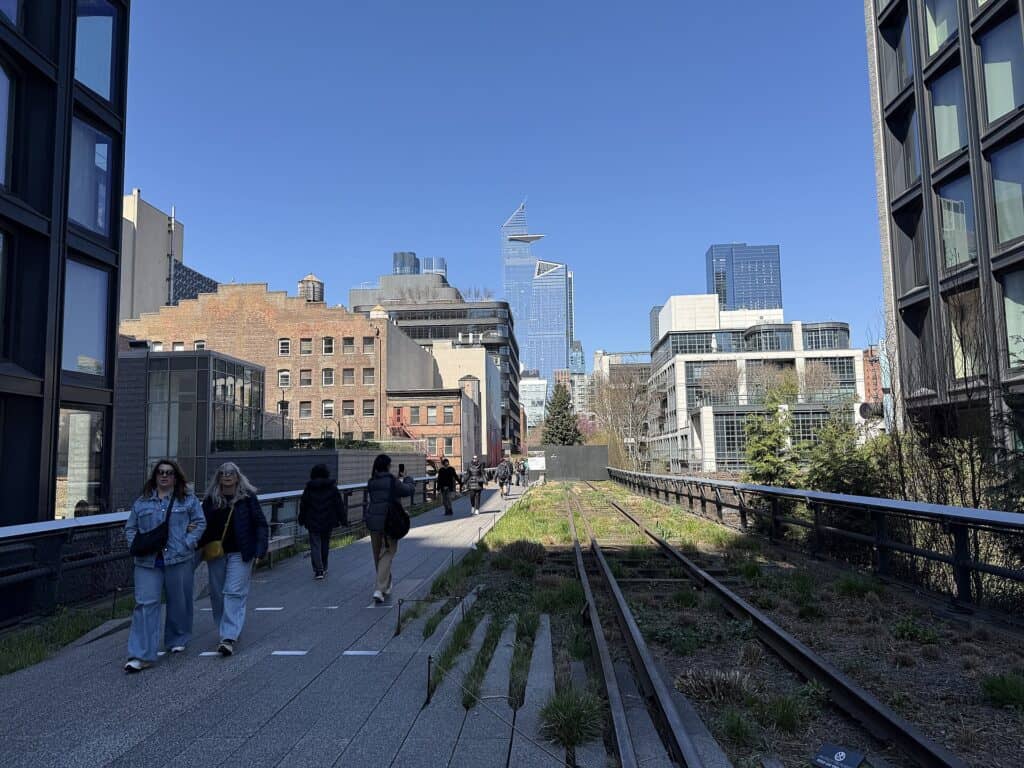
The pathways of the High Line are literally made from sections of old steel rails and sleepers, transformed into decorative elements. If you look down, you can see metal strips stretching into the distance. Original railway elements — supports, beams, and arches — have been preserved along the entire route.
Piet Oudolf’s garden design is a story of its own. The Dutch landscape architect recreated something resembling the wild garden that once grew naturally on the abandoned tracks. Grasses, perennials, and shrubs grow here. The park looks beautiful year-round, even in winter when the plants are covered in frost.
Art on the High Line: an open-air gallery
The High Line is one of the largest public art venues in New York City. Each year, new sculptures, installations, and artworks are placed here. Some remain permanently, while others rotate.
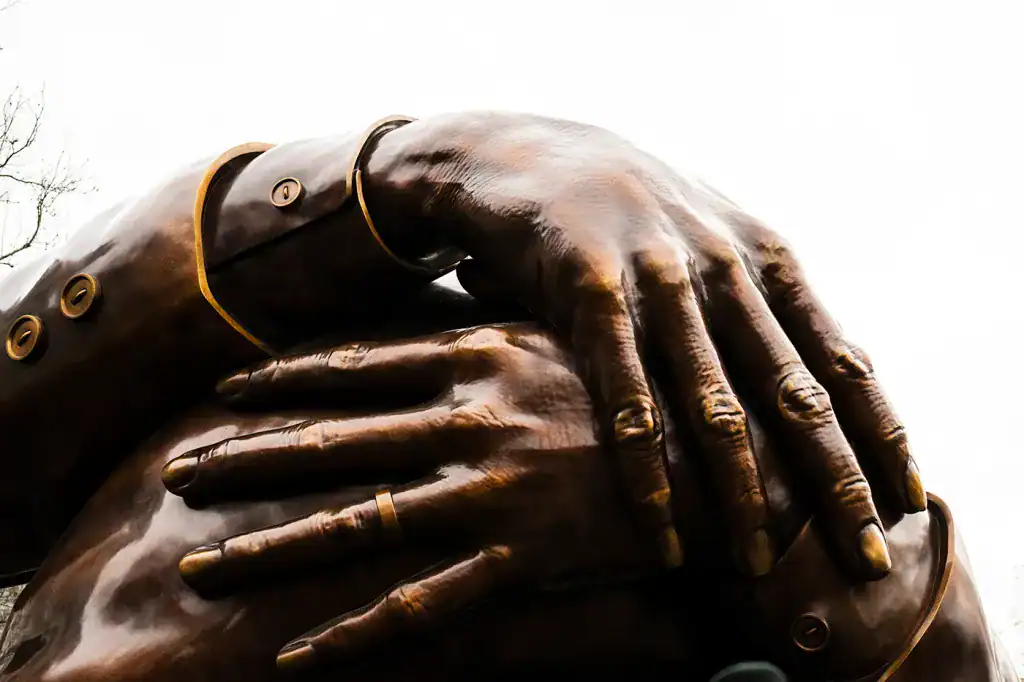
The most famous permanent piece is the sculpture “The Embrace” by Glenn Kaino. Over the years, works by Keith Haring, Daniel Buren, Taryn Simon, and dozens of other world-class artists have been exhibited here.
At the southern entrance, on Gansevoort Street, right beneath the structure, is the Whitney Museum of American Art. If you’re visiting the High Line, it’s just a ten-minute walk away.
How to get to the High Line park
📍 The High Line / New York, NY 10011
Getting there is easy, but note that there’s no subway station named after the park — navigate by street names instead.
- Southern entrance (Gansevoort St): subway lines A, C, E — 14 St station; line L — 8 Av station.
- Central entrance (23rd Street): subway lines C, E — 23 St station.
- Northern entrance (34th Street): subway lines A, C, E — 34 St–Penn Station, or line 7 — 34 St–Hudson Yards.
- The M11 bus runs along 9th and 10th Avenues, with several stops near park entrances.
- By taxi or carsharing, it’s best to go directly to the entrances located at Gansevoort St (south), W 16th St, W 18th St, W 20th St, W 23rd St, W 28th St, and 34th St (north).