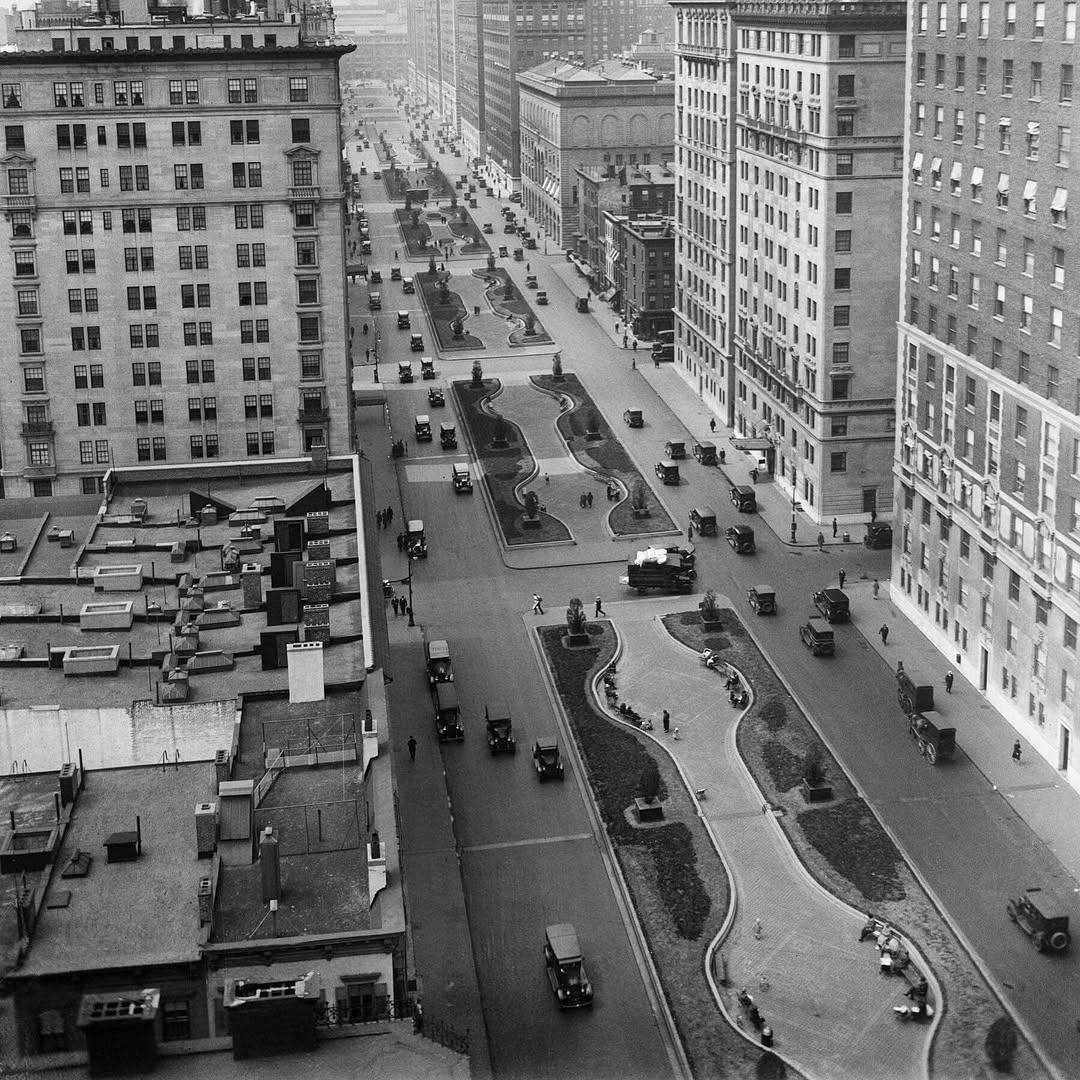
The photograph shows the new pedestrian zone on Park Avenue, which had just been redesigned in 1923–1924 after the New York Central Railroad tracks were covered with a concrete slab.
Before 1913, trains ran along Park Avenue in an open trench — noisy, dangerous, and dirty. After the completion of Grand Central Terminal, the railway tracks were made two-level and electrified, and then covered with a concrete deck. This is how modern Park Avenue came into being.
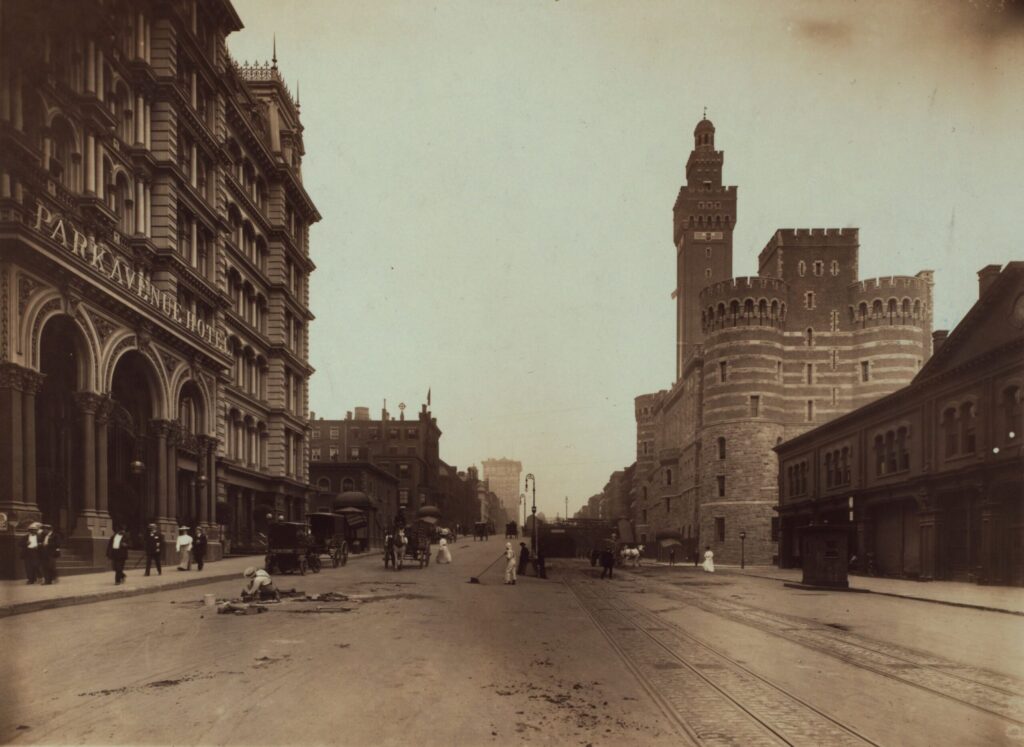
Interestingly, the promenade in the middle of Park Avenue was removed already by the late 1920s, giving in to the temptation to make the street as car-oriented as possible, which at the time was considered progressive. Today, the city is discussing options for partially restoring a wider, more pedestrian-friendly median as part of a new street reconstruction project.
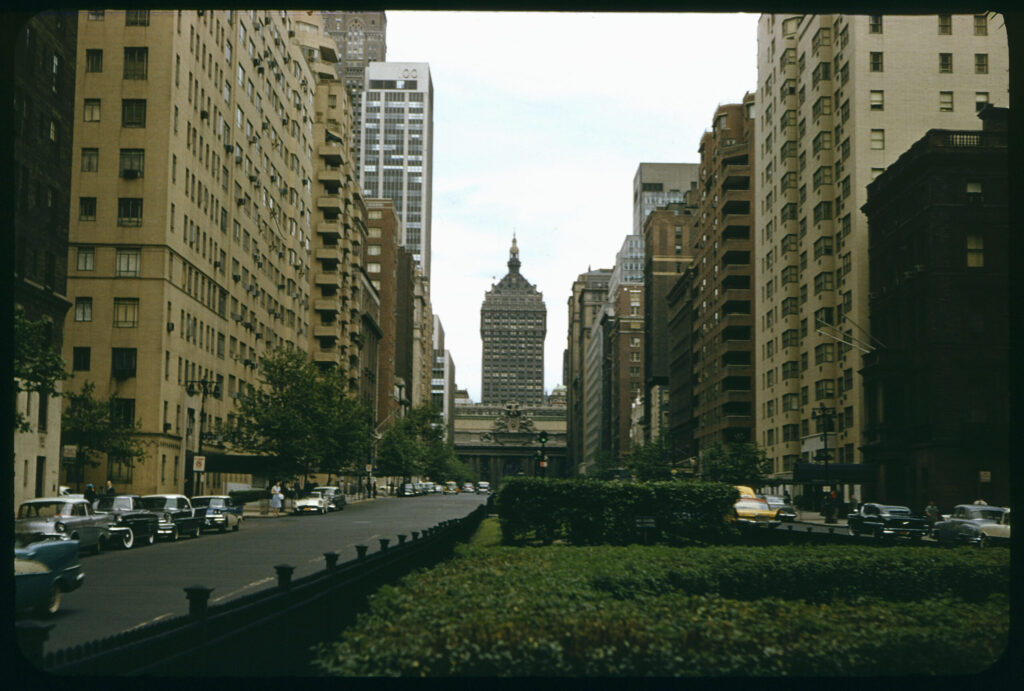
Despite strong competition from Fifth Avenue and the skyscrapers of Billionaires’ Row, Park Avenue is still considered one of the city’s most prestigious addresses — a place associated with old-money dynasties.
📍 Location: Park Avenue, New York