The story of the United States — and New York in particular — has been tied to immigration from the very beginning. And, paradoxically, to fierce battles between different groups of immigrants themselves.
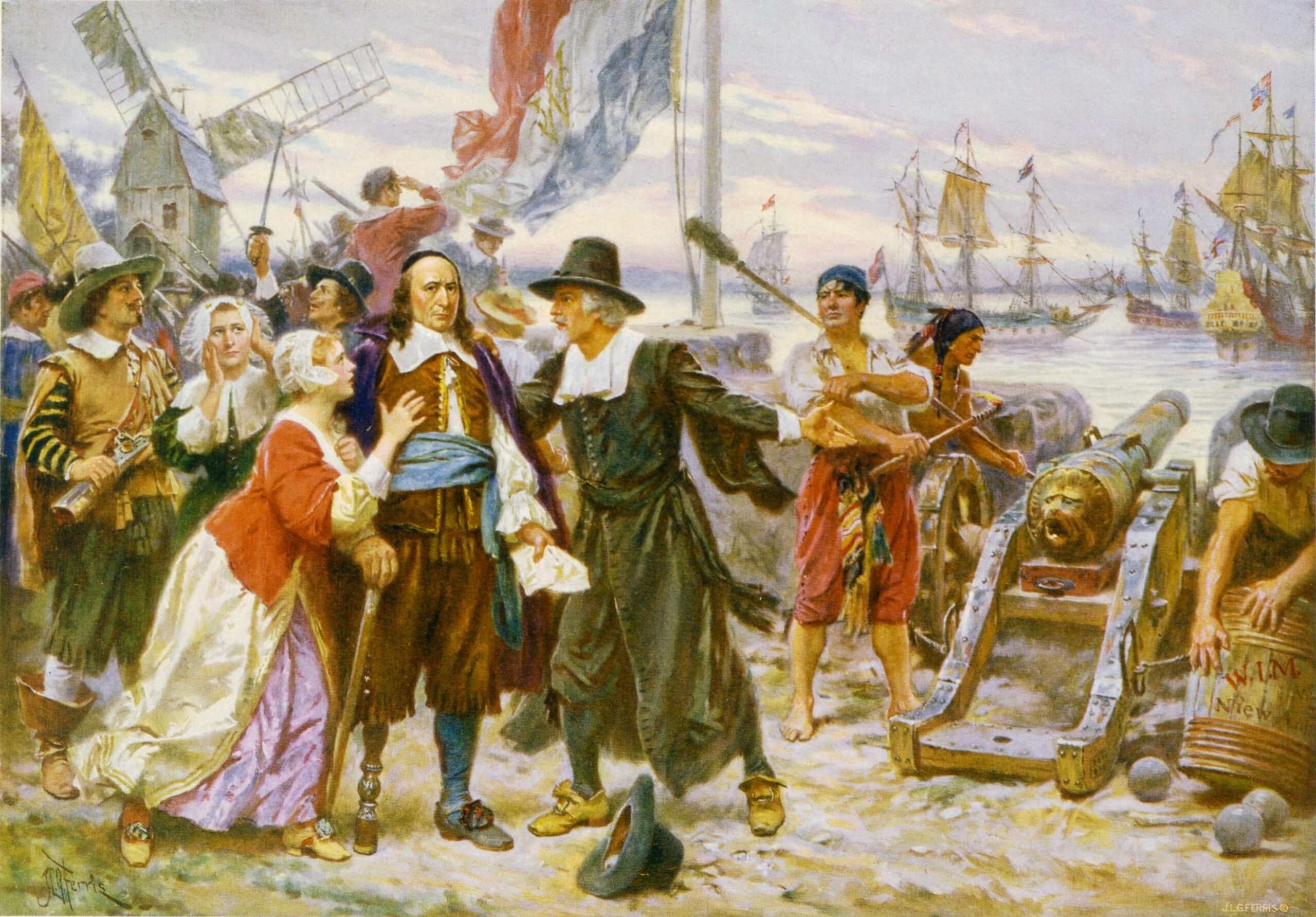
One of the earliest and most revealing episodes unfolded in the spring of 1654. A fairly ordinary merchant ship pulled into the harbor of New Amsterdam — ten years before it would become New York. On board were 23 Jewish refugees.
Their arrival surprised everyone: the tiny settlement and the passengers alike. They were fleeing Brazil, where Portugal had just regained control over parts of the territory, including the city of Recife. Along with Portuguese rule came the Inquisition — and with it, very real prospects of imprisonment, confiscation of property, and execution.
At first glance, this feels like the kind of story that should end on a hopeful note.
New Amsterdam at the time was a scrappy outpost at the edge of the known world: a few hundred houses, a wooden stockade where Wall Street now runs, and a foul-smelling port that already buzzed with dozens of languages. A rough-and-tumble trading hub.
But the local governor, Peter Stuyvesant, saw the newcomers not as an opportunity, but as a threat. He immediately wrote to the Netherlands, warning that these people would bring poverty, conflict, and religious strife. In his letters, Jews were described as dangerous and undesirable.
While the colony waited for a response from Europe, one of the arrivals — Asser Levy — decided not to wait quietly. He didn’t ask for pity or special treatment. His argument was strikingly modern: if Jews were required to pay taxes like everyone else, they were entitled to the same rights. And if they were denied full rights, the city had no moral ground to demand equal obligations.
Fortunately, for the Jewish settlers and for the future of New York, the reply from the Netherlands took a more pragmatic tone. The leadership of the Dutch West India Company acknowledged Stuyvesant’s concerns and was, in theory, open to limiting Jewish immigration. But they ultimately deemed such restrictions unreasonable and unjust, especially given the losses Jews had suffered in Brazil and their significant financial investments in the Company itself.
The compromise allowed Jews to live and trade in the colony, on the condition that members of their community who fell into poverty would be supported internally and not become a public burden.
That moment marks the beginning of the uninterrupted history of New York’s Jewish community — today the largest Jewish community outside of Israel.
What’s especially remarkable is that the community founded back then still exists. It’s known as Congregation Shearith Israel, and it also built the city’s very first synagogue (the original building, unfortunately, did not survive).
📍 Today, the congregation’s active synagogue is located at 2 W 70th St, New York, NY 10023