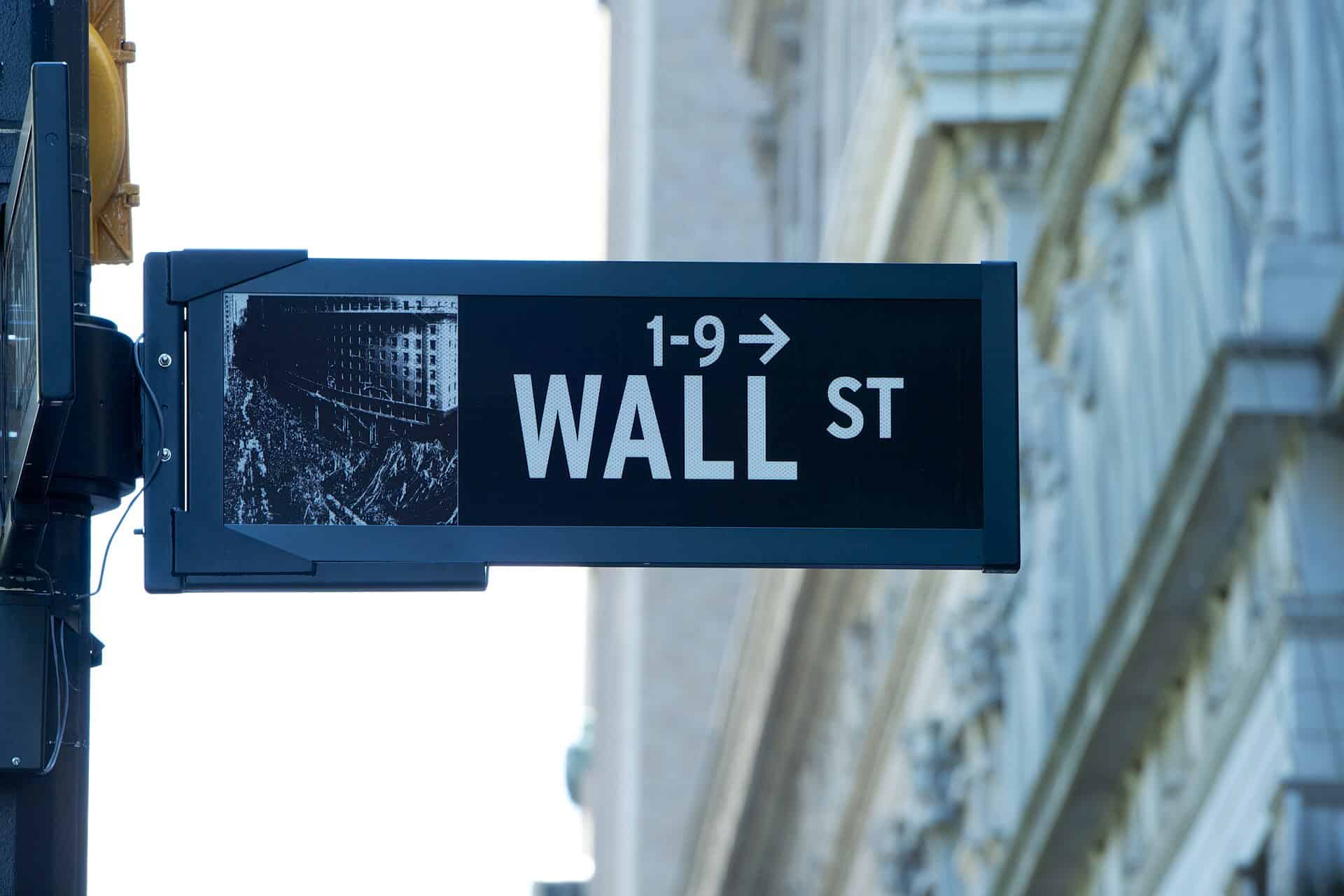
Many people know this street in New York thanks to the film The Wolf of Wall Street. It is on Wall Street that deals worth billions of dollars are most often made. This place has long become a synonym for global capitalism and one of the most photographed intersections in New York. If you come to New York and do not visit Wall Street, you can consider that you have not been to Manhattan.
Interesting facts about Wall Street in New York
- Despite the fact that Wall Street is a symbol of global capitalism, the street itself is very short. Walking it from Broadway to the end takes less than ten minutes.
- The street got its name from a wall, more precisely a wooden palisade, which Dutch colonists built in 1653 to protect against possible attacks by the British and Native Americans.
- In 1792, twenty-four brokers signed an agreement under a sycamore tree on Wall Street establishing rules for trading securities — the prototype of the New York Stock Exchange.
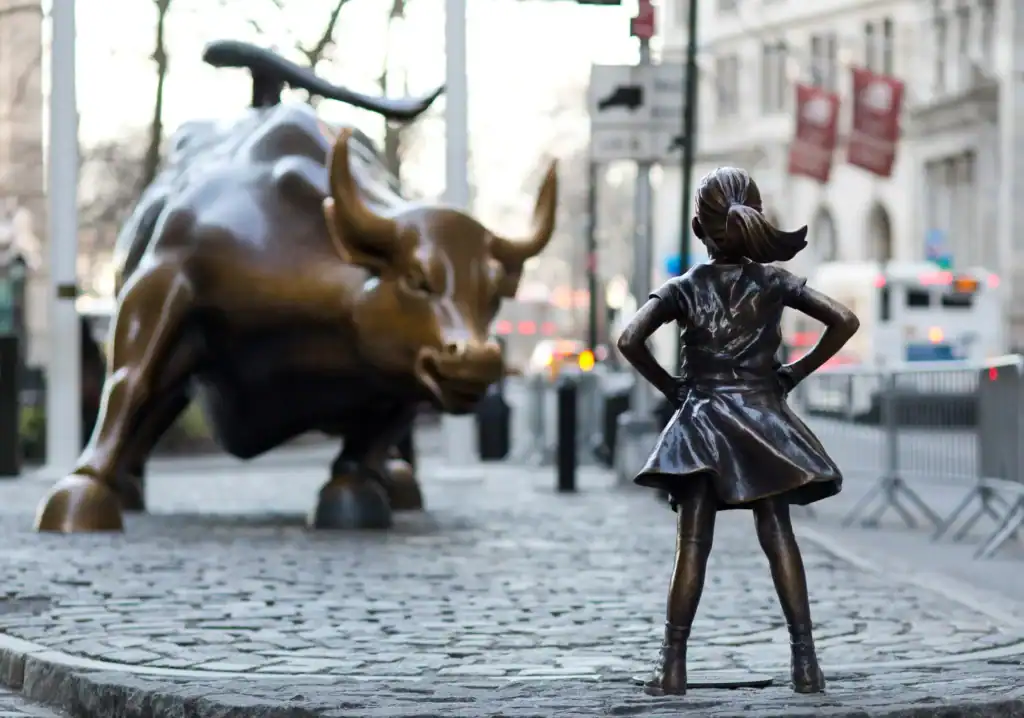
- The famous “Charging Bull” — a bronze sculpture near Bowling Green — appeared there without official permission. In 1989, artist Arturo Di Modica installed the bull overnight in front of the New York Stock Exchange building. The police removed it, but public outrage was so strong that the city returned the sculpture.
- Wall Street has given the world an entire layer of terms and expressions: “bulls and bears,” “blue chips,” “Black Tuesday,” “panic selling” — all originate here.
- In September 1920, a wagon exploded near the J. P. Morgan building at the corner of Wall Street and Broad Street. Thirty-eight people were killed. The marks are still visible on the building’s façade — they were intentionally left unrestored.
- Wall Street is a business district. On weekdays from 8:00 to 18:00 there is a dense flow of people in suits and tourists. On weekends it is almost empty and much easier to take photographs.
Where Wall Street is located
Wall Street is located in the Financial District — the southernmost part of Manhattan. The street runs from west to east: from Broadway to the East River, passing the New York Stock Exchange, Federal Hall, and the former J. P. Morgan building. Within just a few minutes on foot, you can reach Bowling Green with the Charging Bull, Battery Park, and the Staten Island Ferry terminal.
How to get to Wall Street
The subway is the easiest way:
- Lines 2 and 3 — Wall Street station directly on the street
- Lines 4 and 5 — Wall Street station with an exit to Broadway
- Lines J and Z — Broad Street station, right by the main entrance to the New York Stock Exchange
- Line 1 — Rector Street station, two minutes on foot
Main attractions of Wall Street
New York Stock Exchange
📍 11 Wall St, New York, NY 10005
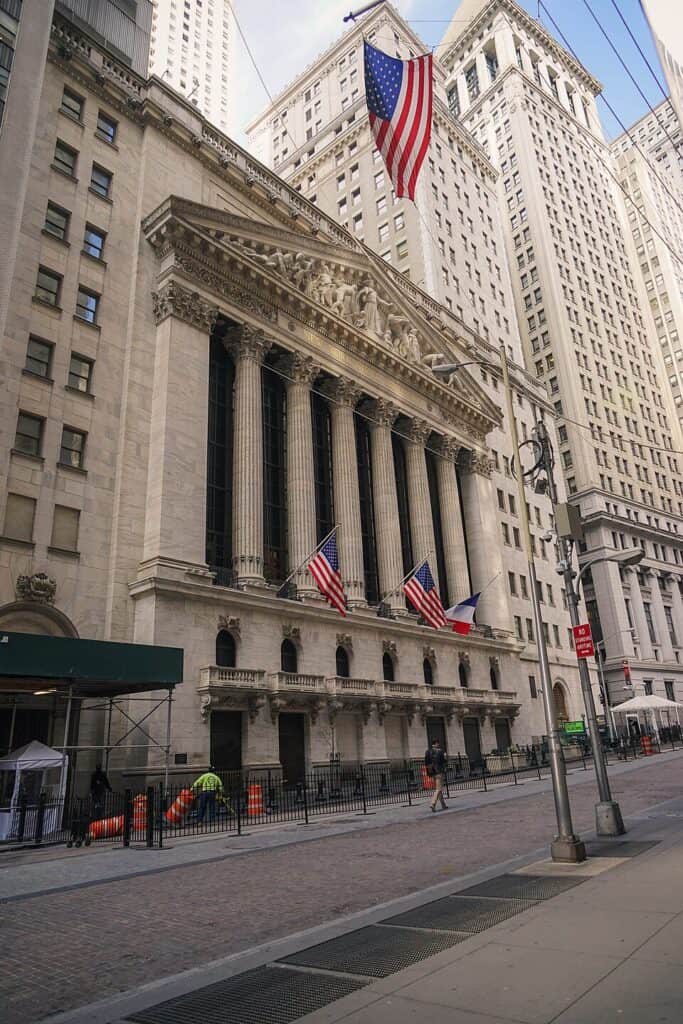
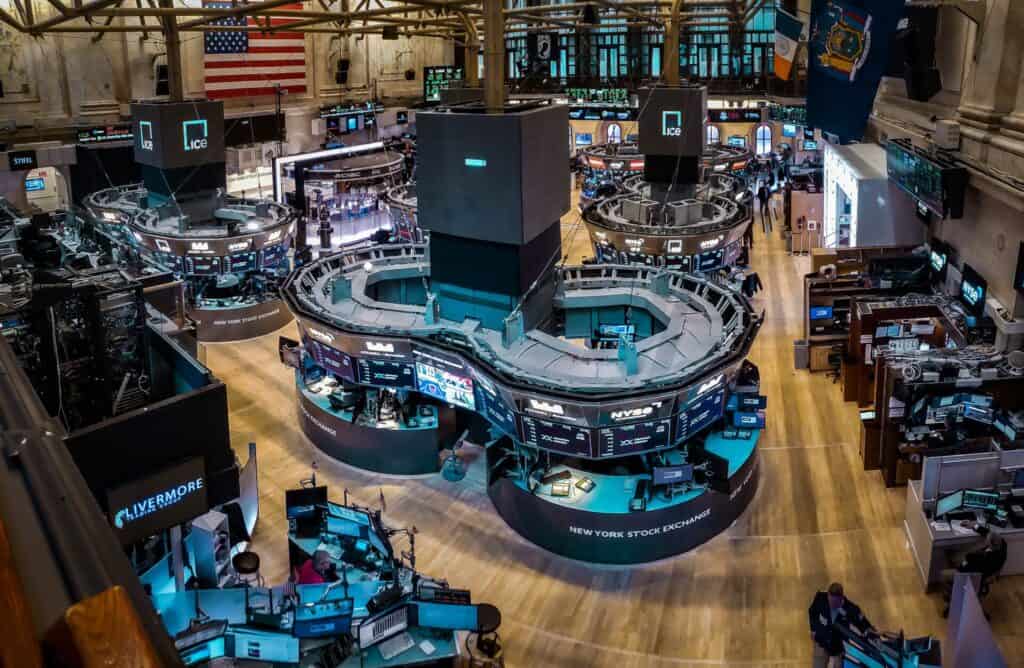
The exchange building with six columns and allegorical figures was built in 1903. Tourists are not allowed inside: the trading floor has been closed to the public since 2001 for security reasons. However, the exterior view is one of the most recognizable in New York, especially when a huge American flag is displayed on the façade during holidays.
Federal Hall
📍 26 Wall St, New York, NY 10005
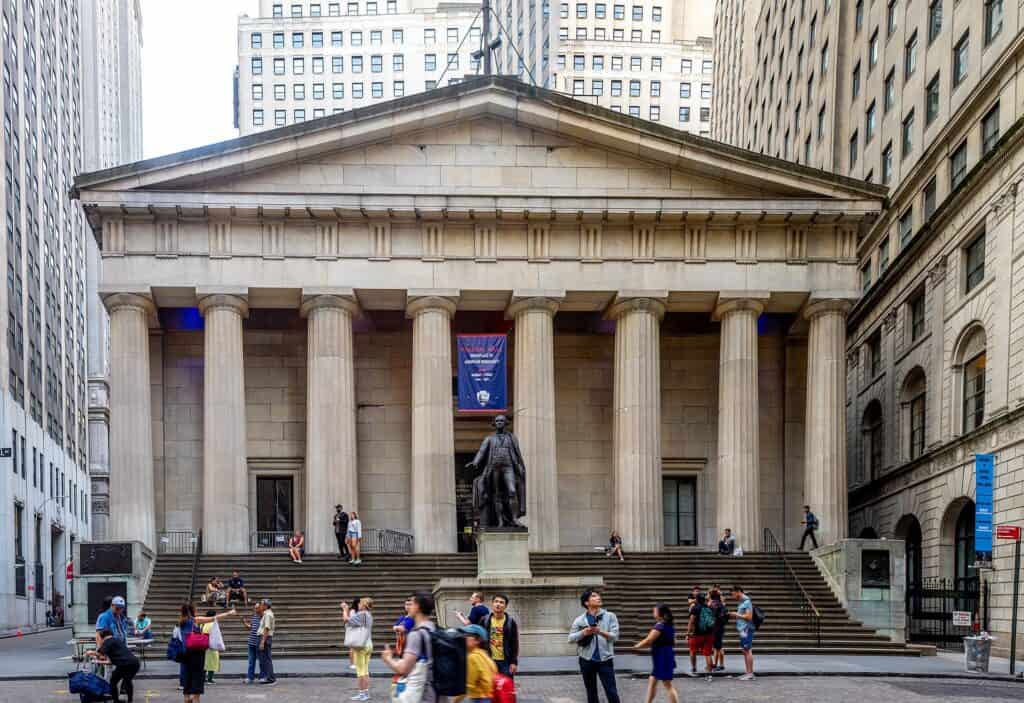
This is where the first President of the United States, George Washington, took the oath of office in 1789. Today, a Greek Revival building from 1842 stands on the site — formerly a customs house, now a national memorial. Admission is free, and inside there is a small exhibition about the history of American democracy. In front of the entrance stands a large bronze statue of Washington.
When Washington took the oath, the stock exchange building did not yet exist. At that time, New York was the capital of the United States for exactly one year, from 1789 to 1790, before it was moved to Philadelphia and later to the purpose-built city of Washington.
Charging Bull
📍 Bowling Green, New York, NY 10004
Officially, the bull is not on Wall Street, but slightly to the south near Bowling Green. However, everyone considers it a symbol of this place. Sculptor Arturo Di Modica created the bull at his own expense — 360,000 United States dollars — as a symbol of New York’s recovery after the stock market crash of 1987.
Fearless Girl
📍 2-26 Broad St, New York, NY 10005
In 2017, a small bronze girl with clenched fists appeared opposite the bull — as a challenge and a symbol of gender equality in the financial industry. Initially, she stood directly in front of the bull, but was later moved closer to the façade of the New York Stock Exchange. The author is sculptor Kristen Visbal. The statue became one of the most photographed objects in New York within just a few days after installation.
Trinity Church
📍 75 Broadway, New York, NY 10006
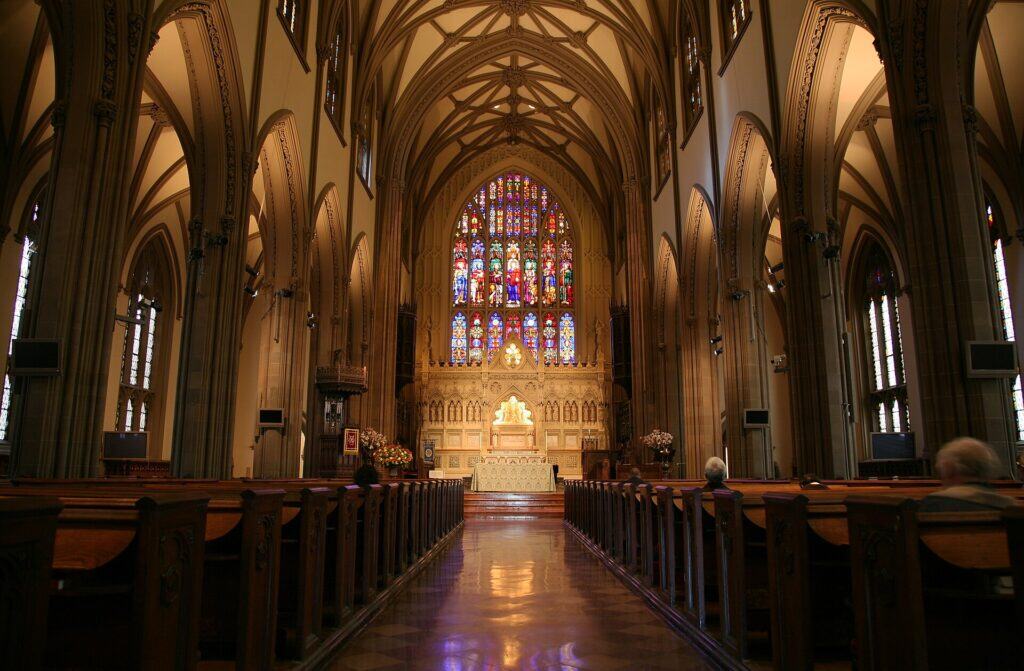
At the end of Wall Street, where it meets Broadway, stands a neo-Gothic church built in 1846. When it was completed, it was the tallest building in New York. Today it is surrounded by skyscrapers, and this contrast creates one of the best photo opportunities in the area. Alexander Hamilton, the first Secretary of the Treasury of the United States and a character in one of Broadway’s most successful musicals, is buried in the churchyard.
Wall Street in film and popular culture
Wall Street is one of the main cinematic locations in New York. Here are several films connected to it:
- Wall Street (1987, Oliver Stone) — Michael Douglas as Gordon Gekko delivers the legendary line “Greed is good.” The film shaped the image of Wall Street for decades.
- The Wolf of Wall Street (2013, Martin Scorsese) — Leonardo DiCaprio as Jordan Belfort. Based on the real story of a fraudulent broker. Filmed partly in New York and partly in New Jersey.
- The Dark Knight Rises (2012) — scenes involving Wall Street were filmed partly here and partly in Pittsburgh.
- American Psycho (2000) — Patrick Bateman works in this district, although most filming took place in Toronto.
A brief history of Wall Street in New York
Lower Manhattan is the oldest part of New York. The Dutch founded New Amsterdam here in 1626. Wall Street originally appeared as a boundary — the wall separated the colony from the rest of the island.
In the eighteenth and nineteenth centuries, the first banks began to appear here. By the early twentieth century, Lower Manhattan was more densely built with skyscrapers than anywhere else on the planet.
Today, some financial companies have moved to Midtown — closer to Central Park and residential areas. However, the New York Stock Exchange, major banks, and investment funds remain here.
Visitor information
Best time to visit: weekday mornings before 9:00 (before the crowds) or weekends (quiet and almost empty).
Food: the Financial District has many cafés and coffee shops catering to office workers. Prices are generally lower than in Midtown.
Time needed: about two hours to see everything at a relaxed pace.
Free: the exterior of the New York Stock Exchange, the Washington statue, the Charging Bull, the Fearless Girl, and the exterior of Trinity Church. Admission to Federal Hall is also free.