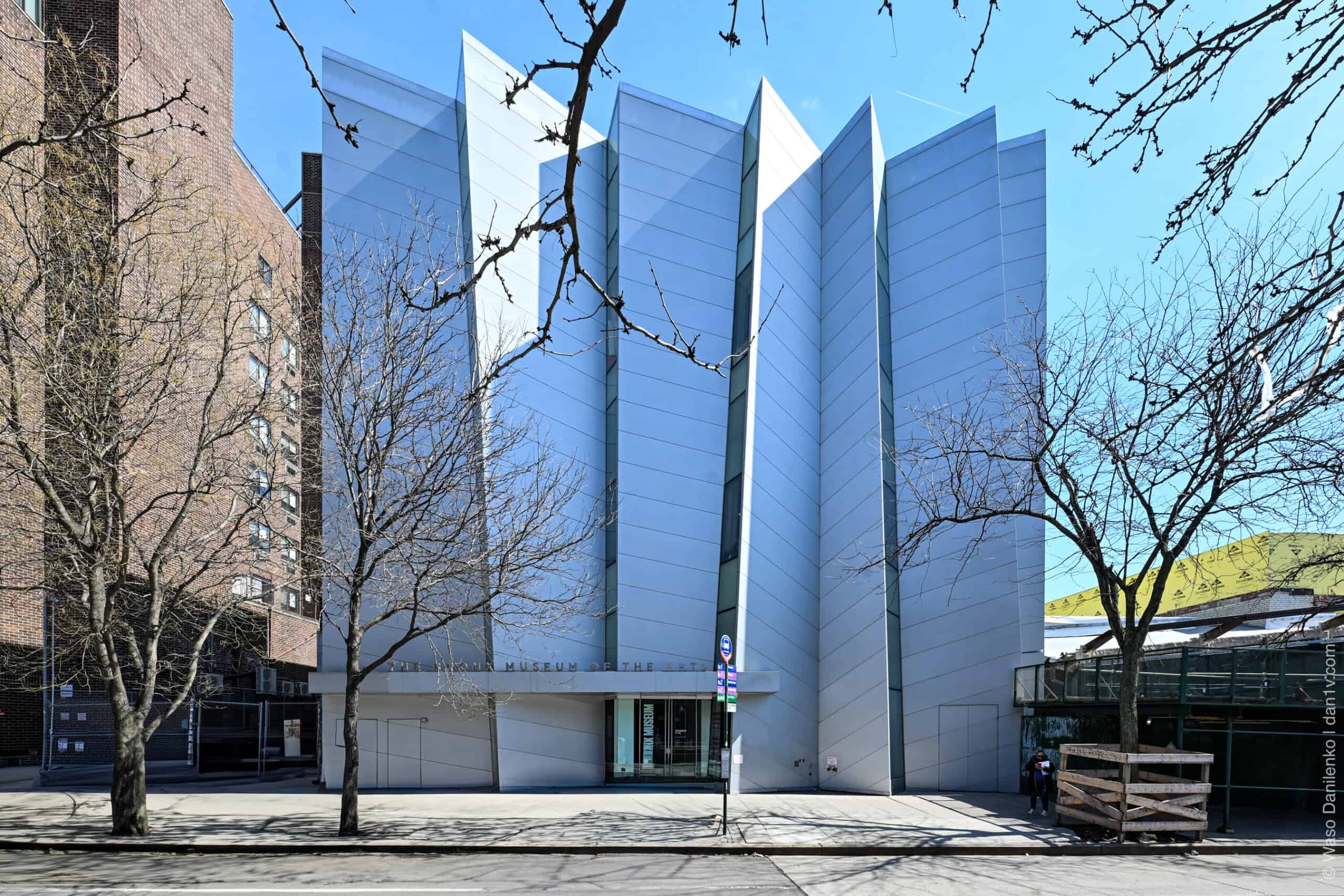
The Bronx Museum of the Arts is the only contemporary art museum in New York City with free admission year-round. It is located on the Grand Concourse in the South Bronx, just a short walk from Yankee Stadium, yet it remains one of the city’s most underrated cultural institutions.
Key facts about the Bronx Museum of the Arts in New York
- In 2012, the museum eliminated admission fees entirely — after which attendance quadrupled.
- Founded in 1971 in partnership with the Metropolitan Museum of Art — the first exhibition featured 28 paintings borrowed from the Met.
- In 1982, the city purchased and transferred to the museum the former Young Israel of the Concourse synagogue building on the Grand Concourse, where it remains today.
- The synagogue was built between 1959 and 1961 and designed by Ukrainian-born architect Simon Zelnick.
- In 2006, a new North Wing opened — a glass-and-aluminum structure shaped like an accordion, designed by the Miami-based firm Arquitectonica.
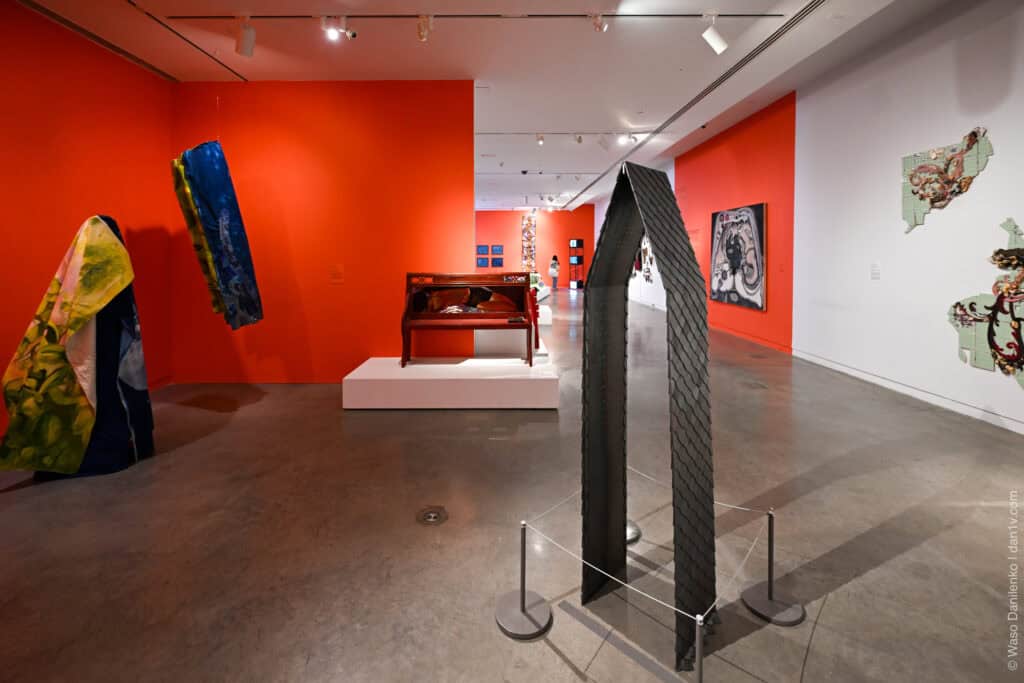
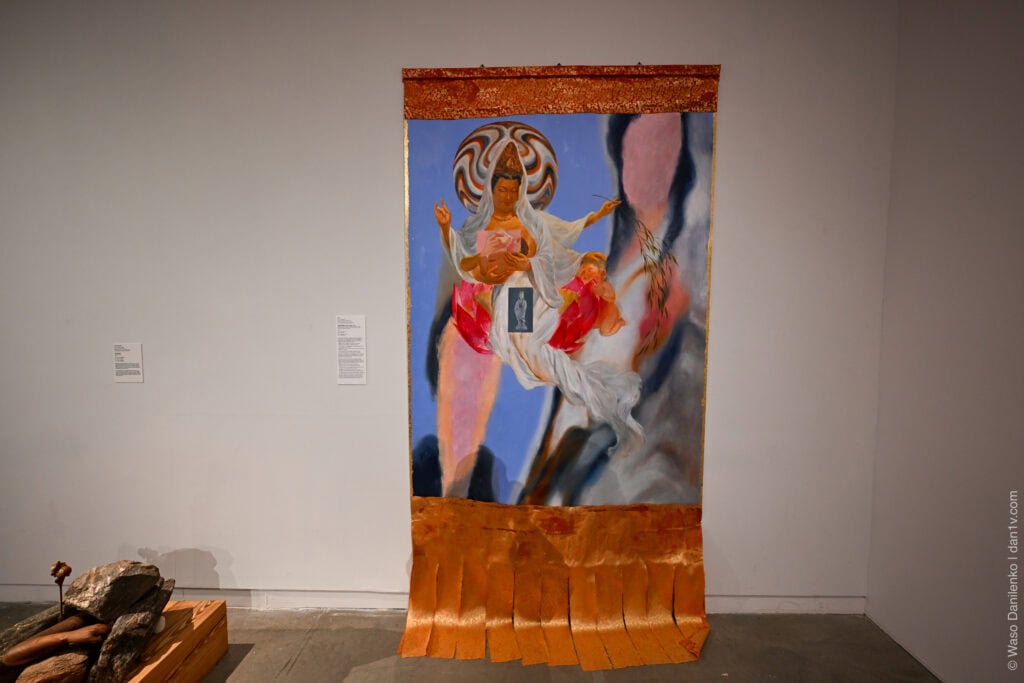
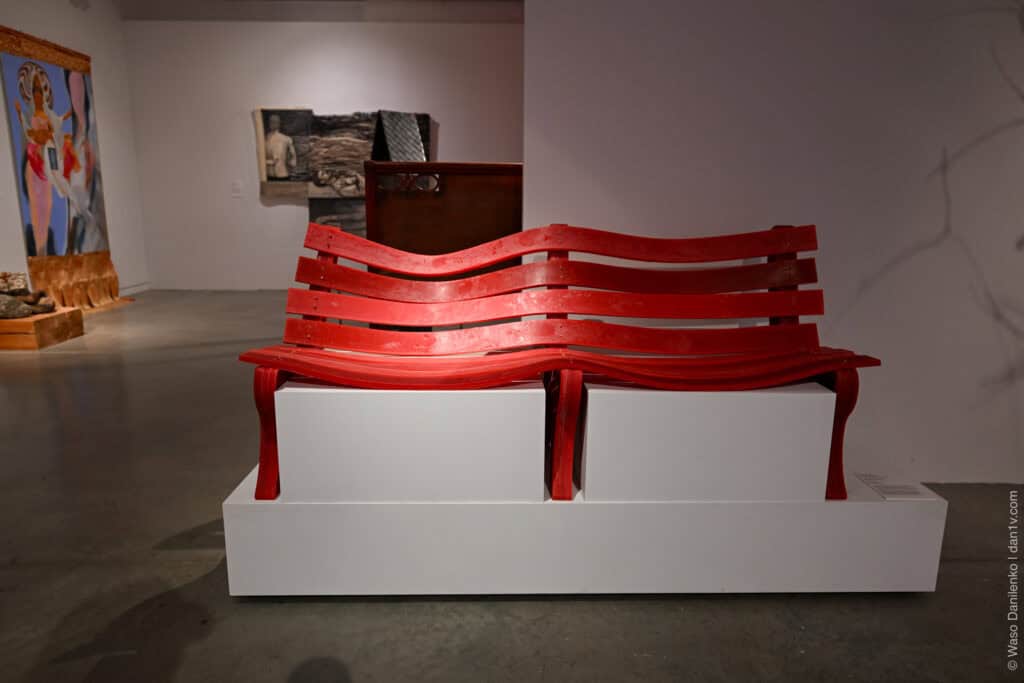
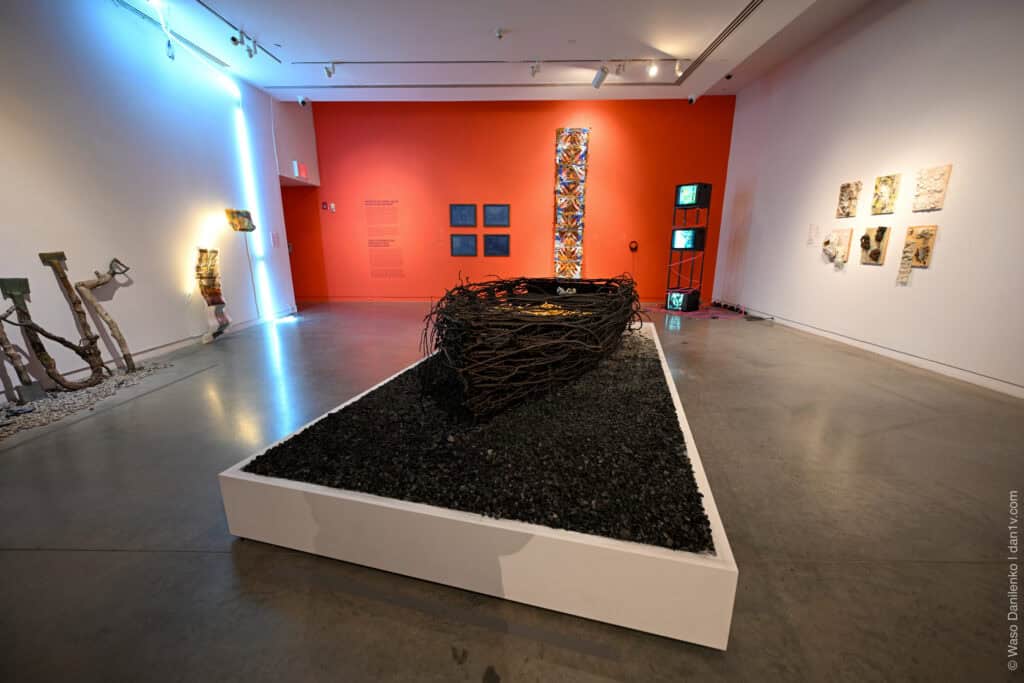
- The permanent collection includes over 2,000 works: painting, sculpture, photography, and works on paper, with a focus on artists of African, Latin American, and Asian descent.
- In 2013, the museum represented the United States at the Venice Biennale.
- Since July 2024, a $33 million renovation by Marvel Architects has been underway, with completion expected in 2026.

Collection and programs of the Bronx Museum
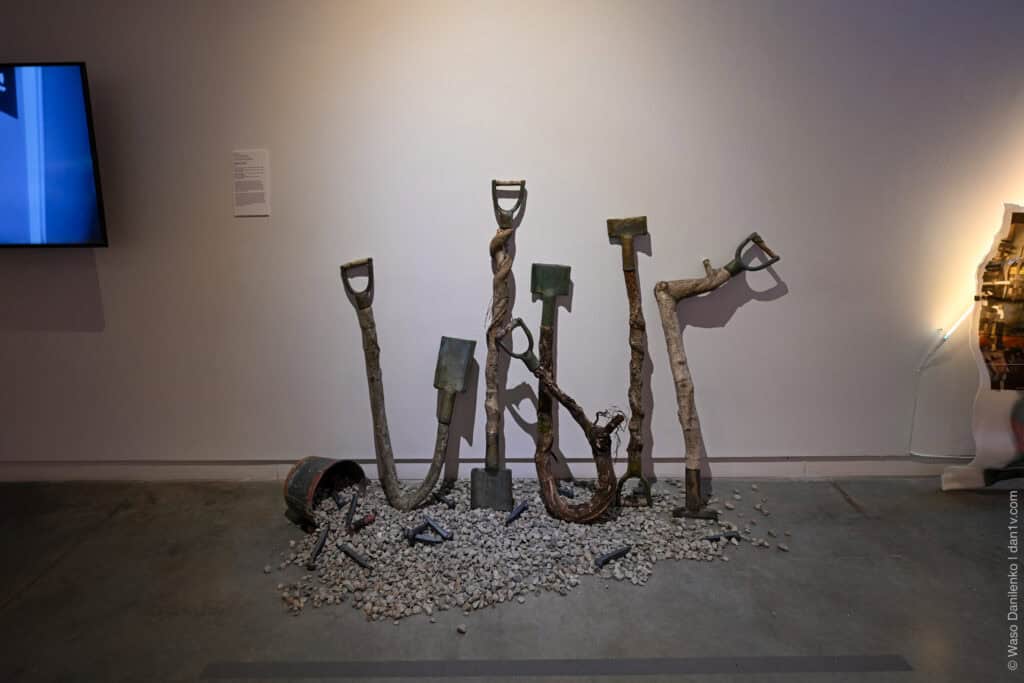
The Bronx Museum’s permanent collection includes more than 2,000 works — paintings, sculptures, photographs, and prints. The focus is on artists of African, Latin American, and Asian descent, as well as those for whom the Bronx played a key role in their artistic development.
The museum built its collection almost from scratch — without initial capital or major donations. For many years, its annual acquisitions budget ranged from $10,000 to $50,000 — tiny by New York art market standards. In 2013, the museum established a dedicated $1 million fund to acquire works by contemporary artists connected to the Bronx.

The Bronx Museum as a launchpad for artists
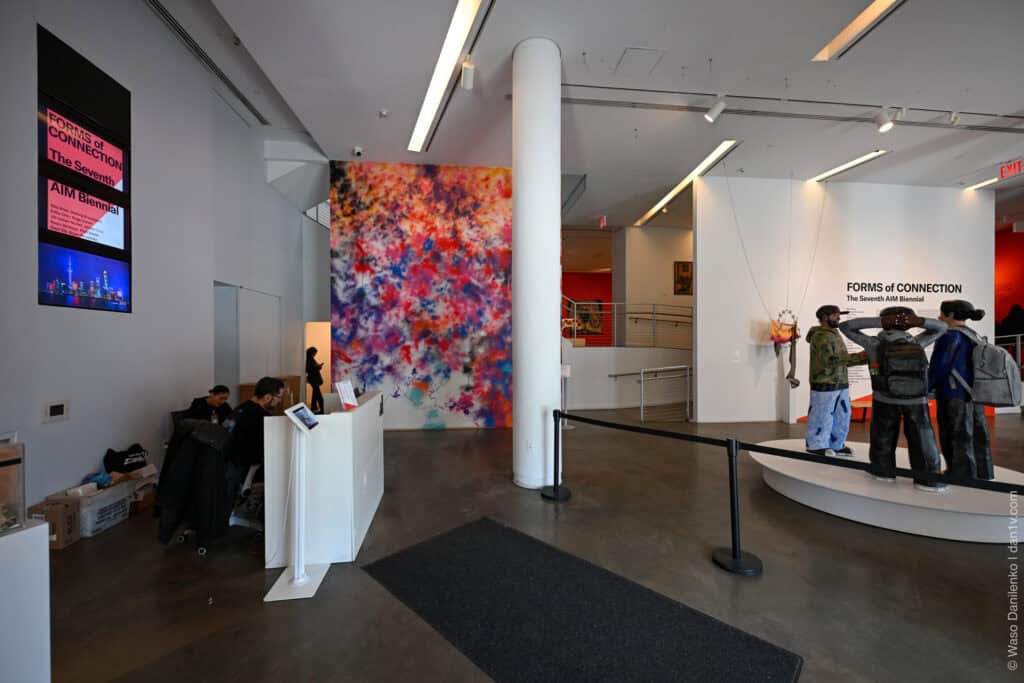
One of the museum’s most notable programs is AIM (Artist in the Marketplace), a free career accelerator for emerging New York artists.
Each cycle: 14 artists selected through an open call participate in 34 weekly seminars, each lasting two hours. Sessions are led by art industry professionals — gallerists, curators, and collectors. The program runs for nine months and concludes with a public exhibition of participants’ work at the museum.
AIM is a rare example of a program specifically designed to support artists from historically marginalized communities, giving them access to networks and knowledge that would otherwise be difficult to obtain.

Architecture of the Bronx Museum
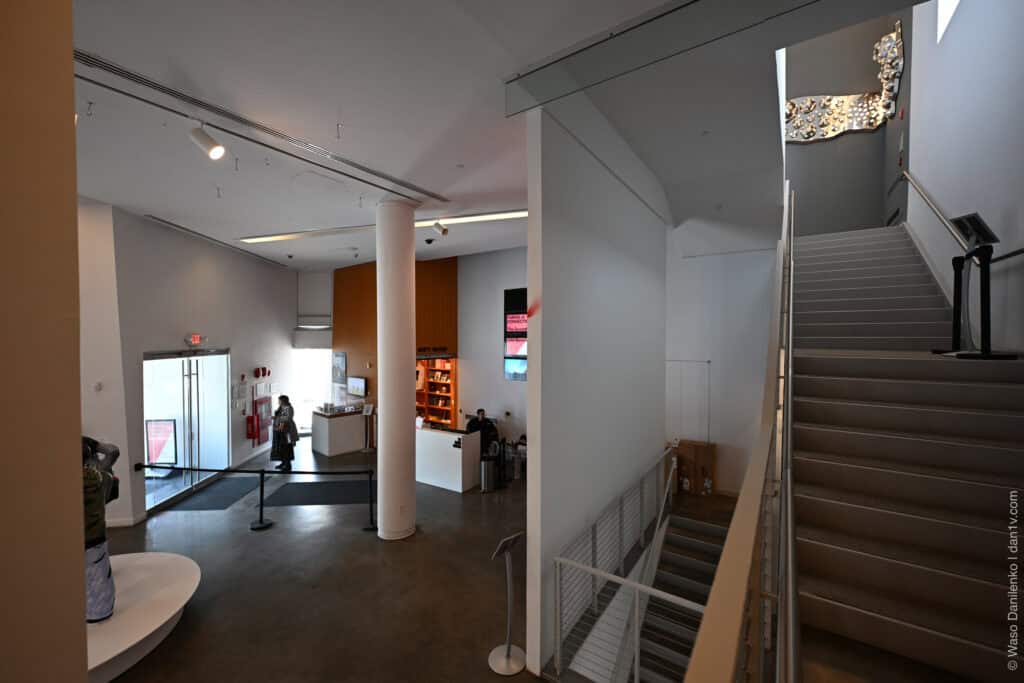
The museum building is a visible timeline of its history, layered in three architectural phases. The foundation is the former Young Israel of the Concourse synagogue, built in 1961.
A modest mid-20th-century brick structure, it is devoid of grandeur or pretension. When architects Castro-Blanco, Piscioneri & Feder added the first expansion with a glass atrium in 1988, New York Times critic Nicolai Ouroussoff later described the result as “awkward” and reminiscent of a suburban shopping mall.
The 2006 North Wing is the complete opposite. Arquitectonica designed a three-story façade composed of seven vertical aluminum panels connected by frosted glass.

From the outside, it resembles a giant accordion or paper fan. The side walls are clad in black-and-white brick with geometric patterns — a reference to residential facades and the Art Deco architecture of the Grand Concourse.
Arquitectonica also incorporated a clever feature: the side walls were designed to be removable in case of future expansion, which would involve demolishing the old synagogue building and replacing it with a residential tower. These plans have not yet been realized.
The 2024–2026 renovation by Marvel Architects will unify all structures into a single campus. Plans include a new triple-height entrance, copper-bronze façade panels echoing the North Wing, and large street-facing display windows allowing artworks to be visible directly from the sidewalk.

History of the Bronx Museum
The early 1970s were among the worst periods in the Bronx’s history. The borough was hit by waves of arson and mass outmigration: landlords burned their own properties for insurance payouts, and entire neighborhoods fell into ruin. At that moment, a group of local activists and members of the Bronx Council on the Arts decided the area needed a museum.
On May 11, 1971 — “Bronx Day,” the borough’s annual celebration — the museum opened in the Bronx County Courthouse. It had no collection: the first exhibition consisted of 28 paintings borrowed from the Metropolitan Museum of Art.
In its first 12 years, the museum held more than 350 exhibitions despite lacking a permanent home or substantial funding. Galleries operated across several Bronx neighborhoods, including Co-op City, Bedford Park, and Allerton. One venue was even located inside Beth Abraham Hospital.
In 1982, the city purchased and transferred the former Young Israel of the Concourse synagogue building to the museum. The new space opened in May 1983 — again during “Bronx Week” — with an exhibition of 20th-century works, once more borrowed from the Met.

Venice Biennale: the Bronx Museum representing the United States
In 2013, the Bronx Museum won the competition to represent the United States at the 55th Venice Biennale — one of the world’s most important art events. For a small, borough-based museum, this was an unprecedented breakthrough.
The museum selected artist Sarah Sze and her installation Triple Point — a large-scale construction made from everyday objects: toothpicks, plastic bottles, lamps, threads, fans, and stones. Sze transformed the space of the U.S. Pavilion in Venice, creating the illusion of architectural change without altering the building itself.
A critic from The Guardian called the installation one of the best national pavilions of the Biennale. Later, part of the work — Triple Point (Planetarium) — was shown at the Bronx Museum, allowing South Bronx residents to experience what had previously been seen in Venice.

Practical information
📍 The Bronx Museum of the Arts / 1040 Grand Concourse, Bronx, NY 10456
Subway: B and D trains to 167th Street (2-minute walk) or 4 train to 161st Street–Yankee Stadium, then a 10-minute walk north
Hours: Wednesday–Sunday, 11 AM–6 PM (Thursday until 8 PM)
Website: bronxmuseum.org
Admission: Free