Apple has announced its annual presentation, and there is a 99 percent probability that a new iPhone will be introduced — possibly the iPhone 17 or even the iPhone 20.
When people think of Apple, they immediately recall the iconic flagship store on Fifth Avenue in New York City with its famous glass cube. But what stood on this site before the Apple Store opened?
Savoy Plaza Hotel
The Savoy Plaza Hotel was a legendary New York City hotel that occupied the southeast corner of Fifth Avenue and 59th Street from 1927 to 1965.
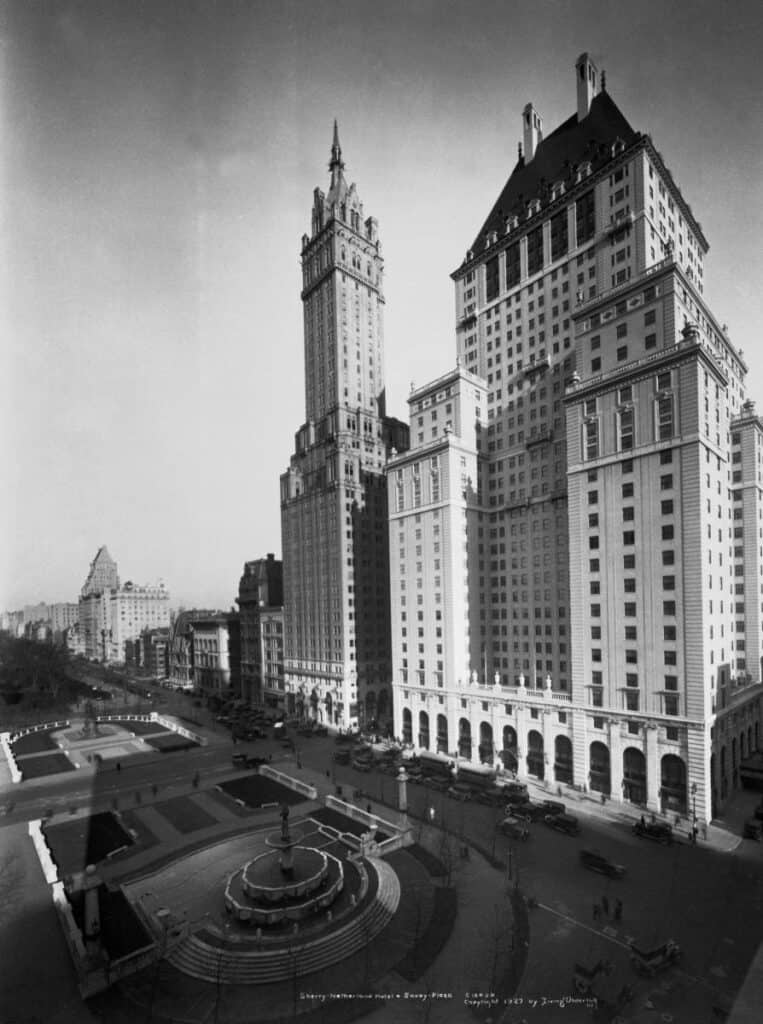
It was built on the site of the earlier Hotel Savoy from 1892 and opened on October 1, 1927, designed by the renowned architectural firm McKim, Mead and White. The 33 story building, 130 meters tall, immediately became one of the most prestigious hotels in the city, embodying the elegance and ambition of early twentieth century New York.
McKim, Mead and White was one of the most important architectural firms in the United States at the turn of the nineteenth and twentieth centuries. Founded in 1879 in New York City by Charles McKim, William Mead, and Stanford White, the firm became famous for large scale projects in the Beaux Arts and Neoclassical styles. Their works included iconic buildings such as the original Pennsylvania Station in New York City, the Brooklyn Museum, the main campus of Columbia University, the Boston Public Library, and many others. According to Robert Stern, only Frank Lloyd Wright was more influential in shaping the identity and character of modern American architecture.
For many years, the hotel penthouse was occupied by Adolph Zukor, the founder of Paramount Pictures, and “Zukor’s rooftop chateau” became a subject of urban legend thanks to its unique roof and views of the park.
In 1958, the hotel was acquired by Hilton Hotels and renamed The Savoy Hilton, becoming part of a well known international hotel chain. However, in 1964, it was announced that the building would be demolished to make way for a new office skyscraper for General Motors.
General Motors Building
Despite loud protests and boycott campaigns from preservationists and admirers of classical architecture, New York City gained a symbol of transformation — a shift from the elegant hotel era to the age of corporate glass towers.
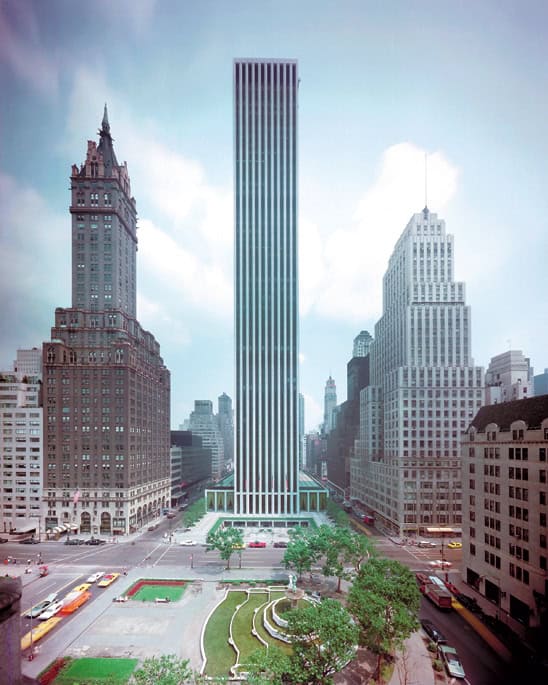
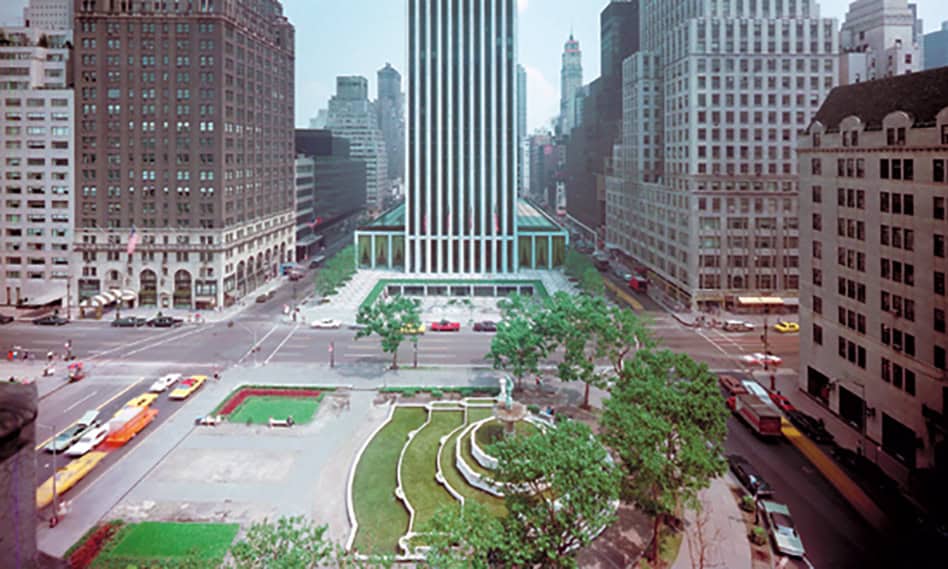
In 1968, construction was completed on the 50 story General Motors Building, one of the tallest and largest office buildings on Fifth Avenue at the time.
The skyscraper was designed by Edward Durell Stone in the International Style, which dominated corporate architecture in the United States in the mid twentieth century. What now seems familiar — a simple rectangular tower emphasizing volume rather than mass — was then a relatively new approach. The façade was completely free of ornament, classical details, or historical elements, following the principle of functionality over form.
Edward Durell Stone (1902–1978) was a prominent American architect and one of the early adopters of the International Style in the United States. He designed projects such as the John F. Kennedy Center for the Performing Arts in Washington, the PepsiCo headquarters in Purchase, and Saint Peter’s Church in New York City. His name appeared on the cover of Time magazine, and his work was popular among politicians and corporations. His style represented a transitional phase from strict International Style to more decorative and expressive architecture.
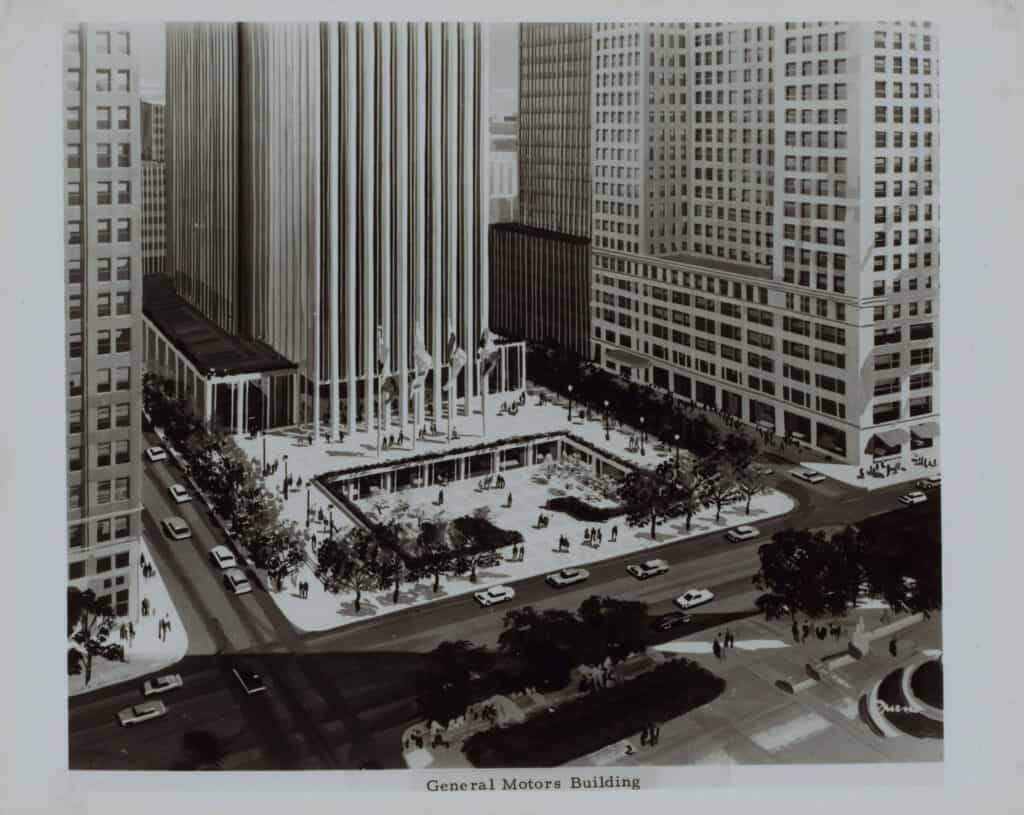
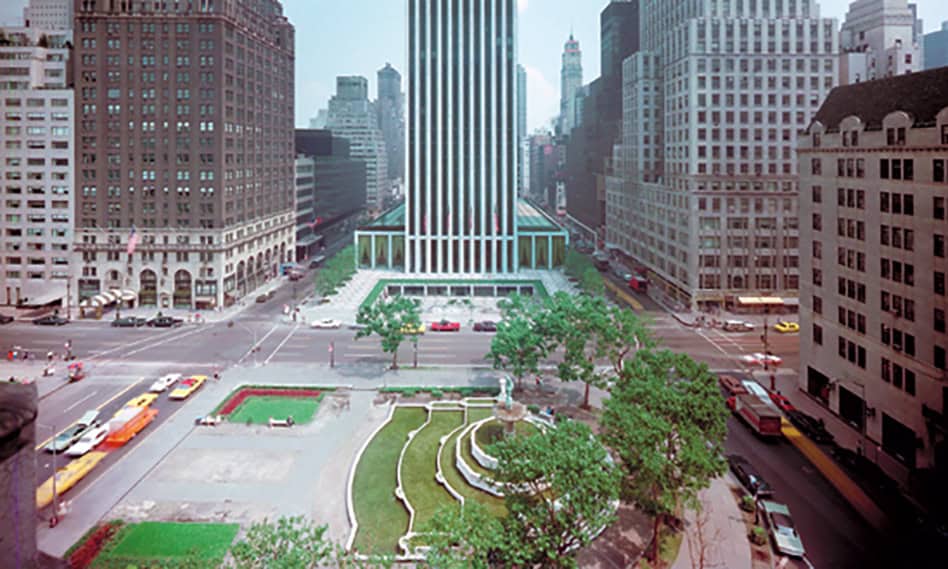
Thanks to the New York City Zoning Law of 1961, the developer, in exchange for additional building height and floor area, was required to create a public space. This led to the creation of the General Motors Building Plaza.
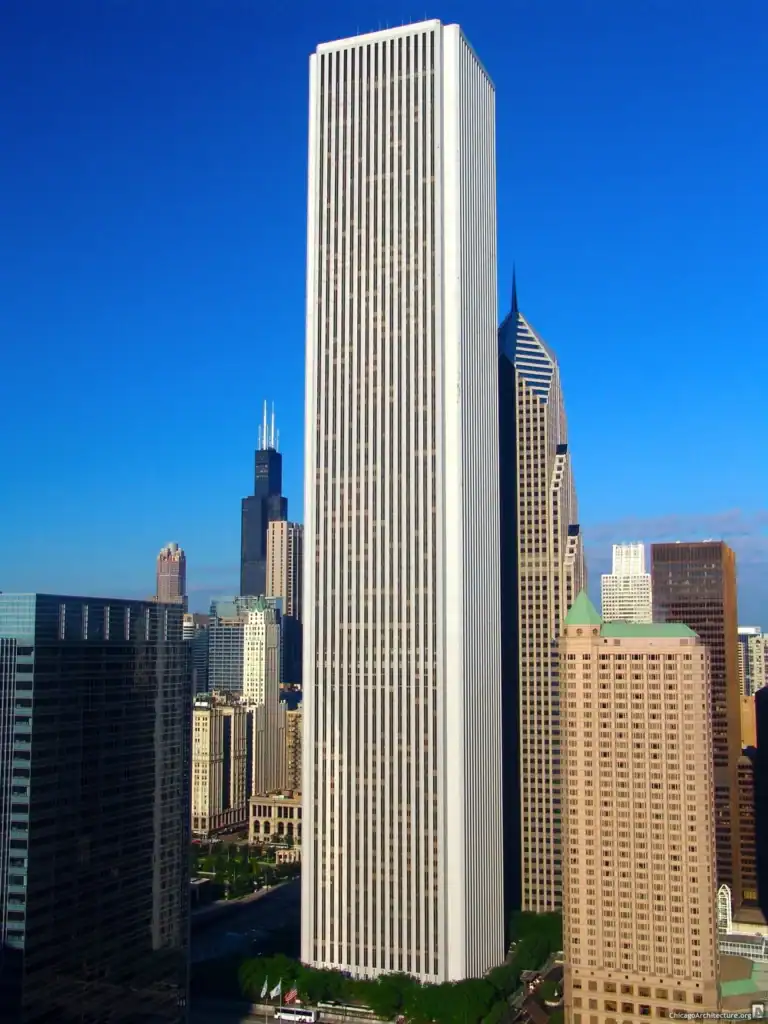
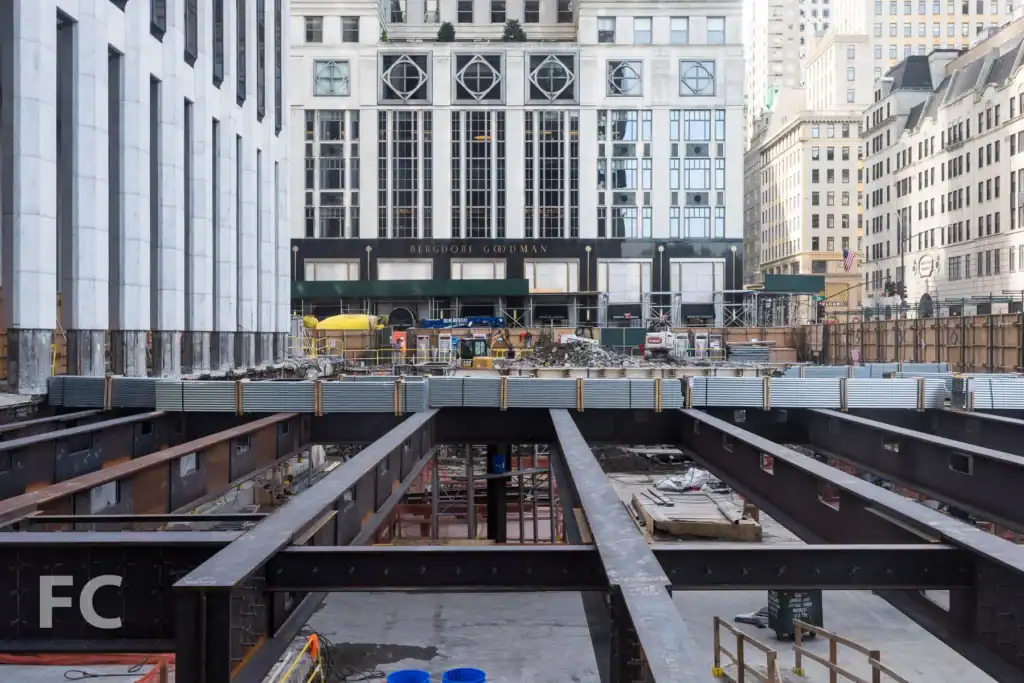
The plaza was a rectangular space set below street level, accessed by descending stairs, resembling a sunken courtyard. Although intended as a place for rest and pedestrians, it quickly gained a reputation as an uncomfortable and largely empty space. The lack of sunlight, shadows cast by the skyscraper, strong winds, and isolation from the active city environment made it unpopular.
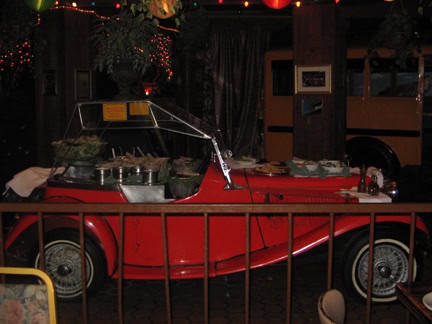
Even the presence of the Auto Pub restaurant did not help. Visitors could sit inside old cars, and the entire design followed an automotive theme, including a bar called Pit Stop. A restaurant critic from The New York Times described it as “shamefully tasteless” with “cold frozen peas without butter” and “bland vichyssoise resembling an industrial product.”
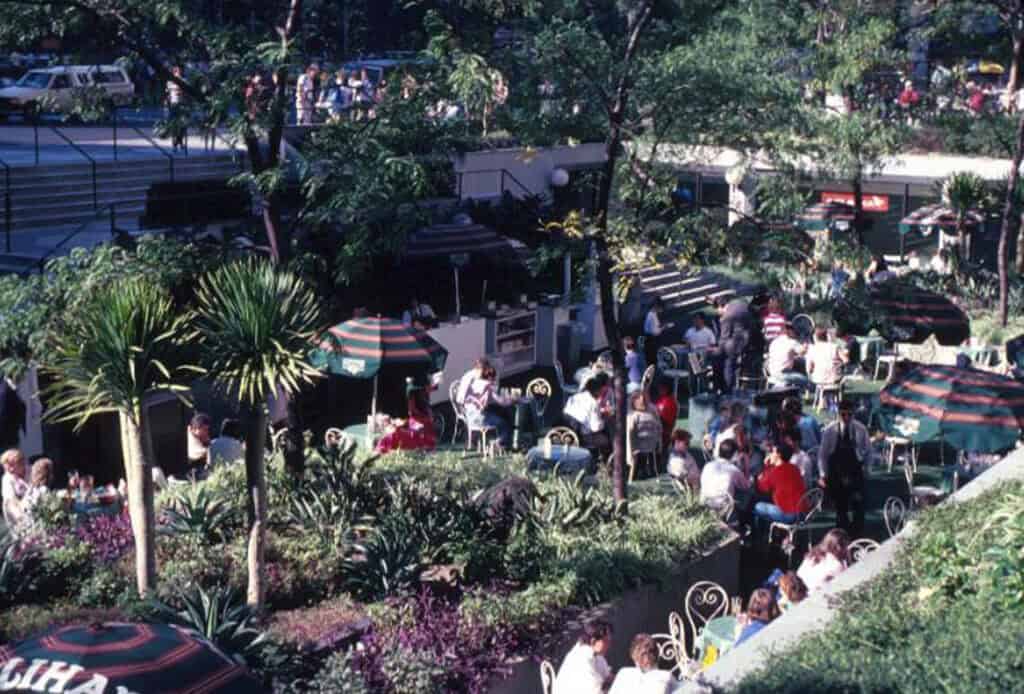
In 1971, the guidebook The Cue Guide to Dining in New York called it “one of the most physically intriguing places in New York.” That same year, Forbes noted: “arrows, road signs, and maps are everywhere.”
Visitors could admire the latest models of Chevrolet, Buick, Pontiac, and Cadillac in the General Motors showrooms above, and then go downstairs to the Autopub restaurant complex to sit at tables made from the stripped bodies of new and vintage cars.

Owner Donald Trump
In 1998, the building was acquired by Donald Trump together with the financial and insurance company Conseco Incorporated. The plaza was renamed Trump International Plaza, and large gold letters spelling T R U M P were added to the building.
The General Motors showroom, where new cars had been displayed for decades, was removed and replaced by a television studio with street facing windows for the CBS program The Early Show. Inside the plaza, the restaurant Houlihan’s began operating.
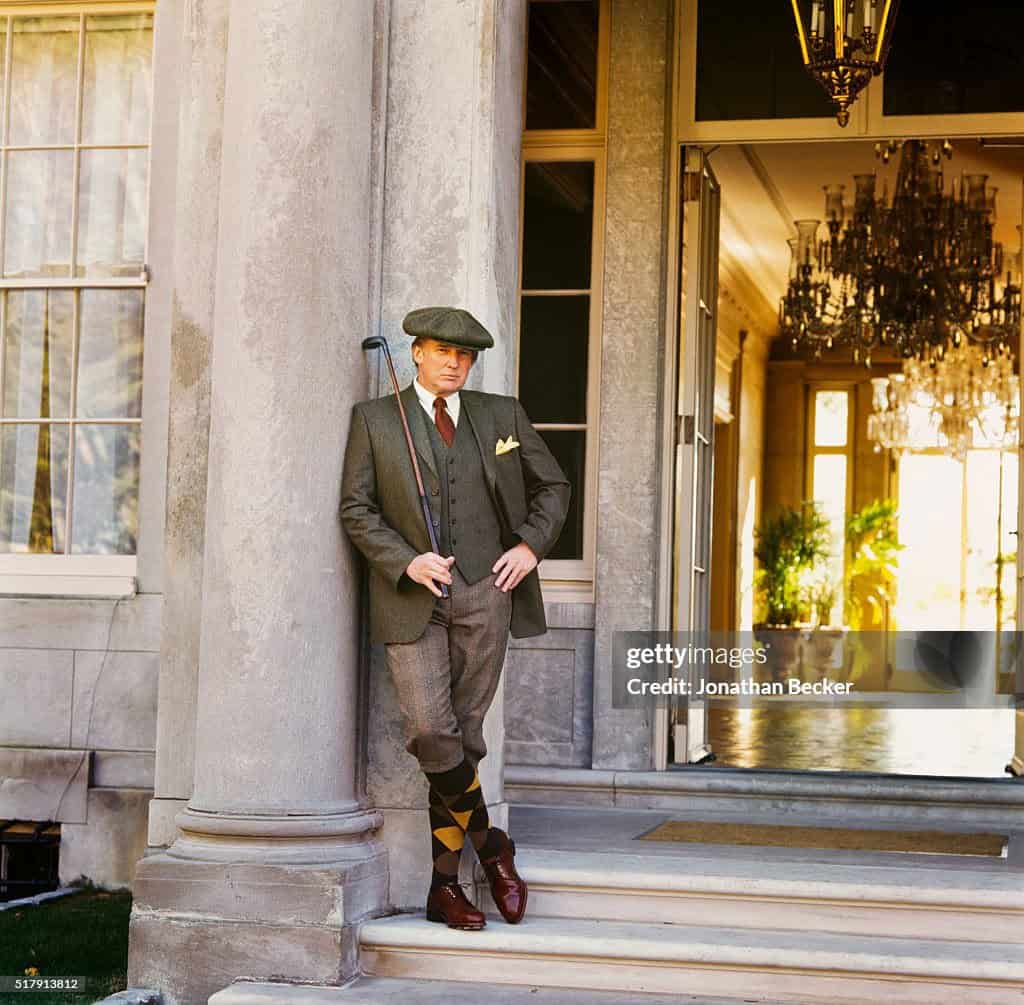
By mid 2000, Conseco wanted to exit the partnership. A long negotiated buyout deal, which Trump worked on during the summer of 2001, collapsed after the September 11 attacks. Trump claimed that Conseco derailed the deal by introducing new demands.
Then, as if following a script from The Art of the Deal, Conseco itself attempted to buy out Trump’s share.
In 2003, Conseco sold the building for 1.4 billion dollars to developer Harry B. Macklowe. At that time, it was the highest price ever paid for an office building in North America.
That same year, the new owner decided to radically transform the plaza, investing 150 million dollars into its redevelopment and proposing the construction of a flagship Apple Store. Steve Jobs immediately responded with the concept of a glass cube that would symbolize a new life for the previously underused space.
For Jobs, the cube was a special form. One can recall his earlier projects such as the NeXT Cube and the Power Mac G4 Cube. Minimalism, simplicity, and transparency — everything he valued in design.
The Apple Store on Fifth Avenue
In May 2006, New York City gained a new symbol — the glass cube Apple Store on Fifth Avenue. On opening day, a line stretched for an entire block along the sidewalk opposite The Plaza Hotel and Central Park. Fans camped overnight outdoors just to be among the first to enter the store, which is located underground. Above ground, only the cube remained — transparent and glowing in the evening light, like a fragment of a modern temple.
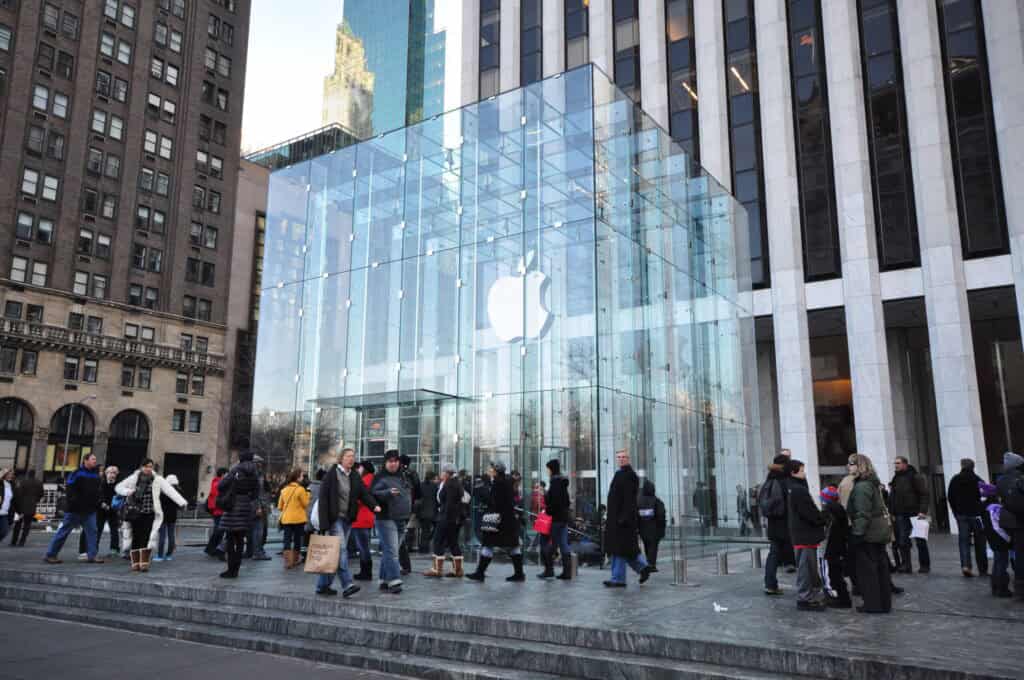
For Steve Jobs, this was not just another retail space, but a demonstration of Apple’s philosophy: simplicity, transparency, and a clear form taken to its absolute limit.
The store was the second Apple Store in New York City and the 147th in the world, but it became legendary. Operating twenty four hours a day, seven days a week, without holidays, Apple Store Fifth Avenue quickly became a tourist attraction comparable to the Empire State Building or Times Square.
In its first year alone, it generated about one million dollars per day, a figure that astonished even skeptics. Images of the cube spread rapidly around the world, turning it into a symbol of Apple and one of the most recognizable architectural elements of the city.
Renovations and modernization
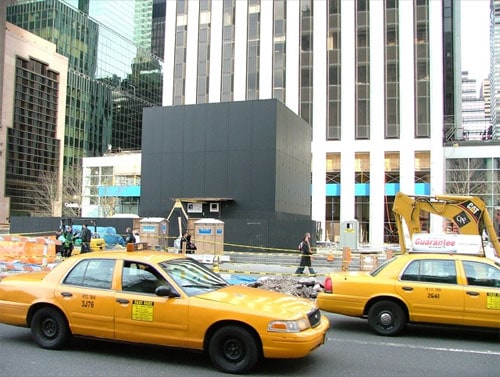
Interestingly, during construction, the cube was covered in dark material, which led the press to nickname it the “Apple Mecca.” Due to its resemblance to the Kaaba in Mecca, media outlets published sharp critiques and expressions of concern.
By 2011, the store underwent its first renovation. The original cube was dismantled and replaced with a new structure made of 15 large glass panels instead of the original 90 panels. The goal was to create an even cleaner form, with fewer seams and joints. The result exceeded expectations: the cube became more monolithic and almost immaterial.
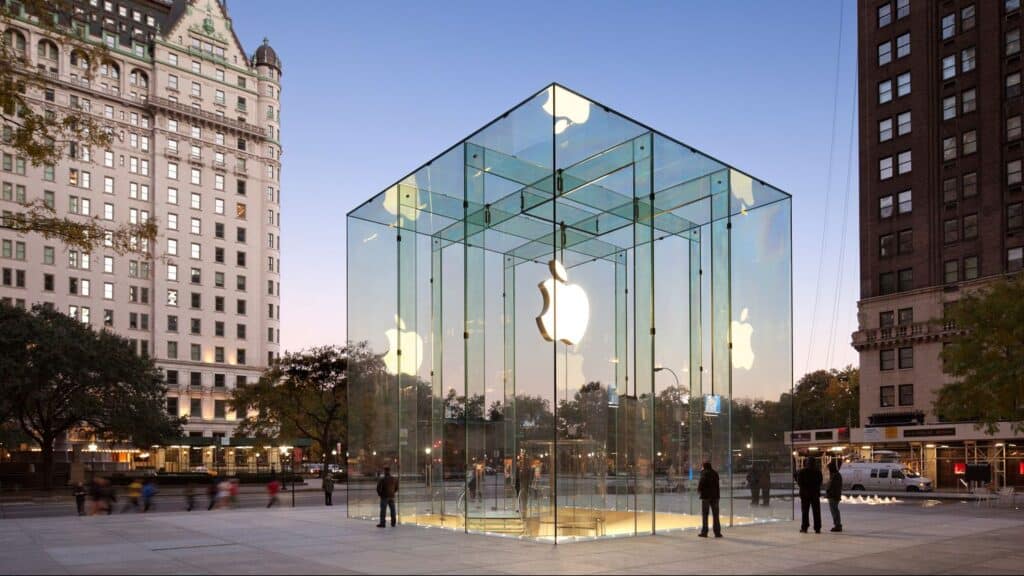
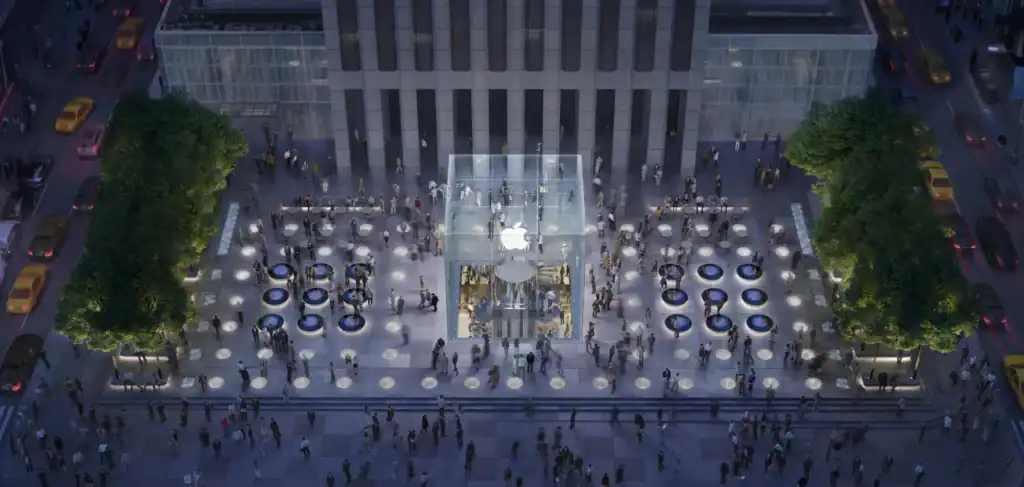
The major upgrade took place between 2017 and 2019, when the store was closed for a complete reconstruction. The underground space was doubled in size, the ceilings were raised, and most importantly, 62 circular skylight lenses were added at sidewalk level.
These mirrored circles not only allow light into the space but also reflect skyscrapers, the sky, and the life of the city. Thanks to them, the underground store feels filled with daylight, while the exterior space gained new points of attraction.
The Apple Store has now become not just a cube, but an entire plaza that has transformed the perception of the entire block.
📍 Apple Fifth Avenue / 767 5th Ave, New York, NY 10153