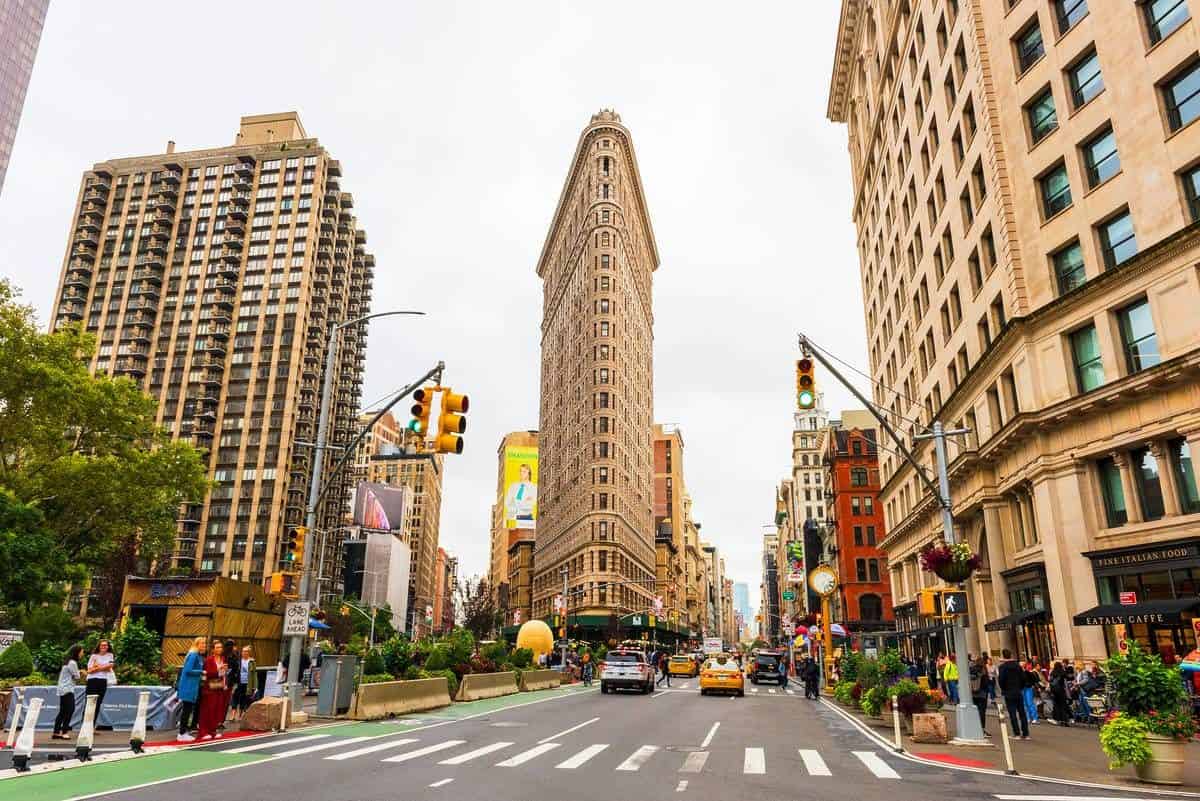
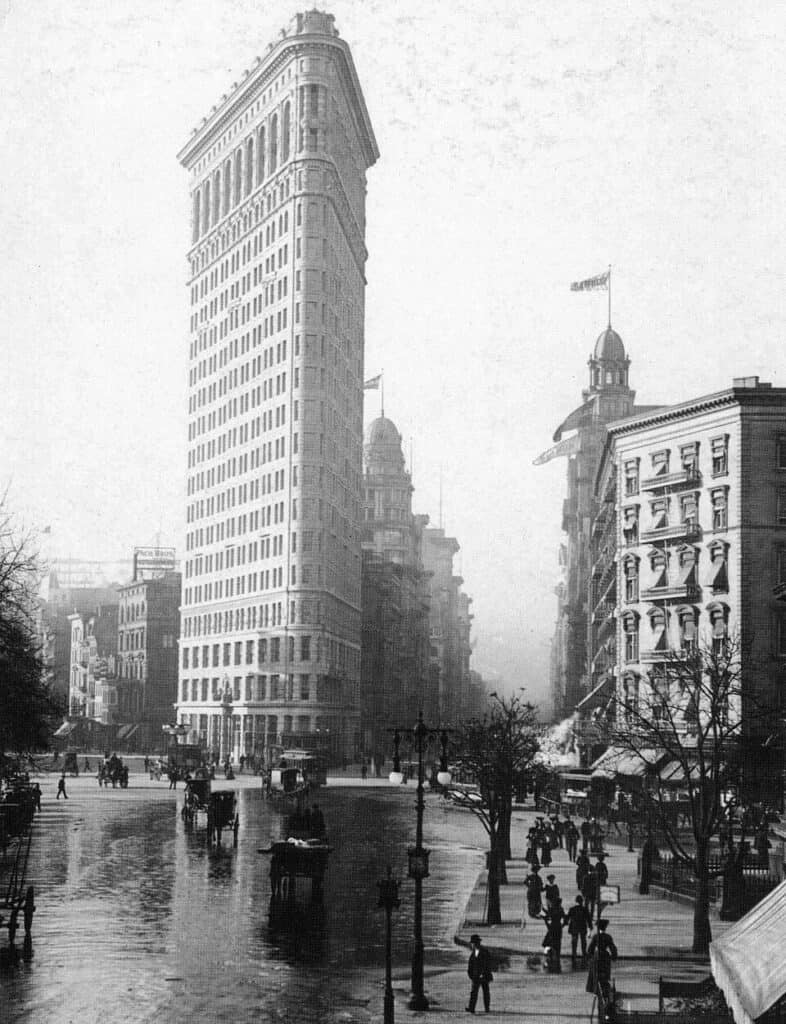
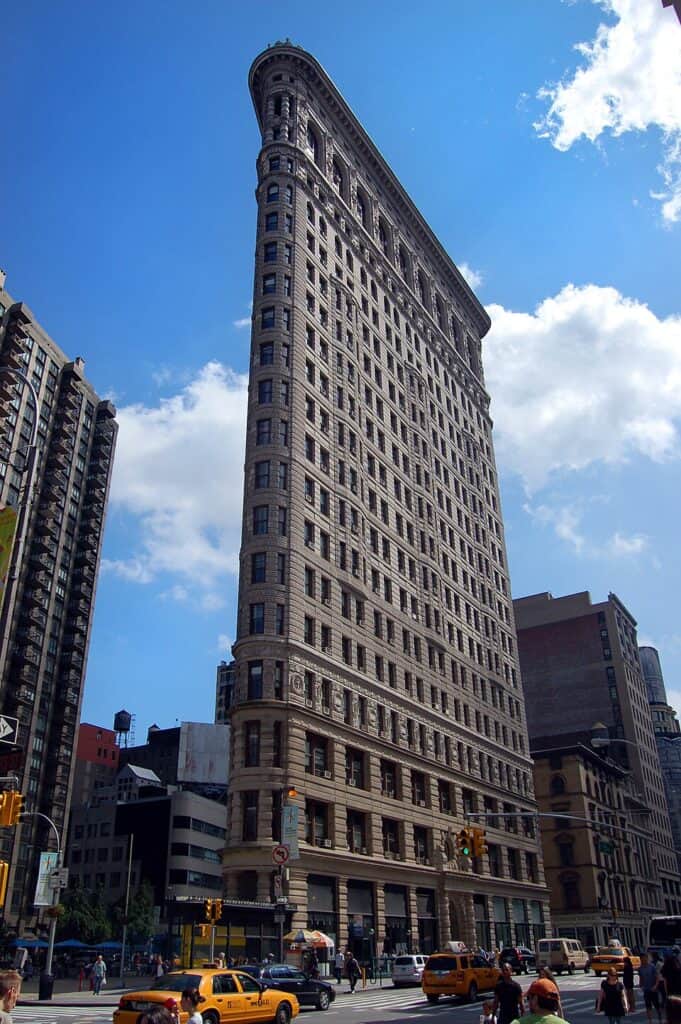
There are buildings that become symbols of a city not because they are the tallest or the most expensive, but because they look completely unlike anything around them. The Flatiron Building is exactly that. Sharp like the bow of a ship, cutting into the intersection of Broadway and Fifth Avenue, it has remained one of New York’s most iconic landmarks for more than a century.
The Flatiron Building is a twenty-two-story skyscraper completed in 1902 on the famous triangular lot where Broadway, Fifth Avenue, and West 23rd Street meet in Manhattan. The official name of the building is the Fuller Building, after the construction company George A. Fuller Company. However, New Yorkers immediately gave it another name — Flatiron, because of its distinctive pointed shape resembling a clothes iron.
Interesting facts about the Flatiron Building in New York
- The building was originally called Fuller’s Flatiron. Journalists began using that name almost immediately after construction, and the popular nickname quickly replaced the official name, Fuller Building.
- In 1902, many New Yorkers believed the building would collapse. Newspapers described it as “a matchbox ready to fall with the first strong wind.” Bets were placed in bars throughout the city. The building remained standing, and the skeptics were wrong.
- At the time of its completion, the Flatiron was the tallest building in New York north of City Hall, although within only a few years it was surpassed by newer skyscrapers.
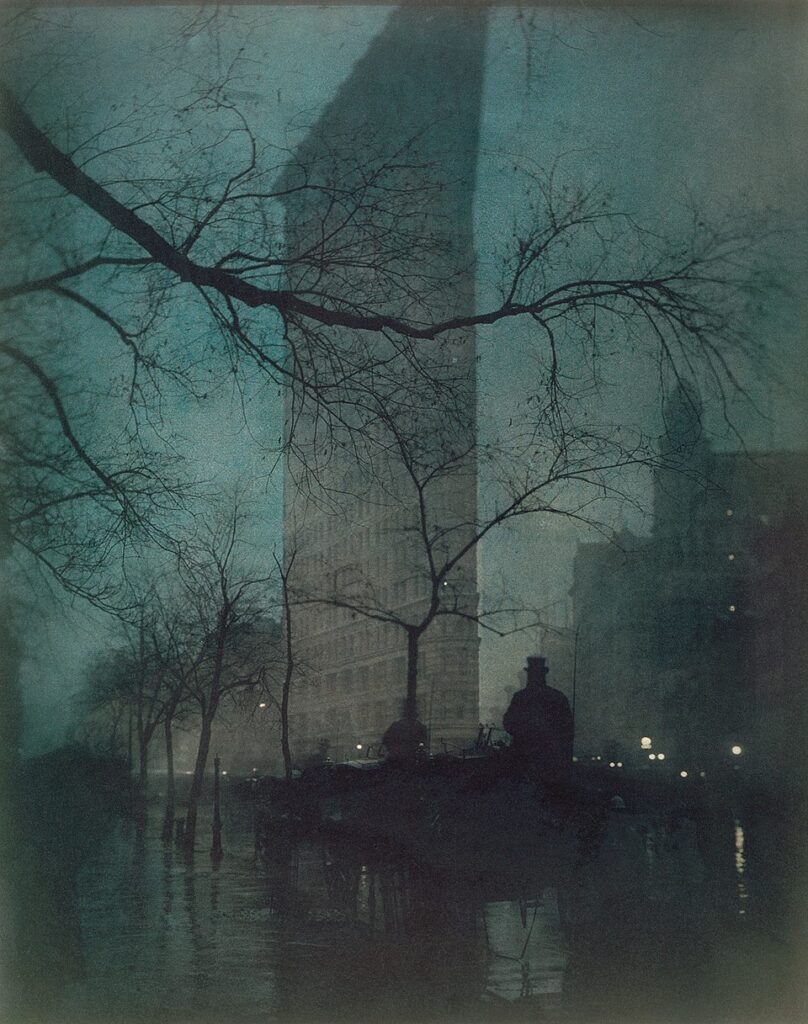
- The building was photographed by Alfred Stieglitz in 1903. His image of the Flatiron during a snowstorm became one of the first iconic architectural photographs in American history.
- The angle of the pointed tip is about six degrees, and the width of the “nose” at ground level is approximately two meters. Some witnesses claimed that only one person could stand sideways in the narrowest part.
- Construction took less than one year. The first foundation piles were driven in spring 1901, and by October 1902 the building was completely finished. For that era, it was an extraordinary speed made possible by prefabricated steel components.
- The building contains six elevators and about two hundred offices. In the early twentieth century, magazine publishers, law firms, and insurance companies occupied the space. The publishing company Macmillan remained there for decades.
- The Flatiron stands on solid bedrock. Manhattan skyscrapers are one of the rare examples in the world where tall buildings are constructed directly on exposed rock, which allows them to remain stable for generations.
- The name “Flatiron” existed before the building itself. The triangular lot had been called that since at least the 1870s because it resembled the shape of the cast-iron irons used at that time for pressing clothes on stoves.
- In 2022, the building was sold at auction for the first time in decades. The final price reached 190 million dollars, and the buyers were a consortium led by GFP Real Estate and Sorgente Group.
The Flatiron Building architecture
The Flatiron was designed in the Beaux-Arts style, which was popular in the late nineteenth and early twentieth centuries on both sides of the Atlantic. It combines Renaissance, Baroque, and Classical influences through clear horizontal divisions, rich ornamentation, symmetry, and monumental scale. What made the Flatiron unusual was the challenge of fitting this elegant style into an extremely narrow triangular site.
It was also one of the first buildings in New York to use a steel skeleton frame. The steel columns made it possible to build thinner walls and larger windows. The exterior is covered in limestone and terracotta with decorative details inspired by Renaissance architecture.
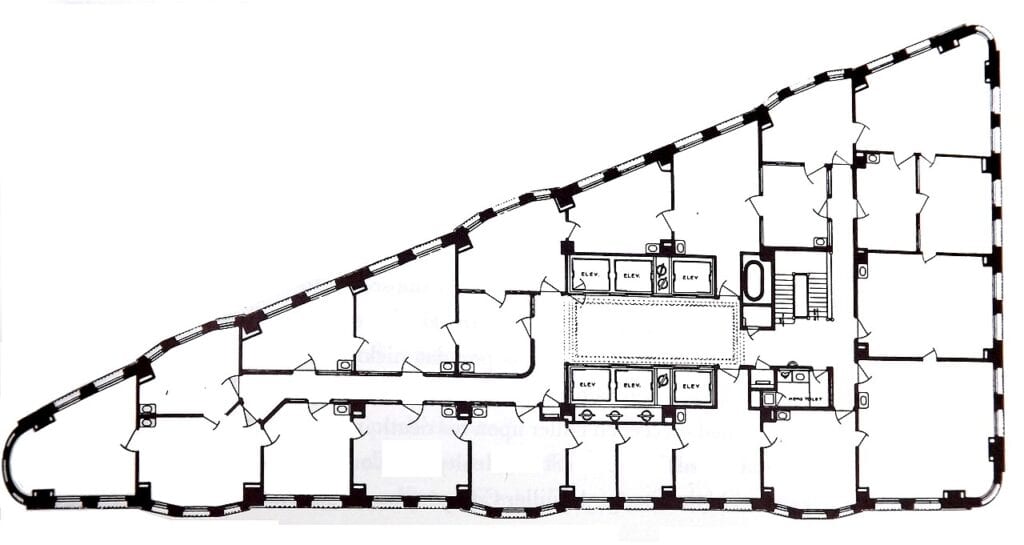
At its base, the building forms a right triangle with an acute angle of approximately six degrees. At the narrow northern tip, the width is only around two meters. Despite that, the architects managed to create functional office spaces through clever layouts with hallways and staircases along the sides.
An interesting detail is that the chief architect, Daniel Burnham, was better known as an urban planner than as a designer of individual buildings. He created the famous Burnham Plan of Chicago in 1909 and directed the 1893 World’s Columbian Exposition. The Flatiron is one of the few projects where he designed a single building rather than an entire cityscape.
The “Flatiron effect”: wind and skirts
One of the most famous side effects of the building’s unusual shape became known as the Flatiron Effect. The sharp angle and great height create powerful wind currents where the streets meet, especially near the pointed corner facing 23rd Street.
In the early twentieth century, when the area first became busy with pedestrians, men would deliberately linger nearby hoping to catch the moment when gusts of wind lifted women’s skirts. Police officers regularly had to disperse the crowds. This is believed to have inspired the slang phrase “twenty-three skidoo,” meaning “move along” or “get out of here,” which became a popular expression in the early twentieth century.
The 2023–2025 restoration
In 2022, the Flatiron changed ownership in a highly publicized auction. A new consortium led by GFP Real Estate, Sorgente Group, and AMS Acquisitions purchased the building for approximately 190 million dollars and announced a large-scale restoration.
Historically, the building had been used as office space. The new owners announced plans to convert the upper floors into luxury residential apartments, similar to what happened at the Woolworth Building and several historic properties in Tribeca.
The construction history of the Flatiron Building
The story of the Flatiron cannot be told without the story of the land beneath it. This strange triangular wedge of land appeared in the mid-nineteenth century when Broadway crossed Manhattan’s regular avenue grid at a sharp angle. Various buildings once stood on this “island,” including a well-known hotel and restaurant.
In 1899, the lot was purchased by Cumberland Realty, and the rights were later transferred to the George A. Fuller Company. The company specialized in large commercial projects and hired one of the most famous architects of the period, Daniel Burnham of Chicago.
Construction began in 1901 and was completed at record speed in 1902. By the standards of that era, it was a true skyscraper: twenty-two stories at a time when most New York buildings were no taller than five or six floors.
The Flatiron Building in popular culture
The Flatiron has appeared repeatedly in film and popular culture:
- In 1903, Alfred Stieglitz turned it into an artistic icon with his famous snowy photograph.
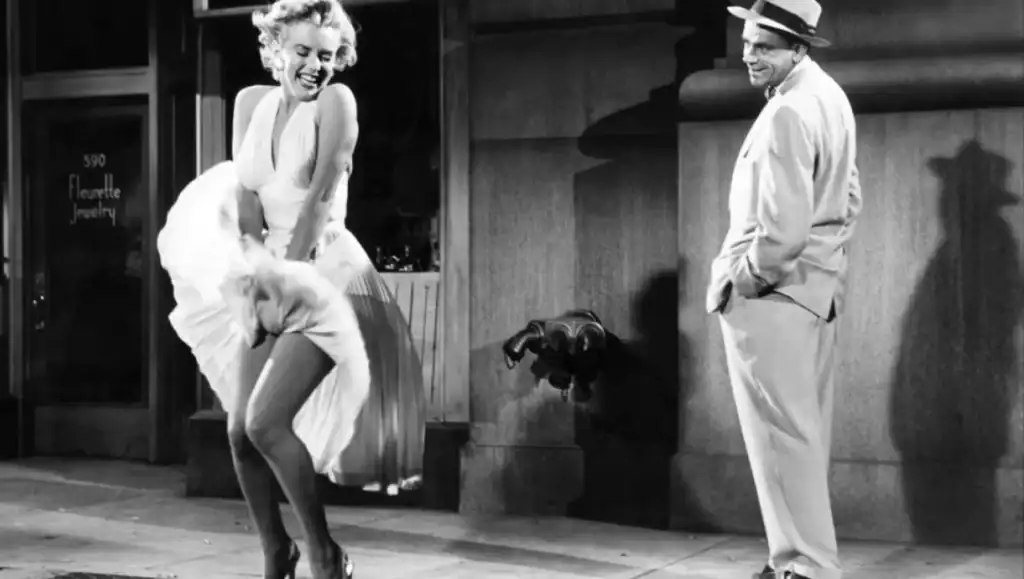
- In 1955, the atmosphere of the neighborhood became associated with The Seven Year Itch, when Marilyn Monroe stood above a subway grate as her dress was lifted by the wind.
- In 2002, director Sam Raimi used the building in Spider-Man as the workplace of the superhero.
It has also appeared in numerous television series and films, becoming a visual shorthand for New York itself.
Practical Information
📍 175 Fifth Avenue, New York, NY 10010
Nearest subway: 23rd Street, lines N, R, W, 6, F, M
Neighborhood: Flatiron District, Manhattan
The interior currently contains only offices and residential apartments, and it is not open to tourists.