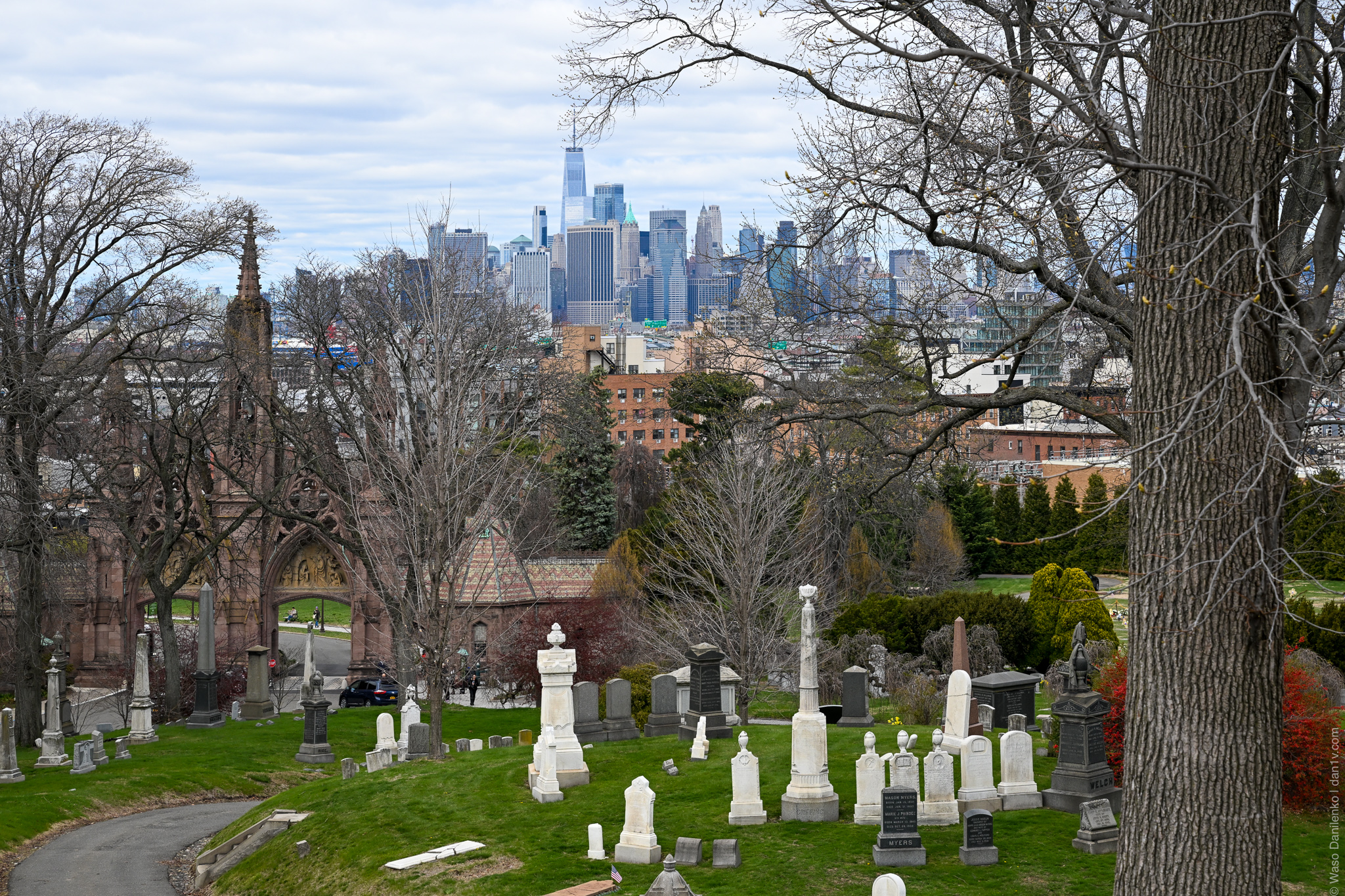
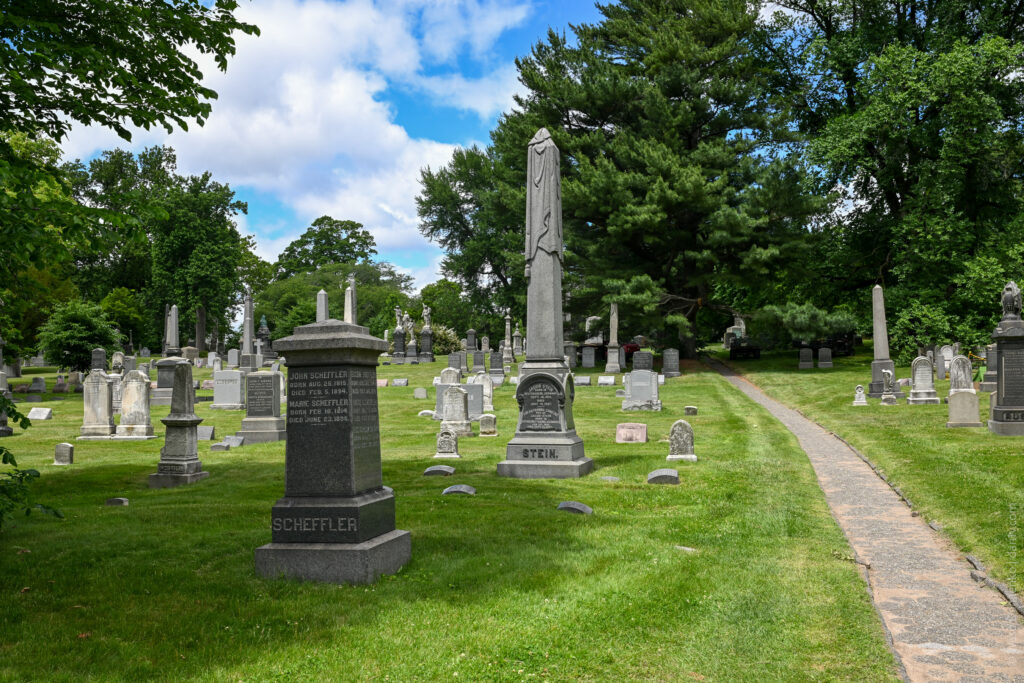
Green-Wood Cemetery in Brooklyn is a popular landmark of 19th-century New York City. Founded in 1838, Green-Wood Cemetery was America’s first “country cemetery,” an idea borrowed from Paris’s Père Lachaise. New Yorkers quickly embraced it: the cemetery became such a popular strolling spot that it inspired the creation of Central Park in 1858.
In 1866, the New York Times wrote, “The ambition of a New Yorker is to live on Fifth Avenue, stroll in Central Park, and be buried beside his fathers in Green-Wood.” This isn’t a metaphor, as being in Green-Wood was a matter of status — much like owning a house on Fifth Avenue in life. Here lie 580,000 people: Leonard Bernstein, Jean-Michel Basquiat, Louis Comfort Tiffany, Boss Tweed, Samuel Morse, Charles Ebbets, DeWitt Clinton, Civil War colonels, founders of the New York Yacht Club, and the creator of the credo of The 400, New York’s most exclusive social society of the Gilded Age.
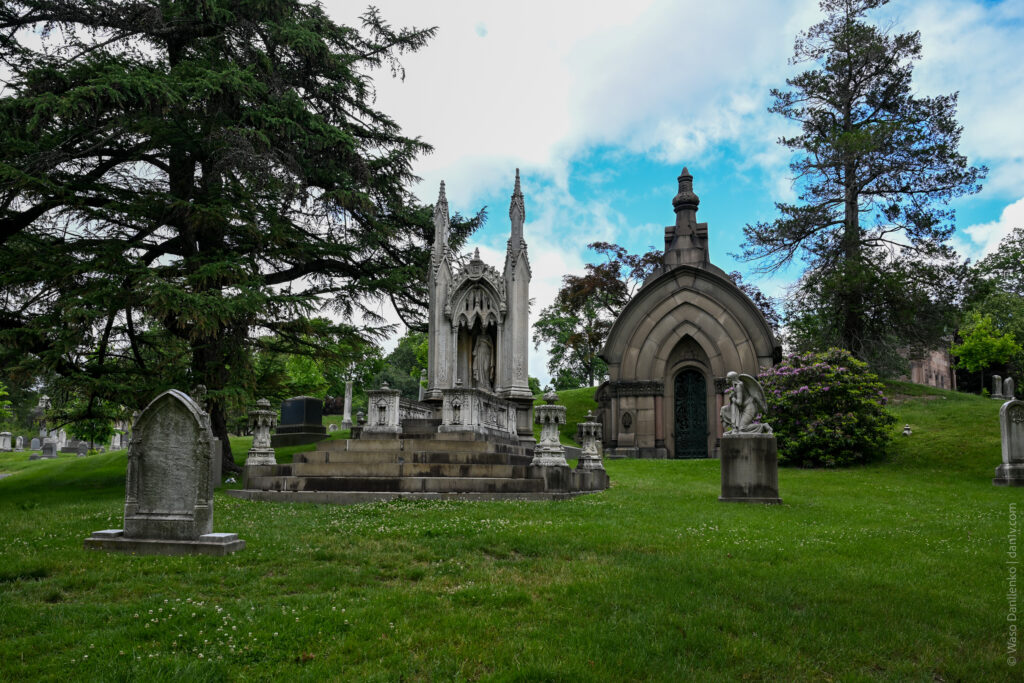
Interesting facts about Green-Wood Cemetery in Brooklyn
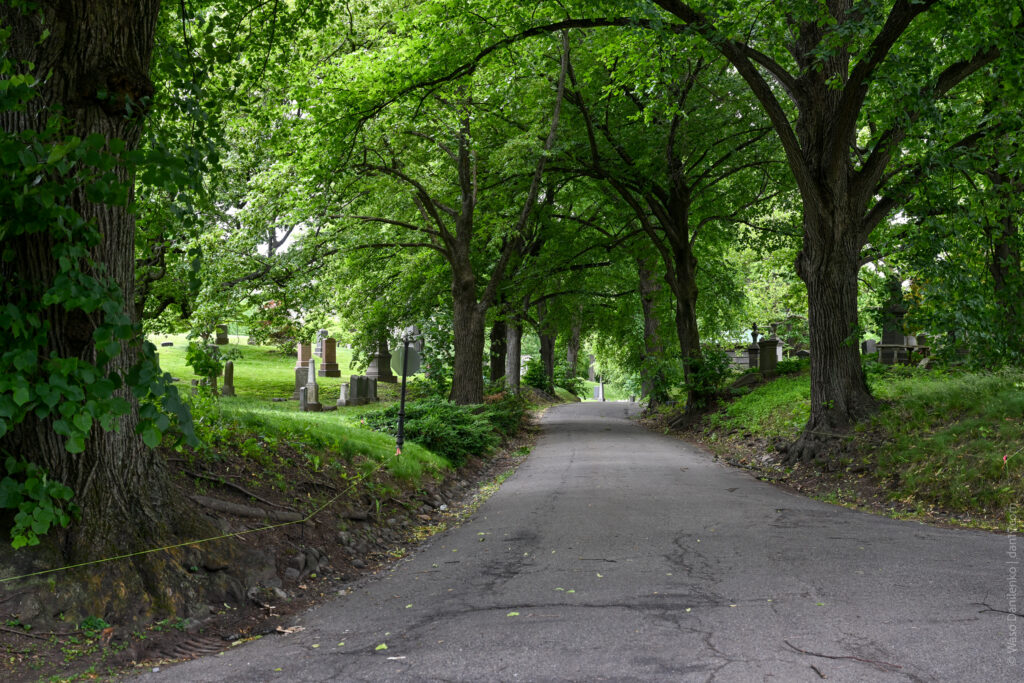
- Before the construction of Central and Prospect Parks, Green-Wood was the city’s premier public promenade, attracting half a million visitors annually. It was second only to Niagara Falls in popularity. Residents came here for picnics and strolls along the shady, winding paths.
- Before becoming a cemetery, this area was the site of the Battle of Long Island — the first clash between British and Continental troops in New York City, which took place on August 27, 1776. The Americans were defeated, and the British captured New York City.
- The Prentiss brothers — Clifton (1835–1865) and William (1839–1865) — are buried next to each other, although they fought on opposite sides of the Civil War. Coincidentally, both died in the same battle, falling just steps apart. The famous Gothic Revival gateway, designed by Richard Upjohn, became home to bright green Argentine monk parakeets. In the 1950s, these birds ravaged Argentina’s farmland, and thousands were transported to the United States.
- In 1844, DeWitt Clinton, governor of New York and the architect of the Erie Canal, was buried here. This marked a turning point: Green-Wood became one of the most prestigious burial grounds and, in essence, paved the way for the creation of Central Park in Manhattan and Prospect Park in Brooklyn.
- The graves of 580,000 people are buried here, including Leonard Bernstein, Boss Tweed, Charles Ebbets, Jean-Michel Basquiat, Louis Comfort Tiffany, Horace Greeley, numerous Civil War generals, baseball legends, politicians, artists, and inventors. The cemetery is the final resting place of sixteen Union and two Confederate generals. Several Civil War monuments are also located here, including the zinc “Drummer Boy” and the New York Soldiers’ Monument.
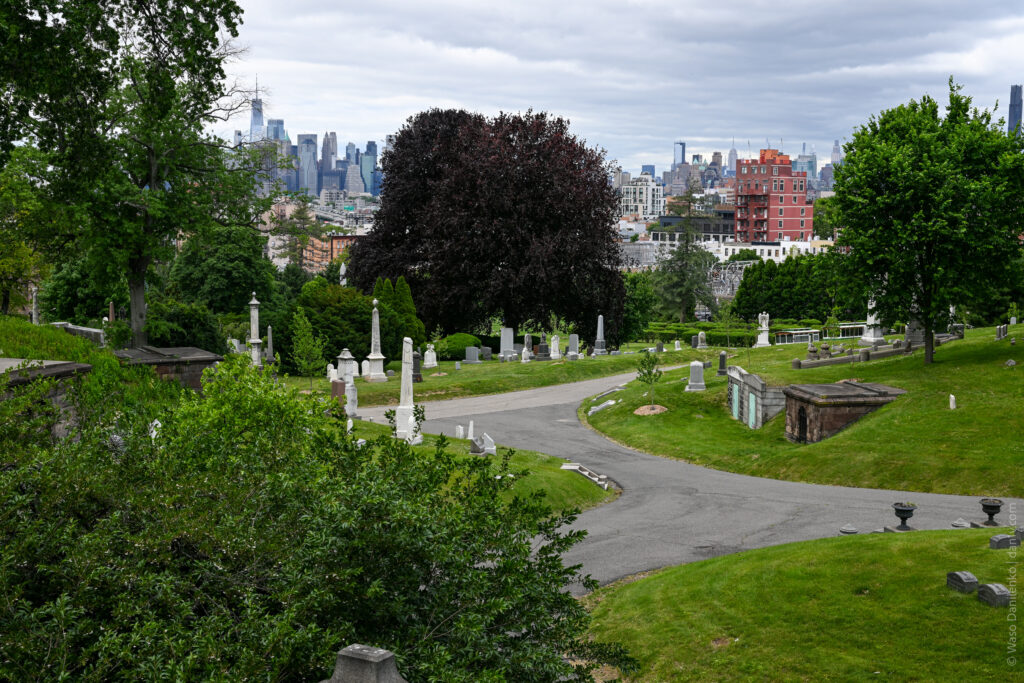
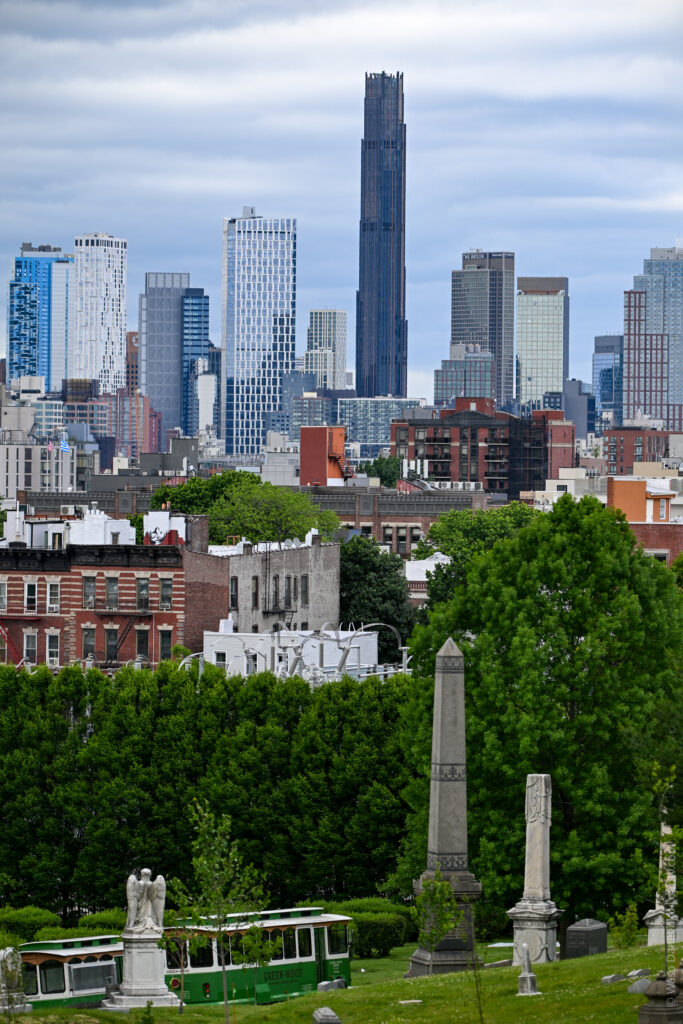
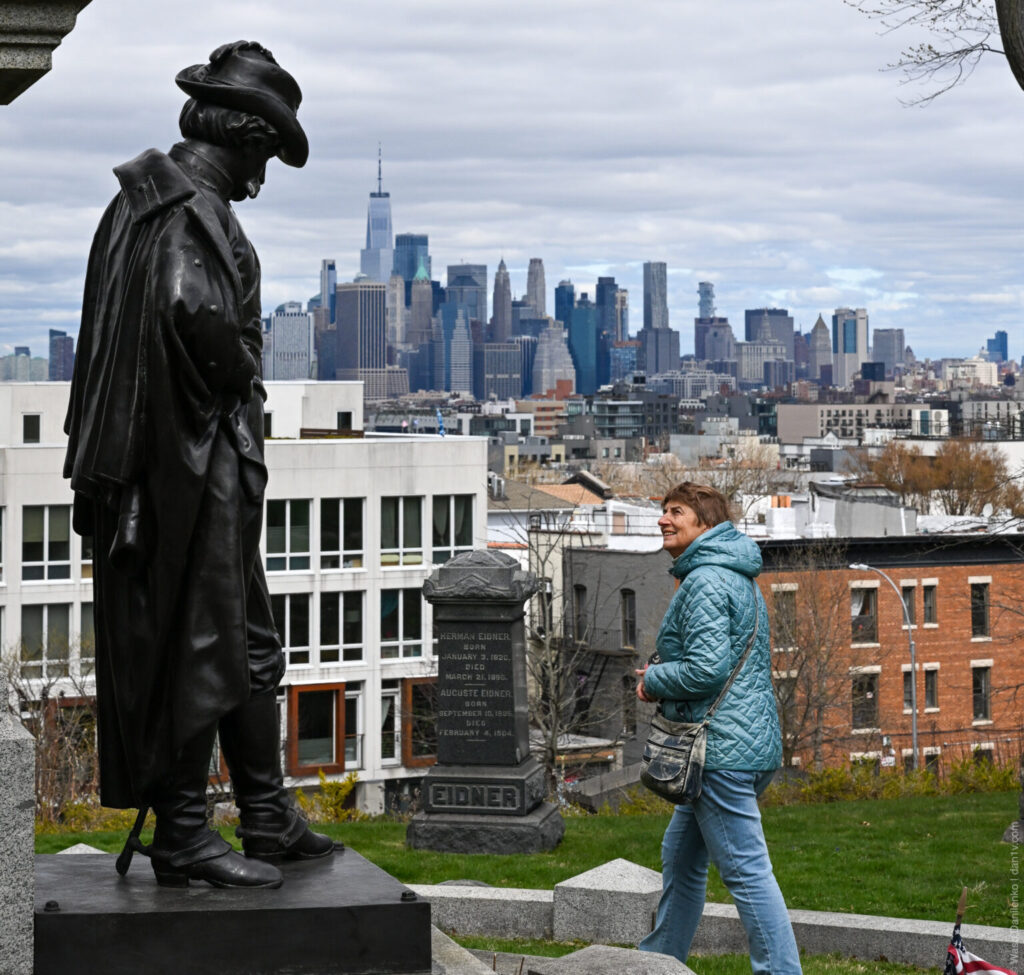
- Brooklyn’s highest point, Battle Hill, is located within the cemetery, approximately 216 feet above sea level. It offers views of Manhattan, the Statue of Liberty, and the World Trade Center towers.
- The cemetery contains 30 catacombs, dug in the 1850s, with coffins in the walls and light shafts in the ceiling.
- The cemetery is designated a Level III Arboretum due to its collection of century-old trees and over 500 plant species.
- Martin Scorsese’s film The Departed (2006) features a scene with Leonardo DiCaprio near one of Green-Wood’s obelisk headstones. The cemetery grounds contain four glacial ponds, including Valley Water, a pond with water lilies that appear every spring.
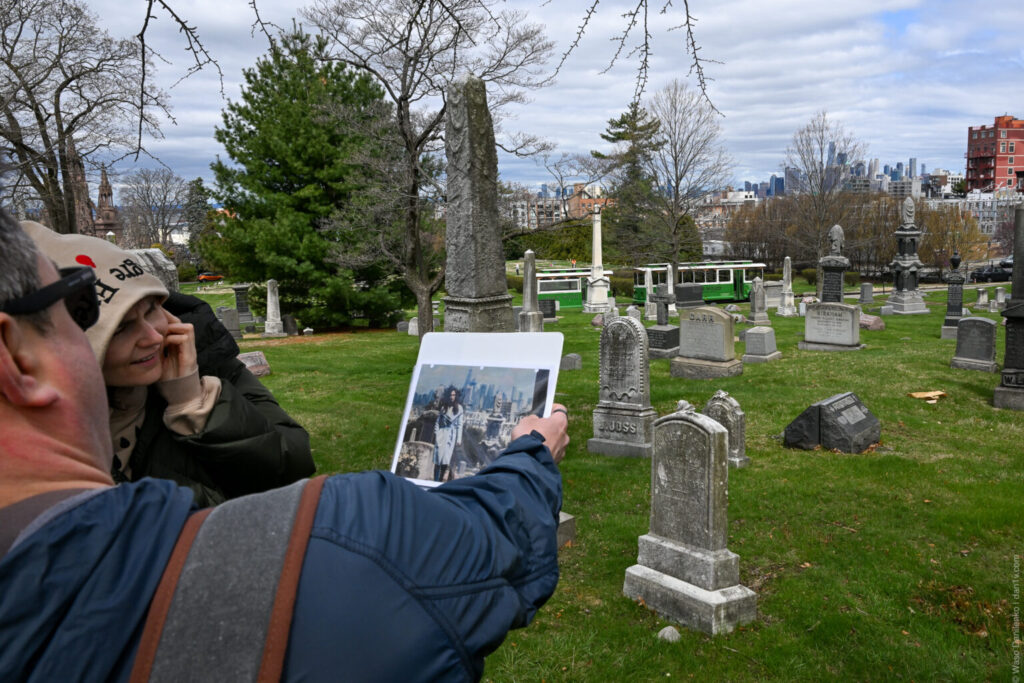
Who is buried in Green-Wood Cemetery
Jean-Michel Basquiat
The artist who transformed street graffiti into high art died of a heroin overdose on August 12, 1988, at the age of 27. His tombstone is small, simple, and black. It is inscribed with nothing but his name and dates, and that in itself is a statement.
Basquiat’s grave has become a place of pilgrimage. Artists, fans, and tourists come here to leave flowers, crayons, and notes. The cemetery regularly removes any unnecessary items, but by the next visit, something always appears again.
Leonard Bernstein
The conductor of the New York Philharmonic and composer of “West Side Story” died on October 14, 1990. He is buried next to his wife, Felicia Montealegre (who died in 1978). Legend has it that fans leave musical scores at his grave. Louis Comfort Tiffany
Son of the founder of Tiffany & Co., a stained glass artist who created the “Tiffany style” and the famous lamps with stained glass shades. He died in 1933. Several stained glass windows by him remain in the cemetery in family mausoleums—one of the reasons to visit the section of the cemetery where they are located.
Samuel Morse
Inventor of Morse code. He died in 1872. His grave is one of the most visited. Morse code is still used worldwide, especially in aviation.
William Magie Tweed
William Magie Tweed was the main political corruptor of the 19th century in the United States. He was the head of Tammany Hall, the political machine that controlled all of New York politics and the police. He stole tens of millions of dollars from the city. He died in prison in 1878. His family briefly left the prison for the funeral. He was buried in Green-Wood without much ceremony, with a more modest tombstone than many of the people he robbed.
Friedrich August Otto Schwartz
Friedrich August Otto Schwartz was a German immigrant who founded a famous toy store in Baltimore in 1862, later moving to New York. He died in 1911.
Charles Ebbets
Owner of the Brooklyn Dodgers baseball club and creator of Ebbets Field, the legendary stadium that became a symbol of Brooklyn. He died in 1925.
Henry Chadwick
Considered the “father of American baseball” – he devised and codified the rules of the game, the statistical system, and the scorecard system. His tombstone is decorated with bronze baseball paraphernalia: a bat, glove, and ball – carved right into the stone.
DeWitt Clinton
Governor, senator, and mayor of New York City who promoted the construction of the Erie Canal (1825) — a waterway that linked the Great Lakes with the Atlantic Ocean via the Hudson River and effectively made New York City America’s premier commercial port. He died in 1828, before Green-Wood opened, but his remains were ceremoniously transferred there in 1844. This burial transformed Green-Wood into a national landmark long before the cemetery’s fame became national.
The date of Clinton's transfer to Green-Wood in 1844 marked the moment when the cemetery went from regional to national. Clinton was a "New York icon," much like the skyscrapers of Midtown are today.
Ray Kassar
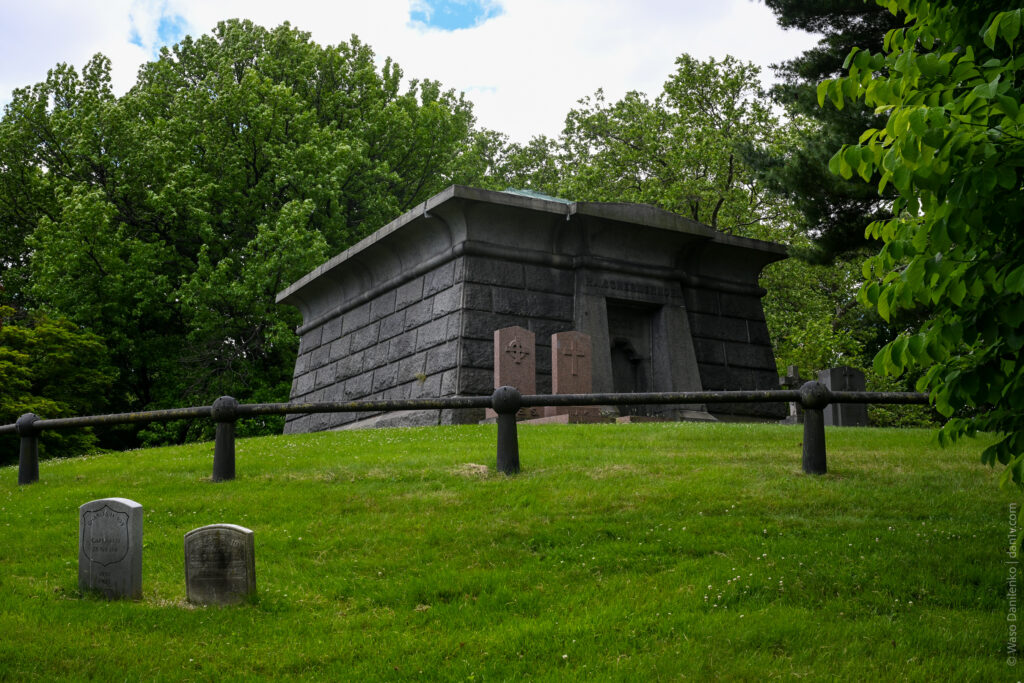
Ray Kassar was the CEO of the legendary Atari company from 1978 to 1983. Atari is the American company that essentially created the video game industry. In the late 1970s and early 1980s, Atari was the fastest-growing company in US history. His family owns a low, wide, and very geometric monument. It has a stark and modern feel: clean surfaces, a lack of decoration, and a few names and dates.
History of Green-Wood Cemetery
The Battle of Brooklyn and Minerva Hill
On August 27, 1776, the Battle of Brooklyn, the first major battle of the Revolutionary War after the Declaration of Independence, took place on these hills. The British, under the command of General Howe, attacked the American positions from several sides.
It was a crushing defeat for Washington. The Americans lost approximately 1,000 men killed, wounded, and captured. The British took Brooklyn. Washington ferried the remnants of his army across the East River to Manhattan at night, in the fog, saving them from encirclement. Many historians believe this nighttime crossing saved the American Revolution. The bones of some soldiers killed in the battle still lie in the ground at Green-Wood.
A bronze statue of Minerva by sculptor Frederick Rookstool was erected on Battle Hill, the cemetery’s highest point, in 1920. Minerva, the goddess of wisdom and war, stands on a pedestal, extending her hand toward the harbor. The Statue of Liberty now stands exactly where Minerva points.
Battle Hill offers a 360-degree panorama: Lower Manhattan, the harbor, the Statue of Liberty, and New Jersey. It’s one of the best vantage points in all of New York City — and most tourists don’t know about it.
How Green-Wood Cemetery appeared
In the 1830s, New York City’s parish cemeteries were overcrowded, with coffins being placed directly on top of previous ones because there was no room underground. Cholera epidemics and the summer odor became a real sanitary disaster in the center of the growing city.
At the same time, the city faced another problem: there was not a single public park. Central Park didn’t even exist — it wouldn’t be built until 1857. Residents of New York and Brooklyn literally had nowhere to walk.
Henry Evelyn Pierpont, one of Brooklyn’s most influential men, who was not yet 30 years old in the 1830s, combined both problems into one solution. In 1832, he visited Mount Auburn in Cambridge, Massachusetts — the first “rural cemetery” in the United States, opened in 1831. Instead of a city cemetery with tightly packed rows of crosses, he envisioned a park with hills, ponds, winding paths, trees, and sculptures.
Pierpont returned to Brooklyn with an idea. He was chairman of the commission planning the streets and parks of the new Brooklyn and had the influence to bring it to fruition.
In 1837, at the height of the financial crisis, land prices fell. Pierpont convinced the city to purchase a hilly site in Greenwood Heights — directly above Gowanus Creek. On April 11, 1838, the New York State Legislature officially established Green-Wood Cemetery. The name was deliberately poetic: “it was to remain forever a place of rural peace, beauty, greenery, and freshness.”
How the cemetery became New York City’s first park
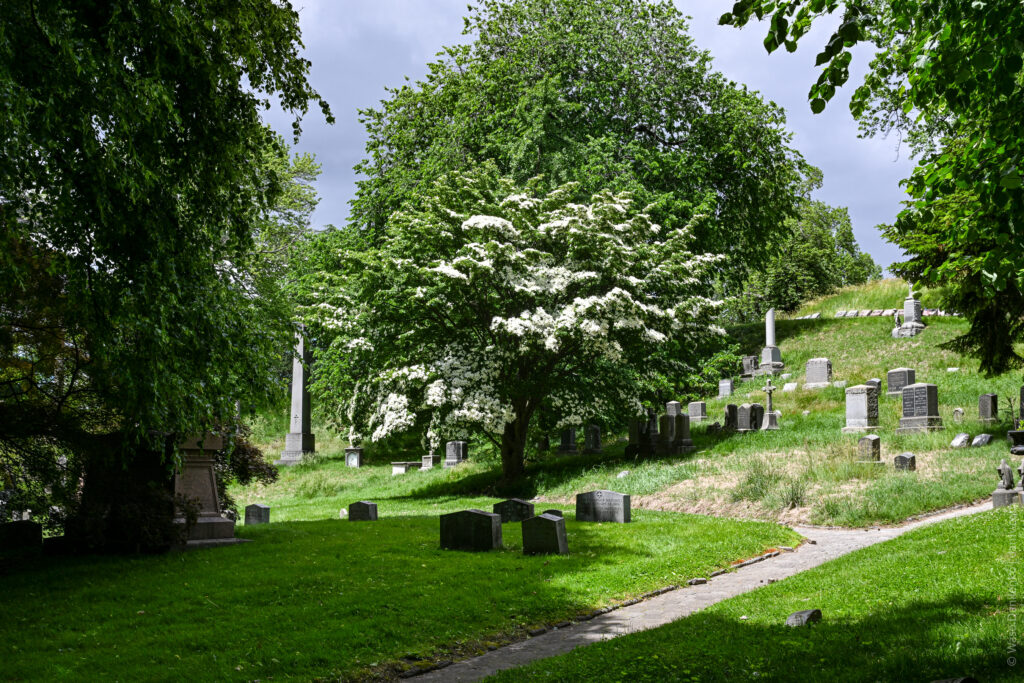
Until the opening of Central Park in 1858, Green-Wood Cemetery was the main public park for the residents of New York City and Brooklyn. By 1860, Green-Wood attracted half a million visitors a year — the second most popular tourist attraction in the United States after Niagara Falls. People arrived by carriage, picnicked, rode along the ponds, and admired the monuments.
This success sparked competition. Landscape architect Andrew Jackson Downing publicly cited Green-Wood as proof that New York City needed a true urban park. His arguments convinced the city to begin planning Central Park. Frederick Law Olmsted and Calvert Vaux, the architects of Central Park, consciously replicated elements of the landscape design honed at Green-Wood in their design: hills, winding paths, ponds, and a departure from the straight lines of the city grid.
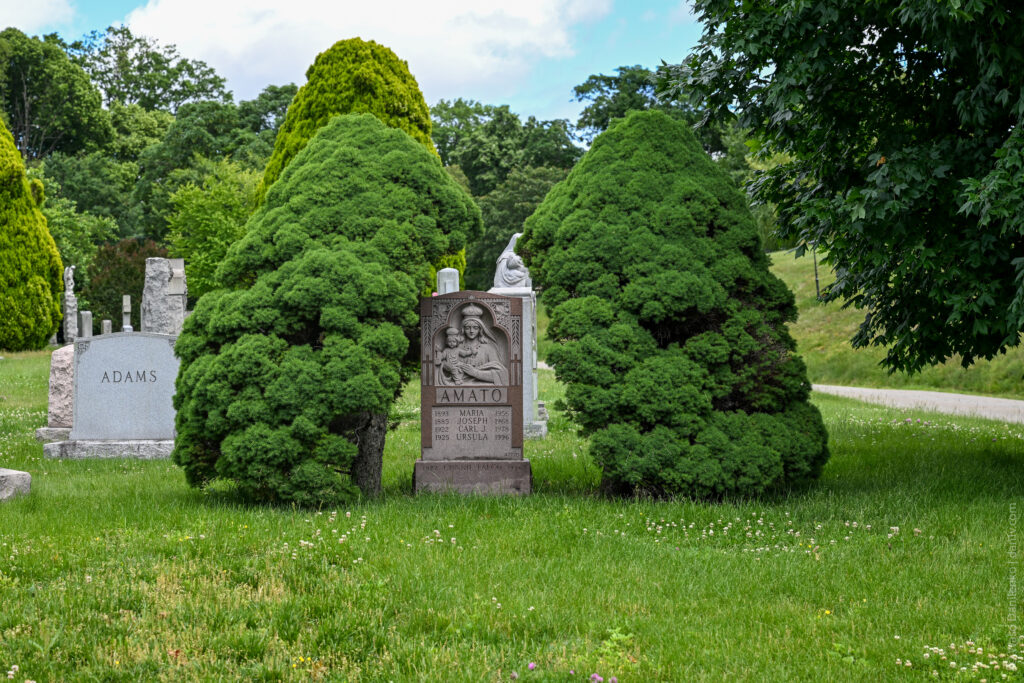
Architecture and Sculpture at Green-Wood Cemetery
Gothic gateway
The first thing a visitor sees — and the first thing worth visiting for — is the 25th Street Gateway, the main entrance.
The architect was Richard Mitchell Upjohn, son of the famous Richard Upjohn, who built Trinity Church on Broadway (New York City’s oldest important building). The gates were built between 1861 and 1863 from Belleville sandstone, the same type of brownstone from New Jersey used in that era for the typical New York brownstone townhouses.
Style: Gothic Revival: pointed arches, buttresses, pinnacles, and fine stone carvings with floral motifs. The main span consists of two wide carriage arches, flanked by narrow pedestrian arches. Above the center is a rosette. The towers at the ends rise 32 meters high.
A colony of monk parakeets (Myiopsitta monachus) lives in the gate towers. In the late 1960s, a wooden container containing a shipment of Argentine parakeets destined for pet stores crashed at Kennedy Airport. Over the decades, the descendants of these escapees have established stable colonies throughout New York City. The most famous and oldest is in the spires of Green-Wood. The birds have been here for so long that the cemetery includes monitoring them in its conservation programs.
The cemetery attempted to remove the nests several times during restoration of the gates, and each time, it specially built alternative platforms where the birds were carefully relocated, but the parrots always returned.
Warren & Wetmore chapel
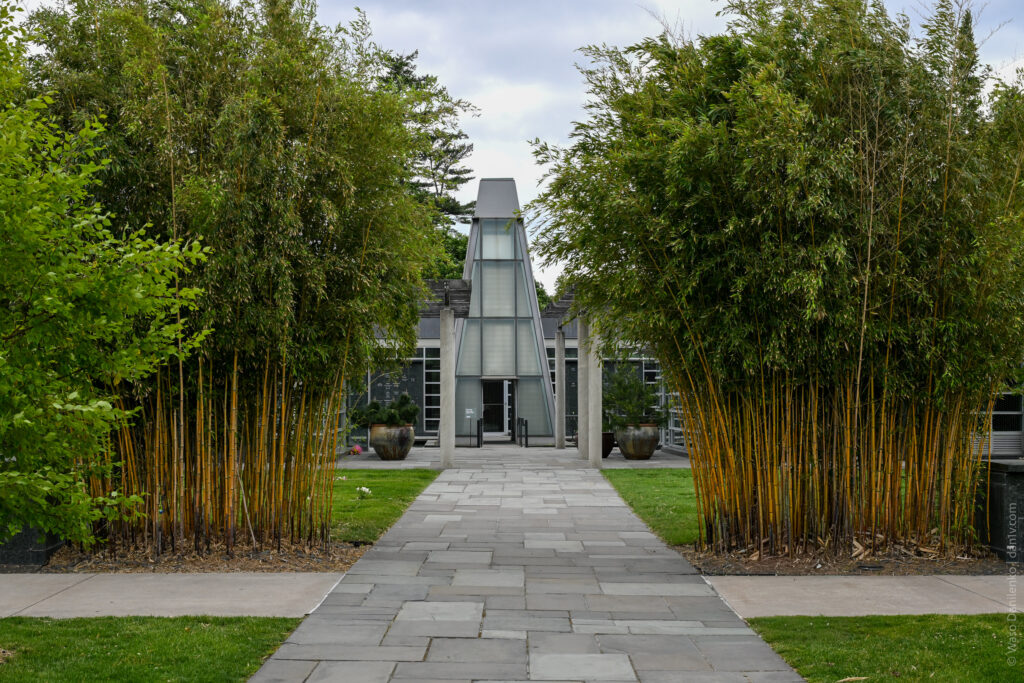
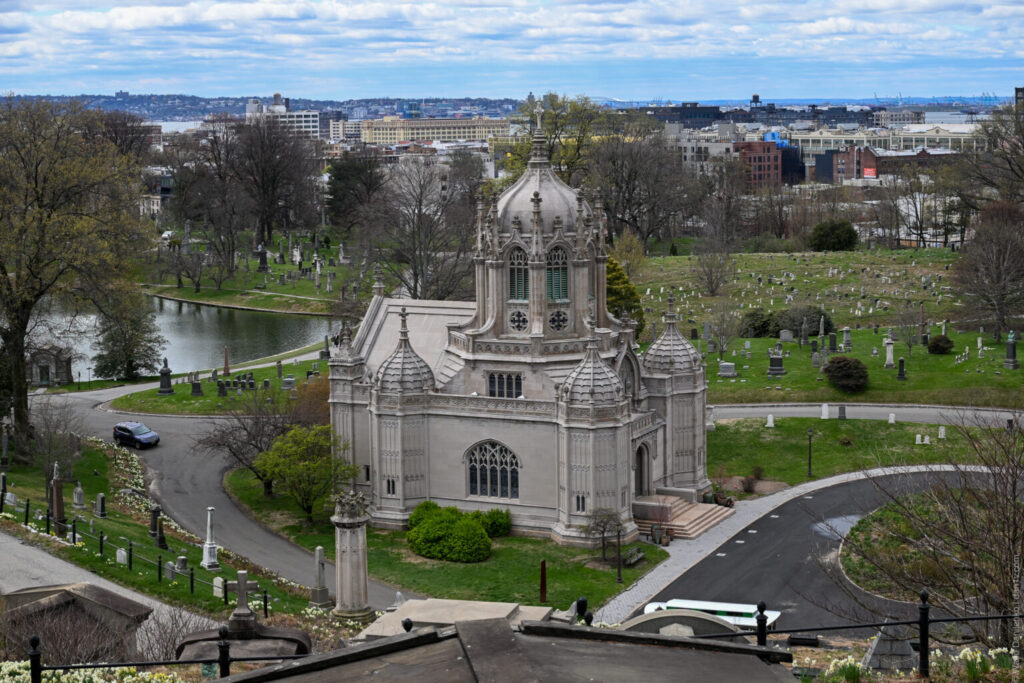
Inside the cemetery stands a small Gothic chapel — the Chapel of the Holy Trinity. Built between 1911 and 1913 by the architectural firm Warren & Wetmore.
Warren & Wetmore are the same architects who opened Grand Central Terminal in 1913. The work was conducted in parallel: during the same years that New York’s main train station was being built in Midtown, the same firm was building a small cemetery chapel in Brooklyn. This was common practice in New York: major architectural firms of the era worked on several projects simultaneously.
The chapel hosts not only funerals but also weddings, concerts, and other events. It features stained-glass windows, a vaulted ceiling, and acoustics designed for a small choir.
Catacombs
In the 1850s, 30 catacombs — underground vaults lined with dense limestone, with corridors and side niches for coffins — were carved into the side wall of one of the cemetery’s hills.
This was the fashion of the era: an above-ground burial method derived from Roman and Neapolitan precedents. Here, burials could be carried out in a covered, dry space without burying the coffin in damp earth.
The catacombs were lit through shafts in the ceiling, specially designed to direct the beam of light onto the tombstone inside. This solved another problem — the fear of being buried alive, a real phobia among wealthy Victorians. The catacombs made it easier to install a ventilation system and a “flash cord” in case a person woke up in the coffin.
Buried in the catacombs are, among others, Ward McAllister, the man who, along with Caroline Astor, compiled the famous list of “New York’s 400 Best Families,” thereby defining the concept of “high society” during the Gilded Age. He died in 1895, forgotten and ridiculed.
The catacombs are closed to independent visitors. They are opened periodically for special tours and nightly concerts.
Sculptures
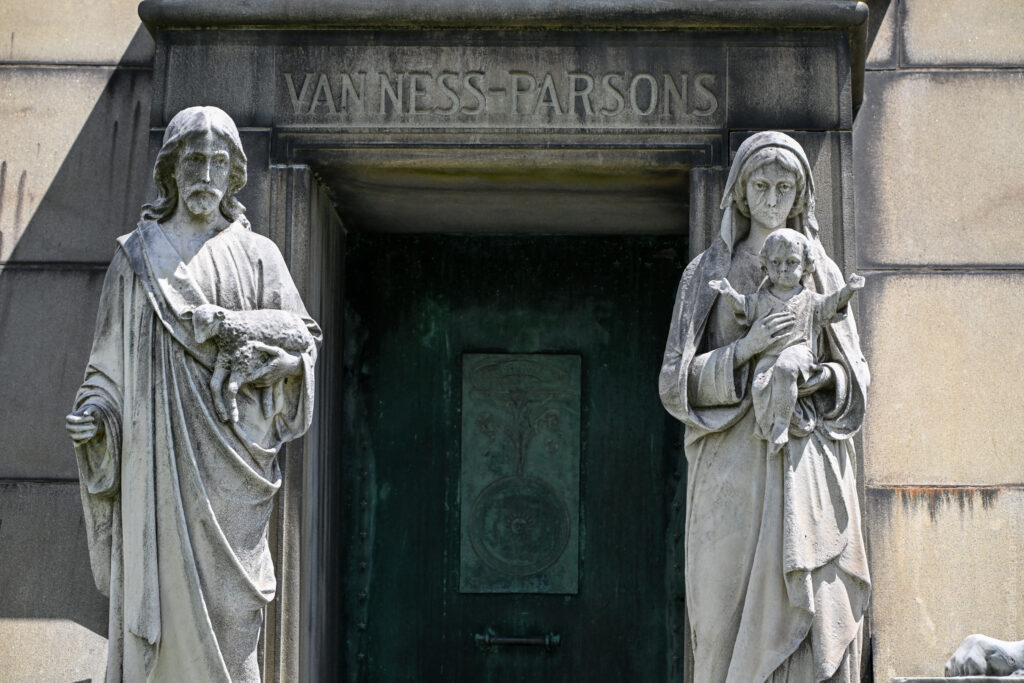
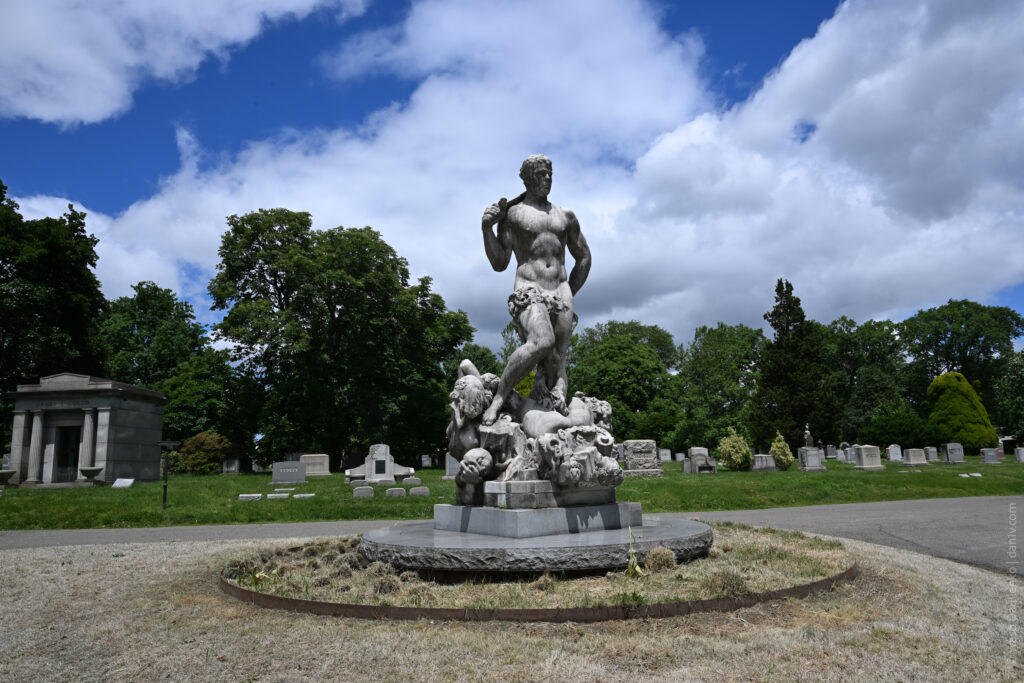
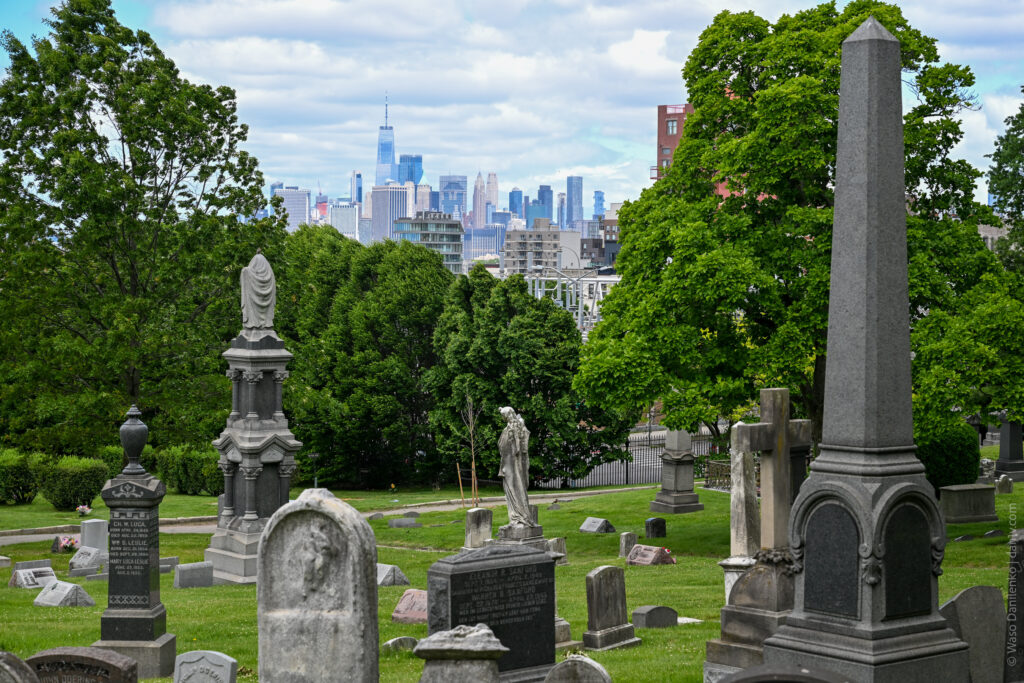
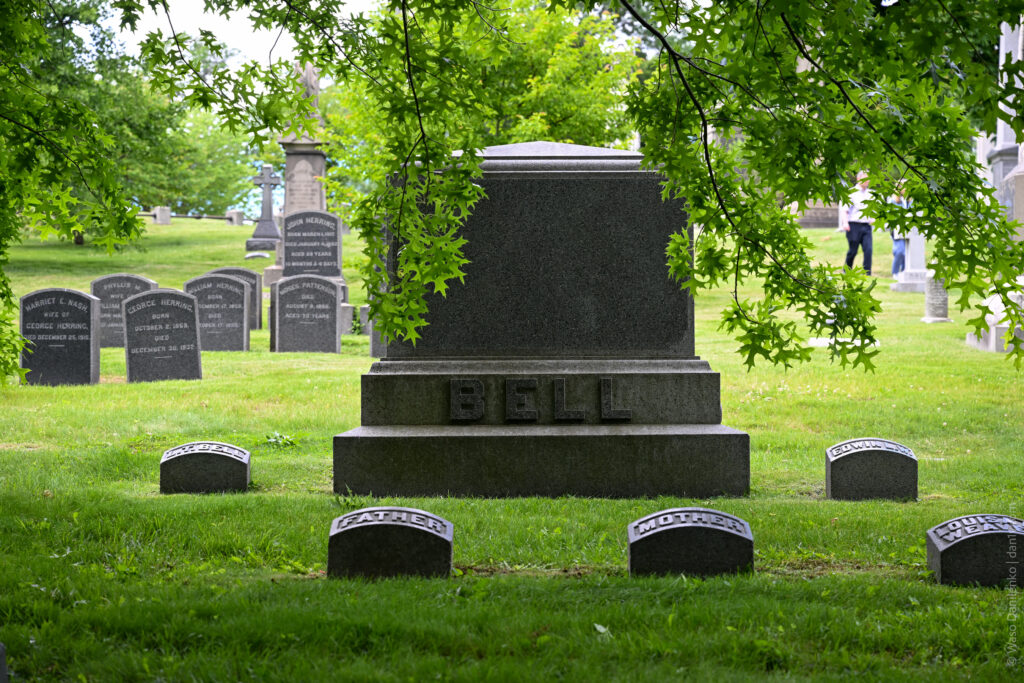
All the major American sculptors and architects of the 19th and early 20th centuries worked in Green-Wood:
- Augustus Saint-Gaudens, creator of the monumental statue of Admiral Farragut in Madison Square Garden and the equestrian statue of Sherman near Central Park, created tombstones for several families in Green-Wood.
- Daniel Chester French, sculptor of the seated statue of Lincoln in the Lincoln Memorial in Washington, D.C., also left works here.
- Elias Howe, inventor of the sewing machine (1846), is buried here, along with his tombstone with appropriate symbols.
- Henry Berg, founder of the ASPCA (American Society for the Prevention of Cruelty to Animals), is buried in a pyramid-shaped mausoleum guarded by sculptures of horses, cats, and dogs.
- The Confederate flag from the Civil War. About 5,000 Civil War veterans are buried here. Cemetery historians spent years mapping all the graves. One section contains a small cluster of Confederates; the proximity to neighboring Unionist clusters is not commented on.
- The Hungerford family mausoleum is one of the few with original stained-glass windows by Louis Comfort Tiffany inside.
Green-Wood Cemetery landscape
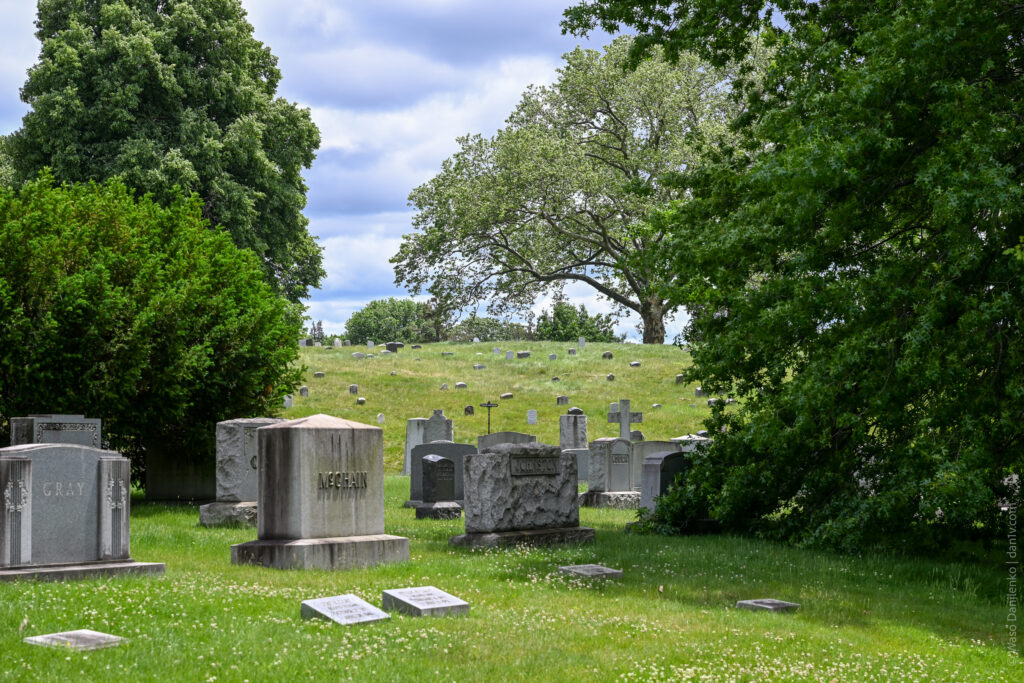
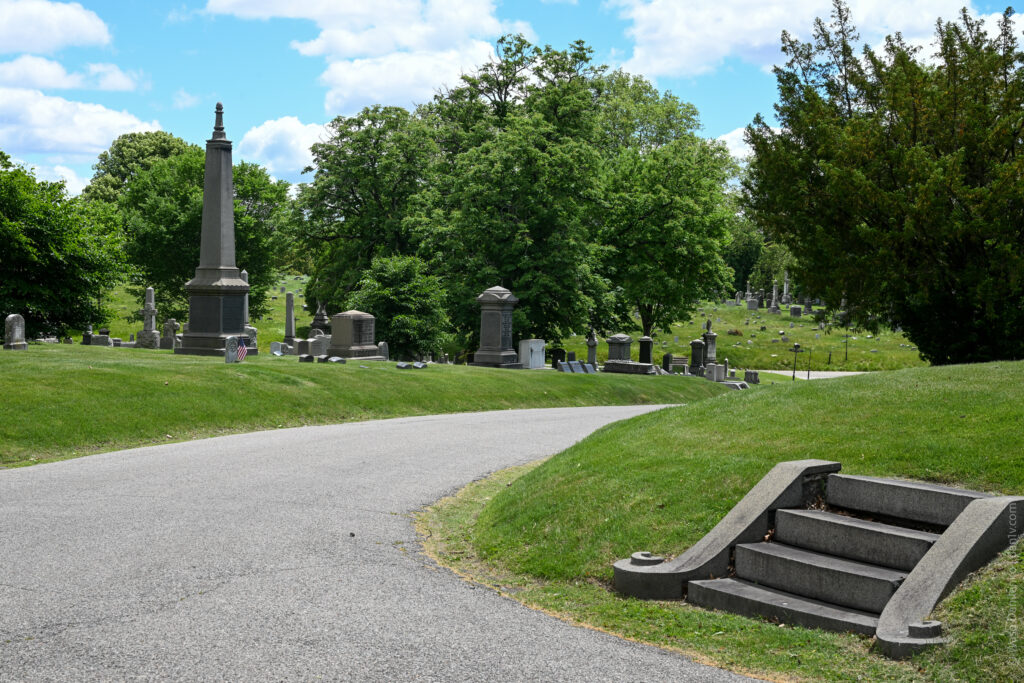
The 478 acres of Green-Wood Cemetery were formed 18,000 years ago by the retreat of the Laurentide Ice Shelf. Hills, ridges, and basins with ponds — this glacial topography has remained virtually unchanged since then. David Bates Douglas, the cemetery’s first landscape architect (a West Point graduate), intentionally designed paths along the natural topography rather than over it.
Green-Wood Cemetery events
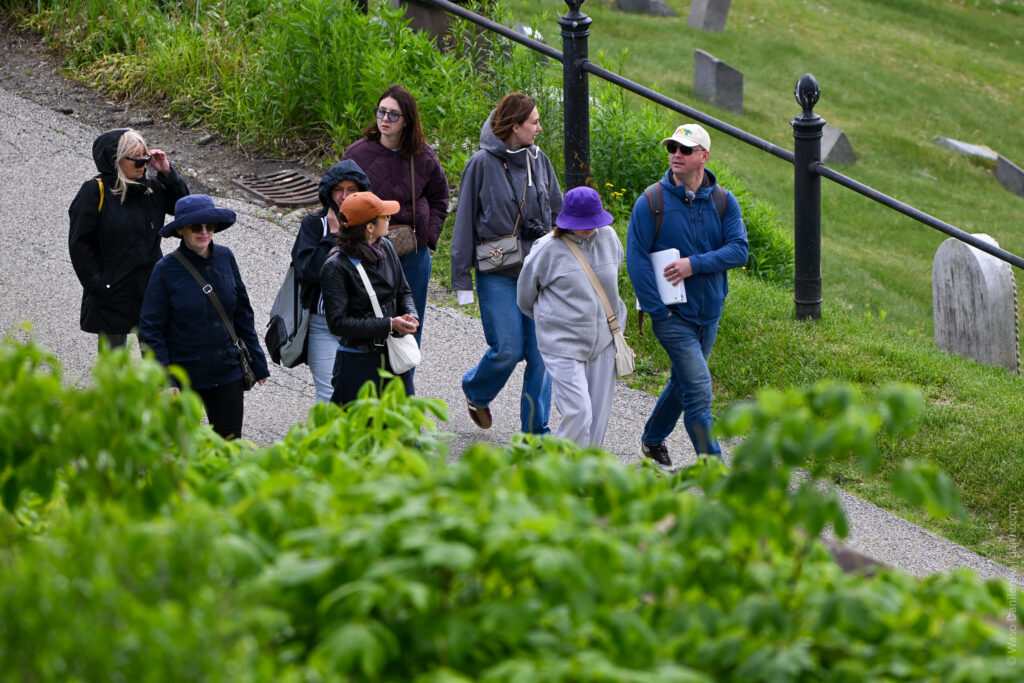
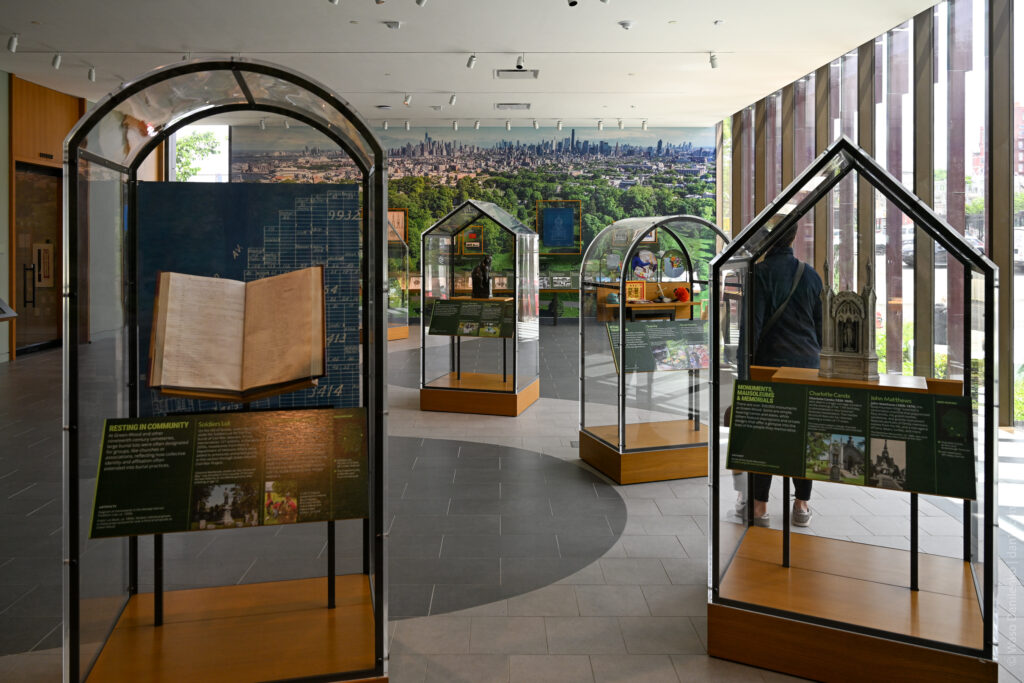
Green-Wood Cemetery is no longer just a cemetery. It’s a vibrant cultural institution with a rich program:
- Night tours of the catacombs — several times a year, only in a guided group
- Catacomb Concerts — chamber music performed in the underground crypts by candlelight (Death by Audio Arcade has organized concerts here)
- Moonlight Tours — nighttime walks through the cemetery
- Bird watching walks — birdwatching walks during migration season
- Greatest Hits tours — overview tours of the main graves with a historian
- Battle Hill tours — tours focusing on the Revolutionary War
- Art & Architecture tours — sculpture and mausoleums
- Private tours available upon request
Seasonal events:
- Dia de los Muertos — November: Mexican festival of the dead right in the cemetery
- Cherry Blossom Walk — April: Japanese cherry blossoms bloom near ornamental ponds
- Holiday Tree Lighting — December
Visitors information
📍Green-Wood Cemetery / 25th St, Brooklyn, NY 11232
Subway:
- R train to 25th Street – exit directly at the main gate
- F/G train to 4th Ave – 9th St – 10-minute walk
- N/W train to 36th Street – 15-minute walk to the south entrance
- Hours: Daily in summer 7:00 AM – 7:00 PM, in winter 7:00 AM – 5:00 PM
Admission is free; cemetery maps are available at the main gate