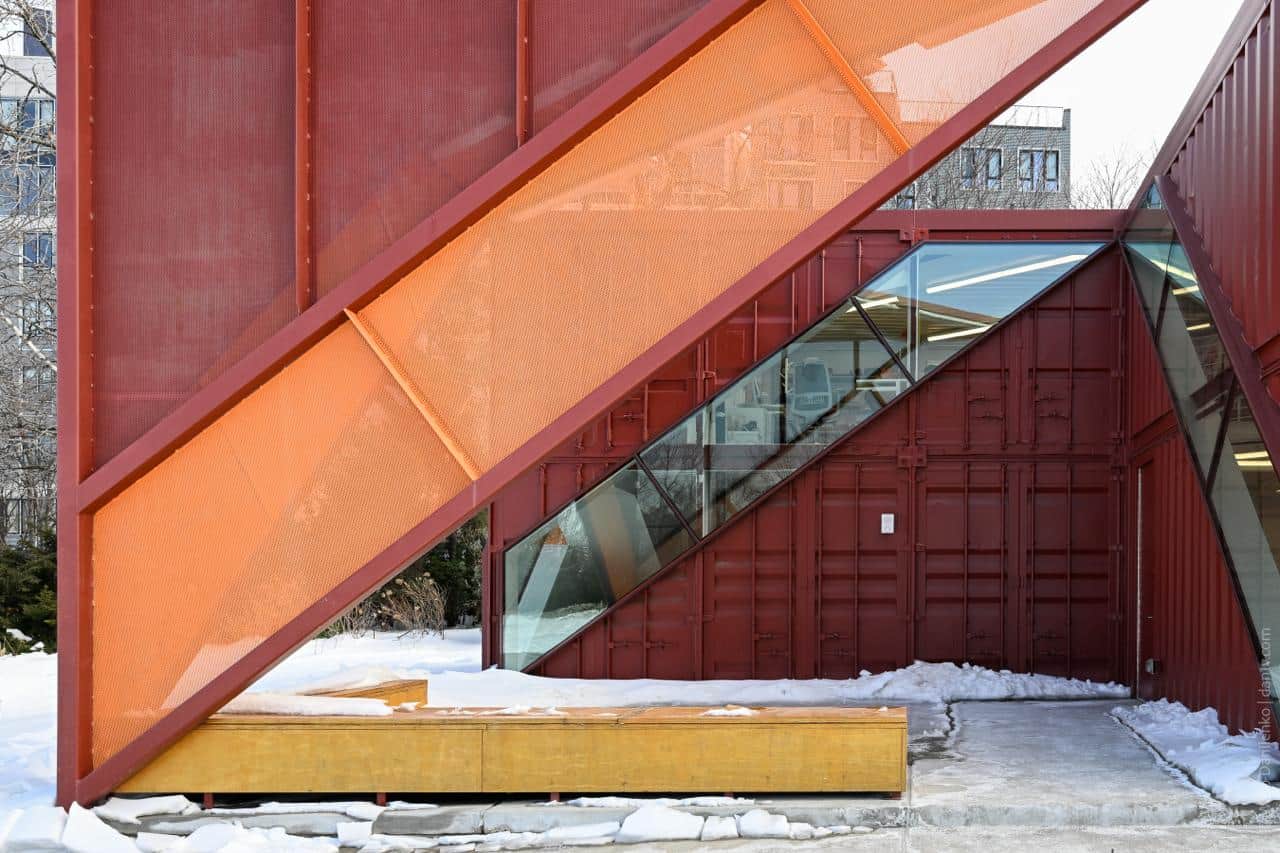
A very unusual museum story happened in New York: a large and famous museum, while moving to a new and more spacious building, gave a small park a piece of its old structure.
What park was it?
In Queens, right on the banks of the East River, there is Socrates Sculpture Park. It isn’t as large and fashionable as Storm King Art Center, not as unconventional as Omi International Arts Center, and not as intimate in spirit as TurnPark Art Space, but it has a fascinating history.
Until 1986, the Astoria waterfront (a Greek neighborhood in Queens) was an abandoned dump where trash was illegally discarded. That changed when the well-known American sculptor Mark di Suvero—whose studio was nearby—noticed the site.
He assembled a coalition of artists and local activists and hired more than a hundred workers (many of whom lived in nearby public housing). Within a year, they transformed the dump into a park for contemporary art. It was named after Socrates as a tribute to the strong Greek community in neighboring Astoria.
Socrates Sculpture Park operates year-round and admission is free. Over nearly 40 years, more than 1,200 artists from around the world have exhibited there. The park hosts sculpture exhibitions, film screenings, yoga and capoeira classes, and educational programs for teenagers.
Yet throughout its entire history, the park had never had a permanent building—no office, no classroom. Everything ran on enthusiasm and temporary structures.
What museum?
In 2012, the Whitney Museum of American Art (then still on Madison Avenue) commissioned the architecture studio LOT-EK to design a small educational pavilion.
They installed six shipping containers in a narrow space between the museum building and the sidewalk, creating a compact 65-square-meter space for workshops and small exhibitions.
LOT-EK is a very unusual New York architecture studio and one of the pioneers of container architecture. Their approach can be summed up in one phrase: “We start with what we find.” Over the past two decades, LOT-EK has turned shipping containers into galleries, houses, offices, student dormitories, and even entire cultural spaces—transforming a utilitarian cargo module into a full architectural language.
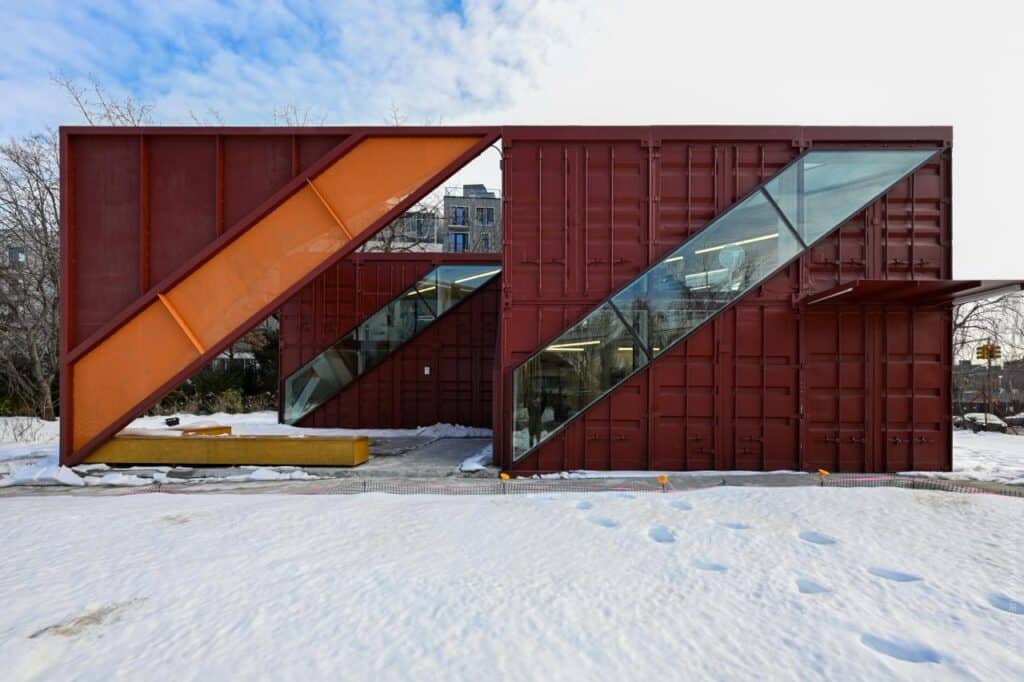
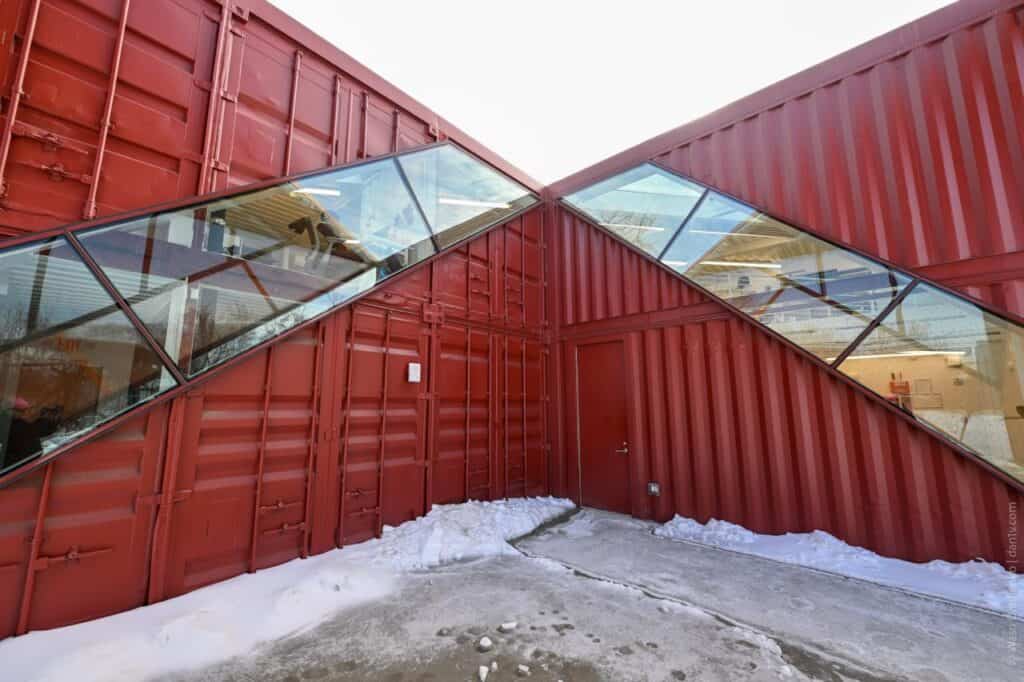
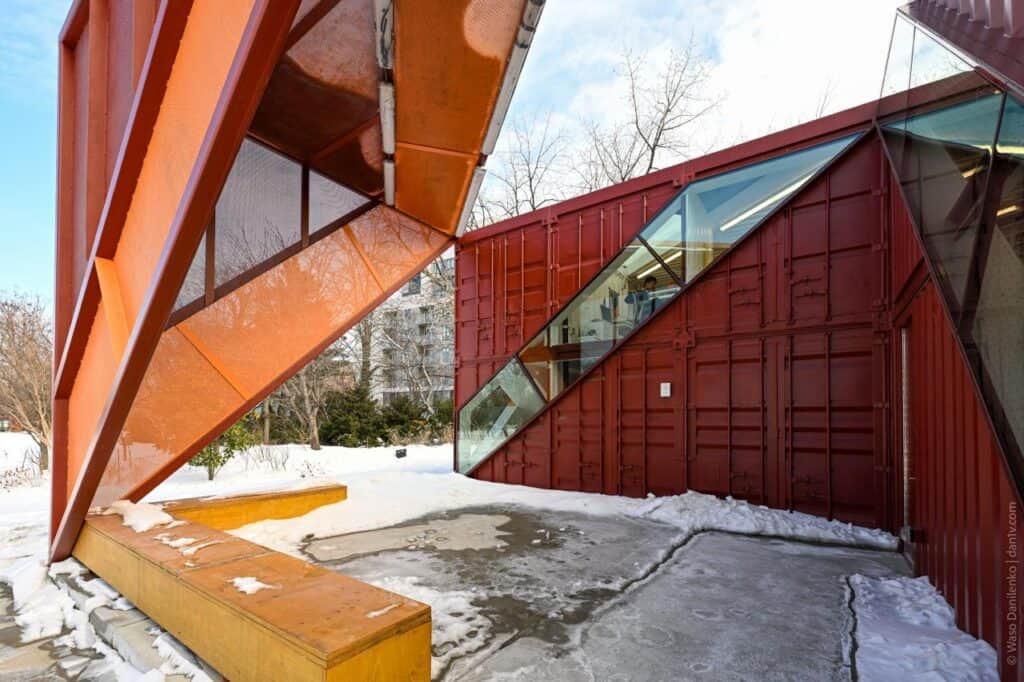
In 2015, the Whitney Museum moved to its new building in Chelsea, Manhattan. Instead of dismantling the container pavilion, the museum donated it to Socrates Sculpture Park. However, LOT-EK redesigned it: they added a dozen more containers to the original six and named the project “The Cubes.”
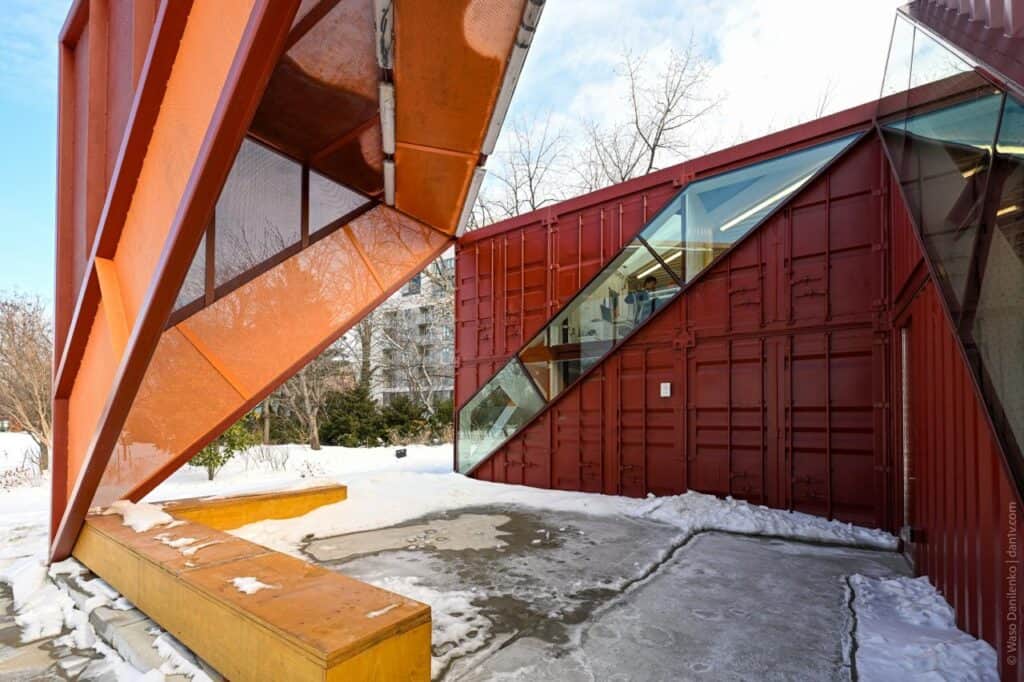
The Cubes
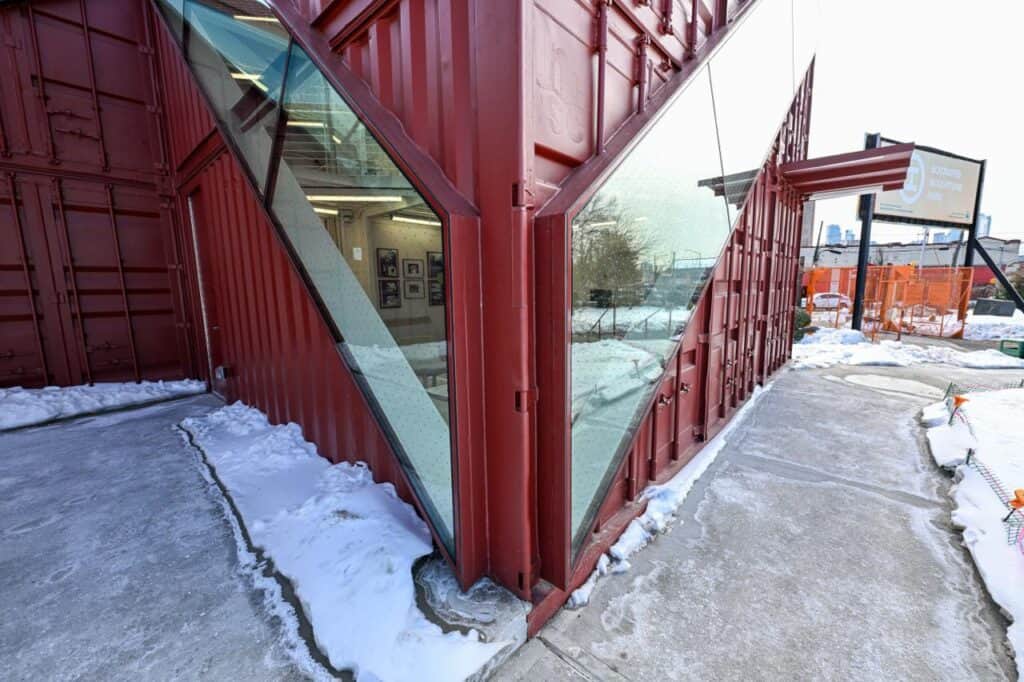
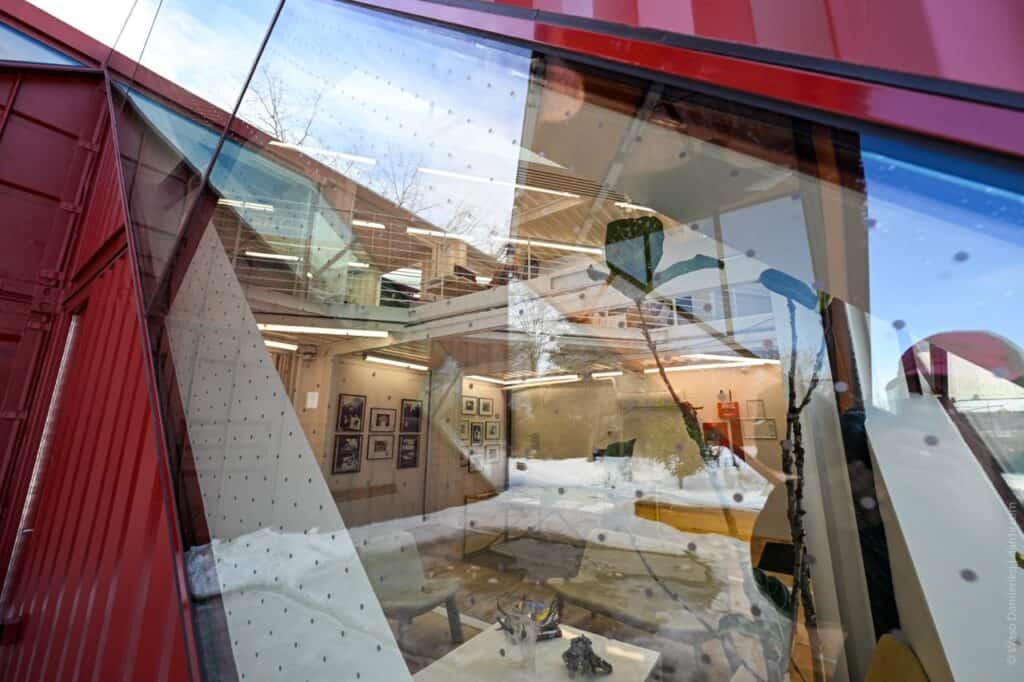
In total, eighteen shipping containers stacked into a two-story structure. Along the walls and roof run diagonal chevron-shaped bands of glass that allow natural light inside while letting park visitors see what is happening in the building.
The first floor contains a multifunctional space for classes and exhibitions, as well as an open terrace.
The second floor houses offices.
Solar panels are installed on the roof.
A park that began when an artist saw potential in a dump eventually received its first real building—assembled from containers donated by a museum that no longer needed them. It’s hard to imagine a story that rhymes with itself more perfectly.
Practical information
📍 The Cubes / Socrates Sculpture Park / 32-01 Vernon Blvd, Queens, NY 11106
Free admission
Park website: socratessculpturepark.org