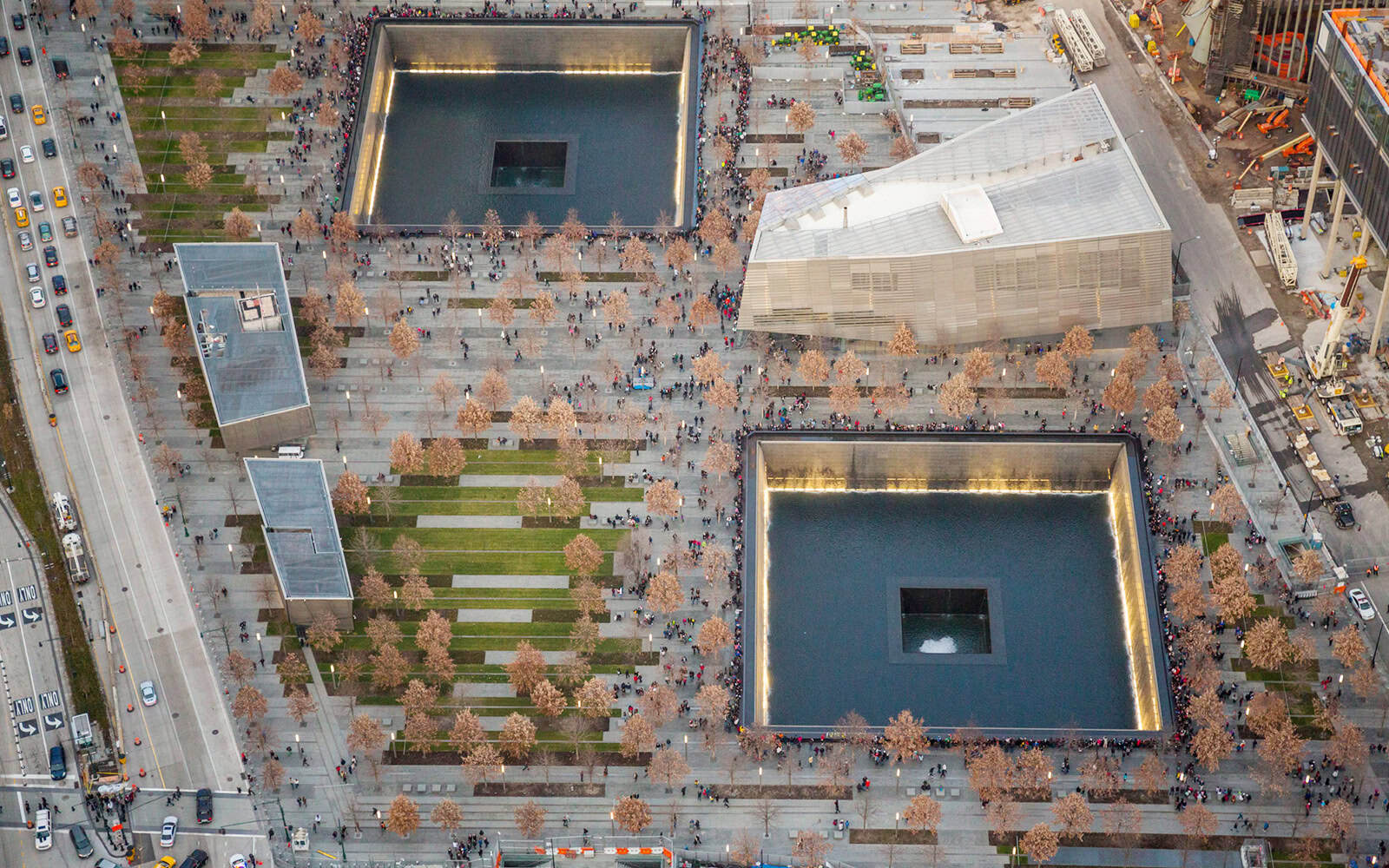
Ground Zero is a site in the heart of Lower Manhattan where the Twin Towers collapsed on September 11, 2001, taking the lives of nearly three thousand people. Today, it is home to the National Memorial, the 9/11 Museum, and One World Trade Center. It has also become an entire district that stands as a symbol of the resilience of New York and the United States as a whole.
Interesting facts about Ground Zero
- The fountains precisely replicate the outlines of the towers’ foundations. Each of the two memorial pools occupies exactly the same footprint as the foundations of the North and South Towers—about 4,000 square meters each.
- Water in the fountains falls to a depth of 9 meters into a “bottomless” basin, making Ground Zero the largest man-made waterfall in North America.
- The names of all 2,977 victims are engraved on the memorial. The arrangement ensures that the names of colleagues, friends, and members of the same crew are placed next to each other.
- Each year, on a victim’s birthday, volunteers place a white flower next to their name on the memorial panel.
- In October 2001, a tree with burned roots was found in the debris. It was nursed back to health in a special nursery in the Bronx and later returned to the site.
- The museum is located 21 meters underground, within a space that originally held back the waters of the Hudson River during construction.
- One World Trade Center stands 541 meters tall, or 1,776 feet. The number is symbolic—it marks the year the United States Declaration of Independence was signed.
- Railway tracks still operate beneath the memorial. The restored station reopened in November 2003, just two years after the tragedy.
The history of Ground Zero
The Twin Towers
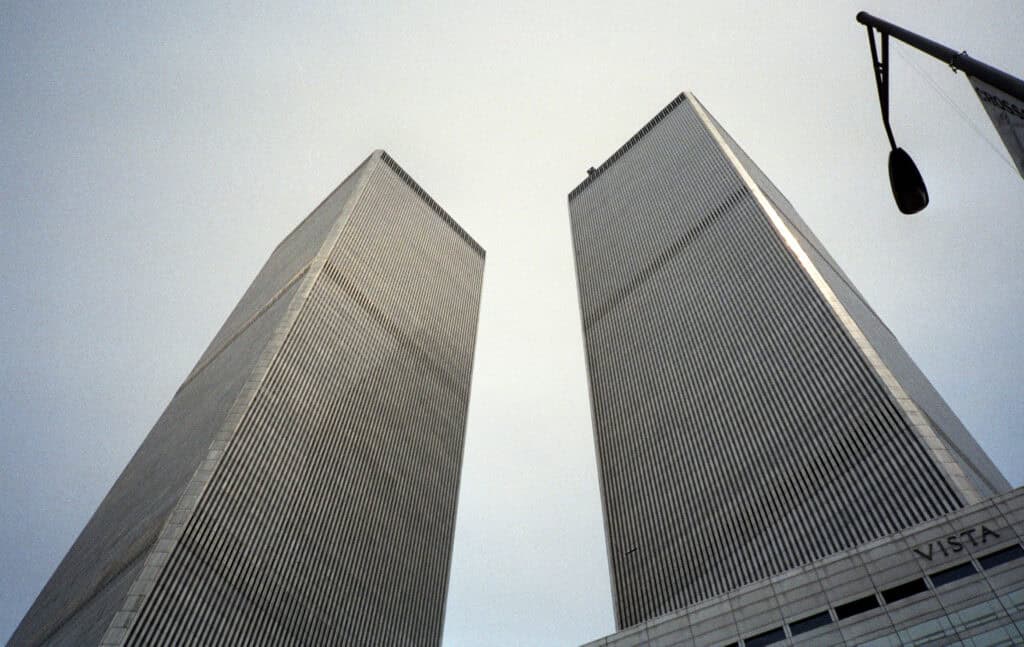
The original World Trade Center was born out of Cold War ambitions and symbolized the economic power of the United States. The Twin Towers were designed by Japanese-American architect Minoru Yamasaki. Construction of the North Tower (Tower 1) began in 1968, and the South Tower (Tower 2) in 1969. They opened in 1972 and 1973.
- At the time of its opening in 1972, the North Tower was the tallest building in the world at 417 meters (110 stories).
- Around 50,000 people worked in the towers, and another 200,000 visited daily.
- The design was revolutionary: load-bearing exterior walls instead of internal columns known as a “tube structure.”
- Construction cost approximately 900 million US dollars in 1970s prices.
- The underground levels housed a shopping area and the PATH transportation hub.
September 11, 2001: the tragedy that changed the world
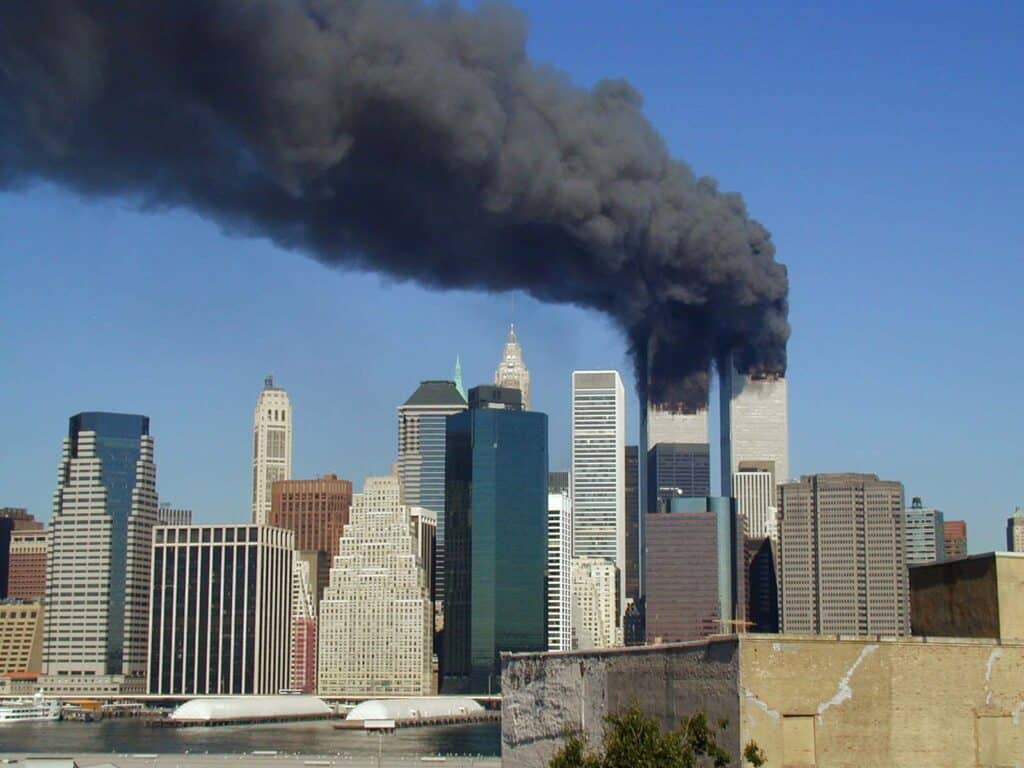
On a warm September morning in 2001, terrorists from the group al-Qaeda hijacked four passenger airplanes. At 8:46 in the morning, the first plane struck the North Tower; at 9:03, the second struck the South Tower. The South Tower collapsed at 9:59, and the North Tower at 10:28. The entire world watched live.
“The city turned into an apocalypse. We ran from clouds of dust rushing down Fulton Street. Everything turned gray — cars, trees, people. New York never stopped breathing for a second, but in those moments it felt as if it had suffocated.”
A total of 2,977 people were killed: citizens of 90 countries, firefighters, police officers, office workers, and tourists. More than 6,000 were injured.
The term “Ground Zero” existed long before 2001; it was used to describe the epicenters of nuclear explosions in Hiroshima and Nagasaki. After September 11, the term became synonymous with the site of the tragedy in New York.
Rebuilding New York
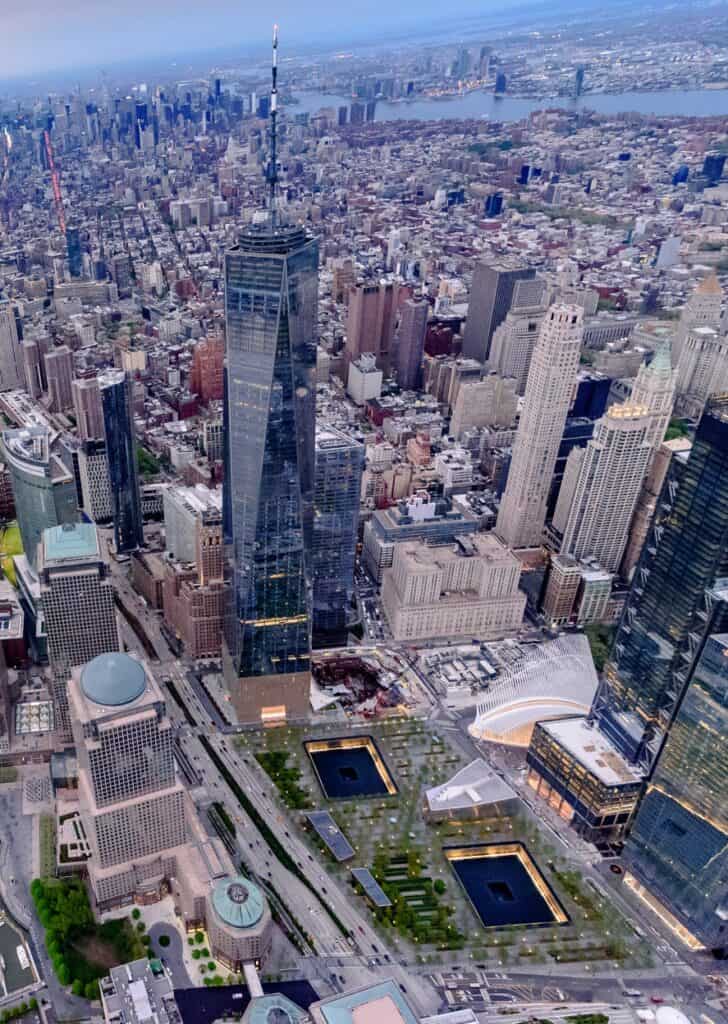
Clearing the debris took nearly nine months and was completed on May 30, 2002. Work continued around the clock: thousands of workers, firefighters, and volunteers manually sorted through the wreckage in search of remains.
More than 1.8 million tons of metal, concrete, and dust were removed. On the day the last beam was taken away, a moment of silence was held. That same day, the “Tribute in Light” tradition was born — two vertical beams of blue light that rise into the sky above Lower Manhattan each year on the night of September 10 to 11, reaching a height of nearly 6 kilometers.
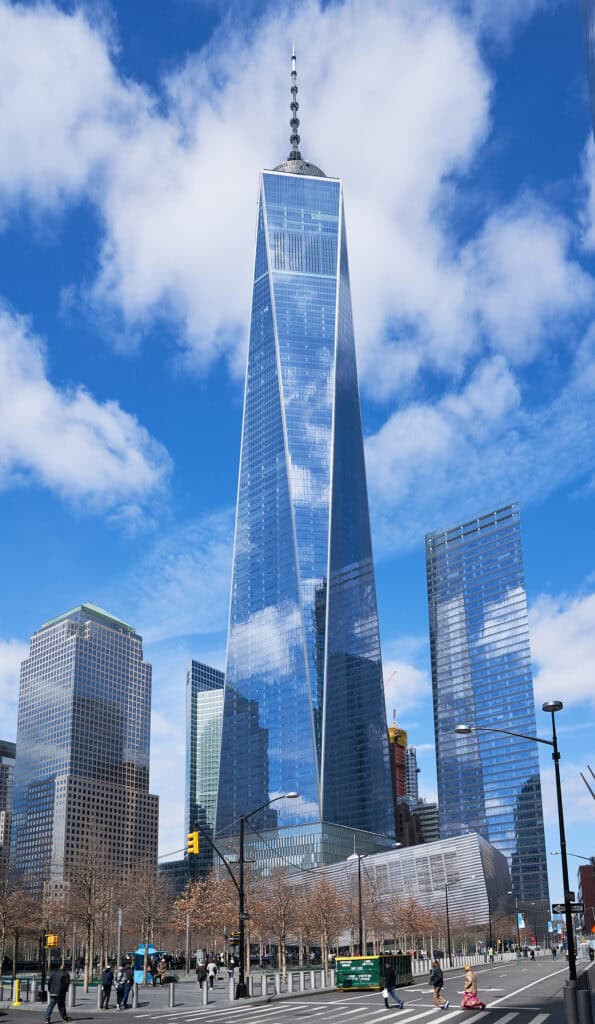
Debates about what should be built on the site lasted for years. One World Trade Center, designed by Skidmore, Owings & Merrill, was begun in 2006 and opened in November 2014 — thirteen years after the tragedy. Its height is exactly 1,776 feet (541 meters), referencing the year of the Declaration of Independence. It is the tallest building in the Western Hemisphere.
In addition to the main tower, the complex includes several other skyscrapers: 3, 4, and 7 World Trade Center have already been completed and are occupied, while construction of 2 World Trade Center, designed by Bjarke Ingels, remains on hold awaiting a major anchor tenant.
Another major project was the Oculus transportation hub by Santiago Calatrava, opened in 2016 at a cost of approximately 4 billion US dollars — more than the main tower itself. Critics called it extravagant, while tourists consider it one of the most beautiful interiors in New York. Both views have merit.
The engineering solution known as “The Bathtub”
One of the most remarkable engineering stories involves the so-called “Bathtub” — a reinforced concrete structure 21 meters deep, built in the 1960s around the underground levels of the World Trade Center to keep out the waters of the Hudson River.
After the towers collapsed, engineers feared that the walls of the Bathtub might fail, flooding Lower Manhattan. This did not happen, and today the structure is used as part of the underground 9/11 Museum.
Where Ground Zero is located
Ground Zero is not a single point but an entire complex: two memorial fountains, an underground museum, new World Trade Center towers, the Oculus, and a park. Locals and tourists often get confused — the term technically refers to the site where the Twin Towers once stood, while the entire district is officially called the World Trade Center.
It is located in Lower Manhattan, in the Financial District. The exact address of the memorial is 180 Greenwich Street, New York, NY 10007. It is about a 10-minute walk from the Brooklyn Bridge and 5 minutes from Wall Street.
What to see at Ground Zero
The 9/11 Memorial
These are not just fountains: each pool occupies the exact footprint of a tower, and water falls 9 meters down, symbolizing absence and irreparable loss. The names of all 2,977 victims are engraved on bronze panels surrounding the pools. On each victim’s birthday, a white flower is placed beside their name.
National September 11 Memorial Museum
An underground exhibition located 21 meters below ground, featuring personal belongings and voice messages of victims, as well as preserved structural elements of the towers. The museum opened in 2014 and quickly became one of the most visited in New York, attracting more than 3 million visitors annually.
- “Bent steel” — twisted metal structures from the base of the towers bearing traces of fire
- The “Last Column” — a 36-ton steel beam covered with messages and photographs during the cleanup
- Fire engine Engine 21 — destroyed during the collapse
- The “Wall of the Unidentified” — a repository of remains that have not been identified
- Memorial halls with photographs and voice recordings of each of the 2,977 victims
One World Observatory
One World Trade Center is the tallest building in the Western Hemisphere (541 meters, or 1,776 feet). The observation deck, One World Observatory, is located on floors 100 to 102 at a height of 386 meters. The elevator ride takes 60 seconds and includes a time-lapse of 500 years of New York City’s development. The view stretches across Manhattan, the Statue of Liberty, New Jersey, and up to 80 kilometers on a clear day.
The Survivor Tree
In October 2001, a few weeks after the tragedy, workers discovered a living tree — a Callery pear — with charred branches and burned roots among the wreckage.
It was taken to a Bronx nursery, where it was cared for for nearly ten years. The tree even survived Hurricane Irene in 2011, when it was uprooted again — only to be replanted and restored once more.
In 2010, it was ceremonially returned to the memorial. Today, it stands among young oak trees, visibly different: crooked, uneven, and marked with scars.
Each spring, the Survivor Tree blooms with white flowers, becoming a small but meaningful event. People come специально to see it. Nurseries across the United States grow seedlings from this tree and distribute them to communities that have experienced natural disasters or tragedies. In this way, one pear tree from the ruins of Lower Manhattan has become a living symbol that has quite literally taken root across the country.
The Oculus (WTC Transportation Hub)
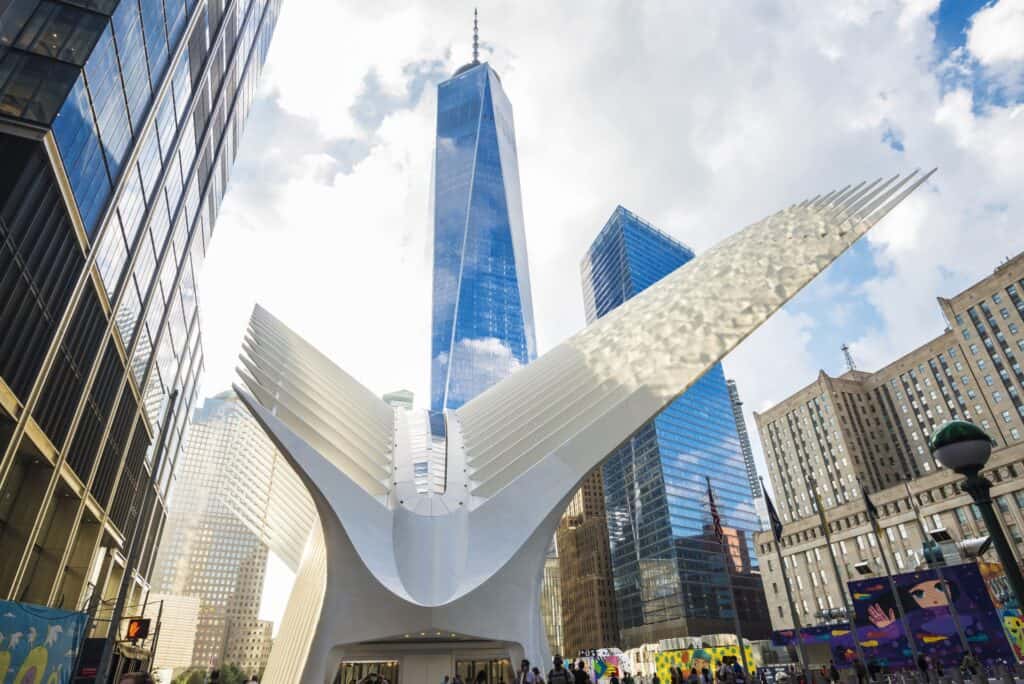
The Oculus transportation hub (PATH station) is one of the most discussed architectural landmarks in New York. Designed by Spanish architect Santiago Calatrava, it cost approximately 4 billion US dollars — more than One World Trade Center itself.
Its structure, resembling a bird’s skeleton with outstretched wings, symbolizes peace and rebirth. Inside is the bright white Westfield shopping center. Each year on September 11 at 10:28 (the moment the North Tower collapsed), a beam of sunlight passes through a специально designed opening in the roof and illuminates the central hall. Admission is free, and it is worth visiting for the architecture alone.
Ground Zero in popular culture
“Extremely Loud and Incredibly Close” (2011), directed by Stephen Daldry and based on the novel by Jonathan Safran Foer, tells the story of a boy who lost his father in the Twin Towers. It stars Tom Hanks and Sandra Bullock and was filmed partly in New York.
“United 93” (2006), directed by Paul Greengrass, is a documentary-style reconstruction of events aboard the fourth hijacked plane. It is considered one of the most honest and emotionally тяжелых films on the subject.
The Twin Towers appeared in hundreds of Hollywood films — from “Godzilla” to “Spider-Man.” After September 11, many studios removed scenes featuring the World Trade Center from films that were already completed. For example, the trailer for the first “Spider-Man” (2002) included a scene with the towers that was later cut.
Artists such as Elton John, Paul McCartney, and Jay-Z have dedicated songs to the victims of the World Trade Center or incorporated the imagery of Ground Zero into their work.
Visitor information
Ground Zero / 180 Greenwich Street, New York, NY 10007
Subway: E, 1 to World Trade Center; R, W to Cortlandt Street; A, C, J, Z, 2, 3 to Fulton Street
The memorial is open daily from 07:30 AM to 09 PM; admission is free
The 9/11 Museum is open Monday through Sunday from 09 AM to 07 PM; tickets cost $33 to $36
One World Observatory is open Monday through Sunday from 09 AM to 09 PM; tickets start from $44