
New York can be explored through its skyscrapers, bridges, and train stations, but to understand how the city became what it is today, you need to visit the Museum of the City of New York. It is located on Museum Mile along Fifth Avenue, directly across from Central Park.
The museum tells the story of the city as a living organism. Here, you can trace how a tiny Dutch settlement grew into a metropolis and discover what makes New York unique. The museum focuses on four key themes: money, density, diversity, and creativity. Its collection contains around 750,000 objects, including works of art, costumes, photographs, maps, and much more.
The museum is worth visiting for anyone interested in urban history, architecture, photography, and fashion, as well as families with children.
Interesting Facts About the Museum of the City of New York
- It once occupied Gracie Mansion. In 1923, the collection was housed in Gracie Mansion, but as it grew, the museum needed a building of its own.
- The museum building opened in 1932. Designed by architect Joseph H. Freedlander, it was constructed of red brick and light-colored stone in the Colonial Revival style.
- A dollhouse featuring real works of art. From 1916 to 1935, Carrie Stettheimer created a miniature house decorated with works by avant-garde artists. These included a miniature version of Marcel Duchamp’s painting Nude Descending a Staircase. After being restored, the dollhouse went back on display at the museum.
- A film about New York’s history. The museum experience begins with Timescapes, a film that tells the story of 400 years of New York history. Stanley Tucci narrates the film. Free audio guides are available in several languages for international visitors, but Russian is not among them.
- One ticket, two museums. Admission to the Museum of the City of New York also includes free entry to the neighboring El Museo del Barrio, which focuses on Latino and Latin American art.
- Contemporary New York through photography. Every three years, the museum presents New York Now, an exhibition in which photographers capture what the city looks like today.
History of the Museum of the City of New York
In the early 20th century, New York was changing rapidly. Old neighborhoods were being demolished and replaced by skyscrapers, and traces of the city’s past were disappearing along with them. To preserve its history, the Museum of the City of New York was founded in 1923. Its first director was historian Henry Collins Brown. Initially, the collection was housed at Gracie Mansion, a historic residence that now serves as the official home of New York City’s mayor.
The collection gradually grew thanks to donations from local residents. New York families gave the museum antique furniture, silverware, clothing, toys, and other objects connected to the city’s history. Soon, there was no longer enough room for all the exhibits, and the museum needed a building of its own. The city provided a site on Fifth Avenue, while private donations funded the construction. The new building opened in 1932, during the Great Depression.
Since then, the museum has undergone several renovations and expansions. New exhibition galleries and educational spaces have been added, and part of the collection has become accessible through digital archives. Today, the museum explores not only New York’s architecture and development but also the people who have shaped the city. Some exhibitions, for example, focus on social movements and civic activism, showing how residents themselves have influenced the city’s future.
Architecture of the Museum of the City of New York
The Museum of the City of New York on Fifth Avenue was originally designed and built specifically as a museum, rather than converted from an old mansion, as many neighboring buildings along Museum Mile were. The city provided the site between 103rd and 104th Streets, while private donations helped fund the construction and the museum’s operations. The design was selected through an architectural competition won by Joseph H. Freedlander. Construction took place from 1929 to 1932, despite the economic crisis that followed the stock market crash of 1929. The museum officially opened on January 11, 1932.
The building is designed in the Neo-Georgian style, which draws inspiration from the architecture of America’s colonial era. Its defining features include red brick, light-colored stone details, and a symmetrical facade. The main entrance is framed by columns, while the interior features marble floors and staircases. Niches on the facade facing Central Park contain statues of Alexander Hamilton, one of the Founding Fathers of the United States, and DeWitt Clinton, a former mayor of New York City and governor of New York State. Their presence emphasizes the building’s connection to the city’s history and the people who helped shape its development.
The museum also fits naturally into the surrounding Upper East Side neighborhood, where wealthy New York families built grand mansions during the 19th and early 20th centuries. In 1967, the building was designated a New York City landmark, protecting its historic appearance.
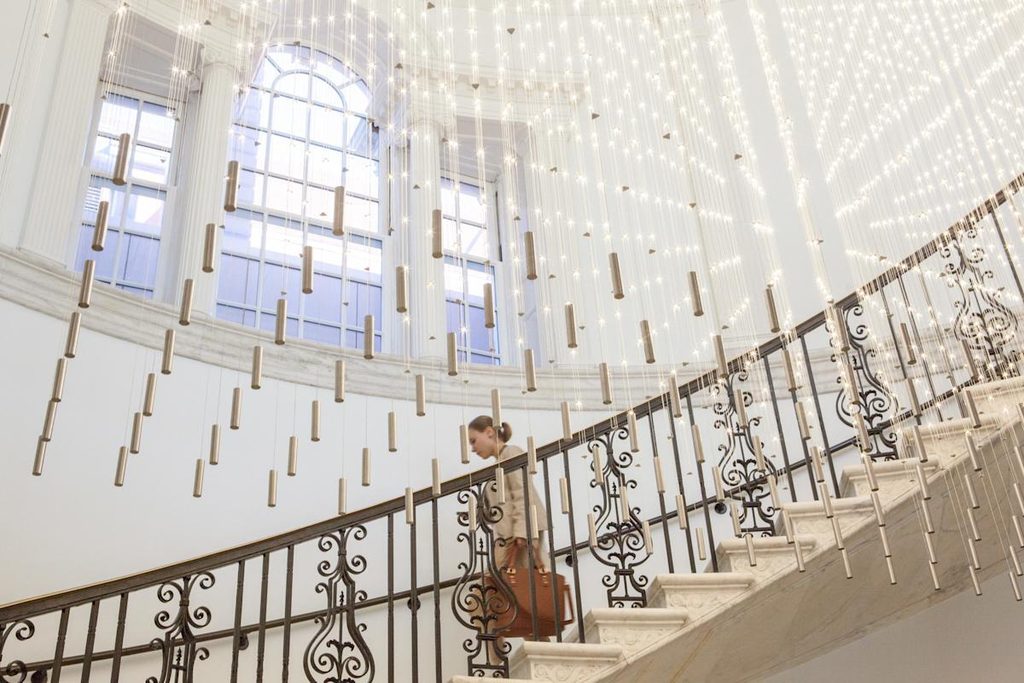
Over time, the museum’s collection continued to grow, creating a need for additional space. A major renovation and modernization project was completed in 2015. The architects at Polshek Partnership preserved the historic facade while introducing contemporary spaces, including a glass addition.
The Collection of the Museum of the City of New York
The Museum of the City of New York houses hundreds of thousands of objects that tell the story of the city’s history, culture, and everyday life. One of the most fascinating sections is devoted to photography. The collection includes photographs by Jacob Riis, who documented life in poor neighborhoods and drew attention to housing conditions, as well as the archives of Byron Company, a photography studio whose images capture New York’s restaurants, theaters, and mansions in the late 19th and early 20th centuries. These photographs offer a glimpse of the city before many of its modern skyscrapers were built.
The museum also holds clothing from different eras, ranging from everyday outfits to evening gowns and theatrical costumes. The history of New York’s theater scene is represented through posters, set designs, costumes, and documents related to Broadway. Another section of the collection focuses on childhood, featuring antique toys, dolls, dollhouses, and children’s books. Among its most unusual objects is Carrie Stettheimer’s famous dollhouse, decorated with miniature works by avant-garde artists.
The museum also preserves furniture, silverware, porcelain, glassware, antique maps, and city plans that reveal how New York’s streets and neighborhoods have changed over time. It also explores contemporary art, including graffiti. For example, the exhibition Above Ground: Art from the Martin Wong Graffiti Collection showcased street art from the collection of artist Martin Wong.
One of the museum’s main exhibitions is New York at Its Core, which explores New York’s past, present, and future. It tells the story of the city’s development through four key themes: money, density, diversity, and creativity. New York’s history unfolds through the lives of immigrants, politicians, entrepreneurs, builders, and ordinary residents.
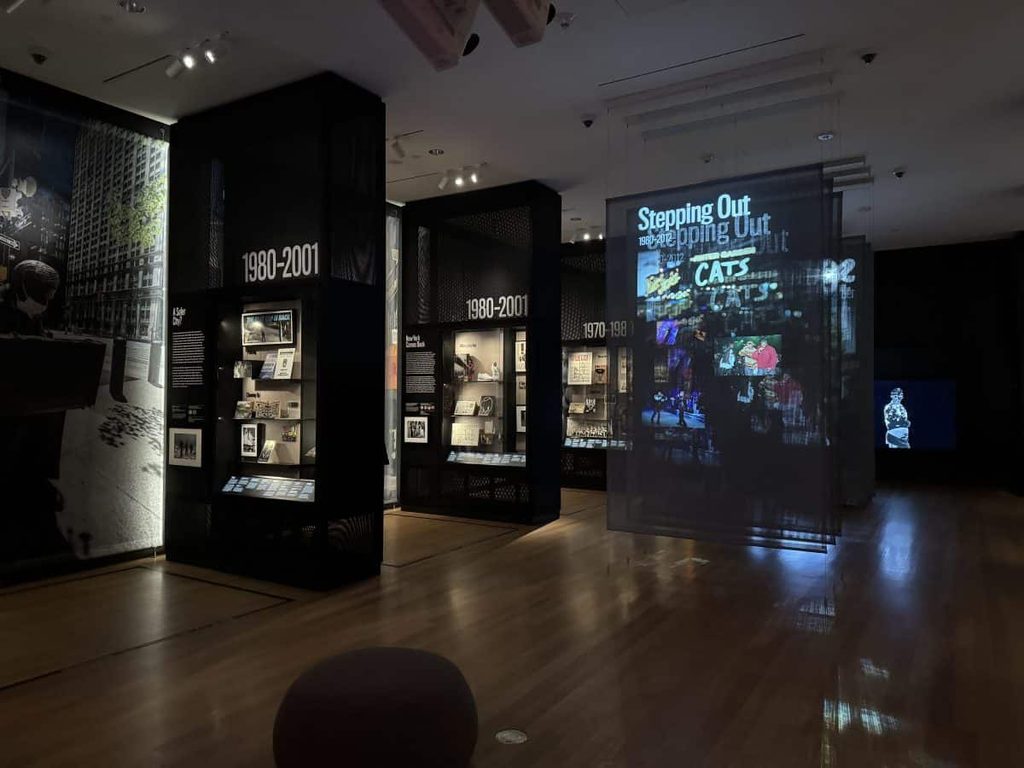
Temporary exhibitions offer different perspectives on the city. Among the projects scheduled for fall 2026 is The Occupied City: New York and the American Revolution, which explores New York during the American Revolution. The exhibition examines life in the city during the struggle for American independence and will run through May 1, 2027. Another project, New York Now: After Dark, focuses on New York’s nightlife, presenting the city through the eyes of contemporary photographers. It is scheduled to open to the public on November 20, 2026.
Another major exhibition is Activist New York, which explores how New Yorkers across different eras have fought for their rights, better housing conditions, equality, and social change. In addition to historical exhibitions, the museum hosts interactive projects devoted to music, dance, and film. During the holiday season, it also presents Gingerbread NYC, an exhibition featuring gingerbread houses.