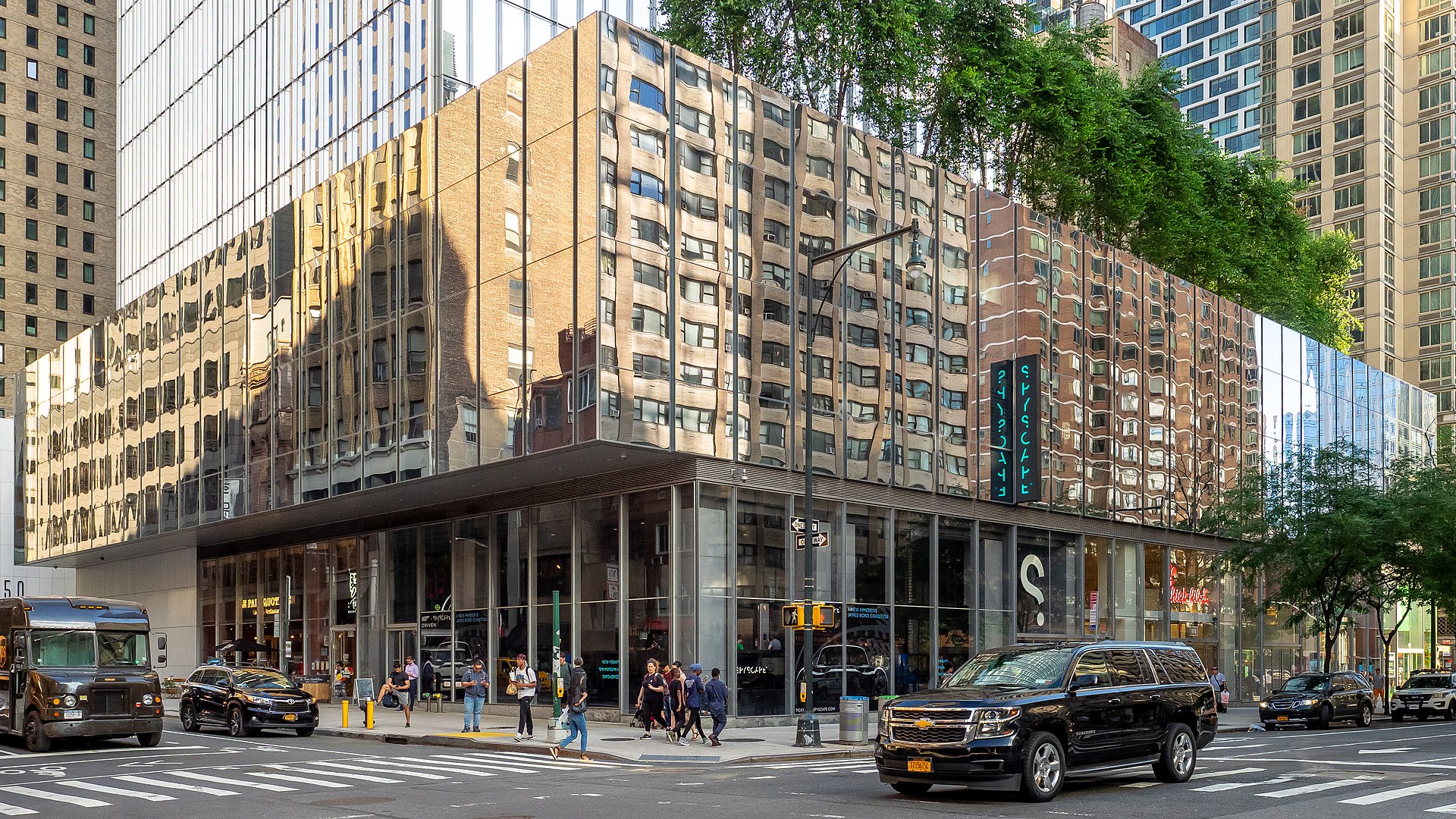
Would you like to try your hand at being a spy? You can weave your way through laser beams, crack a code, or test how well you notice details and detect lies. You can do all this at SPYSCAPE, an interactive spy museum in New York City.
The museum is located in Midtown, on Eighth Avenue, near Central Park. It explores the world of real-life spies, secret operations, and surveillance technology, while giving visitors the chance to take on challenges that test their attention to detail, logic, and stealth.
Unlike a traditional museum, where exhibits are mostly viewed from a distance, SPYSCAPE encourages visitors to get involved. At the end of the experience, you can discover which spy skills you are best at.
Interesting Facts About SPYSCAPE Spy Museum
- SPYSCAPE traces the evolution of espionage, from World War II-era codes to modern hacking and cyber espionage.
- Among its exhibits is a model of Alan Turing’s machine, which helped the Allies crack Germany’s Enigma code during World War II.
- Former intelligence officers and cybersecurity experts helped develop the museum, so many of its challenges are based on real-world espionage techniques.
- Visitors receive a special wristband with a chip that records their performance during the challenges. At the end of the visit, the results help determine which spy skills they are best at.
- One of the museum’s most popular challenges is the laser maze, where visitors must make their way between real laser beams without touching them.
- The museum also has a bookstore and gift shop where visitors can find books and merchandise related to espionage.
The History of SPYSCAPE Spy Museum
SPYSCAPE opened in 2018 after four years of development. A former British intelligence officer was involved in creating the exhibits. The founders wanted to present espionage not just as a thing of the past, but as something that affects everyone today. Surveillance, hacking, and data leaks are part of everyday life, and the museum aims to show where our personal information goes, both online and in the real world.
The museum is also known for involving people with firsthand experience in the field. Its architects worked with former intelligence chiefs and hackers, helping make the exhibits feel authentic rather than like movie sets.
The building was designed by Adjaye Associates, led by renowned British architect Sir David Adjaye. The museum covers approximately 5,500 square meters, and its exhibition is divided into separate pavilions, each with its own theme, materials, and design.
The idea is simple: to make visitors feel like spies, the space itself needs to play with their perception. Passages between the pavilions conceal what lies ahead before opening into large multimedia rooms filled with interactive exhibits. One pavilion, for example, resembles a drum made of darkened steel with curved panels. David Adjaye was responsible not only for the building but also for the exhibition design and even the furniture. The sound design was created by composer Nick Ryan, whose work has included projects for Tate and the Imperial War Museum.
Things to Do at SPYSCAPE Spy Museum
The exhibition is divided into seven themed zones:
- Encryption. This zone explores the codebreakers who cracked Germany’s Enigma cipher during World War II, one of the war’s major turning points. The museum displays a replica of the original Bombe machine, developed by Alan Turing to decipher German messages. Visitors can also try cracking a coded message themselves.
- Deception. This zone tells the story of Robert Hanssen, an FBI agent who secretly passed classified information to the Soviet Union and later Russia from 1979 to 2001. The museum holds documents related to his case. This is the most psychological zone, where visitors can learn to recognize lies and, if they wish, take a lie detector test.
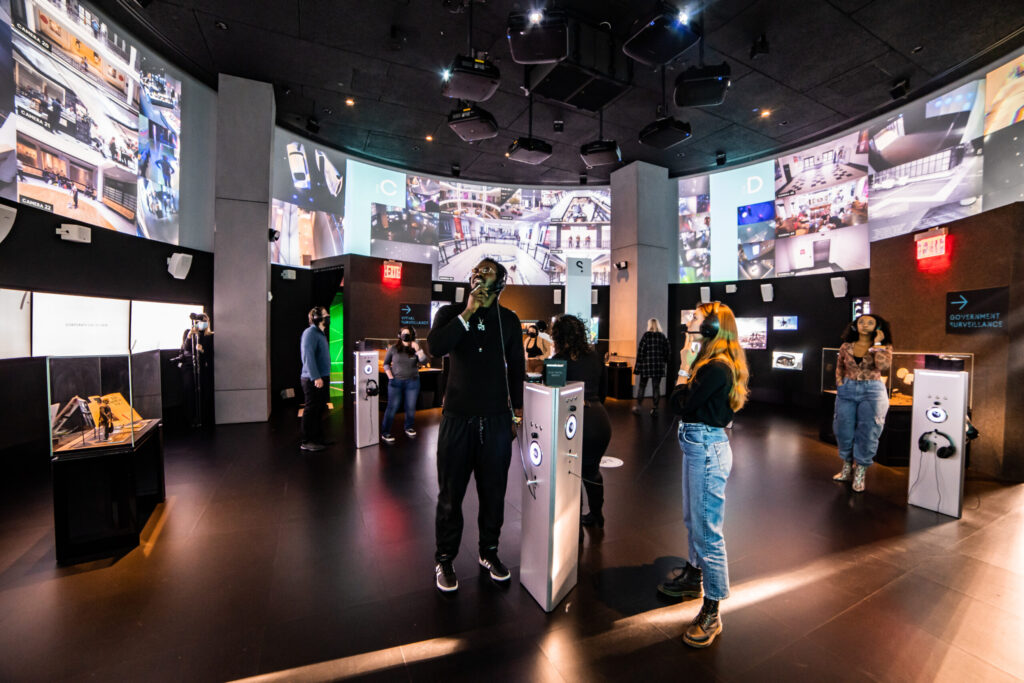
- Surveillance. This circular room offers a 360-degree experience exploring Edward Snowden and mass surveillance. It encourages visitors to think about how much other people and organizations can learn about them.
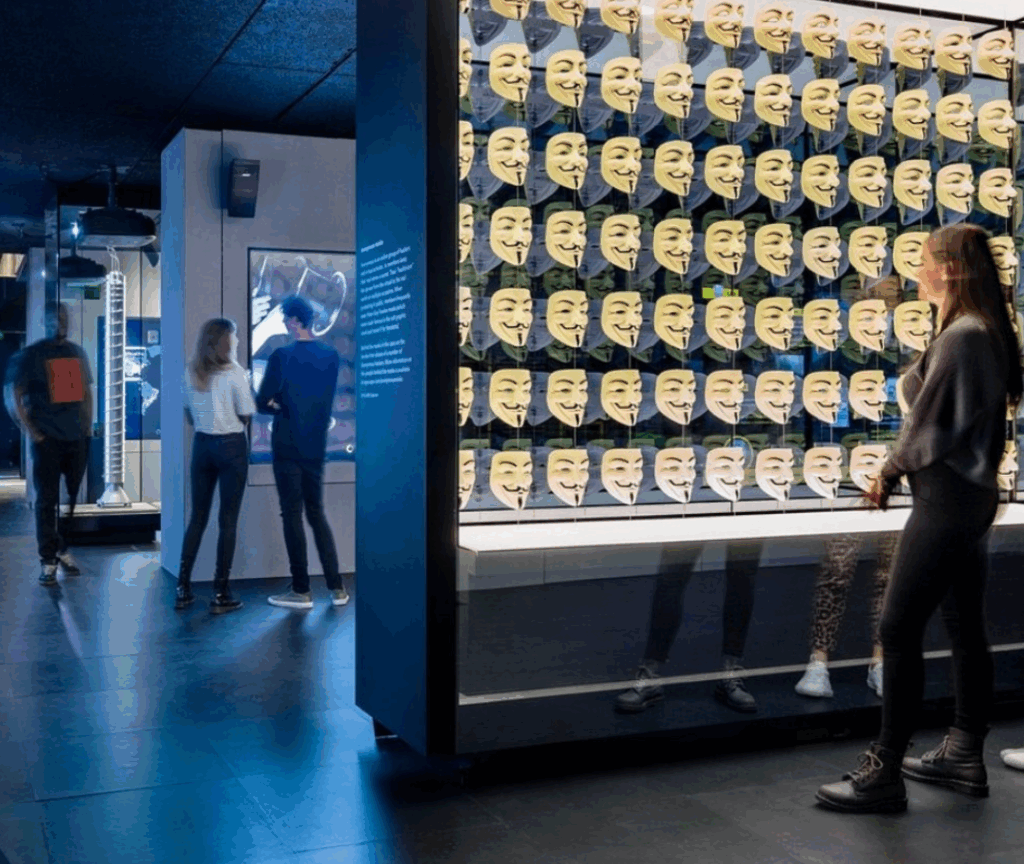
- Hacking. This zone focuses on Anonymous, a group of hacktivists known for their online campaigns. Visitors can learn how hackers operate, what they do, and why this world fascinates some people while frightening others.
- Cyber Warfare. This section explores Stuxnet, a computer worm believed to have been used against Iran’s nuclear program. It is widely regarded as the first known cyber weapon to cause significant physical damage to industrial equipment.
- Special Ops. This zone features espionage gadgets from World War II and tells the story of Virginia Hall, an American who worked for Britain’s Special Operations Executive (SOE). Hall helped the French Resistance during the war. This area is also home to the museum’s most famous challenge: visitors must make their way through a tunnel without touching the moving laser beams.
- Intelligence. This zone explores the role of espionage and intelligence analysis during the 1962 Cuban Missile Crisis, when the world came close to nuclear war.
Your Spy Profile at SPYSCAPE Spy Museum
The main attraction at SPYSCAPE is that you don’t just walk through the galleries — you take on challenges that assess your abilities. At the entrance, each visitor receives a digital wristband that records their results throughout the experience.
At the end, you’ll discover which espionage role best matches your strengths. Possible profiles include an agent recruiter, cryptographer, hacker, intelligence analyst, field operative, special operations officer, counterintelligence officer, spy network director, surveillance officer, or technical specialist.
You can share your results with friends and compare which roles each of you would be best suited for.
Temporary Exhibitions at SPYSCAPE Spy Museum
In addition to its permanent galleries, SPYSCAPE hosts temporary exhibitions, often inspired by popular franchises. One example was Batman x SPYSCAPE, which challenged visitors to test their detective skills using a mobile app.
In 2022, the museum presented Driven: 007 x SPYSCAPE, described as the first official James Bond exhibition in New York City. Its centerpiece was the actual Aston Martin DB5 driven by Pierce Brosnan in the film GoldenEye.
During the COVID-19 pandemic, the museum made an online version of its 007 x SPYSCAPE exhibition available for free. In 2020, it also launched its own podcast featuring real-life intelligence professionals. Special exhibitions sometimes require an additional fee, so it’s best to check the price in advance.