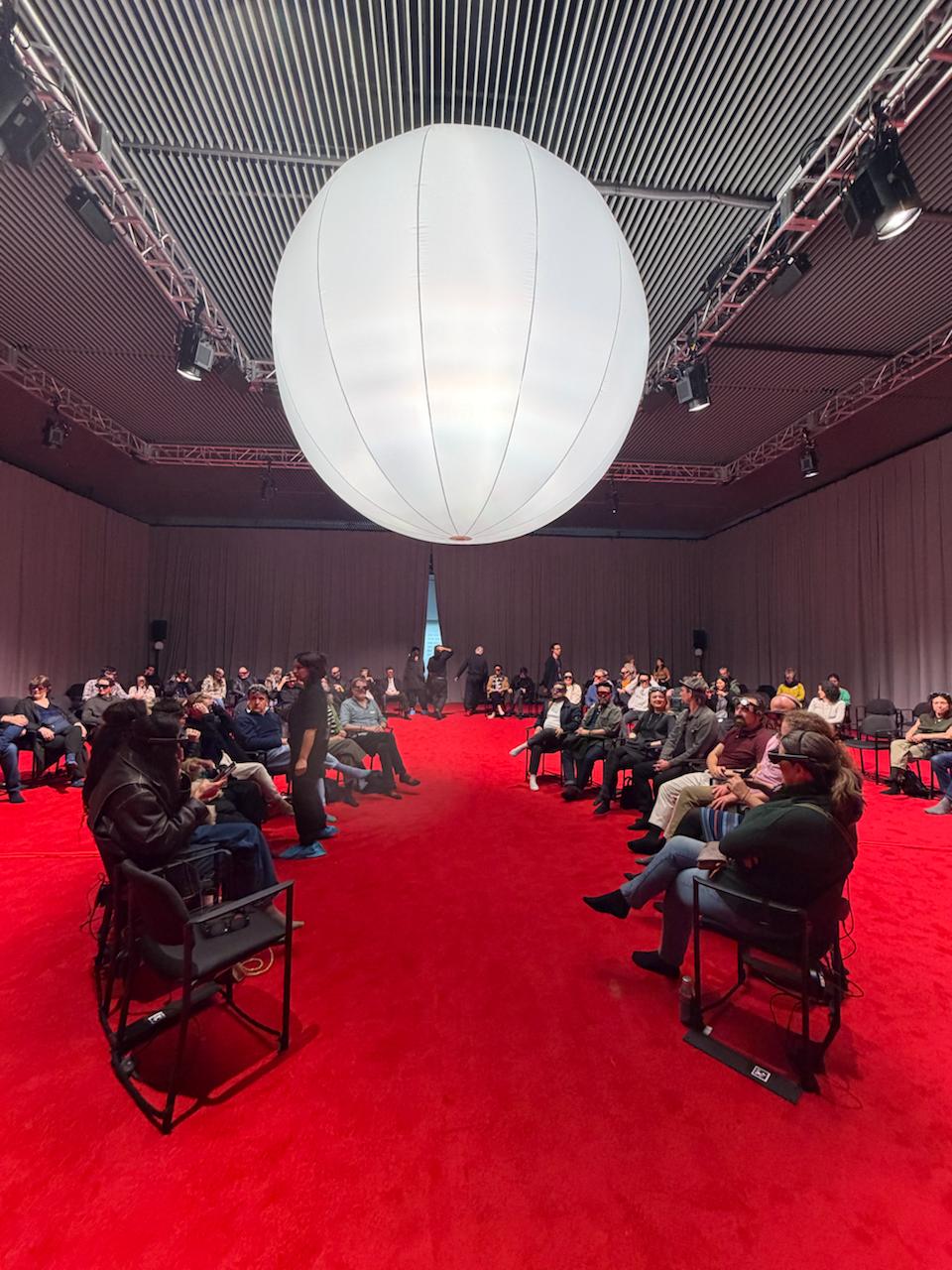
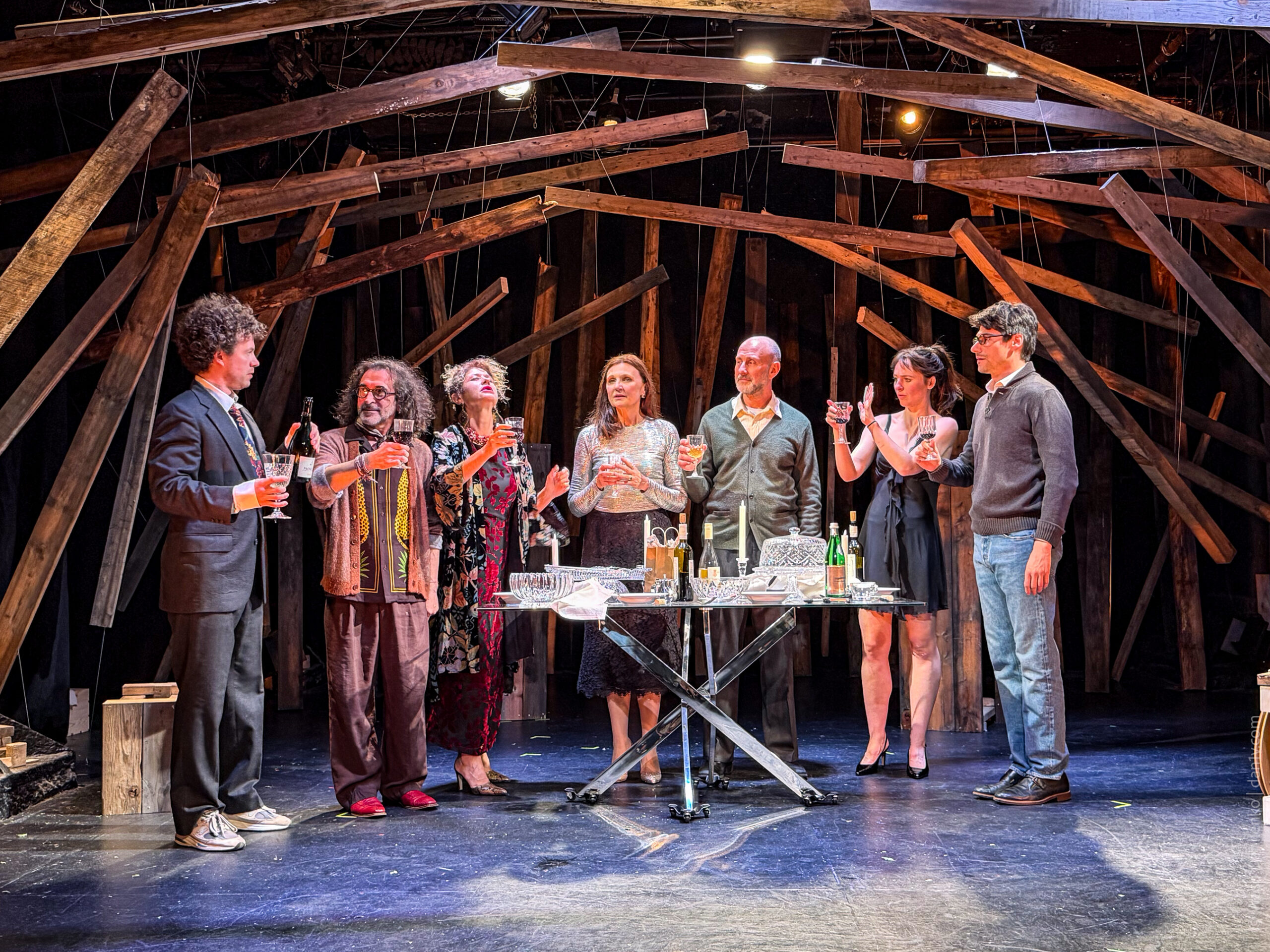
Yesterday in New York, the premiere of The Naked Woman took place, and Waso Danilenko watched it with great pleasure:
The story begins during the winter holidays in a country house in upstate New York. A family of Soviet immigrants gathers around one table. At the center of this family is Misha — a real father figure, a man whose life seems to be built on reason, strong character, Soviet toughness, and the ability to survive in any situation.
But one random and unexpected meeting, which also gives the play its title, starts something that feels familiar not only from Chekhov, but even more from Ibsen: the happy family facade begins to crack, and behind it we slowly see secrets, old hurts, and moral debts that can no longer be ignored.

The powerful appearance of the Naked Woman, played by the wonderful Audrey Arnold, lights a spark in the eyes of the audience for a short moment. But then it turns into a real family fire: every next twist becomes a new test, at the same time exposing the other characters with all their old complaints and questions that had been frozen for years.
For example, 35-year-old Dasha, Misha’s daughter, is trying to escape from several triangles at once. MaryKate Glenn gives a truly star-level performance in this role.
The first triangle is romantic. Dasha is pregnant by her new boyfriend, Dan-2: a reliable, rational American man, next to whom life should finally become adult and clear. But Dan-2 is not in a hurry to propose, and Dasha herself has ended things with Danechka (or at least kind of has) — her long-time lover, “her own” guy from the past, where there is less stability, but much more passion.
But the geometry of her life does not stop there. Dasha is also stuck in a cultural triangle: between Dan’s American rationality and loyalty to a shared cultural code with Dan-1. Although, to be honest, Dan-1 seems to have almost nothing except a fire of feelings — maybe only Zoya, his mother and a bard, who sings Russian romances with a guitar by that same fire.
And somewhere between these men, languages, and versions of the future — including her own profession, which her father Misha once so strongly wanted for her — Dasha has to understand what she really wants.

Maria Atlas is wonderful both as an actress and as a singer. Oleg Blinov (Dan-1) and Max Samuels (Dan-2), playing the first and the second boyfriend, are so natural that during the whole play the audience keeps changing its sympathy from one Dan to the other.
Dasha’s attempts to find at least some points of support become even more complicated because her main family support — her reasonable and respected father — begins to lose this authority. First because of the Naked Woman who appears for just a moment, and then because of his long relationship with other women, including his neighbor/mistress Lilya, played by Tatyana Kot.
Roman Freud in the role of Misha was so convincing and strong that the audience was ready to forgive his character almost anything, especially because his hero quickly and bravely took responsibility for his actions. This makes it even harder to believe that Roman received the text of the play only five days before the premiere (!). Before him, the father was supposed to be played by the well-known Hollywood actor Ilya Volok, who returns to the show for its second week.
Luckily, besides all the dramatic twists and complicated relationships, the play is full of sharp humor. Much of it is built on a cultural break between different worlds and generations, something many of us understand very well. It feels like every family like this had its own Uncle Grisha, the father’s brother, played here by Dima Koan. Russian and English are mixed in a smart and careful way, reminding us of a similar technique in the recent film Anora, which won the Oscar for Best Picture.
The comparison with film is not accidental. The authors of the play — Allie Avital (playwright and director) and Alia Azamat Ashkenazi (playwright and producer) — first wrote this story as a film script, and only this year adapted it for the theater stage. This is where the speed and cinematic feeling of the scenes come from. The amazing work with sets and costumes also helps a lot — production design by Pili Weeber and costume design by Kostya Goncharuk.
I also want to separately mention Natasha Goubskaya in the role of Misha’s wife Rina.. In her performance, this is not just a woman who happens to live next to a strong, complicated, and far from perfect man. She becomes one of the quietest and most precise centers of the play. Her character goes through pain, disappointment, and humiliation, but still finds the strength not only to understand, but also to forgive.

For me, this production was not just a play, but a whole trip upstate to Misha’s family. And even though every character left a complicated and not always simple impression, I really wanted to visit this family again. I wanted to be friends with them and celebrate New Year together — maybe because in this rough, imperfect story you can recognize yourself too.
And maybe this is why you want to love this big and friendly family: because you forgive them with the same ease with which you forgive yourself after similar turns in life. Or maybe for another reason: in immigration, we so often miss a family like Misha’s — not perfect, but big, warm, and loving.
📍The Naked Woman will run at Theatre 154 through June 14 / 154 Christopher St
🎟️ Tickets, starting from $43, are available on eventbrite.com