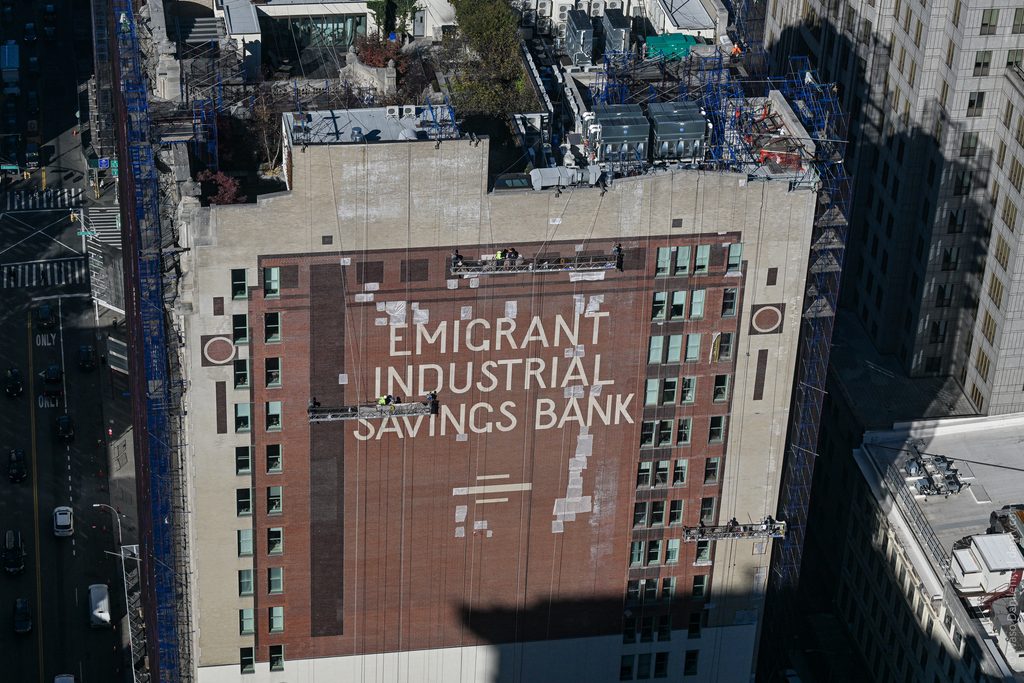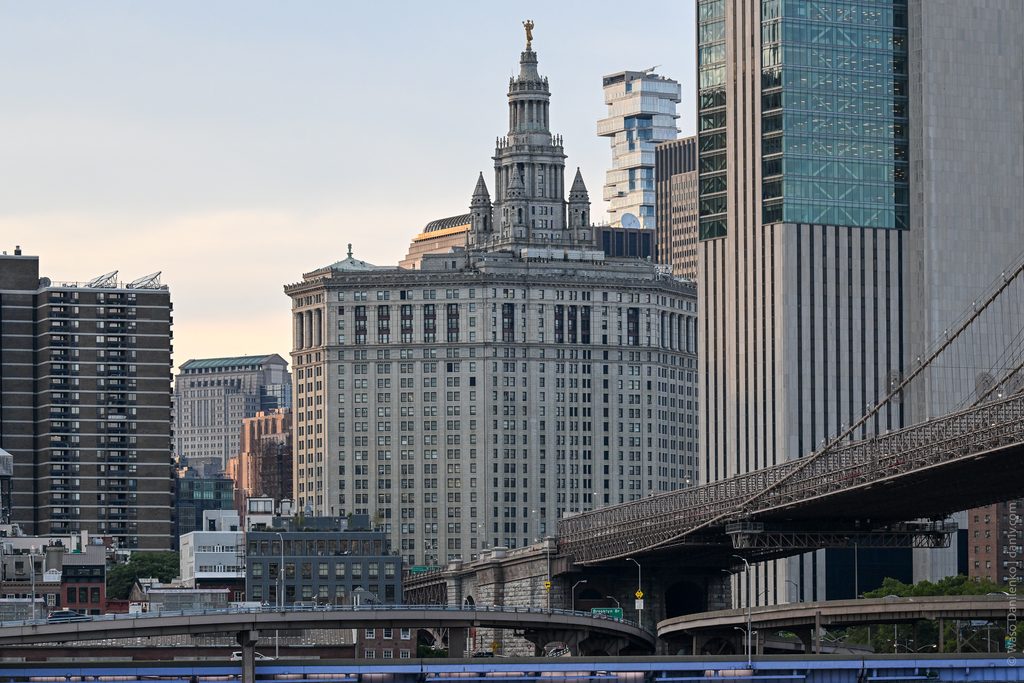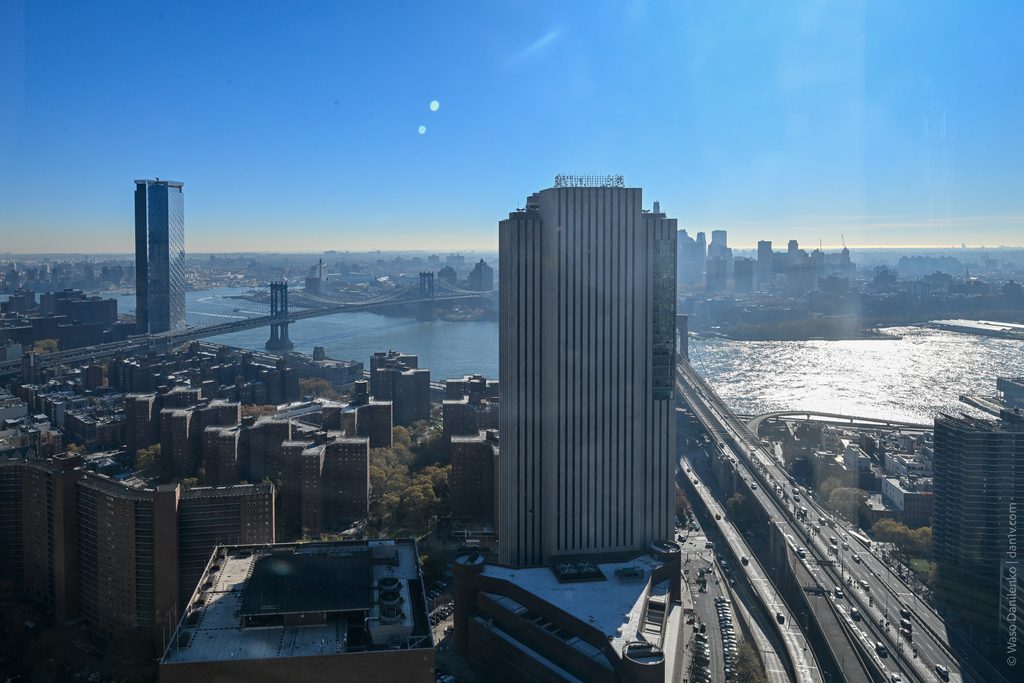
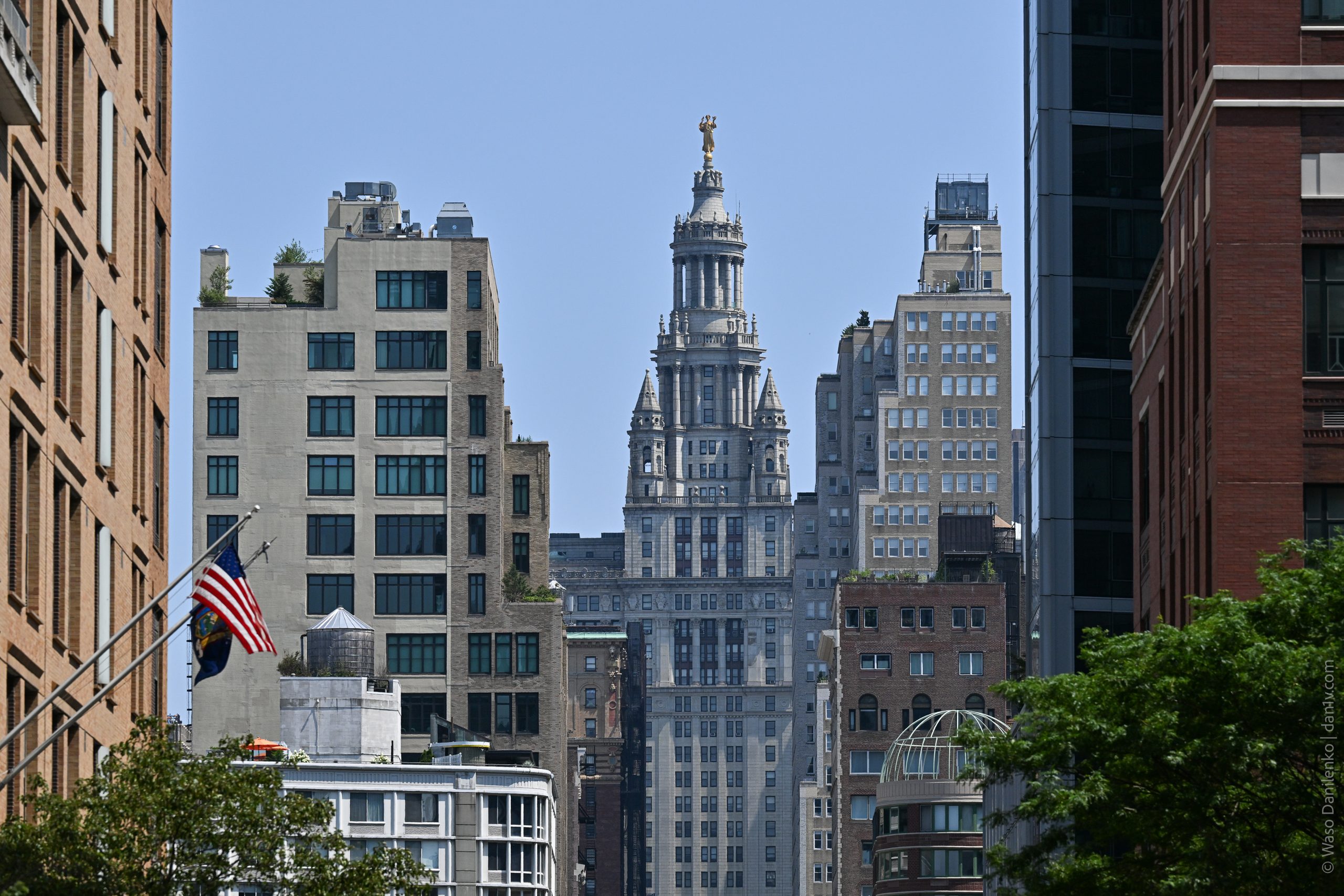
Municipal Building is one of Manhattan’s most recognizable buildings. It was constructed between 1909 and 1914 to house the city administration. The light-colored building, which stands approximately 177 meters tall, is crowned by a golden statue called Civic Fame, clearly visible from the Brooklyn Bridge. Today, it still houses various city government offices. Visitors may be interested in the Centre 360 observation deck, which offers views of Lower Manhattan and the surrounding area.
Interesting Facts About Municipal Building in New York
- The building was designed by William Mitchell Kendall of the architectural firm McKim, Mead & White. The project is often mistakenly attributed to Stanford White, who was murdered in 1906, two years before the architectural competition.
- Municipal Building was the first government building in the United States constructed directly above an active subway line. Chambers Street station, now served by the J and Z trains, was designed at the same time as the building.
- An unusual engineering solution was used during construction: of the 106 foundation caissons, 38 were placed on sand rather than bedrock. Despite this, the building has stood for more than a century.
- Since 1924, the 25th floor had been home to the WNYC radio station. According to Untapped New York, it was from here that the attack on Pearl Harbor was announced on December 7, 1941.
- In February 1935, a 68-kilogram piece broke off the hand of the Civic Fame statue crowning the building. It pierced the roof and fell into the cafeteria on the 26th floor. Following the incident, the hand was reinforced with metal rods.
- For a century, the building housed the city’s marriage bureau. Since 1930, more than 1.2 million couples have been married here, with ceremonies lasting only about four minutes. In 2009, the bureau moved to Worth Street.
- Audrey Munson, a famous American artists’ model of the early 20th century, was long believed to have posed for the Civic Fame statue. However, an alternative theory has emerged in recent years: the model may have been Hetty Anderson, a Black model from South Carolina.
- Civic Fame is the third-tallest figurative sculpture in New York City, after the Statue of Liberty and Jacques Lipchitz’s Bellerophon sculpture at Columbia University.
- The architecture of Municipal Building influenced the design of other American skyscrapers, including Terminal Tower in Cleveland and the Wrigley Building in Chicago. It is also associated with the Main Building of Moscow State University. According to one theory, Stalin saw the New York building and ordered the construction of similar high-rises.
History of Municipal Building
By the end of the 19th century, the city government had outgrown City Hall, which was built between 1803 and 1812. After the consolidation of Greater New York in 1898, it became clear that a small city hall could no longer accommodate the administration of all five boroughs. However, the city spent nearly twenty years unable to agree on a new building.
The first architectural competition was held in 1888. In 1890, the state senate prohibited construction in the park next to City Hall. In 1893, the city decided to demolish City Hall itself, but state legislation blocked that plan as well. In 1903, a design was commissioned for a 45-story tower with a streetcar terminal, but the mayor resigned, and the project was put on hold. The entire process was overseen by the Commissioner of Bridges because the building was originally conceived as a combination of city hall and transportation hub at the entrance to the Brooklyn Bridge.
The fourth competition took place in 1907–1908. The requirements were strict: the building had to have at least 20 floors, Chambers Street had to run beneath it, and the first floor had to have a ceiling at least 6 meters high. McKim, Mead & White won the competition with a design featuring 23 floors and a height of 137 meters. Two additional floors were later added, bringing the building’s height to 170 meters.
Construction nearly ran into trouble from the very beginning. An inspector rejected the original foundation design because the sand beneath the site could not support the building’s weight. The foundation was redesigned and excavated using pneumatic caissons, removing nearly 107,000 cubic meters of soil. Despite working under pressure of 3.2 atmospheres, only two workers developed decompression sickness, and no one died.
Construction began on July 17, 1909, and the steel frame was assembled in 1910–1911. In 1911, a fire broke out on the 25th floor. At the time, it was the highest fire ever fought by New York City firefighters. The statue was lifted into place atop the building in 1913. Government departments began moving in that December, and the building was completed in 1914. Its construction cost $12 million, half of which went toward the land. The city continued paying off the construction bonds until 1964, and the interest eventually amounted to more than twice the building’s original cost.
The building experienced several serious incidents in later years. In 1921, an elevator car fell, killing two people. In 1987, a piece of granite broke off the facade, prompting a restoration project that cost $58 million.
Architecture of Municipal Building
Municipal Building is one of New York’s last major buildings designed in the spirit of the City Beautiful Movement. This American urban planning movement emerged around the turn of the 20th century and promoted monumental, impressive public buildings intended to inspire civic pride. The architectural style is generally known as Beaux-Arts.
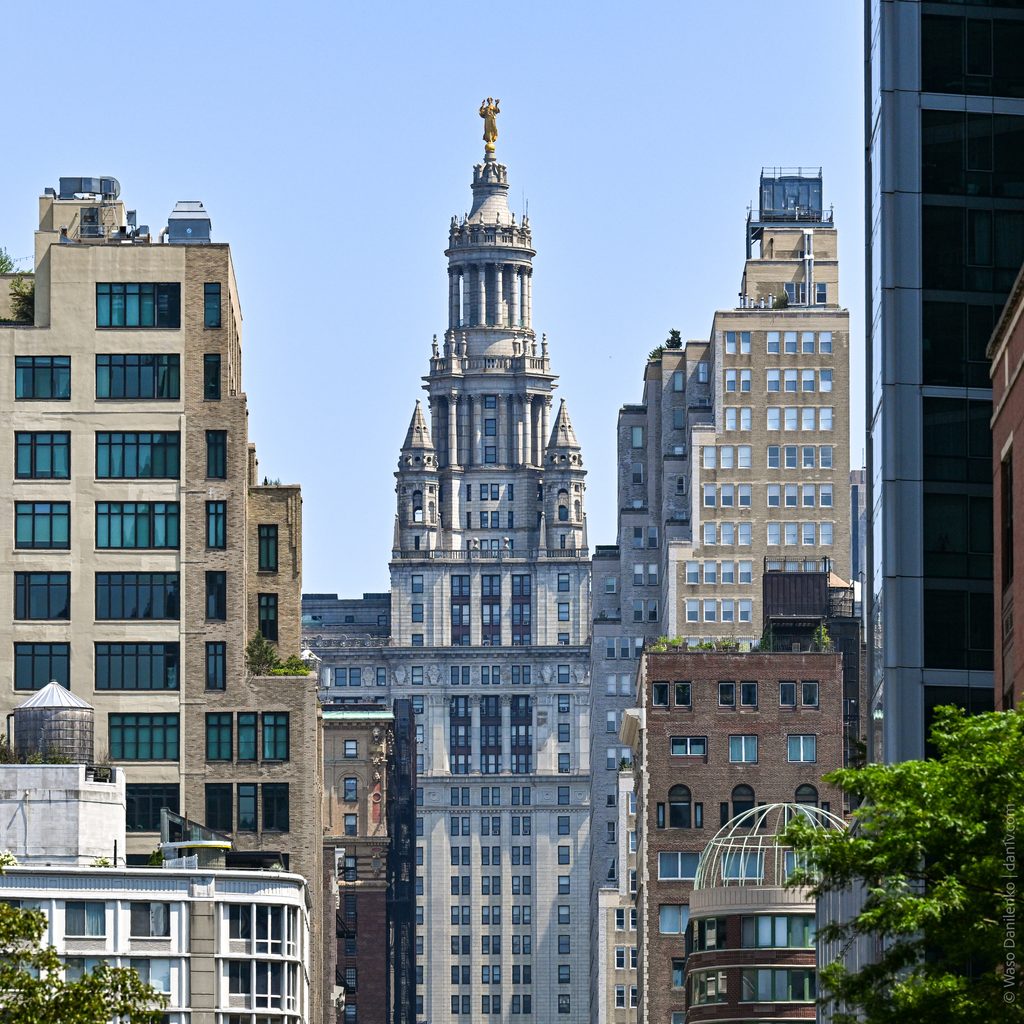
The building occupies an irregularly shaped site, a remnant of the old street grid in the Five Points neighborhood. Kendall fitted the building into a C-shaped horseshoe layout, opening toward the west in the direction of City Hall. The main facade along Centre Street stretches for 116 meters. It is clad in granite, with terracotta used above the 23rd floor.
The most prominent feature of the lower section is a three-story Corinthian colonnade and a central arch approximately 15 meters high. The entrance was modeled after the Palazzo Farnese, while the overall composition was inspired by the Arch of Constantine. Chambers Street originally ran through the arch, which became known as the “Cave of the Winds” because of the constant drafts. Today, the passage is closed, and since March 2026, the arch itself has been available for private events. The vaults of the south loggia are decorated with Guastavino tiles, similar to those found in the Oyster Bar at Grand Central Terminal.
The facade features the inscription MANHATTAN, with NEW AMSTERDAM and NEW YORK on either side. It also displays five coats of arms and bas-reliefs by Adolph Weinman, who incorporated Dutch windmills and beavers into the decorative details.
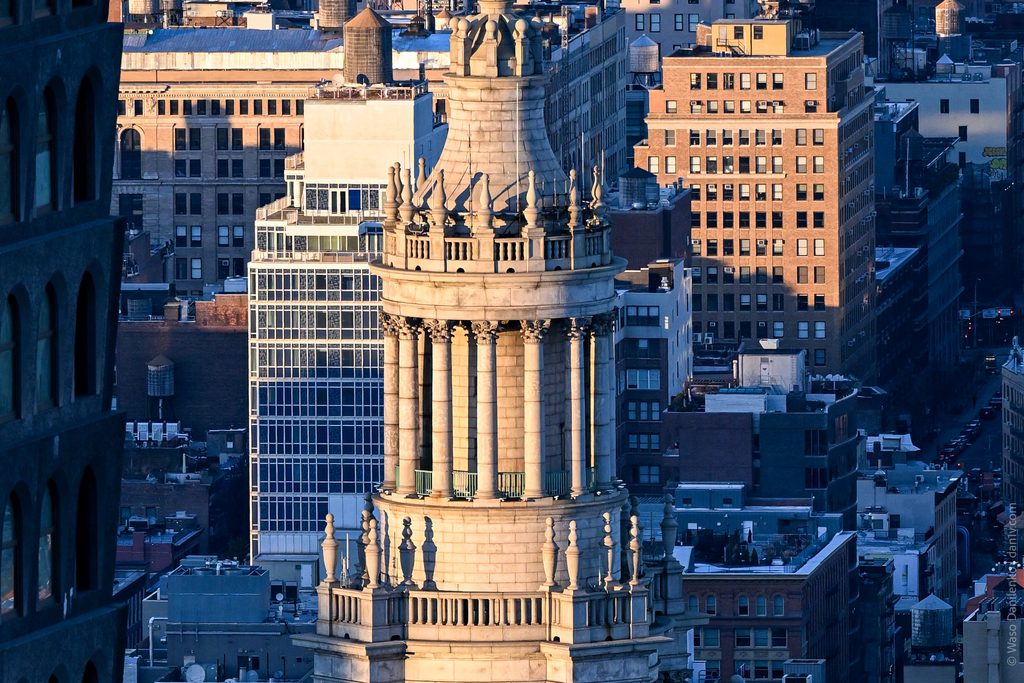
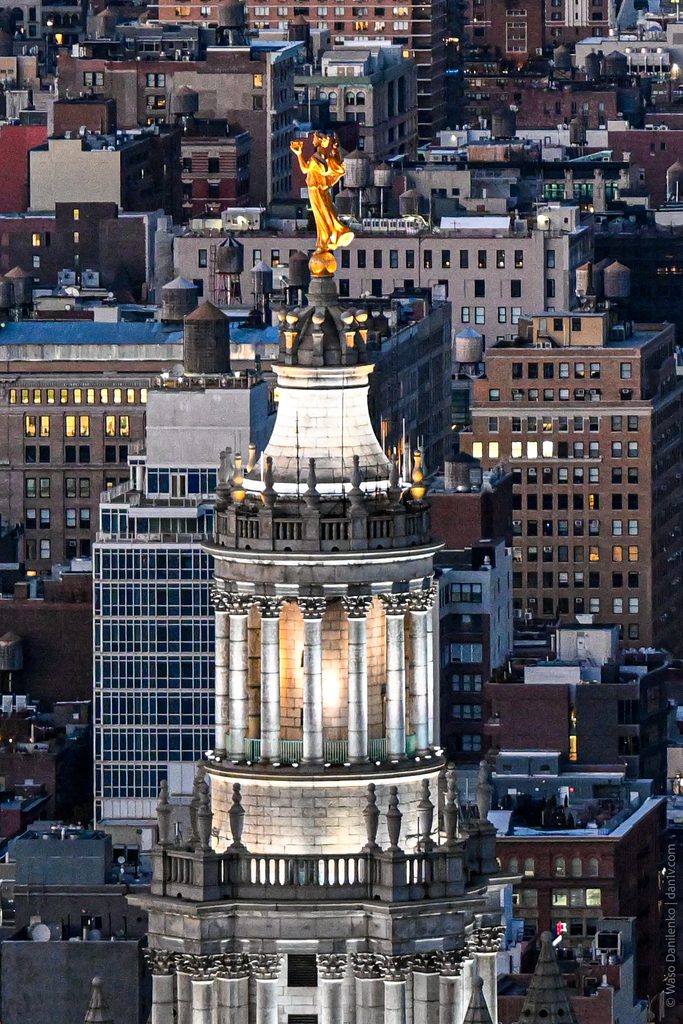
A tower rises above the 25-story main section. It consists of a two-tiered structure, with a circular level featuring four small turrets and a colonnade topped by a domed lantern. The tower is crowned by Civic Fame, a 7.6-meter-tall statue made of gilded copper. The barefoot female figure stands on a globe. In one hand, she holds a crown with five points representing the five boroughs, and in the other, a shield bearing the city’s coat of arms.
Municipal Building in Popular Culture
The building rarely appears under its own name on screen. More often, it stands in for a city hall, courthouse, or another important government institution. Its columns, arch, and golden statue make it look like the kind of grand civic building audiences associate with a major city.
Movies:
- The Taking of Pelham One Two Three (1974): the building appears in a scene where police cars race along Centre Street.
- Ghostbusters (1984): the Ghostbusters’ car drives through the building’s arches, which represent City Hall in the film.
- Crocodile Dundee (1986): the building is listed among the filming locations.
- One Fine Day (1996): a key chase scene takes place here.
- The Devil’s Advocate (1997) and The King of Staten Island (2020).
Television series: Person of Interest, Gotham, and Bull. In Spin City, Michael J. Fox’s character gets married at the marriage bureau inside the building.
Music: In Eminem’s music video for “Not Afraid” (2010), the rapper performs on the building’s roof.
Video games: One of the levels in Max Payne (2001) takes place inside the building, while in GTA IV (2008), a replica of Municipal Building stands next to a replica of City Hall.
Centre 360 Observation Deck at Municipal Building
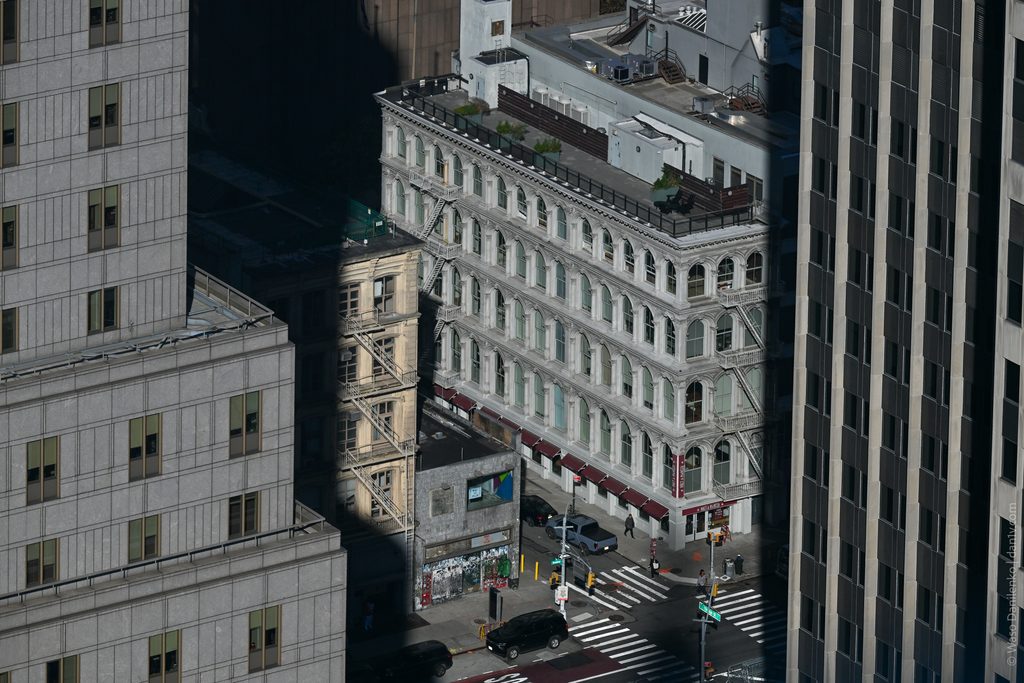
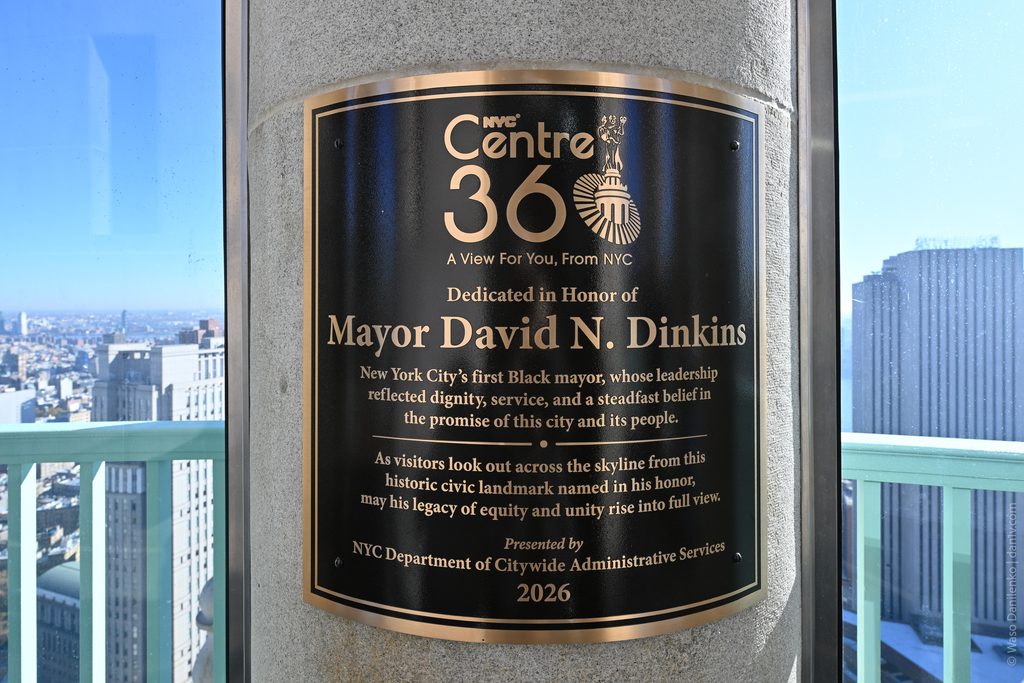
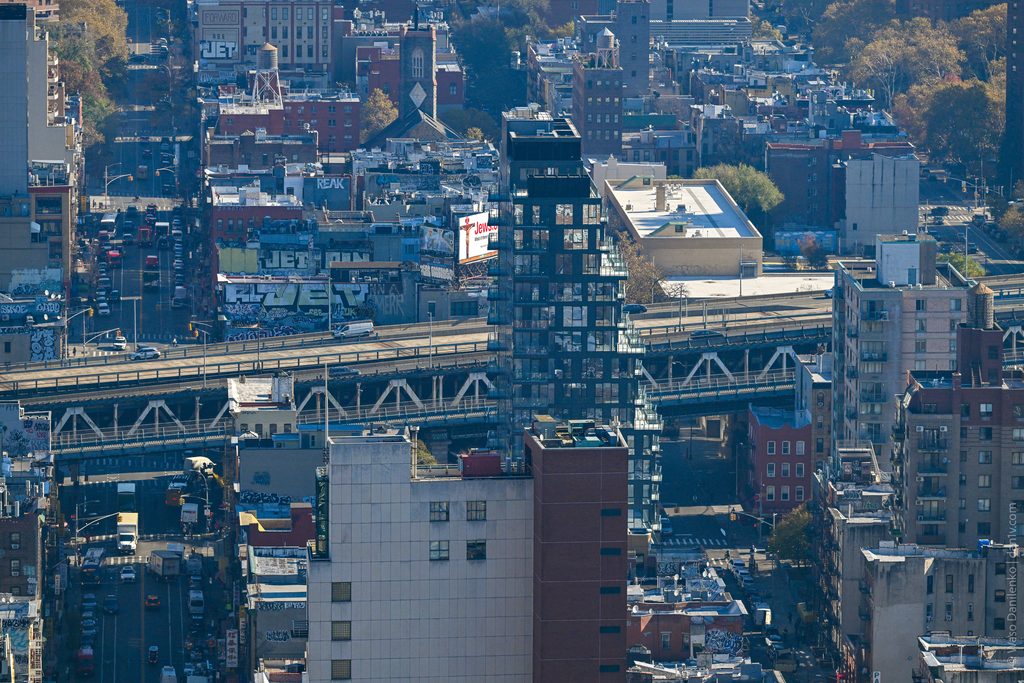
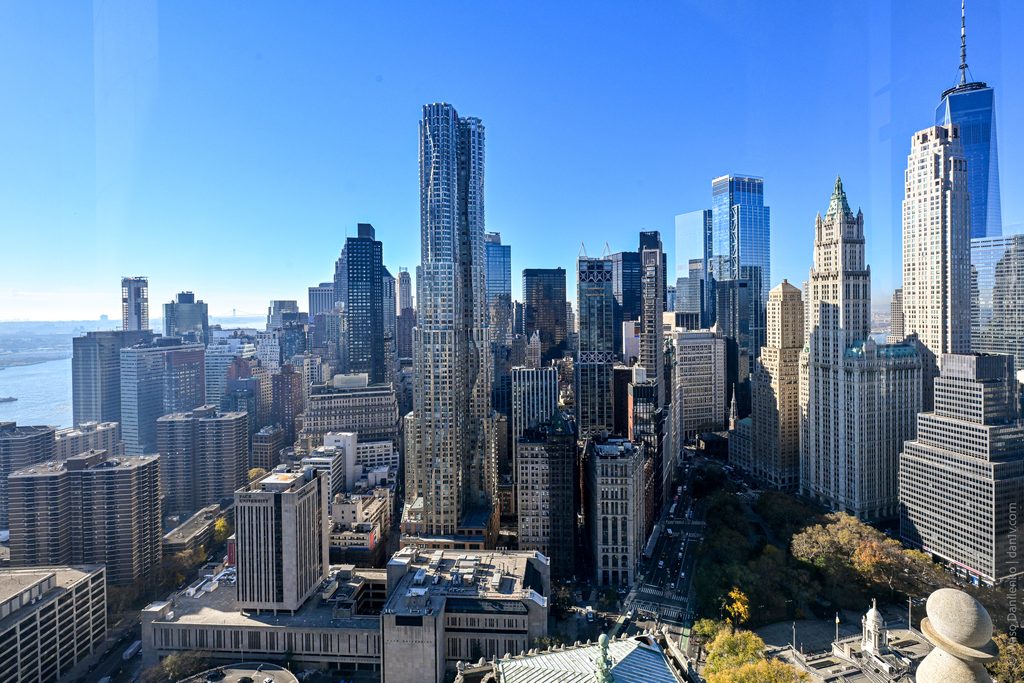
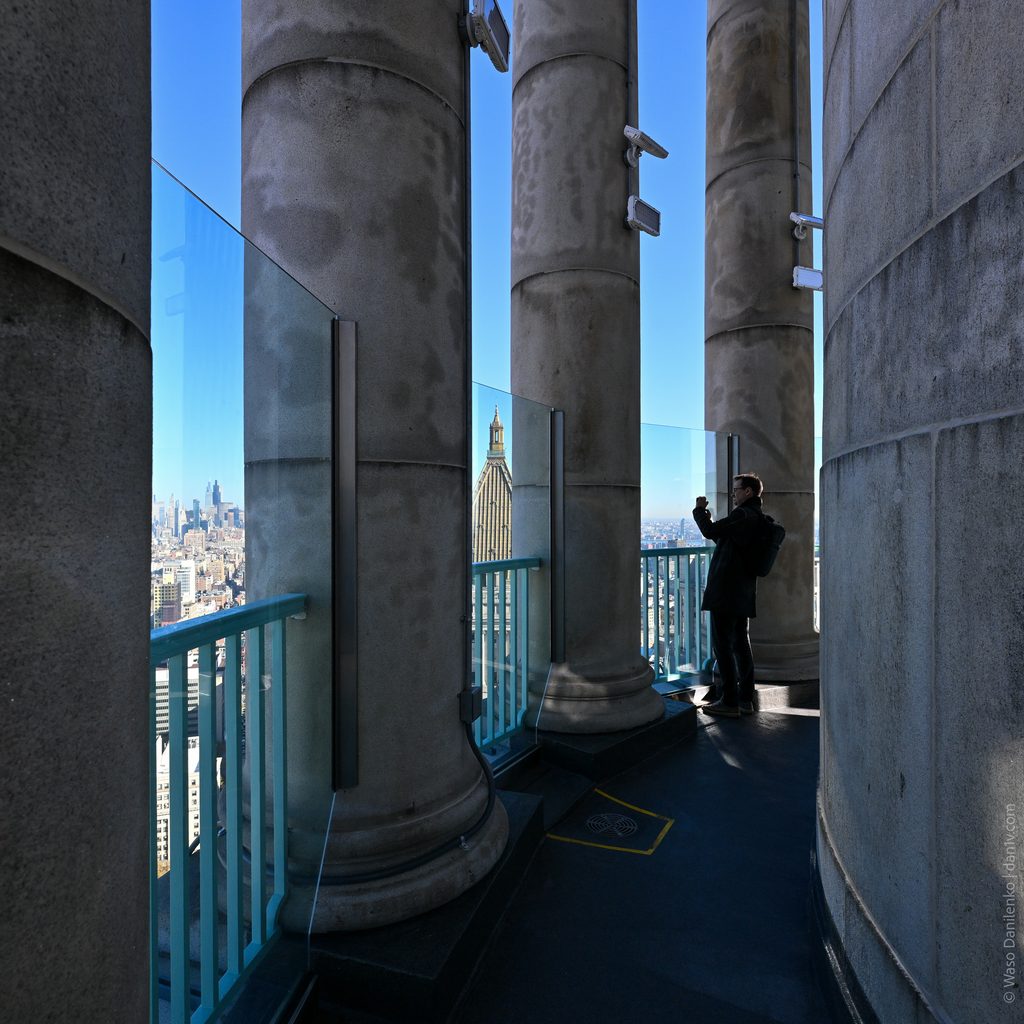
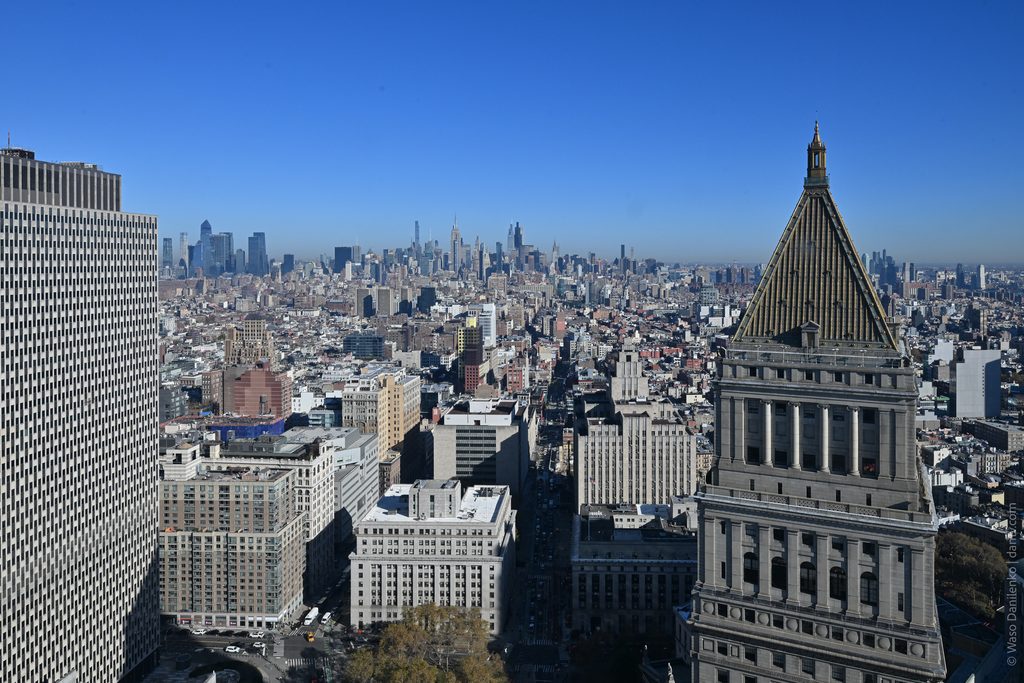
On June 11, 2026, the city opened an observation deck inside the tower’s dome, called Centre 360. Admission is free, the deck is open on weekdays, and visitors must book in advance. Located approximately 150 meters above the ground, it puts you at eye level with the surrounding skyscrapers, while the bridges and Brooklyn appear almost directly beneath your feet. The entire visit takes about 15 minutes. Tickets for each month are usually snapped up within a couple of minutes, so you need to plan your visit well in advance. Read more in our article: