The Brooklyn Museum is one of the oldest and largest art museums in the United States. Its collections include American art, Egyptian art, Classical and Ancient Near Eastern art, feminist art, European art, and art from the Pacific Islands. The museum often presents works by artists representing minority communities and diverse cultural traditions. The museum garden is an added bonus, featuring rare and beautiful plants as well as a replica of the Statue of Liberty.
Interesting Facts About the Brooklyn Museum
- The museum’s history began in 1823, when a library for apprentices was established in Brooklyn. This organization later developed into the Brooklyn Institute of Arts and Sciences, which also included the Brooklyn Botanic Garden and the Brooklyn Children’s Museum.
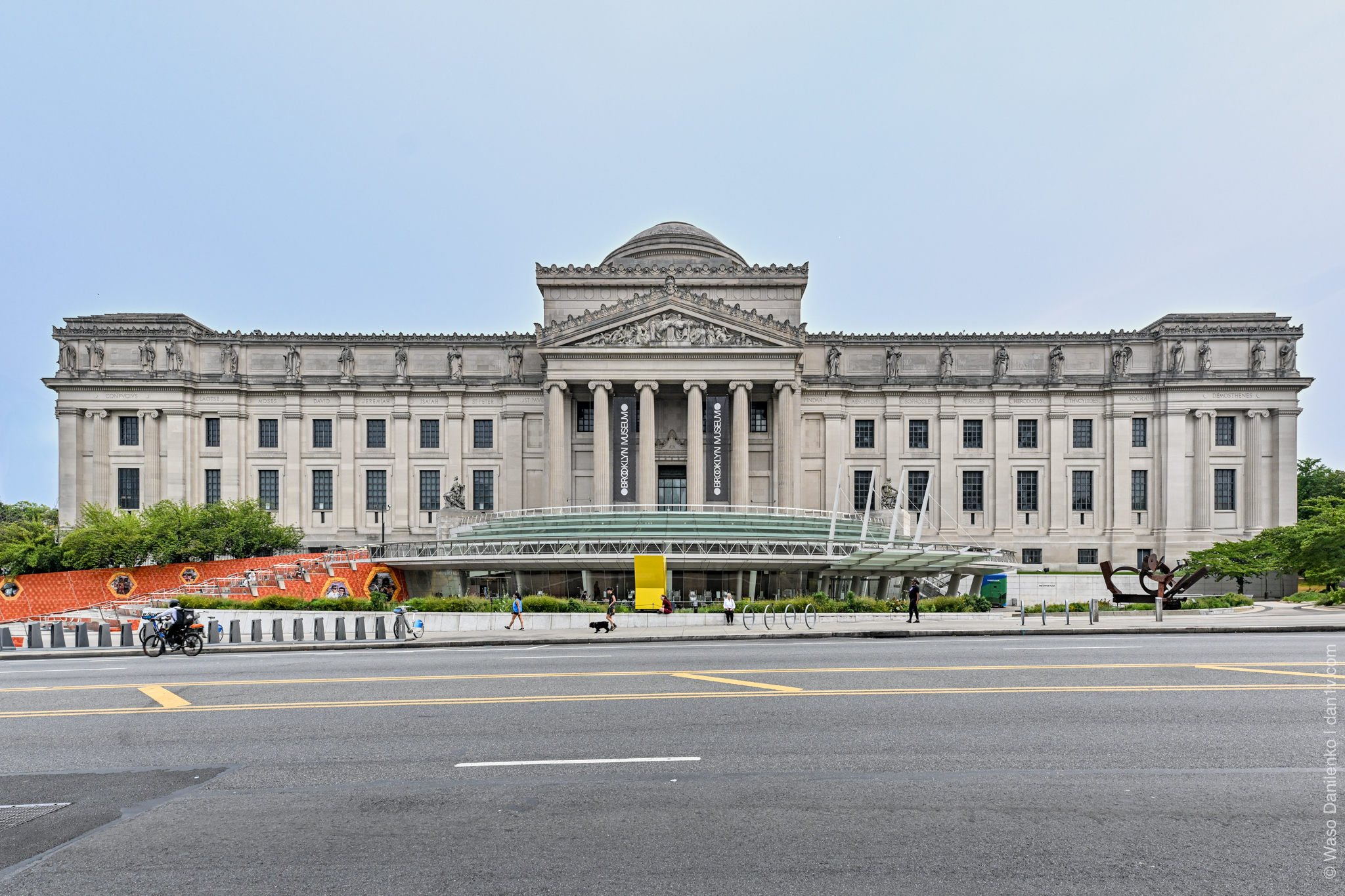
- The museum opened in 1897 in a Beaux-Arts building designed by McKim, Mead & White. The architects planned to make it the largest museum in the world, several times larger than The Metropolitan Museum of Art, but only about one-sixth of the original project was ultimately built.
- The foundation of the Egyptian collection was formed by objects collected by Egyptologist Charles Wilbour. Today, it is considered one of the finest collections of Egyptian art in the world.
- In 1934, the grand entrance staircase was removed because it was believed to discourage visitors, and the entrance was redesigned in the Modernist style. In 2004, the entrance was renovated again, with the addition of a contemporary glass pavilion.
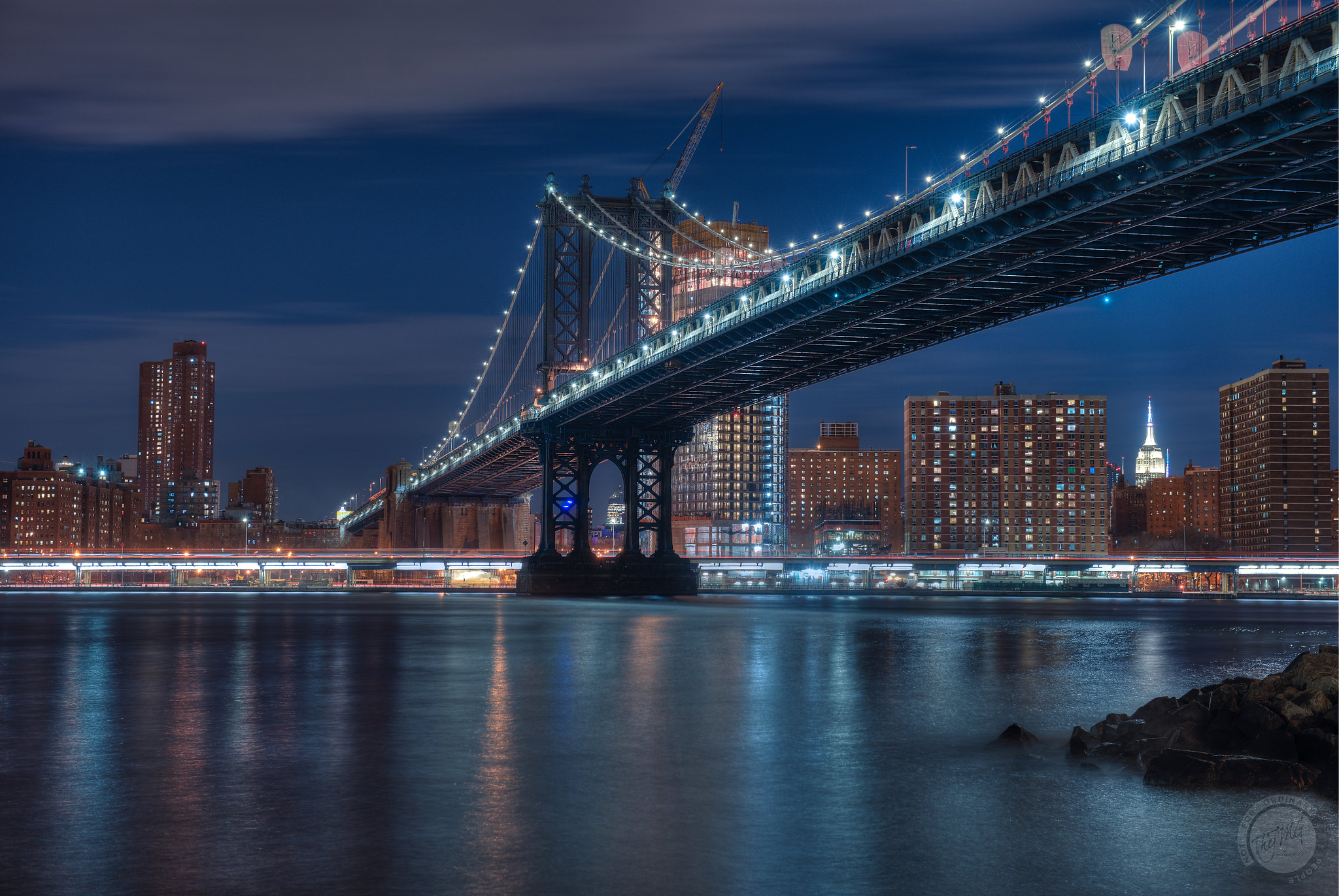
- Two sculptures by Daniel Chester French, Brooklyn and Manhattan, originally stood at the entrance to the Manhattan Bridge. In 1963, they were moved to the museum.
- In 1999, the exhibition Sensation, featuring young British artists, caused a scandal because of Chris Ofili’s work The Holy Virgin Mary, which incorporated elephant dung. Mayor Rudolph Giuliani threatened to withdraw city funding from the museum, but the museum successfully defended its right to hold the exhibition in court.
- In 2007, the Elizabeth A. Sackler Center for Feminist Art opened at the museum. It is the permanent home of Judy Chicago’s famous work The Dinner Party — a triangular table with 39 place settings honoring influential women throughout history.
History of the Brooklyn Museum
The Brooklyn Museum was founded in 1895 as part of the Brooklyn Institute of Arts and Sciences. It was designed in the Beaux-Arts style by the legendary late-19th-century architectural firm McKim, Mead & White. Originally intended to become the largest art museum in the world, the plan was never fully realized.
The museum blends the monumentality of classical architecture with modern interiors. The central atrium and bright galleries create a sense of openness and light. Sculptures and art installations greet visitors right at the entrance, immersing them in art from the very first steps.
Over the years, the museum has grown, expanded its collections, and become a cultural hub not just for Brooklyn but for all of New York City.
Architecture of the Brooklyn Museum
The Brooklyn Museum building on Eastern Parkway is one of the most underrated architectural landmarks in New York City. It grew out of a very ambitious idea: at the end of the nineteenth century, Brooklyn was still an independent city and was preparing to compete with Manhattan. The museum was supposed to become a symbol of these ambitions.
The project was commissioned from one of America’s most influential architectural firms, McKim, Mead & White. The firm also designed Pennsylvania Station, the Boston Public Library, and the Morgan Library in Manhattan. The architects chose the Beaux-Arts style, a grand form of Classicism characterized by symmetrical facades, monumental colonnades, and elaborate sculptural decoration. At the time, it was considered an ideal architectural language for public buildings.
The original plan called for a huge square complex with four courtyards surrounding a central hall, larger in area than any museum in the world. Only a small part of the plan was completed: the west wing opened in 1897, and several more sections were added later. After Brooklyn became part of New York City in 1898, the ambition to build something grander than Manhattan faded, and the full project was abandoned.
The main facade faces Eastern Parkway. It is crowned by a broad Corinthian colonnade, with thirty sculptural figures above the cornice. They represent outstanding figures from world culture, from ancient philosophers to Renaissance masters. Above the entrance are two sculptures by Daniel Chester French, allegorical figures representing Brooklyn and Manhattan.
Light-colored limestone and granite were used for the facade. In the Beaux-Arts style, the material is just as important as the form: the smooth stonework emphasizes the monumentality and strict geometry of the composition.
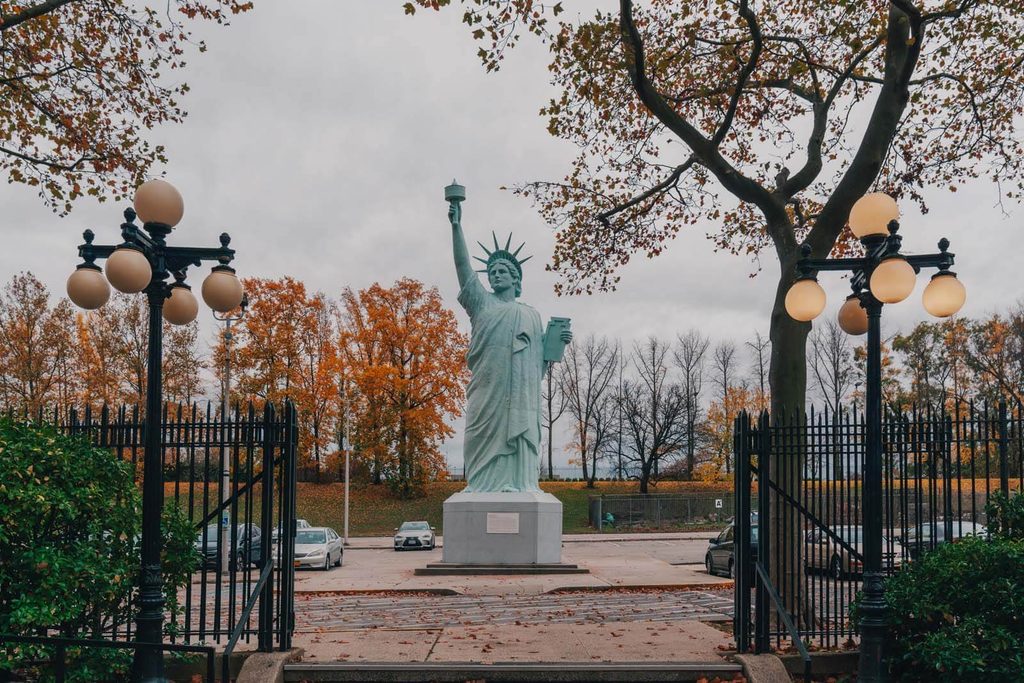
The Brooklyn Museum’s sculpture garden contains a smaller replica of the Statue of Liberty. This is not a modern souvenir but a historic object with its own story.
The replica was made in the early twentieth century, around 1902, to advertise the Liberty Storage Warehouse on the west side of Manhattan near 64th Street. It was installed on the roof of the building and served for many decades as a prominent landmark and advertising symbol for the company. The figure is about 9 meters tall, making it roughly ten times smaller than the original on Liberty Island. It is made of metal that has developed the same green patina as the larger statue over time.
When the warehouse closed and the building was facing redevelopment, the replica was dismantled and given to the museum. It now stands on a pedestal in the sculpture garden. Architectural fragments from demolished New York buildings are displayed nearby, which is fitting: the statue itself also became a “rescued” piece of the city’s history. It is considered an especially good place to see the replica up close, something that was impossible when it stood on the warehouse roof.
The story of the grand staircase is a separate chapter. In the 1930s, the museum decided that the monumental steps intimidated ordinary visitors, so the staircase was removed. A more modest Modernist entrance was built in its place, and the classical facade lost some of its sense of grandeur.
This was addressed in the early 2000s. The project was assigned to Polshek Partnership, later known as Ennead Architects. Rather than reconstructing the old staircase, the architects created a modern response: a transparent glass pavilion with a broad staircase and ramps, preceded by a plaza with fountains. The contrast between the historic stone facade and the light glass-and-steel structure is striking, and the pavilion has become one of the city’s best examples of thoughtfully combining historic and contemporary architecture.
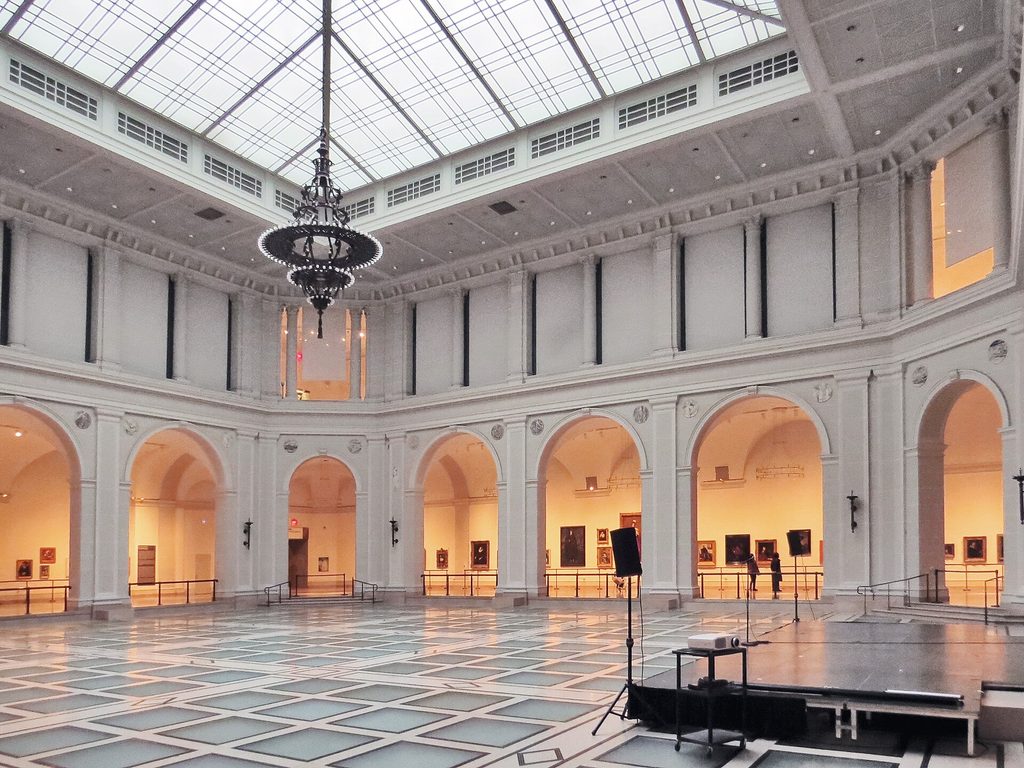
Inside, the building retains the classical Beaux-Arts layout, with enfilades of galleries, high ceilings, and abundant natural light. The central atrium of the pavilion is particularly impressive: it is a bright, open space that is easy to navigate and offers views across several levels of the museum.
Collections and Exhibitions
The Brooklyn Museum’s holdings comprise about 1.5 million objects, representing different eras and cultures.
Ancient Egyptian Art
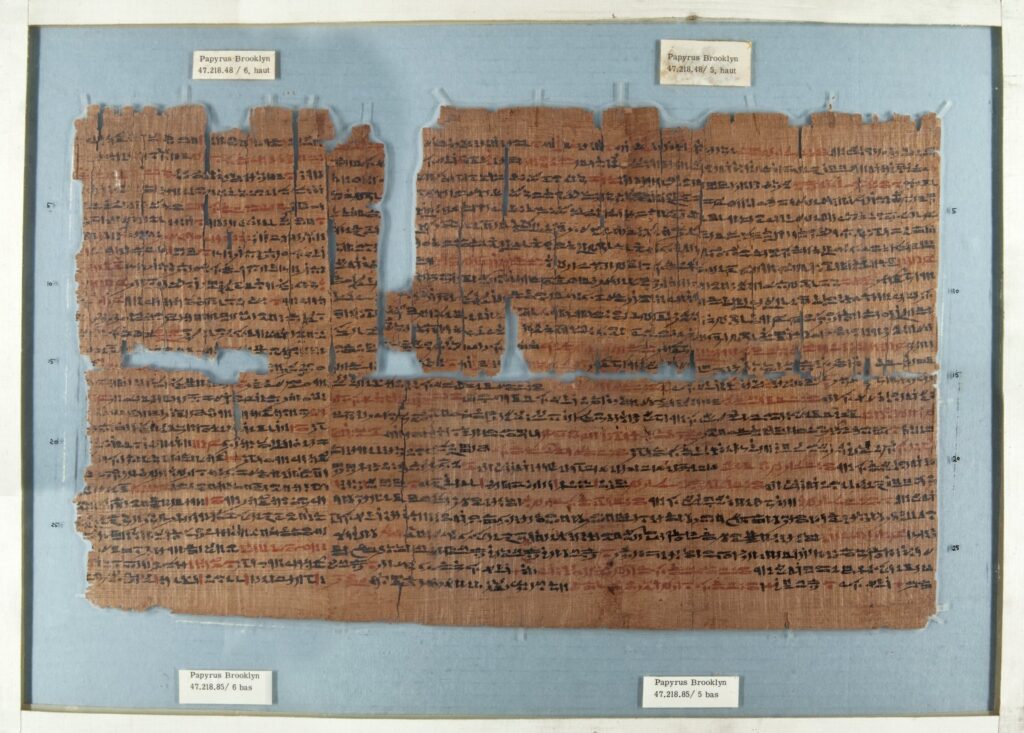
The museum houses one of the largest collections of Egyptian art in the U.S., including sarcophagi, mummies, jewelry, and fragments of temples. This collection contains more than 10,000 objects spanning over 4,000 years of history. Visitors can see multiple mummies, coffins, funerary masks, and everyday items buried with the deceased for the afterlife. These objects vividly illustrate the ancient Egyptians’ beliefs about life after death.
A significant part of the collection consists of papyri, stone inscriptions with hieroglyphics, inkwells, and writing tools. Highlights include excerpts from the Book of the Dead, legal documents, personal letters, and religious texts.
The museum also hosts temporary exhibitions on specific themes such as Women and Power in Ancient Egypt, The Art of the Mummy, and Symbols and Amulets.
American Art
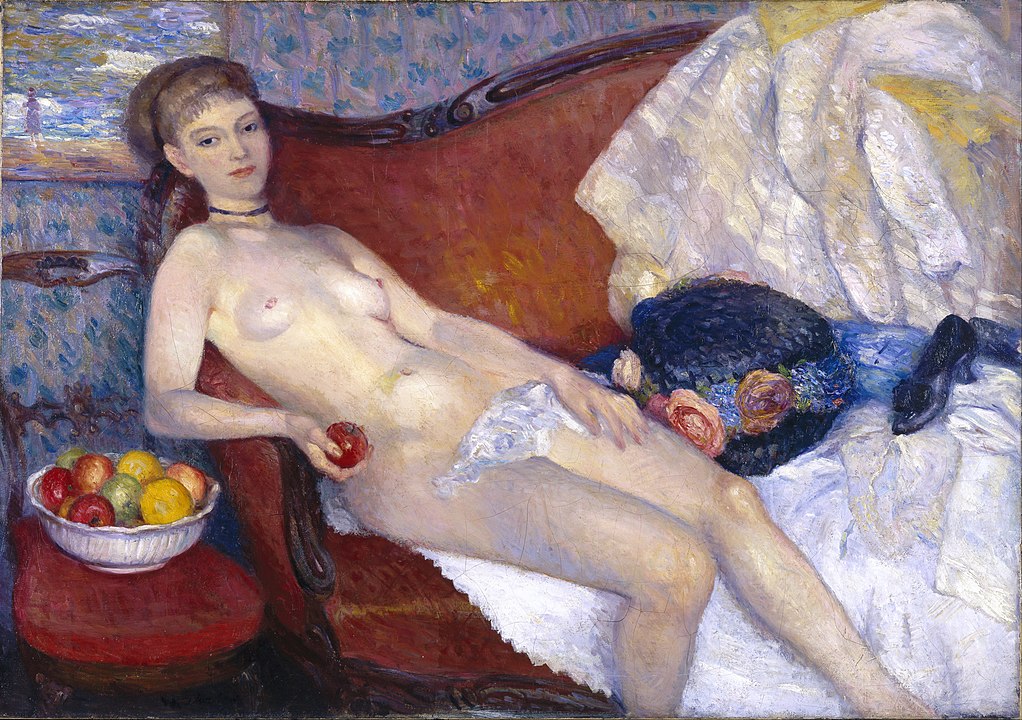
The Brooklyn Museum’s American art collection spans from the colonial era to the present day, featuring works by artists such as John Singer Sargent, Georgia O’Keeffe, and Norman Rockwell.
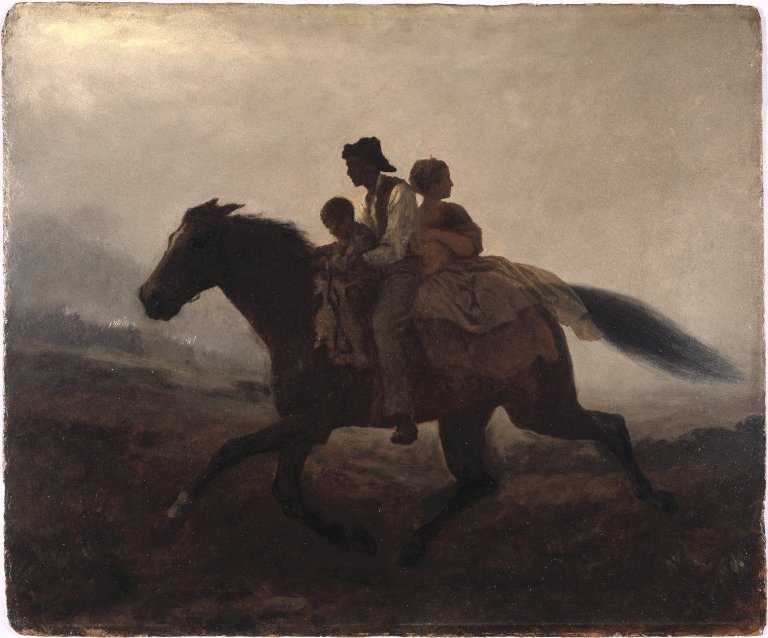
Covering more than 300 years of history, the collection includes painting, sculpture, decorative arts, furniture, textiles, photography, and contemporary installations. The museum seeks to reflect the diversity of the American experience, highlighting both celebrated masters and previously underrecognized artists — including women, African Americans, immigrants, and members of other cultural communities.
One of the most famous works on display is The Dinner Party by Judy Chicago — a monumental installation honoring women’s contributions to world history. Its central element is a banquet table, with each place setting dedicated to an outstanding woman of Western civilization. Every setting is meticulously designed with her name, decorative motifs symbolizing her achievements, as well as a napkin, plate, cutlery, and glass.
The project pays tribute to creative forms traditionally associated with “women’s work” — embroidery, weaving, sewing, and ceramic painting — which for centuries were regarded as secondary to the “high” male-dominated arts like painting, sculpture, and architecture. This piece is the centerpiece of the Elizabeth A. Sackler Center for Feminist Art — the first of its kind in the world, founded in 2007.
European Art
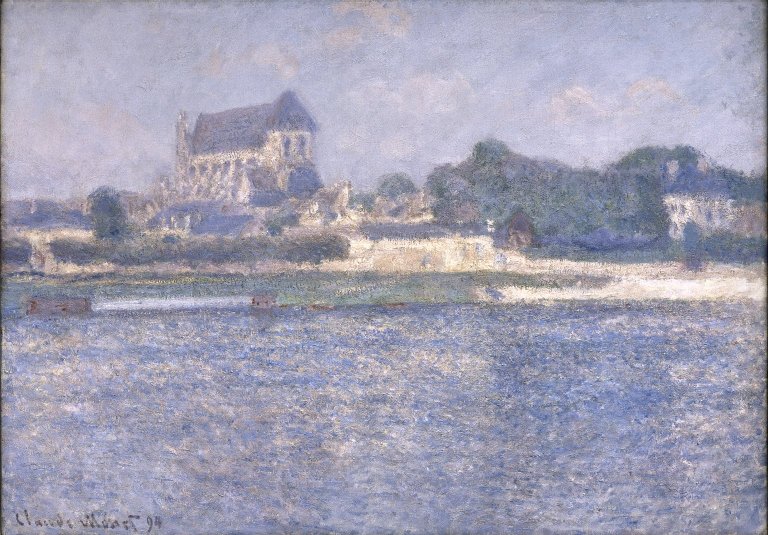
Highlights of the European collection include works by Italian masters of the Late Gothic and Early Renaissance, as well as Dutch Golden Age paintings. Fans of Impressionism and Realism will find treasures from the French school of the 19th century, including works by Claude Monet.
African, Islamic, Asian, and Native American Art
The museum’s collections represent the cultural richness of global history:
- African Art — One of the oldest and largest collections in the U.S., featuring masks, sculptures, textiles, ritual objects, and everyday items created by the Yoruba, Bamana, Fang, Kongo, and other peoples. The displays emphasize cultural, social, and spiritual significance, not just aesthetics.
- Islamic Art — Spanning from Spain to India and from the 7th to the 20th century, this collection includes ceramics, metalwork, textiles, woodcarving, Qur’ans, and calligraphy from Iran, the Ottoman Empire, North Africa, and Central Asia.
- Asian Art — Ranging from ancient China and India to Japan, Korea, and Southeast Asia, the collection features Buddhist and Hindu sculpture, Chinese bronzes, jade, porcelain, Japanese paintings, lacquerware, prints, and more.
Pacific Islands Art
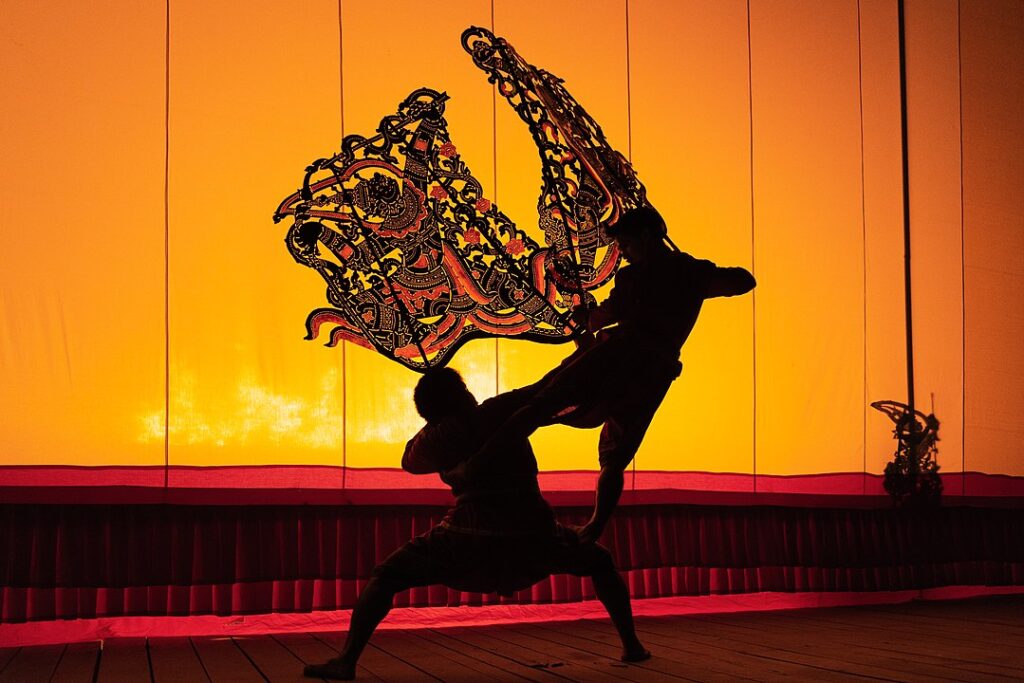
The Brooklyn Museum’s Pacific collection began with the acquisition of 100 wooden figures and shadow puppets from New Guinea and the Dutch East Indies (modern-day Indonesia). Today it includes artifacts from numerous islands of the Pacific and Indian Oceans, including Hawaii and New Zealand.