The Cooper Hewitt, Smithsonian Design Museum in New York is dedicated to the history and design of decorative arts. It offers exhibitions, collections, and educational programs covering a wide range of design-related topics. The museum also holds one of the largest wallpaper collections in the world, featuring both historical examples and contemporary designs.
Interesting Facts About the Cooper Hewitt Design Museum
- The museum was founded in 1897 by Sarah and Eleanor Hewitt, granddaughters of industrialist Peter Cooper. They wanted to create more than just an exhibition space: their vision was an educational workshop where students and designers could study real objects and find inspiration for their own work.
- In its early years, the museum received several important private collections, including textiles donated by banker and collector John Pierpont Morgan.
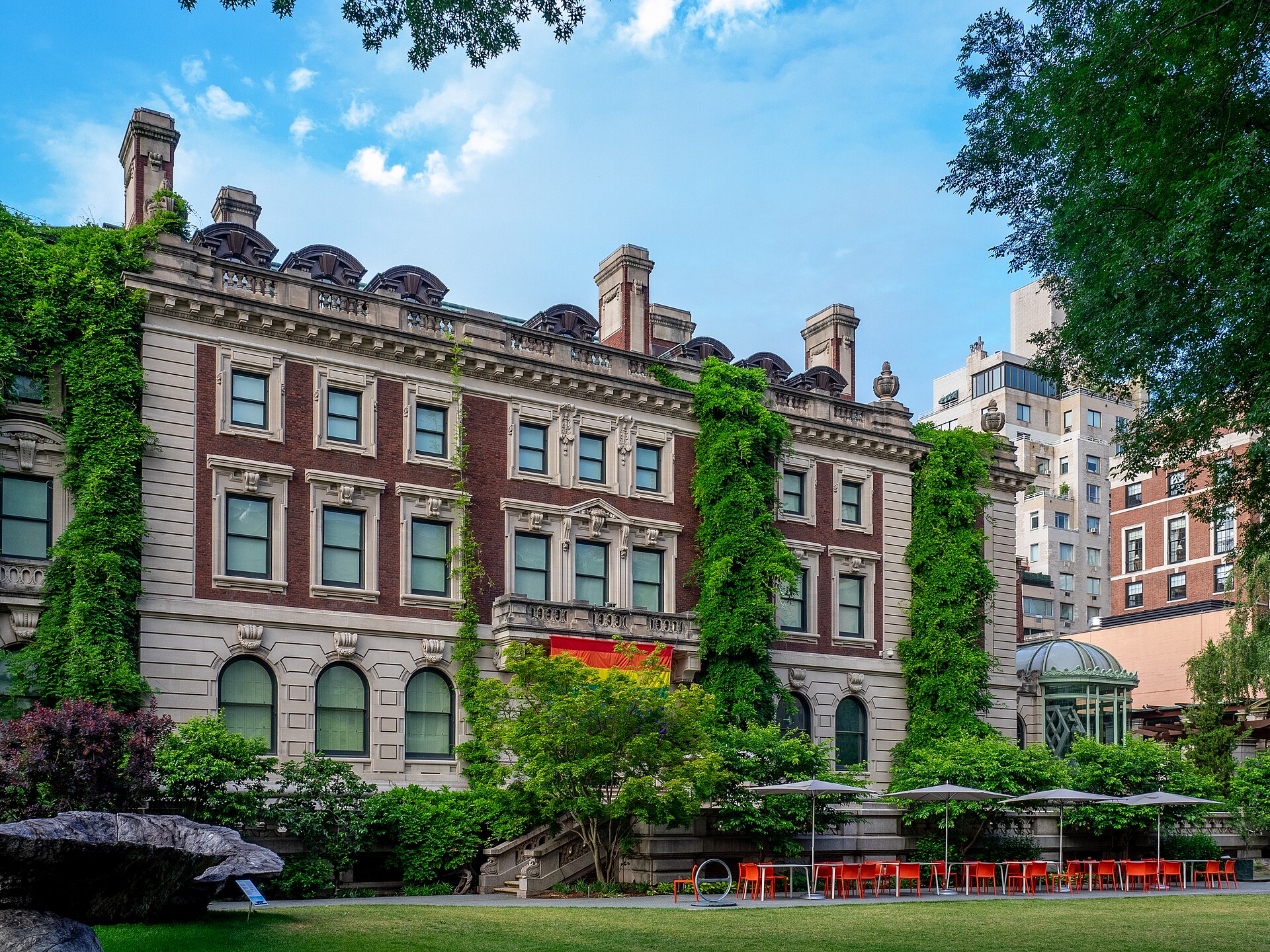
- In 1969, the museum moved into the former mansion of steel magnate Andrew Carnegie on Fifth Avenue. The new building was five times larger than its previous location, and the museum opened to the public there in 1976.
- In 2011, the museum closed for a major $91 million renovation. Over the next three years, the interiors were updated and the exhibition space was expanded by 60%. The museum reopened on December 12, 2014.
- One of the main new features was an interactive Pen that allows visitors to save objects they like and view them later on the museum’s website. Special tables also let visitors explore other items from the collection and create their own design projects.
- Today, Cooper Hewitt is the only museum in the United States entirely dedicated to historical and contemporary design. Its collection contains more than 200,000 objects, although only a small portion is on display at any given time. The collection includes textiles, furniture, architectural models, and everyday objects.
Founding History of The Cooper Hewitt, Smithsonian Design Museum
The museum was founded in 1897 by sisters Sarah and Eleanor Hewitt, granddaughters of inventor Peter Cooper and daughters of a New York City mayor. Educated, energetic, and passionate about art, they traveled across Europe every year, collecting unique decorative arts pieces — including tableware, textiles, furniture, and lighting.


Inspired by the Musée des Arts Décoratifs in the Louvre, they decided to create something similar in New York. Initially, the museum was located in the Cooper Union building, an institution founded by their grandfather. In 1976, it moved into the Carnegie Mansion and became the first Smithsonian museum outside Washington, D.C.
Located in the historic Andrew Carnegie Mansion in Manhattan, the museum blends the atmosphere of the early 20th century with cutting-edge 21st-century technology.
Since 2000, the museum has hosted the National Design Awards, established through a White House initiative. This prestigious award is given in ten categories and is accompanied by educational programs held nationwide.

Collection and Exhibitions at The Cooper Hewitt, Smithsonian Design Museum
The museum’s permanent collection contains over 215,000 design objects, fully digitized and available online. Large-scale temporary exhibitions are held regularly, alongside rotating displays from the collection — including household items, decorative arts, graphics, wallpaper, textiles, and more.


Visitors can explore four floors of galleries dedicated to various areas of design — from industrial and graphic design to textiles and digital innovation. Interactive technologies allow guests not just to view objects, but to engage with them and try their hand at being a designer by creating their own projects right in the museum.
The museum’s programs include lectures, discussions, and hands-on workshops with leading figures in the design world. They are aimed at audiences of all ages and help foster a deeper understanding of design’s role in everyday life.