Isamu Noguchi (1904–1988) was an American sculptor of Japanese descent. You have probably encountered his work even if you did not know the artist’s name: Akari paper lanterns, coffee tables with curved bases and glass tops, and numerous sculptures in public spaces throughout New York City. In his work, Noguchi used simple forms and natural materials.
The Noguchi Museum in Long Island City is a separate part of his artistic legacy. Noguchi himself purchased the abandoned industrial building, designed an addition, created the garden, and decided exactly where the sculptures should be placed. It was the first museum in the United States created by a living artist specifically to display his own work.
Today, the museum consists of bright exhibition spaces and a small indoor garden. Just a few minutes away on foot is Socrates Sculpture Park on the East River waterfront.
Interesting Facts About the Noguchi Museum
- The museum occupies a former industrial building where materials for photogravure printing were manufactured starting in 1929. Noguchi purchased it in 1974 when he began to run out of space in his studio across the street.
- It was the first museum in the United States that a living artist created, designed, and arranged himself to display his own work. The museum officially opened on May 11, 1985.
- For its first 20 years, the museum was open only during the warmer months. It became a year-round museum after renovations were completed in June 2004.
- Noguchi built the museum’s concrete pavilion on the site of a former gas station together with architect Shoji Sadao.
- The museum garden was originally designed around an 18-meter-tall tree that was about 75 years old. The tree remained there until March 2008.
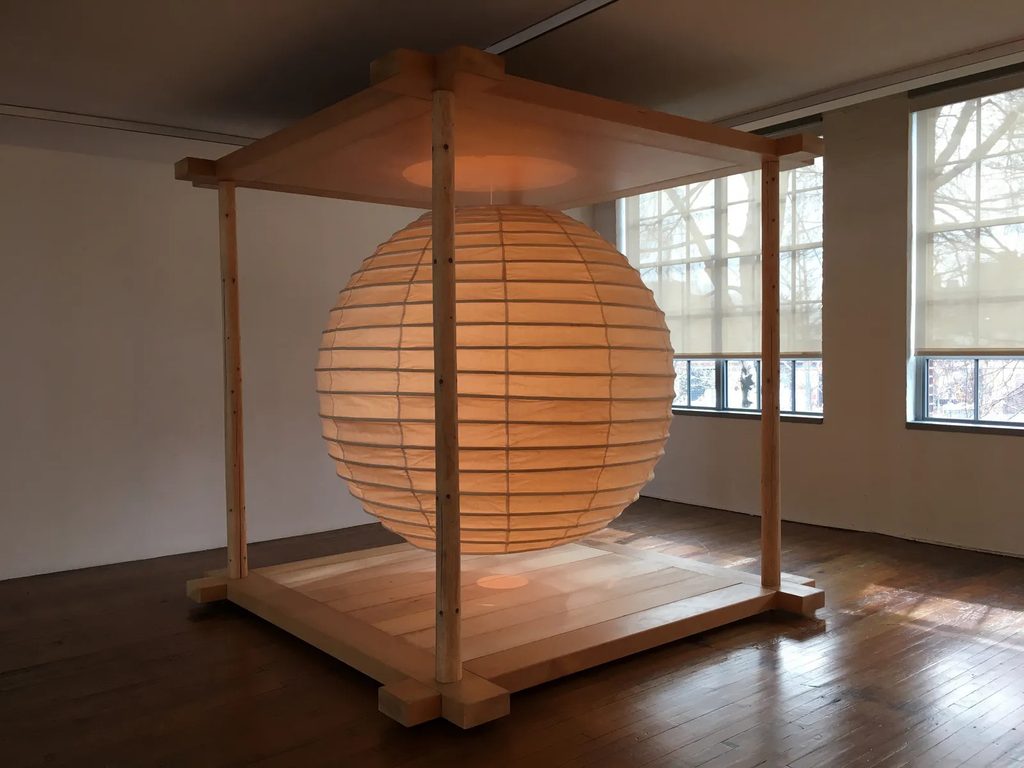
- Noguchi called his Akari pieces not lamps, but light sculptures. He created more than 200 models. Since 1951, the original Akari pieces have been handcrafted by the same Japanese workshop, Ozeki, in the city of Gifu.
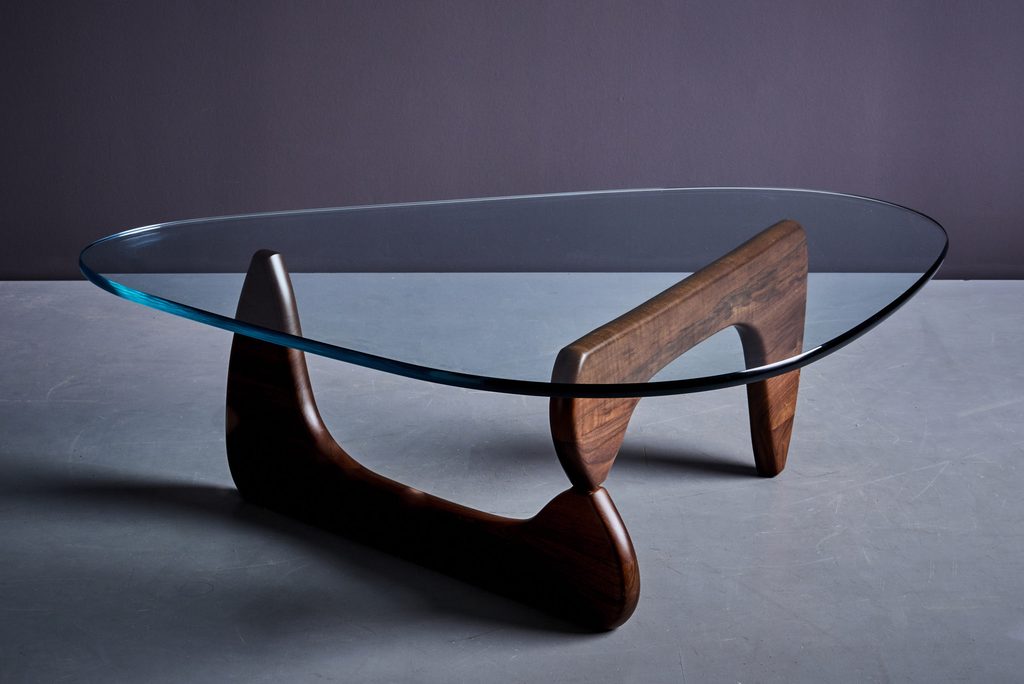
- Noguchi’s famous coffee table was created after a conflict with a designer who copied his work and claimed that “anyone can make a three-legged table.”
- The museum’s digital archive is available for free. It contains more than 60,000 materials, 28,000 photographs, and more than 33,000 documents.
- The museum is located in Queens just one block from Socrates Sculpture Park. The two can easily be combined into a single itinerary.
Who Was Isamu Noguchi and How His Museum Came About
Noguchi’s interest in architecture and public spaces began to take shape early in his career. In 1927, Noguchi traveled to Paris on a Guggenheim Fellowship and became an assistant to Romanian sculptor Constantin Brâncuși, one of the leading figures of European modernism and a pioneer of abstract sculpture. In Brâncuși’s studio, Noguchi learned to work with stone and was introduced to the principle of direct carving, in which the form emerges directly from the wood or stone rather than being created from a model in advance. This experience had a major influence on his later work.
After Paris, Noguchi traveled extensively and studied different artistic traditions. He lived and worked in China and Japan, where he studied ink drawing, ceramics, and traditional crafts. These experiences later influenced his work, which combined European modernism with Asian artistic traditions.
In New York, Noguchi gradually moved beyond traditional sculpture. He created sets for choreographer Martha Graham, collaborated with architects and designers, and designed furniture and lighting. He was interested not only in how an individual sculpture looked, but also in how people experienced it within its surrounding space.
The creation of gardens, plazas, and other public spaces became especially important to him. His projects included the UNESCO Garden in Paris, Hart Plaza in Detroit, and projects in Jerusalem. In these works, Noguchi brought together sculpture, architecture, water, plants, and landscape to create unified environments.
In 1961, he opened a studio in Long Island City, which was then still primarily an industrial neighborhood filled with workshops and warehouses. In 1974, Noguchi purchased a former red-brick industrial building across the street. It had an abandoned courtyard, which the artist transformed into a sculpture garden.
By 1980, Noguchi had developed the idea of creating his own museum there. He purchased the neighboring property, which contained a gas station, built a concrete pavilion, and began bringing together the studio, garden, and new exhibition spaces into a single complex. The museum opened on May 11, 1985.
Noguchi died in 1988, but the museum continued to develop as a place that preserves not only his work, but also the environment he created.
Architecture of the Noguchi Museum
The Noguchi Museum occupies an entire triangular city block in New York City. The complex consists of three parts: a former industrial building from 1929, a concrete pavilion built in the 1980s, and a sculpture garden between them.
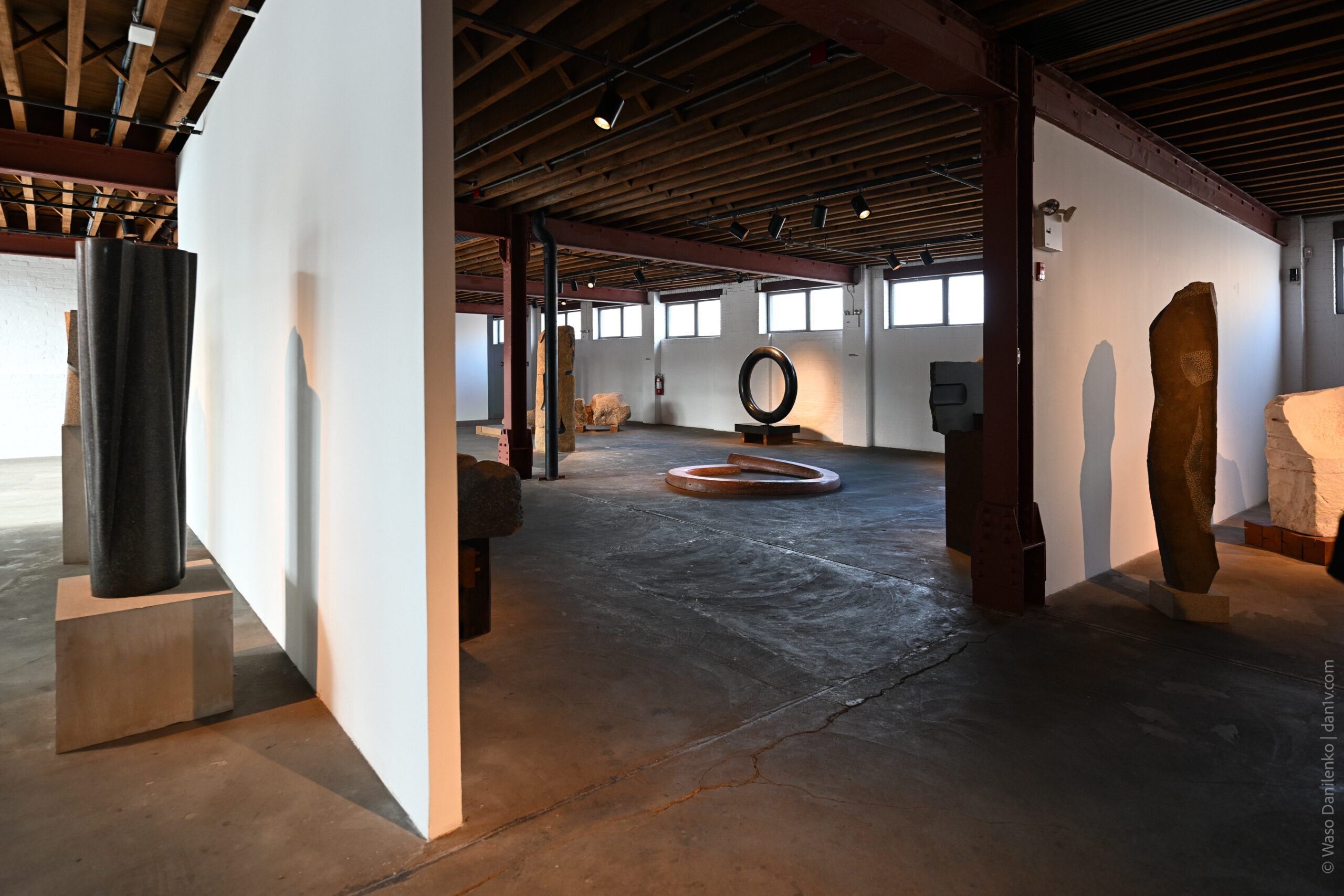
The brick building has retained its simple industrial appearance. Inside, the first floor also preserves the original brick walls, concrete floors, and exposed ceiling beams. This is where large stone and metal sculptures are displayed. The second floor is lighter and is used for temporary exhibitions.
Noguchi designed the concrete pavilion on the site of the former gas station together with Shoji Sadao, his architectural partner and the museum’s first director. It houses Area 1, a gallery featuring basalt sculptures from the later period of Noguchi’s career. Their appearance changes depending on the lighting and weather.
Noguchi deliberately arranged the exhibitions so that his artworks interact with one another and with the surrounding space. Many works are also displayed without labels. Noguchi believed that visitors should first see and consider a sculpture and only then learn its title and history.
The Noguchi Museum Collection and Exhibitions
The museum holds the largest collection of Isamu Noguchi’s work in the world. The core of the collection consists of works that the artist transferred to his foundation when he established the museum, along with several works acquired later. The permanent exhibition on the first floor largely preserves the arrangement Noguchi created himself.
The collection covers all major periods of his career: early abstract works from the late 1920s, influenced by his time working with Constantin Brâncuși in Paris; sculptures made of granite, basalt, marble, and travertine; constructions made of wood and sheet metal; and ceramics from Japan.
Separate sections are devoted to areas of Noguchi’s work beyond sculpture:
- Theater sets and materials for productions by Martha Graham, with whom Noguchi worked for several decades, as well as for George Balanchine and Merce Cunningham.
- Photographs, drawings, and models of plazas, fountains, parks, and playgrounds. These include the UNESCO Garden in Paris, Hart Plaza in Detroit, and Moerenuma Park in Sapporo.
- Furniture, including Noguchi’s famous coffee table.
The museum’s second floor is devoted to temporary exhibitions. They explore different periods of Noguchi’s career, the people and artistic circles around him, and the influence of his work on contemporary artists. Past exhibitions have featured artists including Koho Yamamoto and Toshiko Takaezu.
Since 2014, the museum has also presented the Isamu Noguchi Award each year. Past recipients include Norman Foster, Tadao Ando, Rei Kawakubo, and Lee Ufan.
Akari Lamps at the Noguchi Museum
In the spring of 1951, Noguchi was traveling to Hiroshima, where he hoped to receive a commission for a memorial, when he stopped in the city of Gifu at the invitation of its mayor. Gifu had been known for centuries for its paper lantern production, but the postwar economy and the spread of electric lighting had weakened the industry. The mayor asked the artist to create something modern that could be exported. That evening, Noguchi watched cormorant fishing on the Nagara River, where boats moved through the water under paper lanterns, and began sketching on the spot.
He kept the traditional materials — washi, handmade paper made from the inner bark of the mulberry tree, and a bamboo frame — but replaced the traditional accordion-like shape with rounded, organic forms. He chose the name Akari himself: in Japanese, it refers to both light and lightness. The Hiroshima memorial commission ultimately fell through, but the lanterns remained.
Noguchi deliberately called them light sculptures rather than lamps. Over the following decades, he designed more than 200 models, from table lamps to ceiling fixtures, as well as an entire series for the American Pavilion at the 1986 Venice Biennale. Since 1951, all authentic Akari pieces have been handcrafted by the Ozeki family workshop in Gifu using the same techniques as those used to make traditional lanterns.
The Noguchi Table
Noguchi also became part of the history of twentieth-century design with a coffee table created for the American company Herman Miller.
In 1939, Noguchi made a rosewood-and-glass table for Conger Goodyear, president of the Museum of Modern Art (MoMA). Soon afterward, he met British furniture designer T. H. Robsjohn-Gibbings in Hawaii, who asked him to design a coffee table. Noguchi sent him a plastic model but received no response.
In 1942, after Pearl Harbor and the beginning of the incarceration of Japanese Americans in the United States, Noguchi voluntarily went to the Poston War Relocation Center in Arizona, intending to teach art there. He was allowed to receive magazines at the camp, and in one of them he saw an advertisement for a table that looked suspiciously similar to his model, but was credited to Robsjohn-Gibbings. When Noguchi demanded compensation, the designer replied that anyone could make a three-legged table.
In 1944, Noguchi, in his own words, “made my own version of my own table” in retaliation. American designer George Nelson noticed the model and featured it in his article “How to Make a Table.” Nelson later became the design director at Herman Miller, and the company put the table into mass production under the model number IN-50. It has been produced with virtually no changes since 1948.
To make sure no one would confuse its authorship again, Noguchi named the table after himself: the Noguchi Table. He considered it the best piece of furniture he had ever created.
The Noguchi Museum Archive
The museum maintains a digital archive of Isamu Noguchi’s work. This makes it possible to explore the artist’s work from anywhere in the world by visiting archive.noguchi.org.
The archive contains more than 28,000 photographs, 33,000 documents, and 3,000 architectural drawings, including unrealized projects. It also includes personal photographs of Noguchi during his travels, letters from colleagues, and working notes that show how his ideas developed. The correspondence, for example, includes materials documenting Noguchi’s communication with Buckminster Fuller, while the photographs include images of Noguchi with Louis Kahn in Jerusalem.
The Noguchi Digital Library continues to expand as specialists recover and restore works and materials that were previously considered lost.
The Garden at the Noguchi Museum
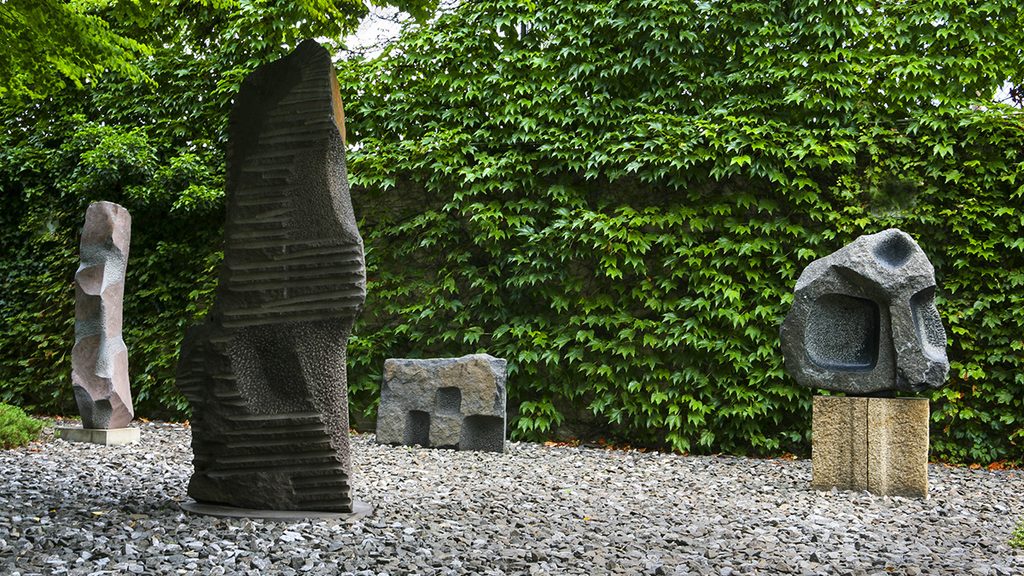
The garden is the central element of the museum. It is a quiet, meditative oasis in the middle of urban Long Island City. Noguchi designed it himself, from the overall layout to the selection of individual stones. There is little excess or randomness: every rock, tree, and hill has a purpose. The landscape draws on the Japanese garden tradition, reinterpreted through Western modernism and minimalism.
The garden was designed around a 75-year-old tree (Ailanthus altissima) that stood 18 meters tall. Noguchi deliberately preserved it when he cleared the courtyard for the future sculpture garden.
In 2008, the tree had to be removed because it posed a risk of falling onto the building. The museum invited the Detroit Tree of Heaven Woodshop, an artist collective, to transform the wood into benches, sculptures, and other elements for the museum’s interior and exterior spaces.