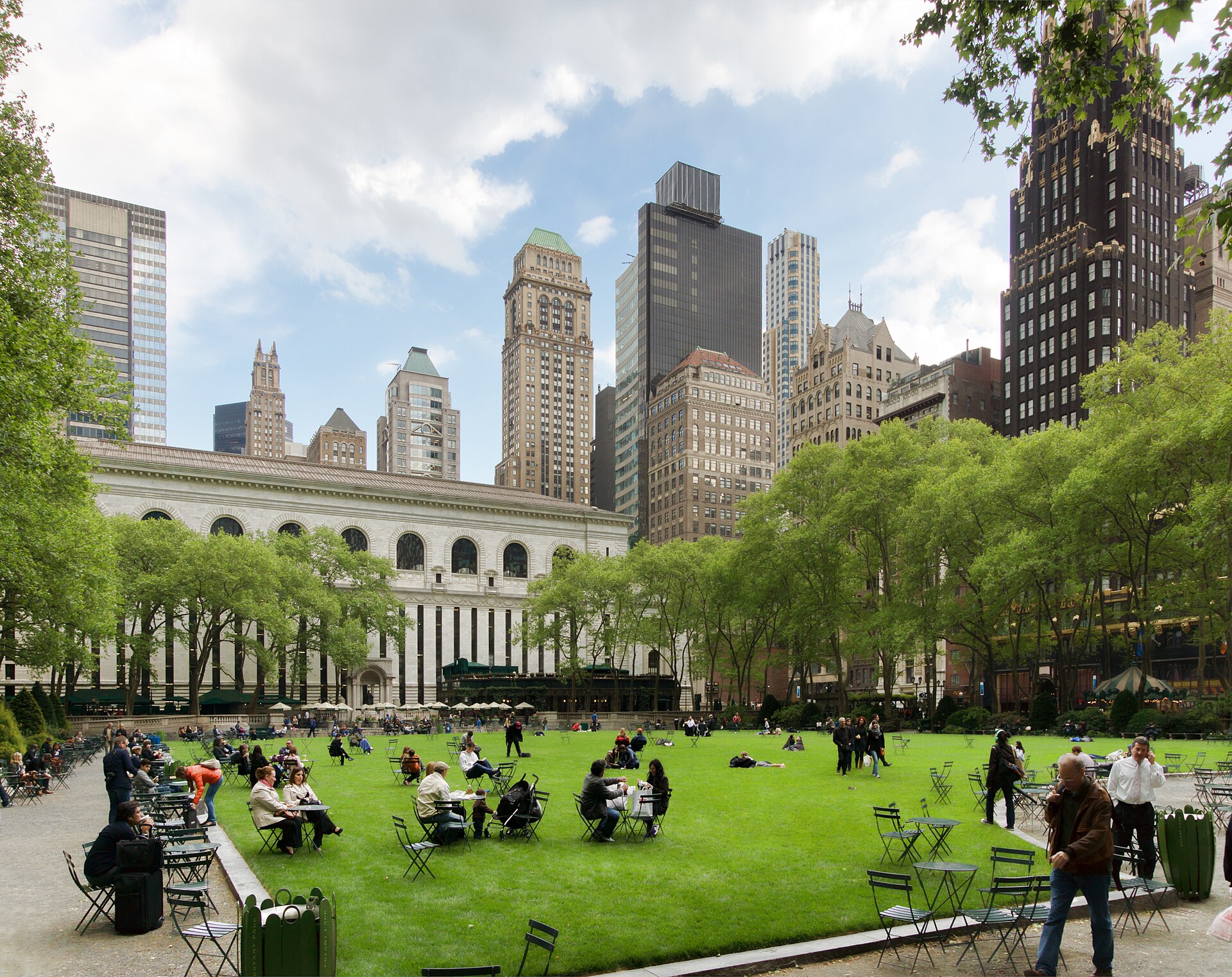
Between Fifth and Sixth Avenues, just a few blocks from Times Square, lies Bryant Park — a small green oasis in the middle of Manhattan. People play chess, read outdoors, ride the carousel, and watch movies on the large lawn in summer. In winter, the park turns into one of New York City’s most popular holiday destinations, with a free ice-skating rink and a Christmas market.
Despite its small size, Bryant Park is remarkably rich in history and architecture. Iconic Manhattan buildings surround it, while the park itself brings together city life, classical architecture, and modern New York traditions.
Interesting Facts About Bryant Park
- During the first half of the 19th century, the site of Bryant Park was a potter’s field for the poor. The burials were later moved.
- Underground stacks belonging to the New York Public Library are located beneath the park’s lawn. They can hold millions of volumes.
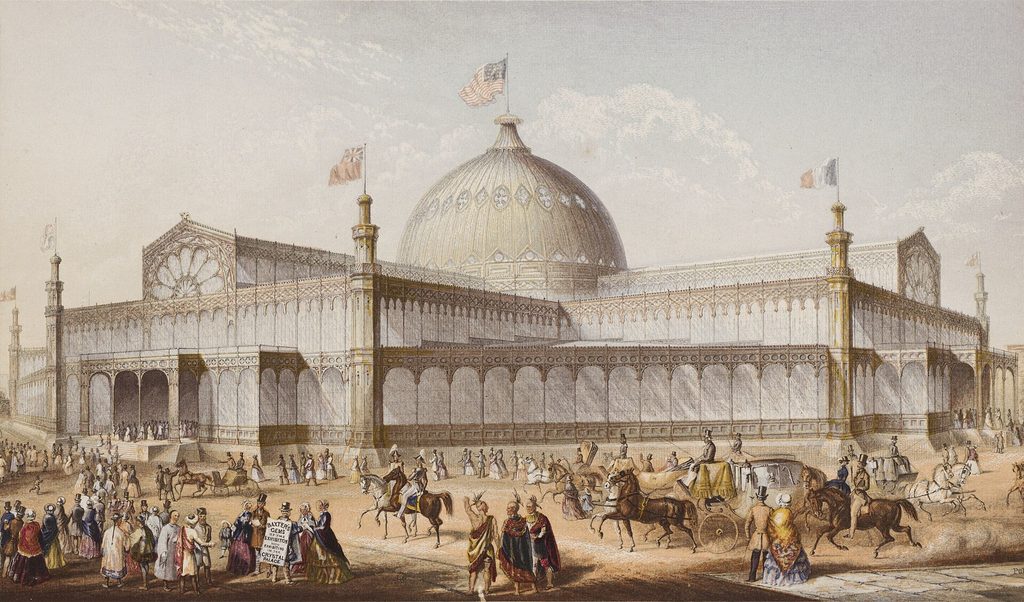
- In 1853, the first World’s Fair in the United States was held here. The glass-and-iron Crystal Palace pavilion burned down in 1858.
- The park was saved by private investors. Until the 1990s, it was considered one of the most dangerous places in Midtown. Today, according to the park itself, it is one of the busiest public spaces in the world, and it describes itself as Midtown’s town square.
- The green metal chairs and tables in the Parisian style have become one of the park’s trademarks. The idea was inspired by the research of urbanist William H. Whyte.
- The park was one of the first places in the city to offer free Wi-Fi.
- New York Fashion Week was held here. From the 1990s until the early 2010s, leading American designers presented their collections under white tents in the park.
History of Bryant Park
The land where Bryant Park stands today was set aside for public use as early as colonial times. In 1823, a potter’s field for poor and unidentified people was established here. Twenty years later, the burials were moved, and the site became known as Reservoir Square.
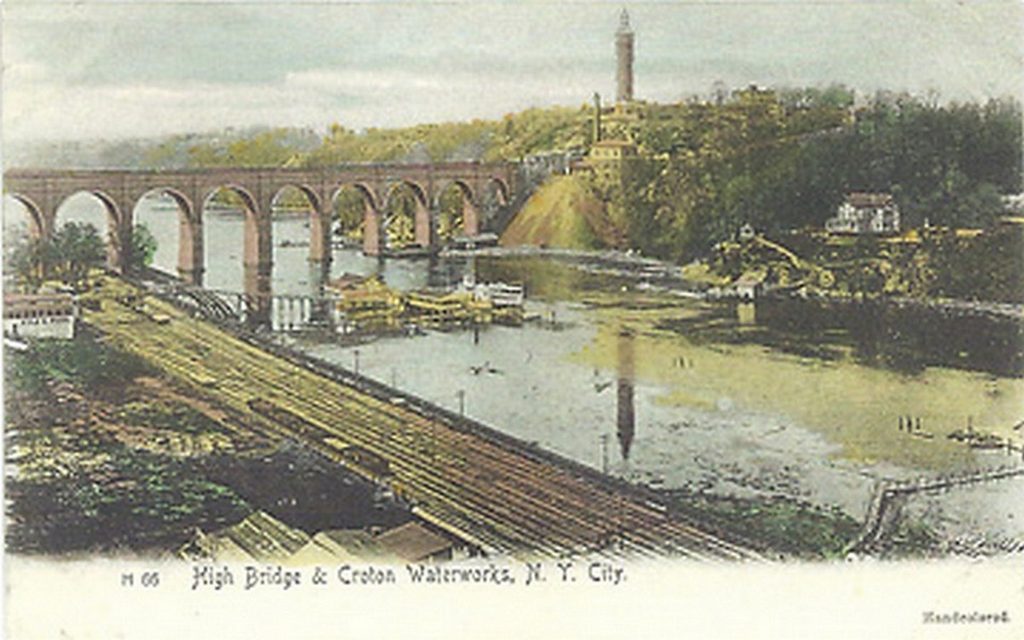
In 1842, the Croton Reservoir was built nearby. This enormous structure in the Egyptian Revival style supplied New York City with water. People could even walk along its massive walls.
In 1853, the Crystal Palace was built on an adjacent site — a gigantic glass pavilion for the World’s Fair. In 1858, it burned down within a matter of minutes.
In 1884, the park received its current name in honor of William Cullen Bryant, a poet, journalist, editor of the New York Evening Post, and abolitionist. Bryant also supported the creation of Central Park. His monument, installed in 1911, still stands in the western part of the park.
At the end of the 19th century, the Croton Reservoir was demolished, and the main building of the New York Public Library was built on the site. The library opened in 1911 and became the park’s main architectural landmark. In the 1930s, Bryant Park was completely redesigned, with strict symmetry, a raised terrace, and tall fences. Over time, this layout became one of the reasons for the park’s problems: it was poorly connected to the surrounding streets and almost completely cut off from the city.
By the 1970s and 1980s, Bryant Park had fallen into decline and was considered unsafe. High walls and dense vegetation blocked it from the street, while the area became associated with drug dealing. In 1980, the Bryant Park Corporation was established to manage and restore the park.
A major renovation led by the architecture firm Hanna/Olin transformed the park almost completely. The walls were lowered, cafes, kiosks, and terraces were added, and the space became much more visible from the street. The renovated Bryant Park reopened in 1992. Today, it is often cited as an example of how thoughtful renovation and new management can bring an abandoned urban space back to life and make it popular again.
Architecture and Layout of Bryant Park
Bryant Park is designed according to the principles of a formal French garden, in the Beaux-Arts style. Its layout is strict and symmetrical: the main axis runs from the New York Public Library to Sixth Avenue, with a large lawn known as The Lawn at the center. Paths, rows of London plane trees, and flower borders surround it. The trees make the park feel like a green gallery, while the plants in the flower beds change with the seasons.
Cafes, kiosks, and restaurants are located around the edges of the park. Their light, modern structures blend well with the historic architecture of the library without overwhelming the space.
The park has several notable sculptures and fountains. A monument to William Cullen Bryant stands in the western part of the park, while the Josephine Shaw Lowell Fountain, installed in 1912, is located near the southern entrance. You can also see a sculpture of Gertrude Stein, a copy of the work by American sculptor Jo Davidson.
What to See in Bryant Park: The Most Interesting Places
- The Lawn. In summer, people come here for picnics, yoga, outdoor movie screenings, and concerts. The park also hosts Picnic Performances, a series of free music, dance, and theater performances.
- Le Carrousel. A vintage French carousel with hand-painted animal figures that operates year-round. It is a great option for families with children and romantic photos.
- The Reading Room. During the warmer months, shelves with books and magazines are set up along one of the paths, allowing visitors to read outdoors. It is a long-standing tradition in the park.
- Chess, ping-pong, and games. The park has tables for chess, checkers, ping-pong, and other games. Equipment can be borrowed on site, and the park’s calendar regularly includes games, juggling, and even outdoor piano performances.
- Bank of America Winter Village. One of New York City’s main winter attractions, second only to the Rockefeller Center Christmas Tree. It features an ice-skating rink with free admission, quality skate rentals, and free shows, as well as a holiday market with hundreds of vendors.
- Cafes, restaurants, and bars.
- Events and activities. The park hosts bird-watching tours, yoga classes, concerts, and workshops.
What to See Near Bryant Park
New York Public Library
📍 New York Public Library / 476 5th Ave, New York, NY 10018
The main library building stands directly behind Bryant Park, on its eastern side, and the two look almost like one architectural ensemble. The library was designed by architects Carrère and Hastings and opened in 1911. It is one of the finest examples of the Beaux-Arts style in America, with a white marble facade, columns, staircases, and porticos. Two stone lions, Patience and Fortitude, guard the main entrance. They were given their names in the 1930s, during the Great Depression, as a reminder of the qualities the city needed during difficult times. The lions have since become one of New York’s symbols, and tourists are constantly taking photos with them.
Inside, make sure to see the Rose Main Reading Room. This enormous room is about 295 feet long, with a painted ceiling, tall windows, and long wooden tables with lamps. It still operates as a working reading room, so visitors are expected to keep quiet. Nearby are exhibition rooms with rare books, manuscripts, and maps, and admission is free.
Bank of America Tower
📍 Bank of America Tower / New York, NY 10036
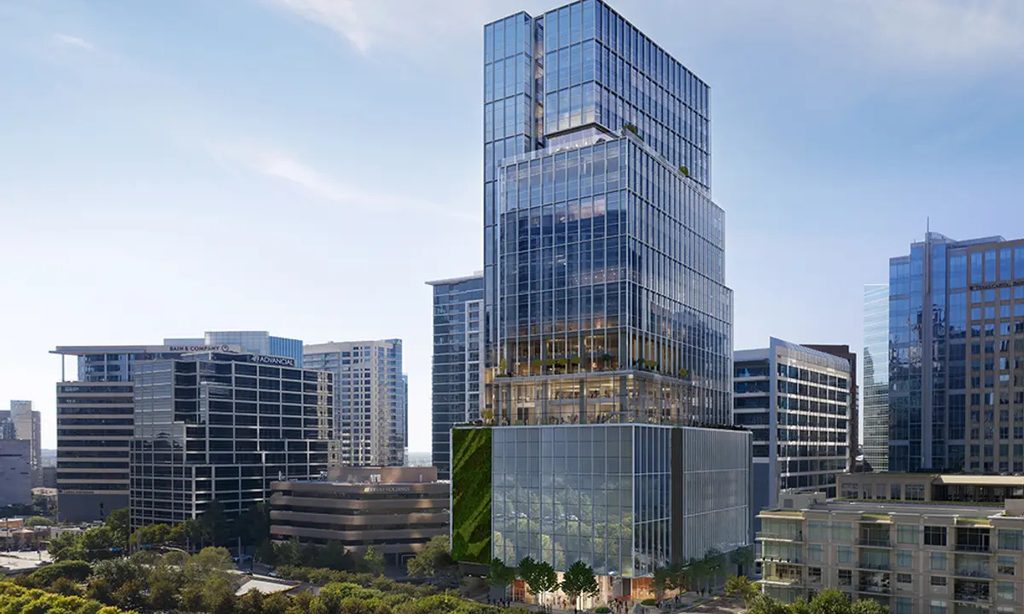
This glass skyscraper, completed in 2009, stands directly along the northern side of the park. It was designed by Cook+Fox, and its height, including the spire, is about 1,200 feet. The tower looks like a faceted crystal: its glass surfaces reflect the sky differently throughout the day. It is best viewed from The Lawn, especially around sunset. The base of the building incorporates the former Henry Miller’s Theatre, now called the Stephen Sondheim Theatre.
The tower is considered one of the world’s greener skyscrapers and received the highest LEED Platinum certification. The building is designed to conserve water and energy, collect rainwater, filter the air, and use its own cooling and energy systems.
American Radiator Building
📍 American Radiator Building / 40 W 40th St, New York, NY 10018
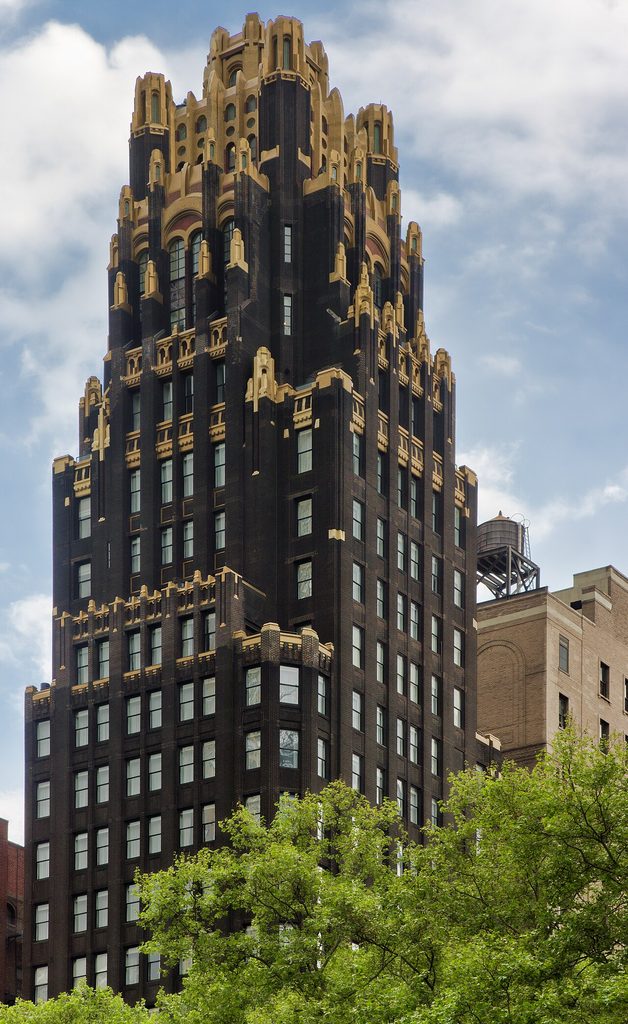
The building was designed by architect Raymond Hood in 1924 and immediately became one of Midtown’s most recognizable landmarks. Its facade is made of black brick with gold details at the top. The black color is said to represent coal, while the gold represents fire, reflecting the building’s original connection to a company that manufactured heating radiators. The tower resembles a Gothic cathedral, which is why it is often described as an example of Gothic Art Deco. The famous artist Georgia O’Keeffe even depicted the building in one of her paintings.
Today, it houses the Bryant Park Hotel, directly across from the park. You can go inside if you are staying at the hotel or visiting its restaurant or bar, but the main attraction is the facade, which can be admired from the street. It looks especially beautiful in the evening when the golden top is illuminated.
Grace Building
📍 Grace Building / W. R. Grace Building, 1114 6th Ave, New York, NY 10110
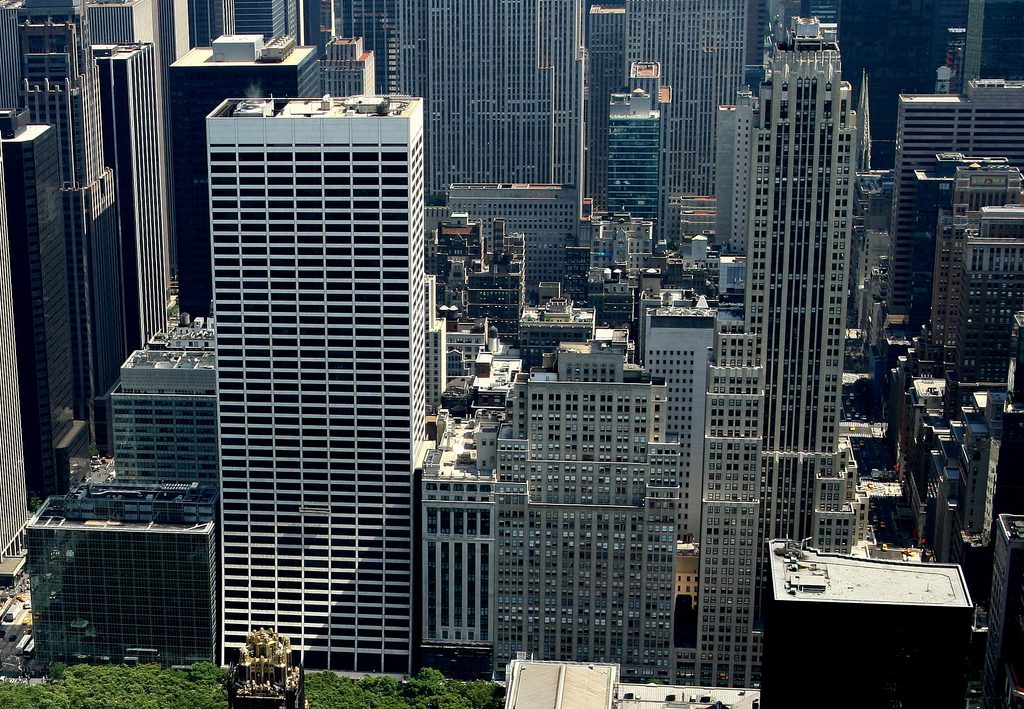
The Grace Building on Sixth Avenue opened in 1974 and was designed by Gordon Bunshaft of SOM. It stands out from its neighbors: the facade consists of angled surfaces, making the building look more like a sculpture than a conventional box. Its unusual shape immediately catches the eye along Sixth Avenue. The name comes from W. R. Grace and Company, the company for which it was built.
It is a good example of 1970s architecture that contrasts with the classical library and Hood’s Gothic building. If you like architecture, pay attention to how three very different eras coexist on the same block.
Bryant Park Studios
📍 Bryant Park Studios / 80 W 40th St, New York, NY 10018
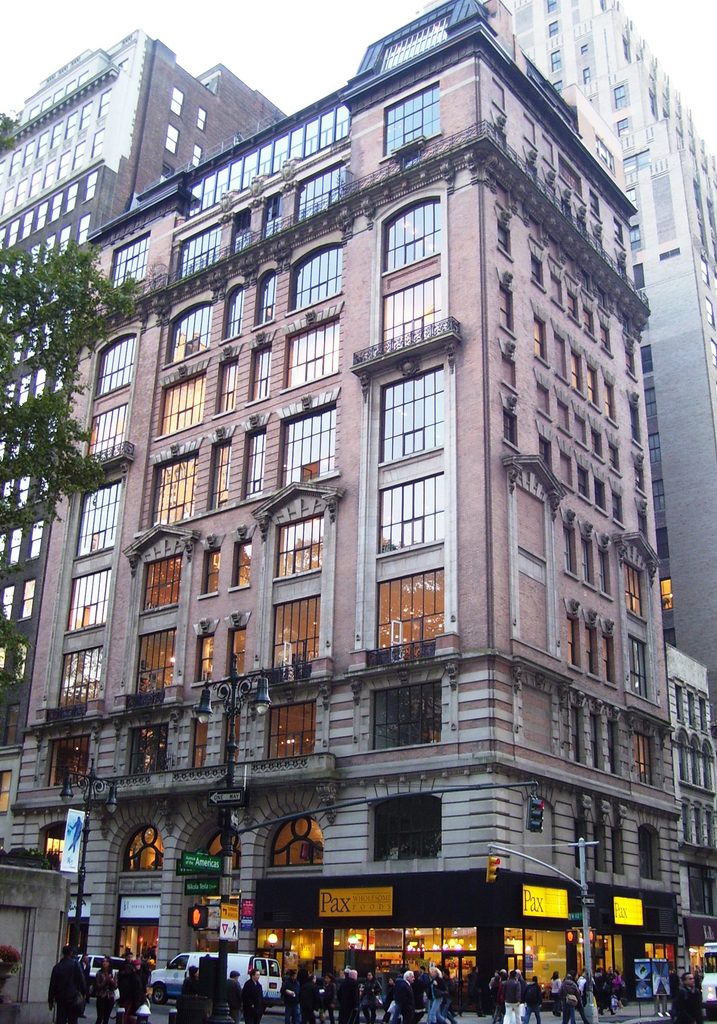
This brick building from 1901 stands next to the park and looks much more modest than its neighbors. It was originally built as a building with studios for artists. The studios had high ceilings and large windows, providing artists with plenty of natural light for their work. Today, the building is residential, so visitors cannot enter.
It is easy to walk past a building like this, but it is a reminder that artists once lived and worked in Midtown. It is a quiet remnant of the neighborhood’s “golden age” among the skyscrapers and makes a nice short stop for a photo.
Grand Central Terminal
📍 Grand Central / New York
The terminal is about a 10-minute walk east of the park and opened in 1913. It was built in the Beaux-Arts style and is one of the most beautiful places in the city. The Main Concourse is impressive in scale, with tall windows, marble staircases, and an enormous turquoise ceiling covered with stars and constellations. In the center stands the famous information booth with its four-sided clock, a classic meeting point.
Do not miss the Whispering Gallery near the entrance to the Oyster Bar. Stand at one corner of the arch while your friend stands at the opposite corner, and you will be able to hear each other’s whispers across the space. You can also stop here for a meal or some oysters. Grand Central is a must for any Midtown itinerary.
Times Square
📍 Times Square / New York, NY 10036
Times Square is only two blocks west of the park. It is a striking contrast to the quiet Bryant Park, with huge advertising screens, crowds, Broadway theaters, and the constant energy of the city. The square is famous for its New Year’s Eve ball drop, which has taken place here since the beginning of the 20th century, as well as its red steps, where you can sit and watch the crowds.
Come in the evening or at night, when the screens are at their brightest. During the day, it is crowded, but it is also a good time to find discounted theater tickets. An hour is enough for a quick visit, after which you can return to the park and relax.
Rockefeller Center and Top of the Rock
📍 Rockefeller Center / 45 Rockefeller Plaza, New York, NY 10111
This is a large complex of Art Deco buildings constructed in the 1930s. It features sculptures, spacious plazas, and the famous ice-skating rink. In winter, visitors come for the city’s main Christmas tree, which is lit every year in early December. Walking around the complex takes about an hour.
Top of the Rock is an observation deck at the top of one of the buildings in the complex. From here, you can see all of Manhattan, including the Empire State Building and Central Park. Choose a time close to sunset to see both daylight and the city lights, and it is best to buy tickets in advance.
Empire State Building and Chrysler Building
📍 Empire State Building / 20 W 34th St, New York, NY 10001
The Empire State Building opened in 1931 and remained the world’s tallest building for decades. It is a classic example of Art Deco, and millions of tourists visit its observation decks on the 86th and 102nd floors every year. It is best to arrive early in the morning or in the evening to avoid the longest lines.
📍 Chrysler Building / 405 Lexington Ave, New York, NY 10174
The Chrysler Building was completed in 1930 by architect William Van Alen. Its most famous feature is the gleaming stainless-steel crown decorated with eagle gargoyles. There is no observation deck, so admire it from the outside — it looks best from a distance. If the lobby is open, take a look inside: it is decorated with marble and captures the style of the era beautifully.
Visitors’ Information
📍 Bryant Park / New York, NY 10018