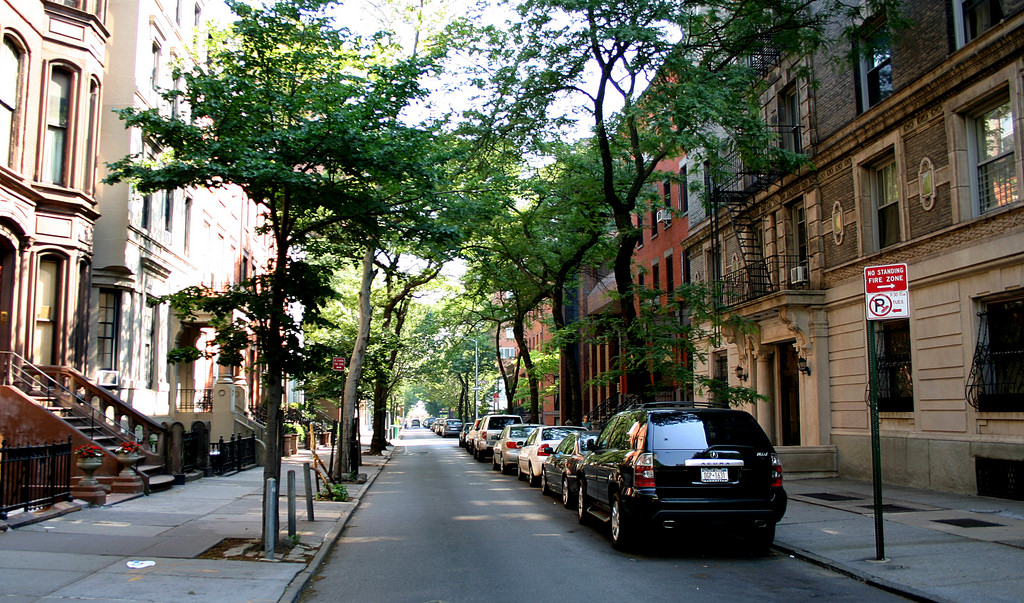
As someone who grew up in a town with only one traffic light for the entire neighborhood, I’m very interested in living in the US: new discoveries every day!
It turns out that a typical American (and other) dead-end street with no through traffic, often ending in a roundabout, is called a cul-de-sac. Translated from French: cul-de-sac = “bottom of the bag” → a metaphor for a street with no direct exit.
Also, I’ve finally gathered the strength to understand why not all streets in the US are simply called streets, so here’s a mini-guide to alleys, drives, lanes, places, and other synonyms for the word “street”:
- Place – a small street, often a side street or a dead-end street. For example, the historic 📍Patchin Place / New York, 10011;
- Lane – a narrow street or alley, often of historic origin. For example, Manhattan’s shortest street 📍Mill Lane / New York, 10004;
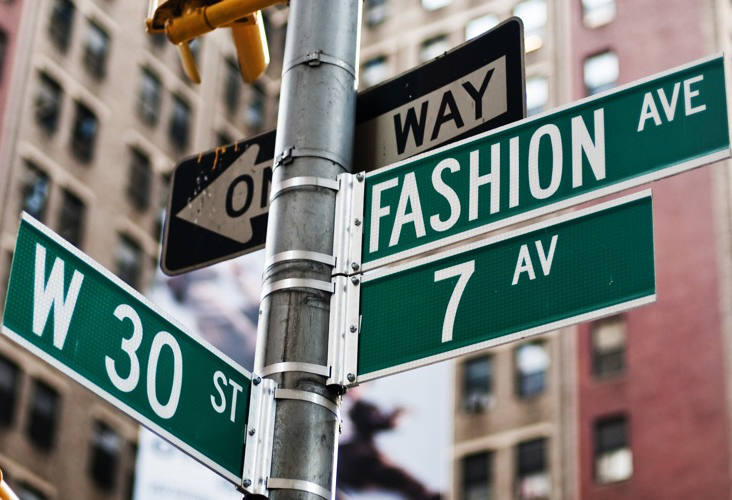
- Way is a broad term, but in New York City, it’s usually a section of road that receives an informal nickname after a famous person. For example, 📍Miles Davis Way, named after the great jazz musician (he lived at 312 W 77th St / 312 W 77th St, New York, NY 10024);
- Drive is often a winding street that follows the landscape. An example is 📍Riverside Drive, ideal for cycling, with views of the Hudson River;
- Circle is a circular street, often a cul-de-sac in the shape of a ring or loop. For example, the well-known 📍Columbus Circle / 848 Columbus Cir, New York, NY 10019 on the southwest corner of Central Park;
- Loop is a closed, circular street, fortunately only accessible by bicycle or foot. For example, 📍Central Park Loop / 79th Street & 85th Street, New York, NY 10024 along the edges of Central Park;
- Alley is a narrow alley, often between buildings or as a service road. An example of such a street is the most famous and “cinematic” alley in New York City, 📍Cortlandt Alley / New York, 10013 often used for commercial and film shoots;
- Row – a historically significant street with rows of identical houses or townhouses. For example, the picturesque 📍Astor Row / W 130th St, New York, NY 10037 consisting of 28 detached houses in Harlem;
- Walk – a pedestrian path or very narrow street. For example, the private street of 27 Tudor-style townhouses 📍Pomander Walk / New York, 10025 in the Upper West Side (UWS);
- Terrace – a short, winding or slope-lined street, often residential. One of the most recognizable and colorful streets in Upper Manhattan is 📍Sylvan Terrace / Sylvan Terrace, New York, NY 10032;
- Boulevard – a wide street with a divider, often decorated with trees or an alley. For example, 📍Hudson Blvd East & West is a new boulevard on the site of former industrial wastelands near Hudson Yards and Vessel. 📍St. Nicholas Ave was also considered a boulevard at one time;


- A promenade is a pedestrian area, usually along water. The most famous promenade in Brooklyn is 📍Brooklyn Heights Promenade, with panoramic views of the city. Although located in Brooklyn, it is often cited as the best promenade for views of Manhattan, Staten Island, the Brooklyn Bridge, and the harbor.

- A court is a short street or dead-end street, often lined with residential buildings and sometimes with a closed end. 📍Sniffen Court / 99-1 Sniffen Ct, New York, NY 10016 is one of the most unusual and colorful historic streets, made up of ten two-story brick buildings originally built as stables for wealthy residents during the American Civil War. It is also considered “Manhattan’s most famous cul-de-sac.”
All of the streets listed above are worth visiting in their own right, so bookmark this list as a city walk option. Especially if you’ve already visited all the tourist spots and want to immerse yourself in a historic, but less touristy, New York.