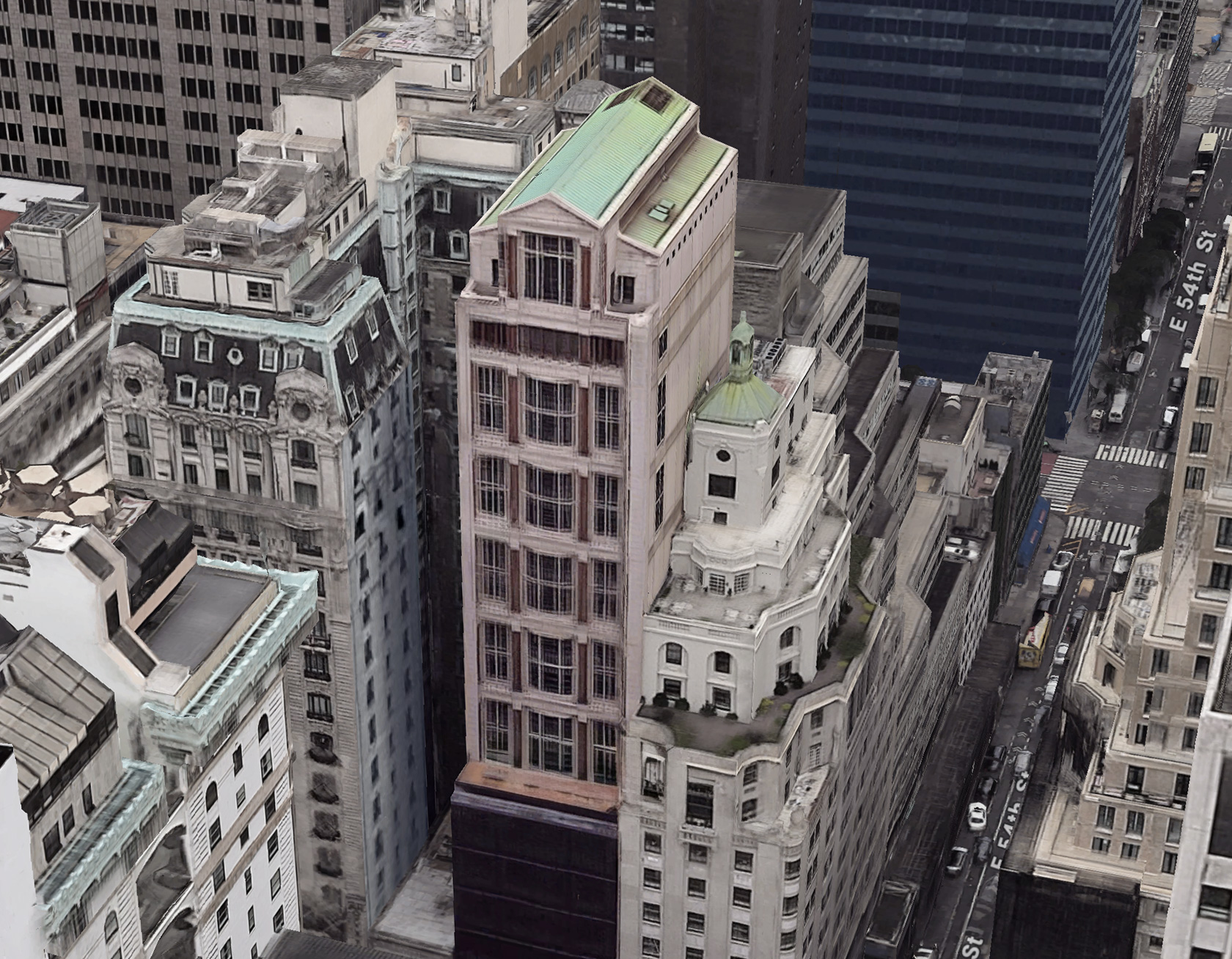
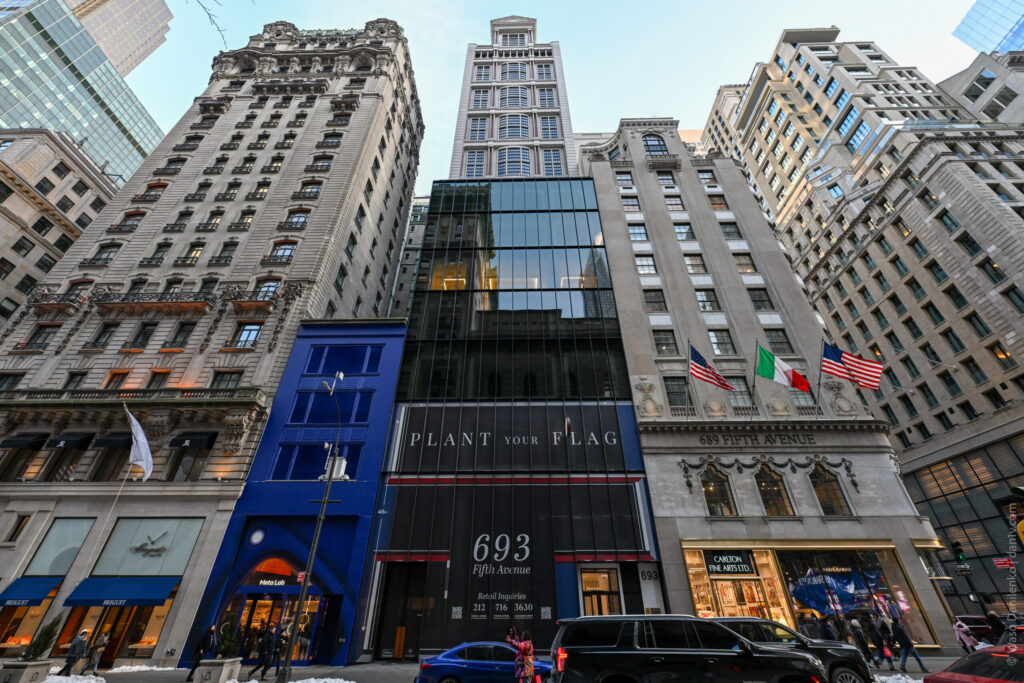
The Takashimaya Building at 693 Fifth Avenue is a postmodern 20-story skyscraper in the heart of Midtown Manhattan, situated between 53rd and 54th Streets. The building brings together the legacy of Japanese luxury, the architecture of Philip Johnson, and a penthouse housing a gallery-boutique dedicated to collectible design.
Interesting Facts About Takashimaya at 693 Fifth Avenue
- After Takashimaya’s bankruptcy in 2010, the building was acquired by Thor Equities for $140 million.
- More than 200,000 people pass by the building’s façade every day.
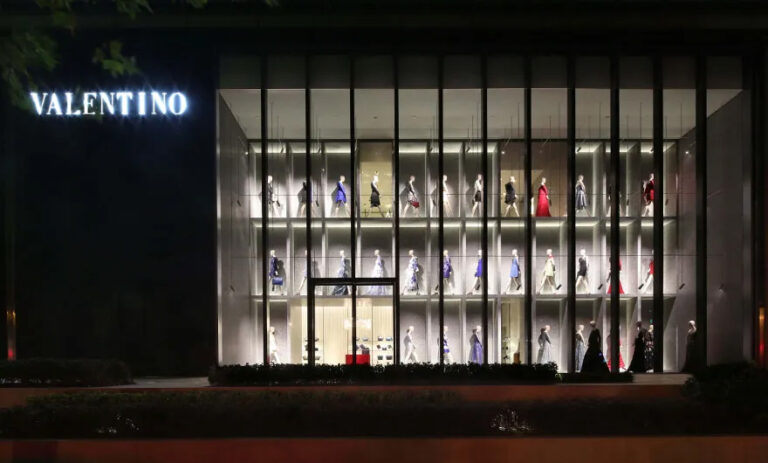
- Italian fashion house Valentino occupied the first three floors of the building from 2014 to 2020, with its lease accounting for more than 80% of the property’s total rental income.
- When it opened in 1958, it was the first Japanese department store in the United States. The store featured a three-story atrium, a flower salon, and merchandise sourced from around the world.
- Architectural historian Carter B. Horsley described 693 Fifth Avenue as the finest postmodern building in New York City.
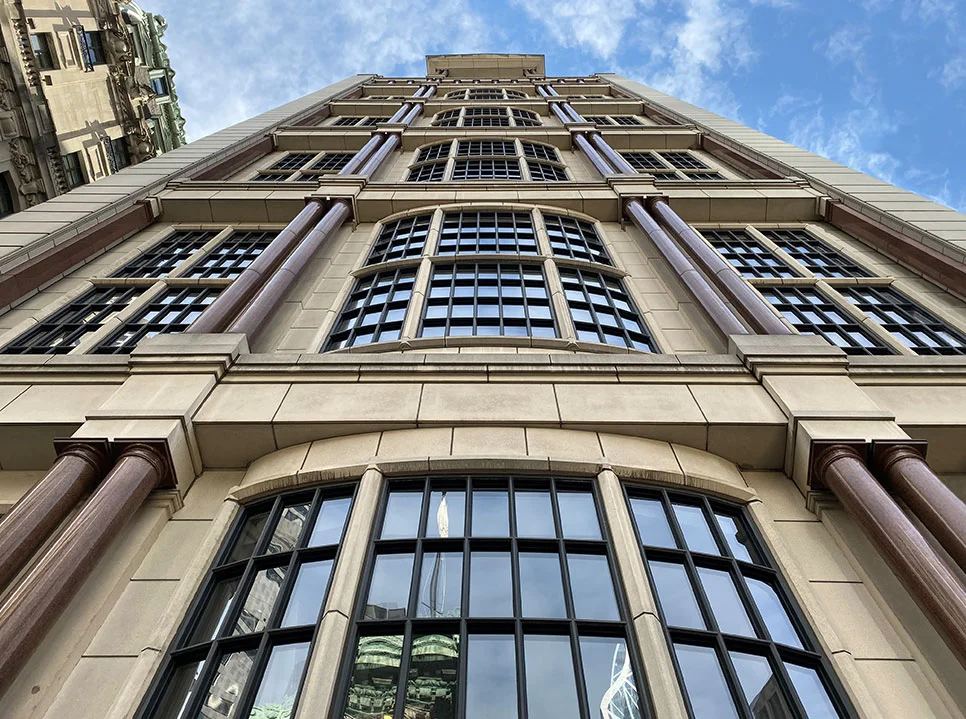
- The building’s façade is clad in rare pink granite imported from Brazil.
- Richard Hudnut, the cosmetics brand whose flagship salon stood on the site from 1931, later became part of Warner-Lambert. In 2000, Pfizer acquired Warner-Lambert for $90 billion to obtain Lipitor, which became the world’s best-selling cholesterol medication.
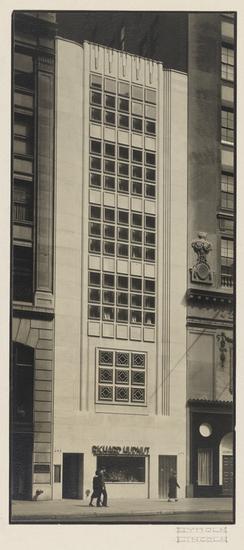
- The original Hudnut showroom was designed through a collaboration between Ely Jacques Kahn (architect of 120 Wall Street) and Eliel Saarinen. Architectural Forum described the partnership as one of the most intriguing architectural collaborations of its era.
- The 19th and 20th floors are home to Carpenters Workshop Gallery, featuring 12-meter-high ceilings and two open terraces overlooking Fifth Avenue. Admission is free.
- The upper floors retain Philip Johnson’s original postmodern façade, distinguished by arcades and pink granite. In contrast, the lower seven floors were reclad in black metal and glass in 2014 as part of a redesign by David Chipperfield.
Architecture of Takashimaya at 693 Fifth Avenue
The current building was completed in 1993 and designed by the architectural firm Philip Johnson & John Burgee Architects. Rising 20 stories and approximately 90 meters (295 feet) tall, the tower became one of the most notable examples of postmodern architecture on Fifth Avenue. The architects sought to integrate the building into the historic character of the neighborhood: the upper floors feature arched windows, granite columns, and rusticated details that reference classical architecture.
A defining feature of the building is its façade, clad in rare pink granite imported from Brazil, which distinguishes it from the surrounding glass skyscrapers.
In 2014, the lower seven floors were completely redesigned by British architect David Chipperfield. The original frontage was replaced with a minimalist façade of black metal and glass accented by brass details, drawing inspiration from the modernist architecture of Ludwig Mies van der Rohe.
Following the renovation, architectural critics noted the striking contrast between the building’s two parts: the postmodern tower appears to rise above a sleek and contemporary glass base, creating a distinctive dialogue between historical references and modern design.
History of Takashimaya at 693 Fifth Avenue
The history of the site at 693 Fifth Avenue mirrors the evolution of Manhattan itself — from a district of grand mansions to one of the world’s premier centers of commerce and fashion. In the late nineteenth century, the block between 53rd and 54th Streets formed part of the famous “Millionaires’ Row.” Along Fifth Avenue stood the residences of New York’s wealthiest families, making the neighborhood a symbol of wealth and social prestige.
In 1931, the flagship salon of the cosmetics company Richard Hudnut opened on the site. The grand opening took place on June 1. In addition to selling perfumes and cosmetics, the establishment featured manicure rooms, beauty salons, and even fitness facilities. Such salons became an integral part of New York’s social scene and were so deeply embedded in popular culture that they were satirized in the classic film The Women (1939).
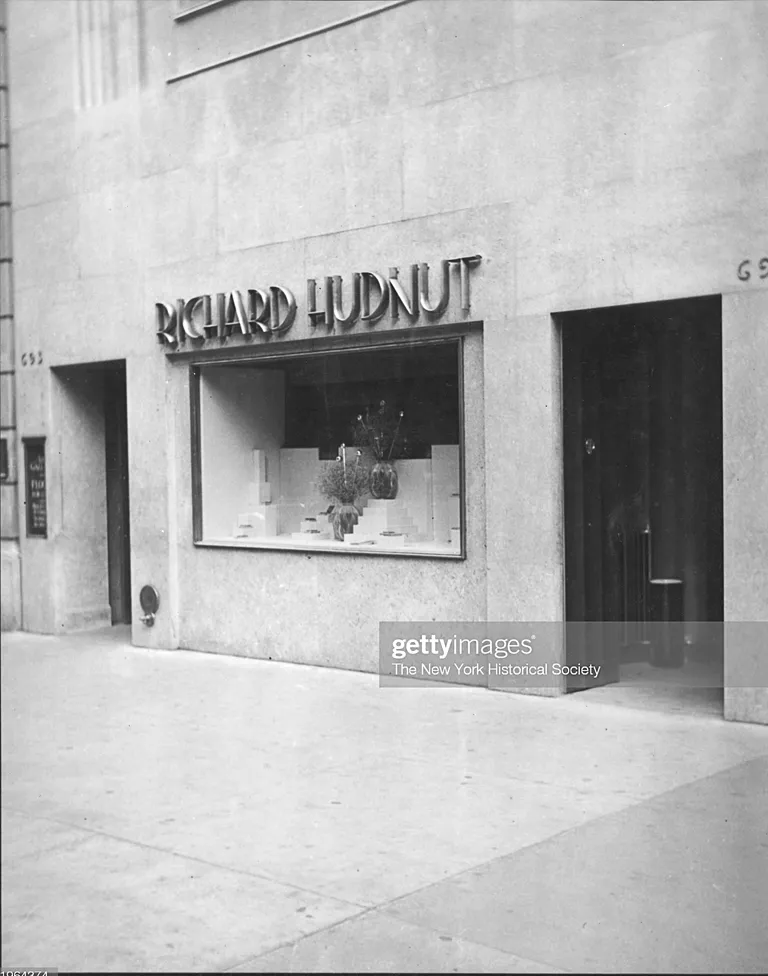
The Richard Hudnut era came to an end in the mid-twentieth century. In 1955, Warner-Hudnut merged with Lambert Pharmacal Company, the maker of Listerine, to form Warner-Lambert Corporation. Following the merger, the Fifth Avenue salon was closed. Decades later, Warner-Lambert became part of Pfizer through a merger valued at approximately $90 billion.
A new chapter in the site’s history began in 1958 when the Japanese retailer Takashimaya opened its first department store in the United States at this location. The store quickly became a neighborhood landmark thanks to its three-story atrium, flower salon, and carefully curated selection of merchandise from around the world.
By the early 1990s, Takashimaya decided to completely redevelop its New York headquarters. In 1993, a new 20-story building was completed on the site, designed by architects Philip Johnson and John Burgee. Clad in rare pink granite imported from Brazil, the tower became a prominent example of postmodern architecture on Fifth Avenue. Its arched windows and classical architectural motifs helped maintain a dialogue with the historic character of the surrounding streetscape.
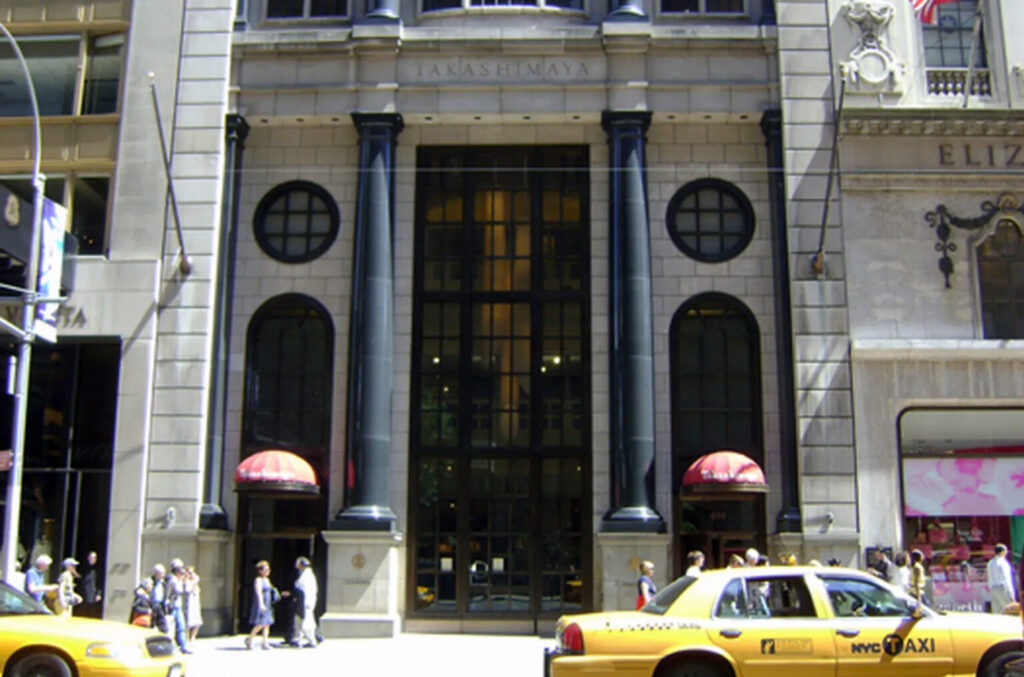
After more than half a century on Fifth Avenue, Takashimaya closed its store in June 2010. Shortly thereafter, the property was acquired by the development firm Thor Equities for $140 million, beginning a new phase of redevelopment.
In 2014, the lower floors underwent a complete transformation designed by British architect David Chipperfield. The new base, composed of black metal, glass, and brass, created a striking contrast with the postmodern tower above and gave the building a more contemporary appearance. Upon completion of the renovation, the first three floors were leased to the Italian fashion house Valentino, whose boutique became the property’s principal commercial tenant.
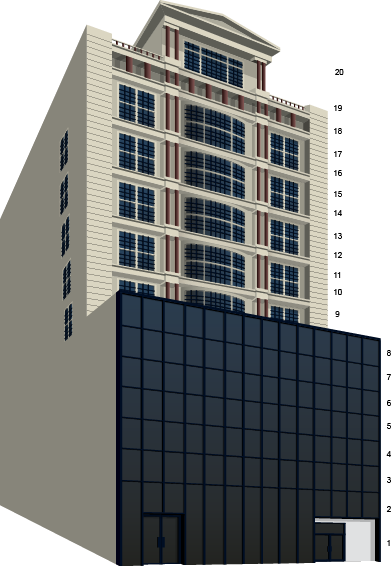
A year later, in 2015, Carpenters Workshop Gallery opened on the 19th and 20th floors. One of the world’s leading galleries for collectible design, the space features 12-meter-high ceilings and open terraces overlooking Fifth Avenue, establishing a new cultural destination within the neighborhood.
During the Covid-19 pandemic, Valentino vacated the premises ahead of schedule. The retail space was temporarily occupied by Burberry, which used the building as a temporary flagship store while its primary Fifth Avenue location near 57th Street underwent renovation. Burberry returned to its own building in October 2024 following the completion of those works.
Today, the lower floors of the complex are once again undergoing modernization, and a permanent retail tenant has yet to be announced. Meanwhile, the gallery on the upper floors continues to operate, and the building remains one of the most distinctive architectural landmarks on Fifth Avenue — a place where more than a century of New York history converges.
Carpenters Workshop Gallery at Takashimaya, 693 Fifth Avenue
Carpenters Workshop Gallery is one of the world’s leading galleries for collectible design. The gallery showcases furniture and objects that blur the line between art and functionality, including sofas, chairs, lighting pieces, and sculptures. Founded in London in 2006, Carpenters Workshop Gallery now operates locations in London, Paris, New York, and Los Angeles.
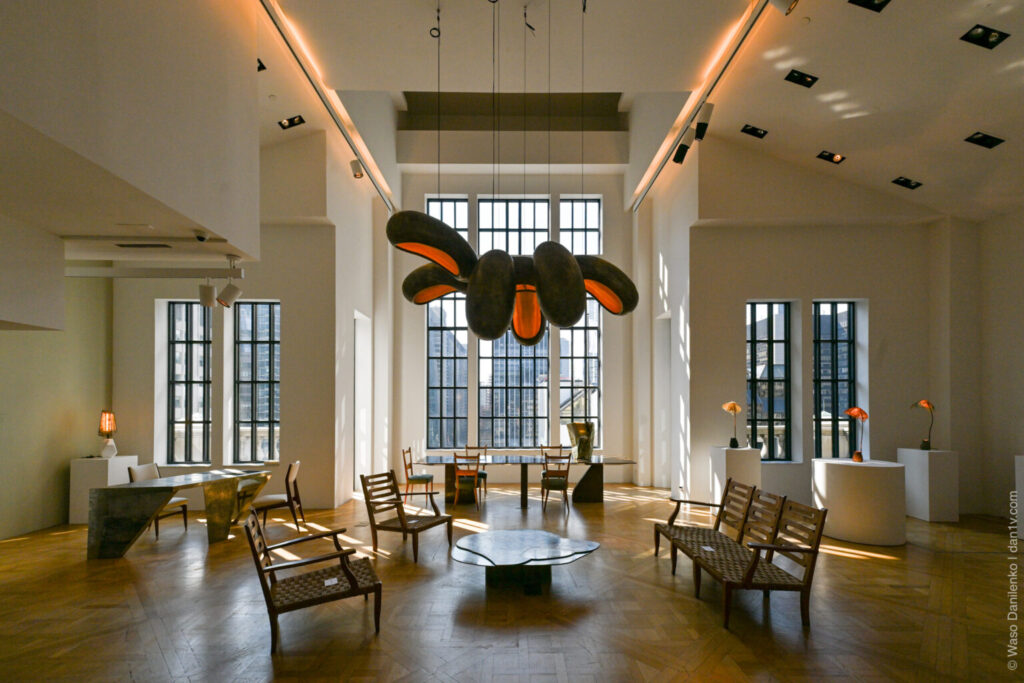
The New York gallery occupies the building’s top two floors — the 19th and 20th levels — and features dramatic 12-meter (40-foot) ceilings and floor-to-ceiling panoramic windows. Two open terraces offer sweeping views both north and south along Fifth Avenue. Admission is free, and visitors can access the gallery directly by elevator from the building’s lobby.
Visitors Information
📍Takashimaya / 689 5th Ave, New York, NY 10019
Metro: E, M, station 5 Av/53 St (3-minute walk)
Admission: Free