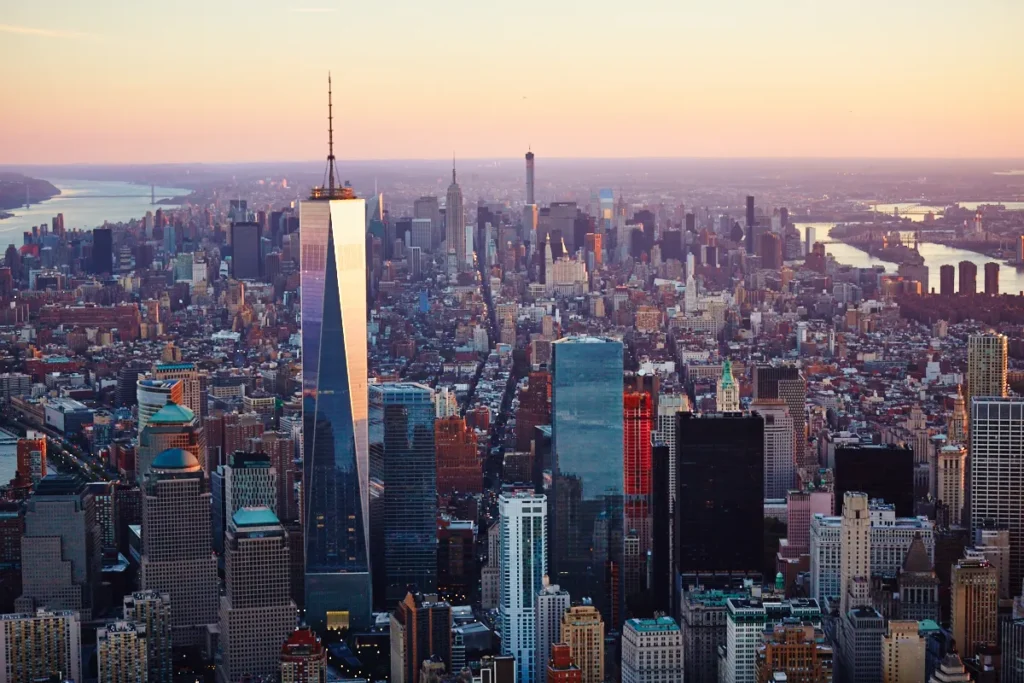
New York City continues to grow, and the last fifteen years have seen one of the most active periods in the history of high-rise construction. Manhattan has seen the emergence of skyscrapers that are setting new records and redefining modern architectural standards. Among them are One World Trade Center, a symbol of the city’s recovery; 111 West 57th Street, the world’s thinnest skyscraper; and the new JPMorgan Chase headquarters at 270 Park Avenue, a showcase for the possibilities of modern corporate architecture.
This review includes ten projects: five existing skyscrapers over 300 meters (900 feet) tall, completed between 2014 and 2025, and five future towers that are expected to transform New York’s skyline by 2031.
Completed skyscrapers 2010–2025
One World Trade Center
📍One World Trade Center / 117 West St, New York, NY 10007
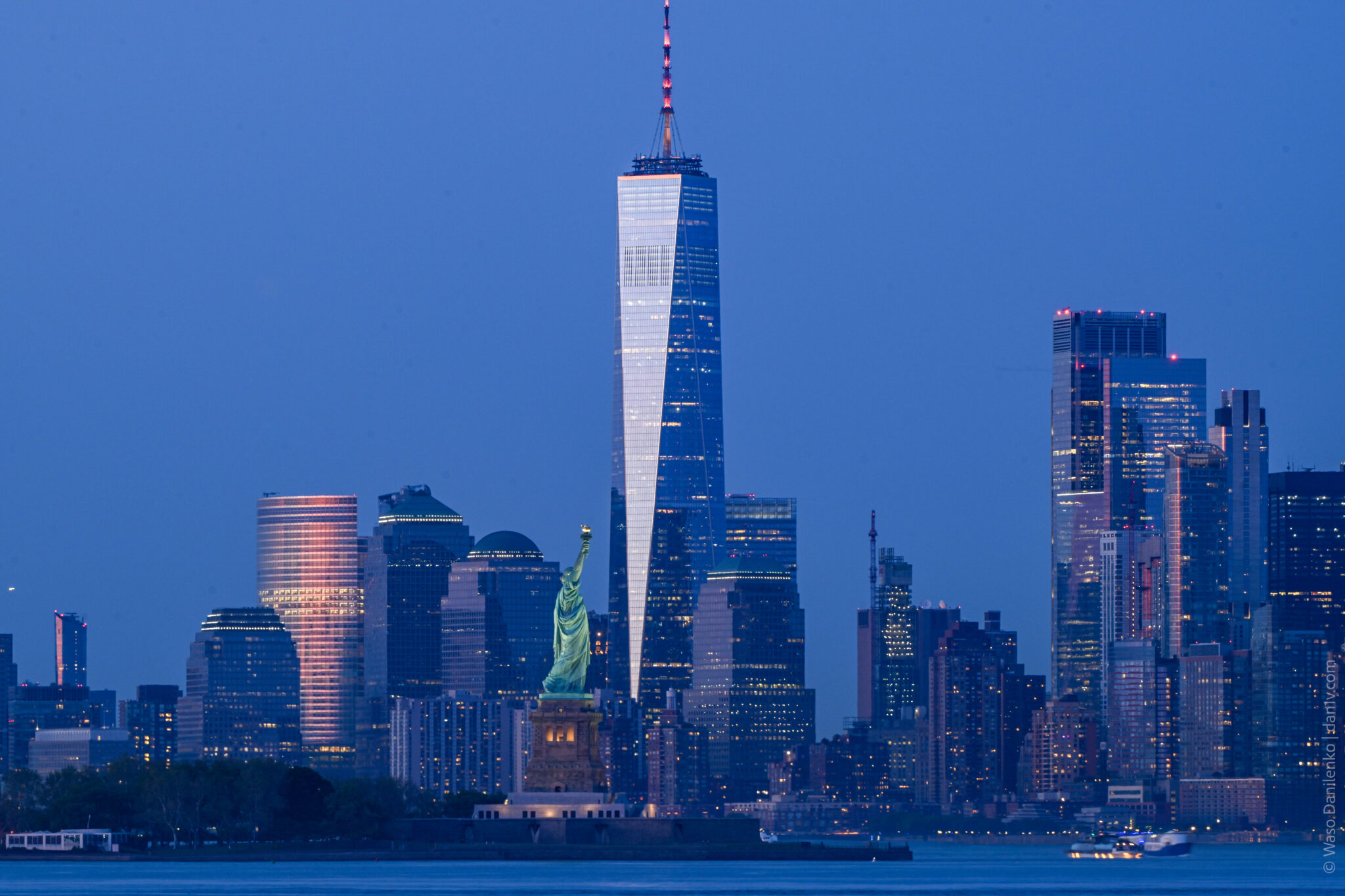
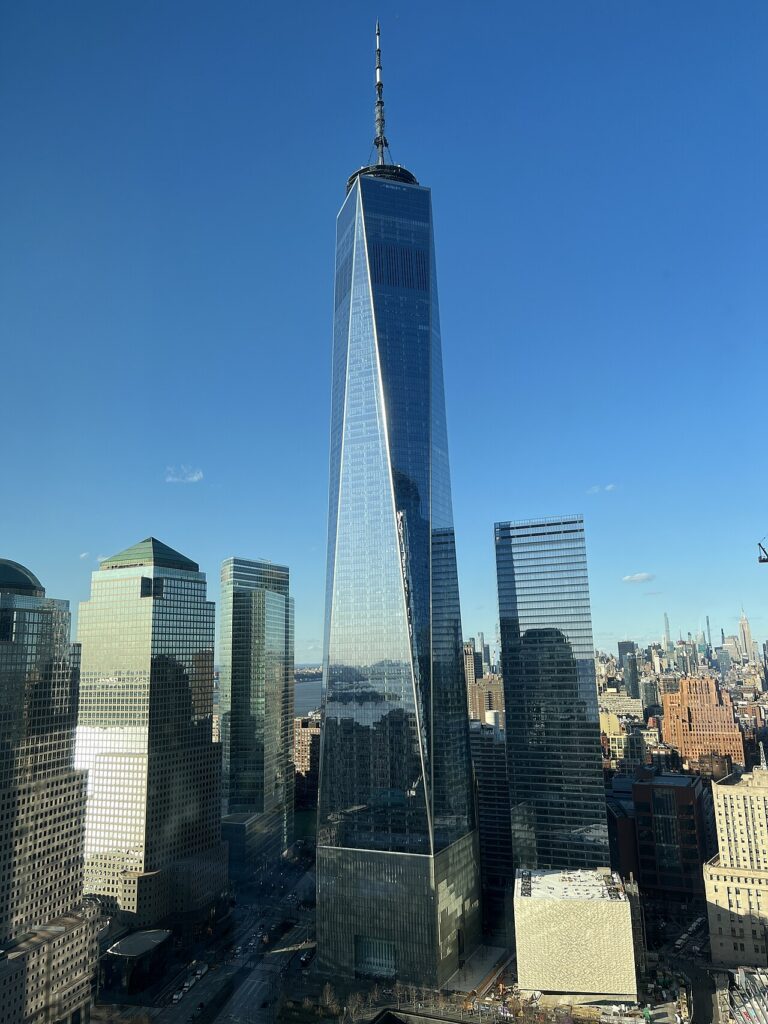
The height of this building is not a random number. At 1,776 feet (541 meters), it commemorates the year the U.S. Declaration of Independence was signed. This decision was made during the master planning stage, when architect Daniel Libeskind proposed a new vision for Ground Zero. In the final design of the tower, created by David Childs of Skidmore, Owings & Merrill, the symbolic height was preserved — the occupied building reaches 1,368 feet (417 meters), topped by a 408-foot (124-meter) spire.
The building’s form transitions from a square base to an octagonal midsection. The lower 180 feet (55 meters) consists of a reinforced security podium — massive concrete walls clad with glass and steel fins. Above this podium, the tower takes on a distinctive transparency. Glass panels nearly 5 feet (1.5 meters) wide span the full height of each floor without interruptions, giving the façade an almost crystalline clarity. Depending on the viewing angle, the tower can appear either as a slender obelisk or a broad prism — an optical effect intentionally incorporated by Childs.
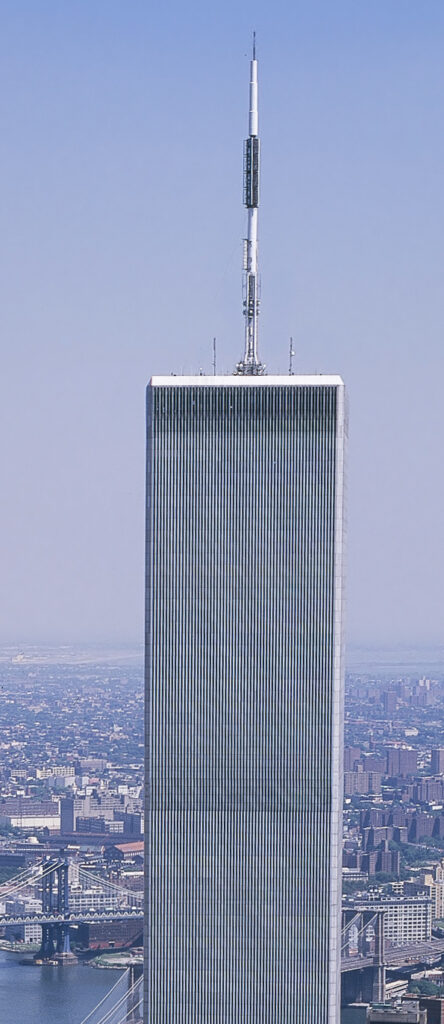
Construction began on April 27, 2006, five years after the September 11 attacks. The tower was designed as a commercial office building, yet it became something more symbolic — and that is both its strength and its contradiction. The building does not attempt to recreate the Twin Towers, but it cannot pretend they never existed.
The first tenant was the media company Condé Nast, which moved into the tower in November 2014. A year later, the One World Observatory opened on floors 100–102, rising 1,270 feet (387 meters) above street level.
One World Trade Center is the tallest building in the United States and the Western Hemisphere. In global rankings, it stands behind several taller structures, including the Burj Khalifa in Dubai, Tokyo Skytree, Shanghai Tower, Abraj Al-Bait, and Ping An Finance Centre. In this context, however, its symbolic significance matters more than its place on a height chart. Technically, it is not the tallest building in the world, but architecturally, it remains one of the most meaning-laden structures of the modern era.
One Vanderbilt
📍 One Vanderbilt / 1 Vanderbilt Ave, New York, NY 10017
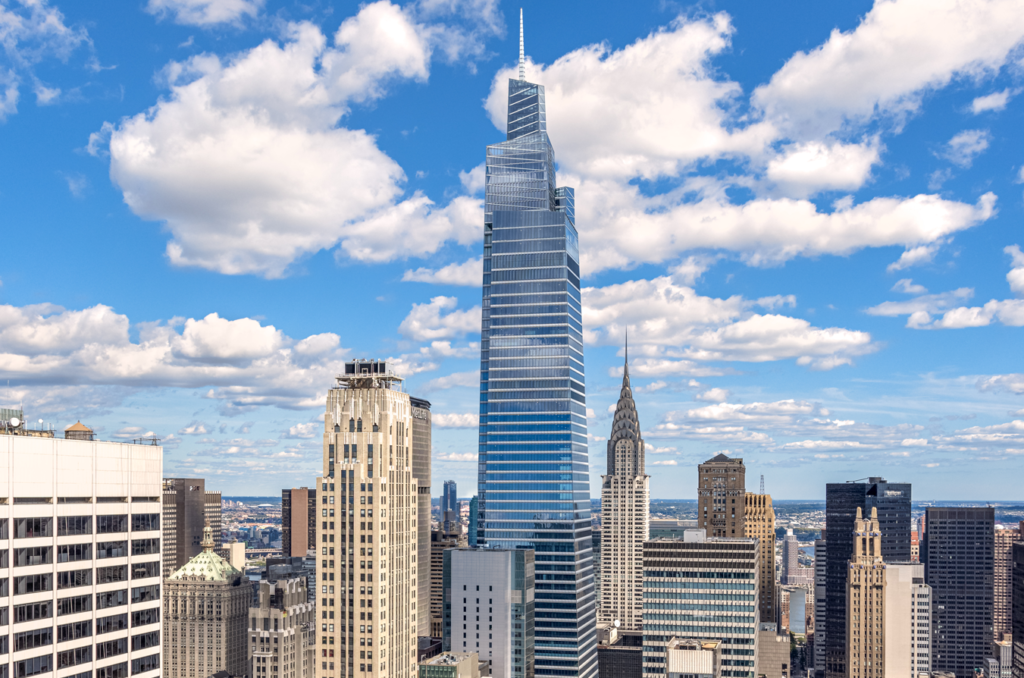
The tower stands directly beside Grand Central Terminal — and that relationship shaped the entire project. The architects at Kohn Pedersen Fox (KPF), led by James von Klemperer, set out to solve what seemed like an impossible challenge: how to build a 1,401-foot (427-meter) skyscraper next to one of New York’s most important architectural landmarks without the two competing for attention.
Their answer was terracotta cladding — the same material used in the interior ceilings of Grand Central Terminal. The tower’s façade combines terracotta spandrel panels with floor-to-ceiling glass, creating a building that visually lightens as it rises. The base appears denser and warmer, while the crown gradually dissolves into the sky through glass and stainless steel. The form consists of four interlocking and twisting volumes that taper upward into a distinctive pinnacle. The eastern face of the tower intentionally steps back from Grand Central, preserving the terminal’s visual prominence.
The office floors are notable for their exceptional proportions. Ceiling heights range from 14.5 to 24 feet (4.4 to 7.3 meters), interior columns are eliminated in favor of perimeter structural supports, and uninterrupted glass walls provide full 360-degree views of the city.
The tower is also home to Le Pavillon, created by renowned chef Daniel Boulud. The restaurant features 60-foot (18-meter) ceilings and sweeping views of the Chrysler Building, making it one of New York’s most talked-about restaurant openings of 2021.
The observation deck, SUMMIT One Vanderbilt, opened in October 2021 and was designed by Snøhetta. Occupying floors 91 through 93, it is far more than a traditional viewing platform. Visitors encounter glass skyboxes suspended above Madison Avenue, mirrored rooms that multiply reflections in every direction, and an open-air terrace 1,102 feet (336 meters) above the street. The experience blends architecture, art, and spectacle into one immersive environment.
The tower earned LEED Gold certification. Its structure incorporates reinforcing steel made from approximately 90% recycled metal, and its rainwater collection system can store nearly 90,000 gallons (about 340,000 liters) for non-potable building operations. One Vanderbilt ranks among New York City’s four tallest buildings, surpassed only by One World Trade Center, Central Park Tower, and 111 West 57th Street.
The legal story behind the project is nearly as dramatic as its architecture. Under New York zoning regulations, the site originally could not support a tower taller than about 590 feet (180 meters). Developer SL Green Realty secured two major exceptions: one through a municipal rezoning of Vanderbilt Avenue and another through a $220 million contribution toward improvements to the surrounding subway infrastructure. At the same time, the owners of Grand Central Terminal filed a lawsuit, arguing that SL Green had acquired the terminal’s air rights — the right to build additional floor area above existing property — at an unfairly low price. The dispute was ultimately settled out of court. In the end, the tower rose to nearly twice the height originally permitted under the zoning code.
Central Park Tower
📍 Central Park Tower / 217 W 57th St, New York, NY 10019
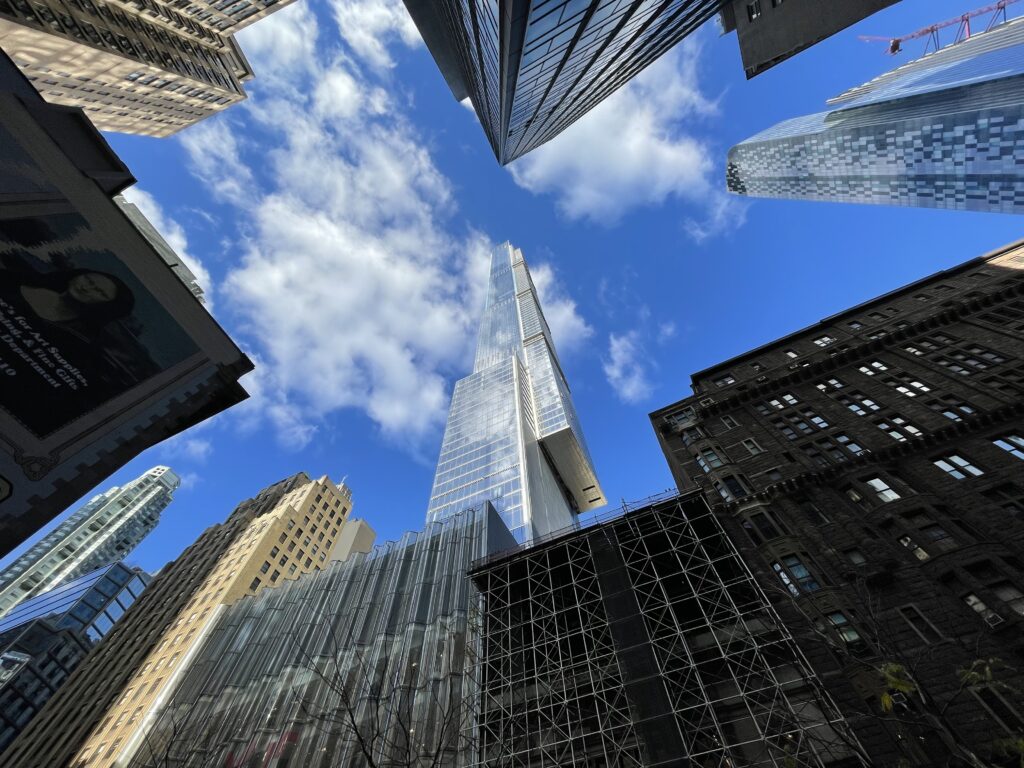
At 1,550 feet (472 meters) to the roof, Central Park Tower is the tallest residential building in the world and the tallest structure in New York City if the spire of One World Trade Center is excluded. The tower rises along West 57th Street, a stretch of Midtown Manhattan that New York media have long nicknamed “Billionaires’ Row.”
The project was developed by Extell Development Company, which assembled an unusually complex collection of transferable air rights from neighboring properties to make the tower possible. The architects were Adrian Smith + Gordon Gill Architecture, the Chicago-based firm also responsible for the design of Jeddah Tower, a leading contender for the title of the world’s tallest building. Construction began in September 2014, the structure reached its full height in September 2019, and the residential tower was completed in 2020.
From approximately 300 feet (91 meters) above ground level, residents begin to enjoy unobstructed views of Central Park. The building contains 179 residences, ranging from two-bedroom apartments originally priced around $6.9 million to a penthouse that debuted on the market at $95 million.
The first six floors are occupied by a flagship store of Nordstrom, the largest location ever built by the retailer. Near the top of the tower, the private Central Park Club occupies the 100th floor, offering restaurants, lounges, and meeting spaces with views stretching across Manhattan and beyond.
Remarkably, the tower contains only 11 elevators — a relatively small number for a residential building of this height. The design prioritizes privacy and exclusivity, with many residences served by dedicated elevator access.
In 2021, the Council on Tall Buildings and Urban Habitat honored Central Park Tower with its Award of Excellence in the category of Best Tall Building in the Americas over 400 meters. The tower’s glass curtain wall produces one of its most distinctive visual effects. At sunrise and sunset, the façade can appear to glow in shades of pink, gold, and orange. On overcast days, however, the building often seems to dissolve into the sky, its reflective surface blurring the boundary between architecture and atmosphere.
Steinway Tower (111 West 57th Street)
📍 Steinway Tower / 111 W 57th St, New York, NY 10019
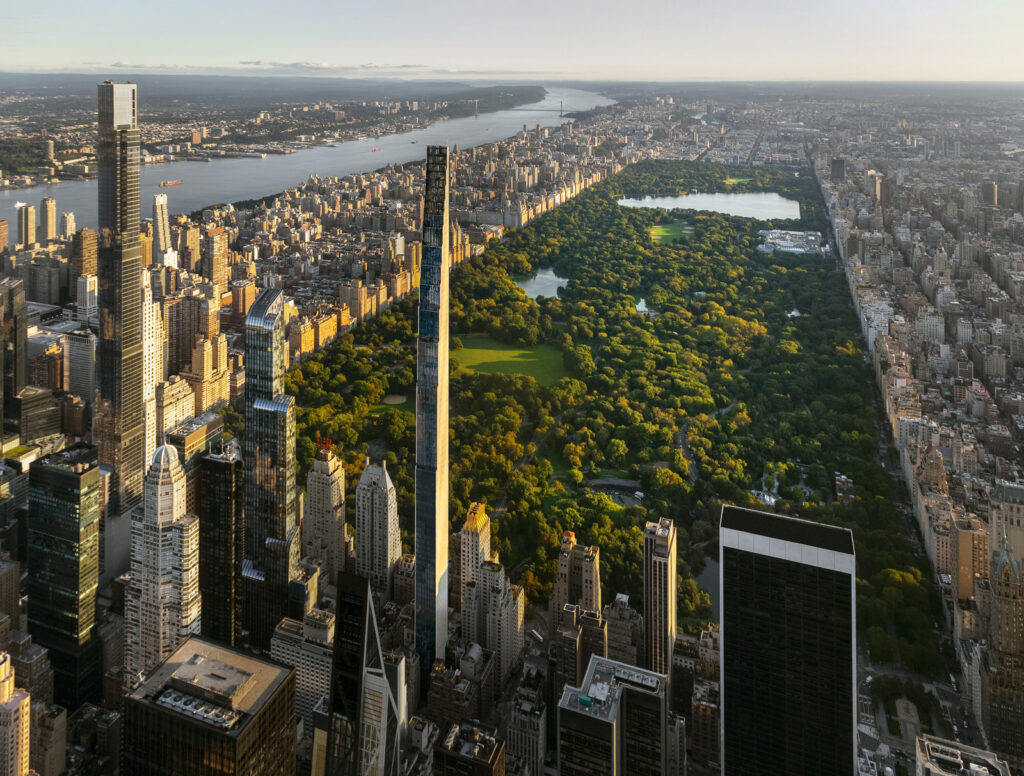
If Central Park Tower holds the record for height, 111 West 57th Street holds a different distinction: slenderness. Rising 1,428 feet (435 meters) while measuring only about 60 feet (18 meters) across at its narrowest point, the tower has a height-to-width ratio of 24:1. That makes it officially the world’s most slender skyscraper, a title recognized by the Council on Tall Buildings and Urban Habitat.
The building was designed by SHoP Architects, whose façade is among the most meticulously crafted in contemporary New York architecture. Thousands of terracotta panels vary subtly in profile, creating a rippling texture that changes with the light throughout the day. The east and west elevations combine terracotta and glass, while the north and south façades are dominated by glass, maximizing views of Central Park to the north and the Manhattan skyline to the south.
Construction required approximately 64,000 cubic yards (49,000 cubic meters) of concrete and extensive structural reinforcement. Because of the tower’s extreme proportions, engineers incorporated sophisticated damping systems to reduce movement caused by wind. While such systems are common in super-slender towers, the challenge here was amplified by the requirement to preserve and integrate the historic Steinway Hall. In effect, the modern tower is anchored within and behind the landmark structure, with the two buildings sharing portions of their structural framework.
The residences are designed for maximum privacy and exclusivity. Many occupy entire floors, providing unobstructed views in multiple directions and a level of separation rarely found even in luxury residential towers. The building contains just 46 residences, making it one of the most exclusive addresses in New York.
One residence was initially offered for sale at $57.5 million, and even before construction was completed, industry observers speculated that the building could become the site of New York City’s first residential transaction exceeding $100 million. The interiors were designed by William Sofield of Studio Sofield. Drawing inspiration from the original Steinway Hall, Sofield incorporated rich materials, fine woodwork, and details that echo the landmark building’s historic craftsmanship, creating interiors that bridge New York’s Gilded Age elegance and contemporary luxury.
JPMorgan Chase Tower
📍 270 Park Avenue / 270 Park Ave, New York, NY 10017
With approximately 2.5 million square feet (232,000 square meters) of floor area, JPMorgan Chase’s new headquarters is the largest newly built office skyscraper in New York City. The tower is designed to accommodate up to 14,000 employees. Eight dedicated trading floors, designed by Skidmore, Owings & Merrill, occupy nearly 495,000 square feet (46,000 square meters) and can house roughly 4,000 traders.
The building is also New York City’s first fully electric supertall skyscraper. Powered entirely by hydroelectric energy, the tower was designed to operate with net-zero direct operational carbon emissions, setting a new benchmark for large-scale commercial development in the city.
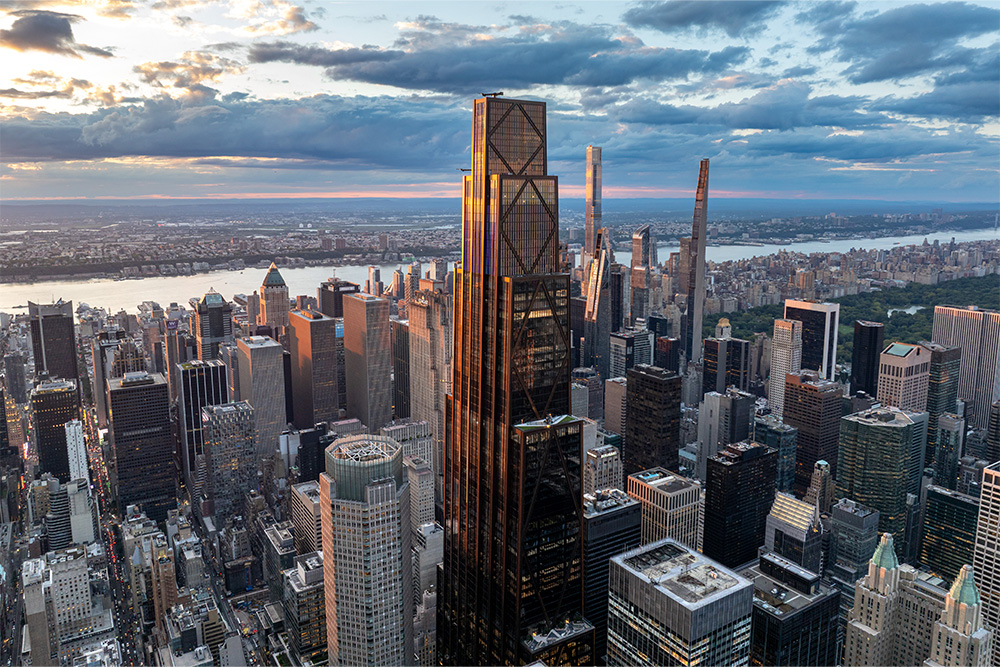
Architecturally, the façade blends structural expressionism with contemporary Art Deco influences. The steel structural frame is expressed on the exterior, creating a vertical relief that is especially visible from street level. Triple-glazed curtain walls, automated solar-shading systems, indoor air-quality monitoring, and AI-assisted energy management technologies make the building one of the most technologically advanced office towers in the world.
The site has a particularly controversial history. From 1960 until 2021, 270 Park Avenue was occupied by the Union Carbide Building, a modernist landmark designed by Gordon Bunshaft. JPMorgan Chase successfully pursued the removal of the building’s landmark protections, demolished it, and replaced it with the current tower. The decision remains one of the most debated episodes in recent New York architectural history, as intentionally demolishing a protected high-rise is exceptionally rare.
The new tower was designed by Foster + Partners under the leadership of Norman Foster and was completed in 2025. The opening ceremony was attended by Jamie Dimon, Kathy Hochul, and Foster himself. According to multiple accounts from the project team, Dimon took an unusually active role in the development process, personally reviewing and approving major design decisions throughout the project.
More than simply a corporate headquarters, 270 Park Avenue represents a shift in how supertall office buildings are conceived: larger, greener, more technologically integrated, and designed around workplace collaboration rather than maximum rentable floor area. In a city defined by iconic skyscrapers, JPMorgan Chase’s new tower stands out not for residential luxury or observation decks, but as a statement about the future of the workplace itself.
Skyscrapers under construction and future buildings 2025–2031
520 Fifth Avenue
📍 520 Fifth Avenue / 520 Fifth Ave, New York, NY 10036
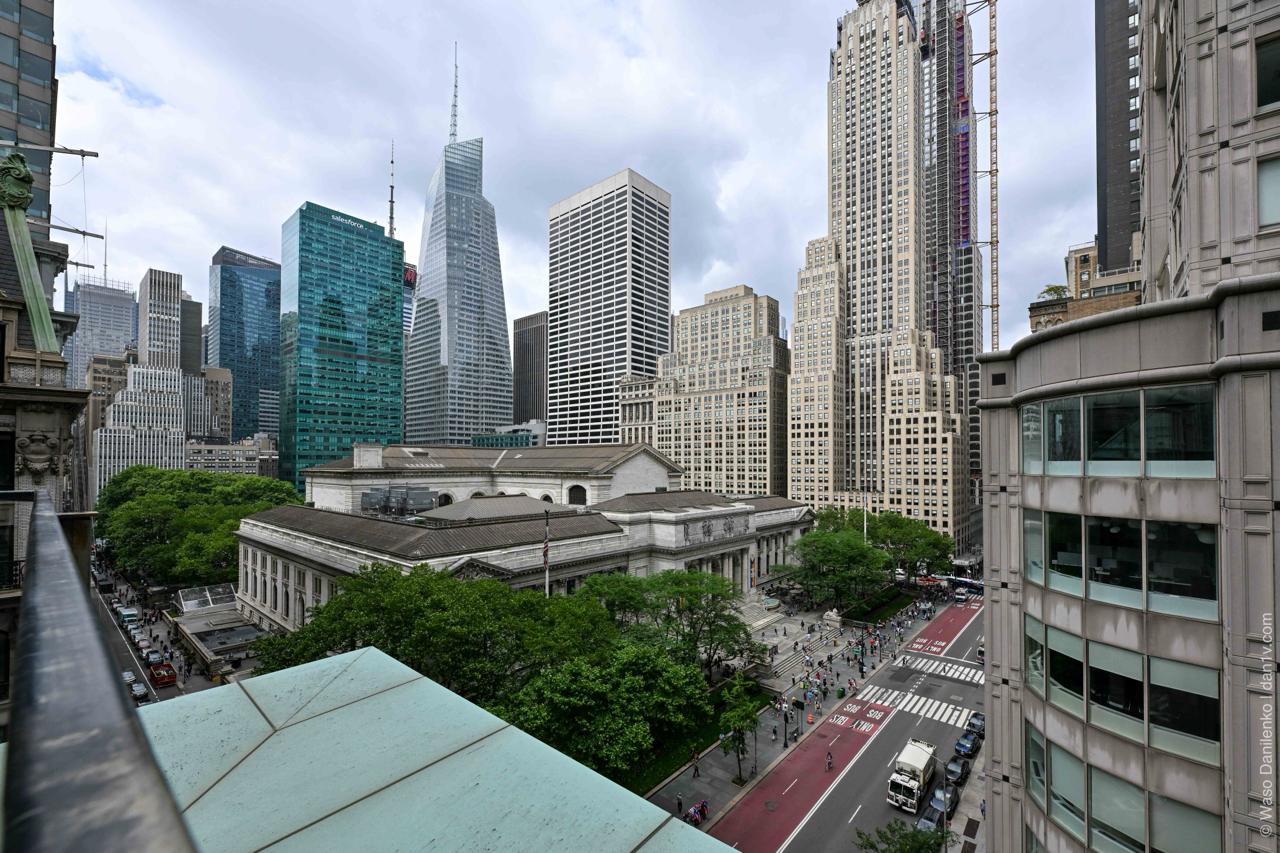
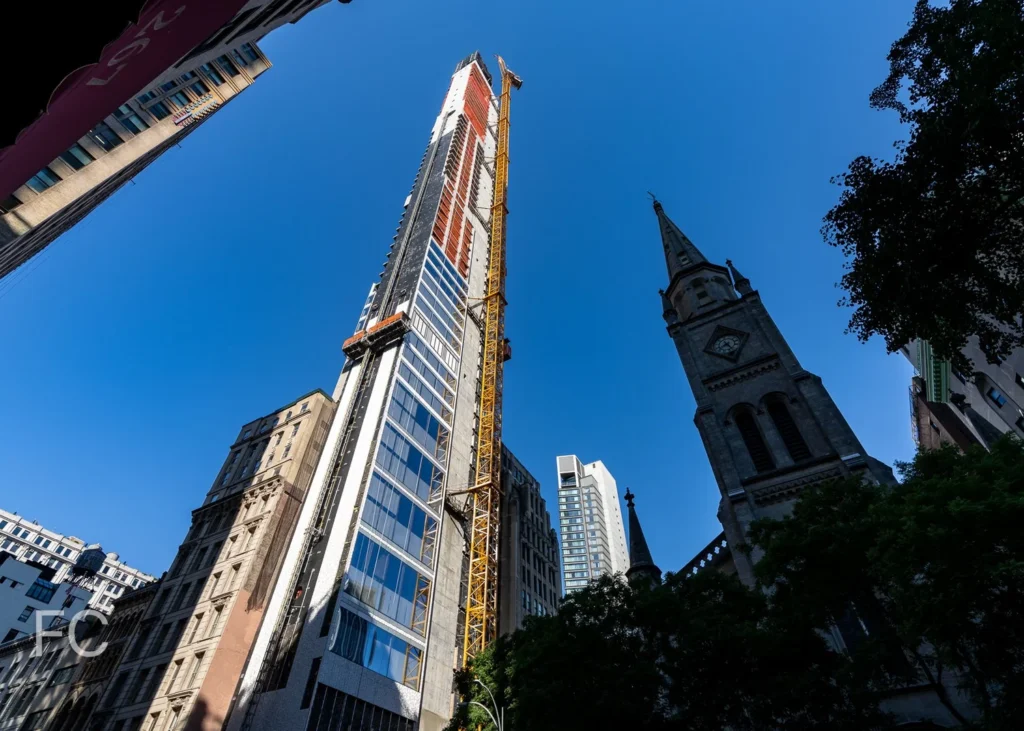
About a block and a half north of the New York Public Library Main Branch, at the intersection of Fifth Avenue and 43rd Street, one of the most unexpected skyscraper projects in recent years is nearing completion. Rising 1,002 feet (305 meters) while measuring only about 85 feet (26 meters) across, 520 Fifth Avenue is a true pencil tower in the heart of Midtown Manhattan. Its 12:1 height-to-width ratio places it among New York’s slenderest skyscrapers, although it remains well short of the extreme proportions achieved by Steinway Tower.
The building is the first supertall skyscraper constructed directly on Fifth Avenue in decades. While it does not surpass the Empire State Building in height, it rises above most of the historic skyline that defined the avenue for generations.
The project was designed by Kohn Pedersen Fox (KPF), the same architectural firm behind One Vanderbilt. Here, however, the architects pursued a different design language. Rather than emphasizing sleek contemporary forms, 520 Fifth Avenue draws inspiration from New York’s prewar skyscrapers through a series of stepped setbacks and sculpted massing. The façade combines glazed terracotta arches with expansive glass surfaces, creating a modern interpretation of the city’s classic Art Deco-era towers.
Functionally, the building is a mixed-use development. The upper floors contain approximately 100 luxury residences, while the lower portion includes roughly 200,000 square feet (18,600 square meters) of office space. Between them sits the private Moss club, with retail occupying the ground-floor levels.
According to developer Miki Naftali, more than 95 percent of the residential inventory had reportedly been sold by December 2025, less than a year after sales began — an unusually rapid pace for a project in this segment of the luxury market.
The site itself has a long and complicated development history. Developer Aby Rosen and RFR Realty first explored a major tower on the property before the 2008 financial crisis. Over the following decade, the site changed hands several times, including a period under Thor Equities, which proposed a separate 71-story project. In 2019, Naftali acquired the property and filed plans for the current tower in 2021. Construction began in March 2022, and by the fall of 2024 the structure had reached its full height. The project’s planned completion date was June 1, 2026.
Unlike many recent New York supertalls that rely on pure glass minimalism, 520 Fifth Avenue embraces ornament, texture, and historical references. It represents a growing trend among contemporary skyscrapers: combining the engineering ambitions of the twenty-first century with architectural ideas drawn from the city’s golden age of tower construction.
2 World Trade Center
📍 2 World Trade Center / 2 World Trade Center, New York, NY 10007
Few buildings in modern architectural history have followed a path as long and convoluted as 2 World Trade Center. The site remained undeveloped for nearly two decades after the attacks of September 11, 2001. During that time, the project cycled through multiple designs, two star architects, and several prospective anchor tenants before construction finally resumed in February 2026.
The story began in 2006, when Norman Foster unveiled the original proposal: a sleek tower crowned by four diamond-shaped volumes clustered at the top. The design was intended to complete the skyline composition of the rebuilt World Trade Center complex while responding to the memorial below.
Years later, developer Larry Silverstein secured interest from 21st Century Fox and commissioned a radically different concept from Bjarke Ingels Group (BIG). Led by Bjarke Ingels, the firm proposed a stacked composition of stepped volumes with landscaped terraces at every setback. The design looked less like a traditional skyscraper and more like a vertical neighborhood. When the anticipated tenant ultimately declined to proceed, however, the project stalled once again.
By 2025, the 2 World Trade Center site had spent more than twenty years as a partially built foundation surrounded by construction fencing. New York journalists jokingly referred to it as “the most expensive beer garden on Earth,” a reflection of the temporary public uses that occasionally occupied the long-vacant parcel.
The breakthrough came when American Express announced plans to relocate its headquarters to the site. Foster returned to the project with an entirely new design tailored to the needs of a single corporate occupant. The current proposal calls for a 1,227-foot (374-meter), 55-story tower incorporating multiple levels of landscaped terraces. More than 10,000 American Express employees will occupy approximately 2 million square feet (186,000 square meters) of flexible office space. Unlike most modern skyscrapers in Lower Manhattan, the building is intended as a dedicated corporate headquarters rather than a multi-tenant office tower.
From an engineering perspective, the project benefits from a unique advantage: much of its foundation infrastructure was already completed in 2013 and then sat dormant for more than a decade. Reusing that work is expected to significantly accelerate construction, with completion currently projected for 2031.
The tower’s completion will mark the final major chapter in the rebuilding of Ground Zero. Its surroundings demand an architectural dialogue with some of the site’s most distinctive landmarks: directly across the plaza stands Oculus by Santiago Calatrava, while nearby sits the Perelman Performing Arts Center. More than just another skyscraper, 2 World Trade Center carries the weight of completing one of the most symbolically charged urban reconstruction projects of the twenty-first century.
350 Park Avenue
📍 350 Park Avenue / 350 Park Ave, New York, NY 10022
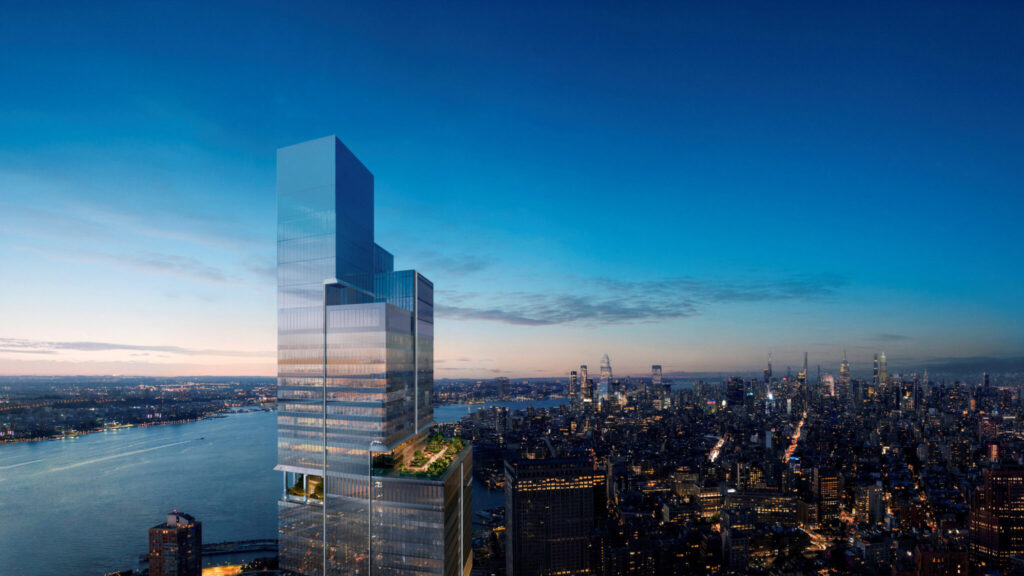
Park Avenue in Midtown Manhattan is undergoing a major transformation, and 350 Park Avenue sits at the center of that shift. With 270 Park Avenue already completed nearby, the next phase involves the demolition of the existing 1960s modernist office building at 350 Park. In its place, a new 1,415-foot (431-meter) supertall tower is planned for completion toward the end of the decade.
The project is led by Vornado Realty Trust in partnership with Rudin Management. A decisive role in shaping the development has been played by hedge fund billionaire Ken Griffin. In 2023, his firm Citadel signed a long-term lease for the building, reportedly at $36 million per year with an option to purchase. By early 2026, Griffin’s entities had exercised that option and acquired a majority stake in the development partnership, effectively turning Citadel into the primary force behind the project.
Under the agreement with the city, the developer committed to significant public benefits. These include a $150 million purchase of air rights from St. Bartholomew’s Church and an additional $35.8 million contribution to the East Midtown Public Realm Improvement Fund. A publicly accessible indoor passage of approximately 12,500 square feet (1,160 square meters) will connect to Park Avenue and remain open 24 hours a day, reinforcing the area’s pedestrian network.
The tower itself, designed by Norman Foster and Foster + Partners, will rise to 1,417 feet (431 meters) and be fully electric in operation. Its design continues Foster’s ongoing work in Manhattan’s corporate skyline, emphasizing energy efficiency, structural clarity, and flexible high-performance office space tailored for large-scale financial institutions.
More than just a new headquarters, 350 Park Avenue represents the next wave of Park Avenue redevelopment: older mid-century towers being replaced by highly capitalized, ultra-modern supertalls driven directly by their anchor tenants.
5 World Trade Center
📍 5 World Trade Center / 5 World Trade Center, New York, NY 10006
5 World Trade Center is set to become the first and only residential tower within the rebuilt World Trade Center complex. While the other buildings at Ground Zero are primarily dedicated to office use, this project reflects a broader post-pandemic shift in demand, with developers increasingly integrating housing into traditionally commercial districts.
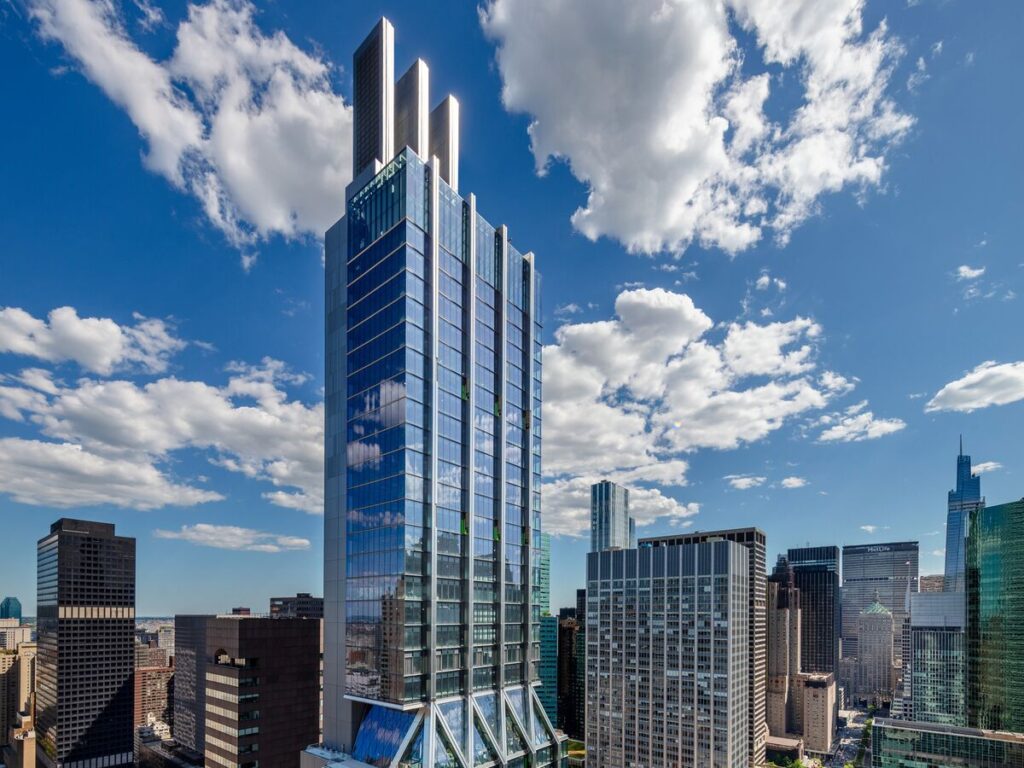
The tower was designed by Kohn Pedersen Fox (KPF) and is planned to rise 900 feet (274 meters) with approximately 80 floors, accommodating around 1,325 residential units. Roughly one-third of the apartments are designated as income-restricted housing. Among these, 80 units are reserved for Lower Manhattan residents and workers affected by the September 11, 2001 attacks, including first responders and families of victims.
The design follows the concept of a “vertical neighborhood.” Residential floors are organized into smaller communities with shared lounges, landscaped gardens, and communal spaces, aiming to replicate some of the social functions of a traditional city block within a high-rise structure.
Architecturally, 5 WTC differs noticeably from its surrounding office towers. Instead of a fully glass curtain wall, the façade uses a mix of metal framing, opaque panels, and staggered glazing arranged in multi-story modules. This creates a more residential scale and texture compared to the corporate aesthetic of neighboring skyscrapers.
The building will also include a podium with retail space, offices, and facilities for the Educational Alliance. A pedestrian bridge will connect the complex to Liberty Park.
The site itself carries deep historical weight. It was previously occupied by the Deutsche Bank Building, which was severely damaged in the September 11 attacks and ultimately demolished in 2011. Nearby stands the St. Nicholas Greek Orthodox Church, designed by Santiago Calatrava — the only church destroyed in the attacks and later rebuilt on the site.
As of early 2026, developer Larry Silverstein through Silverstein Properties continues to work on financing and delivery timelines. Completion is currently expected around 2029–2030.
More than just another addition to Lower Manhattan’s skyline, 5 World Trade Center represents a shift in the identity of the district itself: from a purely commercial center to a mixed-use neighborhood where housing, memory, and urban life coexist within the same symbolic footprint.