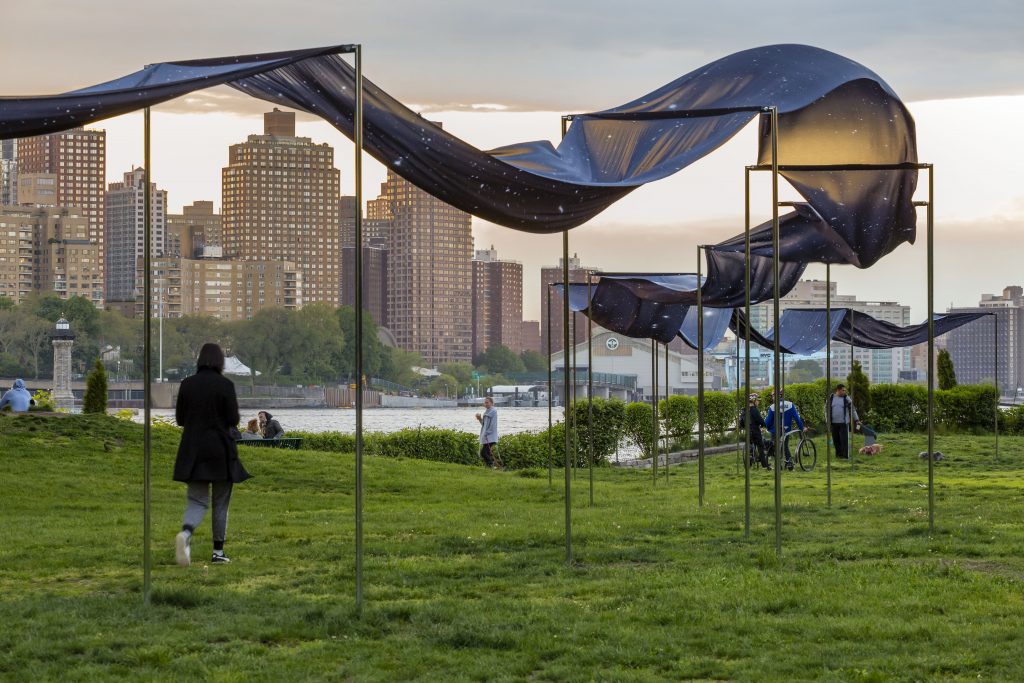
New York City boasts numerous museums, but few know about a place where art thrives in the fresh air, amidst grass, wind, and the city skyline. Socrates Sculpture Park is a unique open-air museum in Long Island City, Queens, where you can see large-scale installations by contemporary artists, relax by the East River, and experience the vibrant energy of the city.
Interesting Facts About Socrates Sculpture Park
- The park was established in 1986 thanks to sculptor Mark di Suvero, other artists, and local residents. Together, they cleaned up an abandoned landfill along the East River and transformed it into an outdoor exhibition space.
- The park was originally intended as a temporary project: the land was leased from the city for just one dollar a year, with an initial term of five years.
- In 1993, the site was officially designated as a park, protecting it from potential development.
- The park was named after the ancient Greek philosopher Socrates. His name symbolizes dialogue and reflection, values that are central to the people who created this space.
- Over the years, the park has presented works by more than 1,200 artists. Some sculptures are created right on the premises, with artists provided with studio space, materials, and equipment.
- The park covers approximately two hectares, but its open layout makes it feel much larger.
- It offers panoramic views of Manhattan and Roosevelt Island.
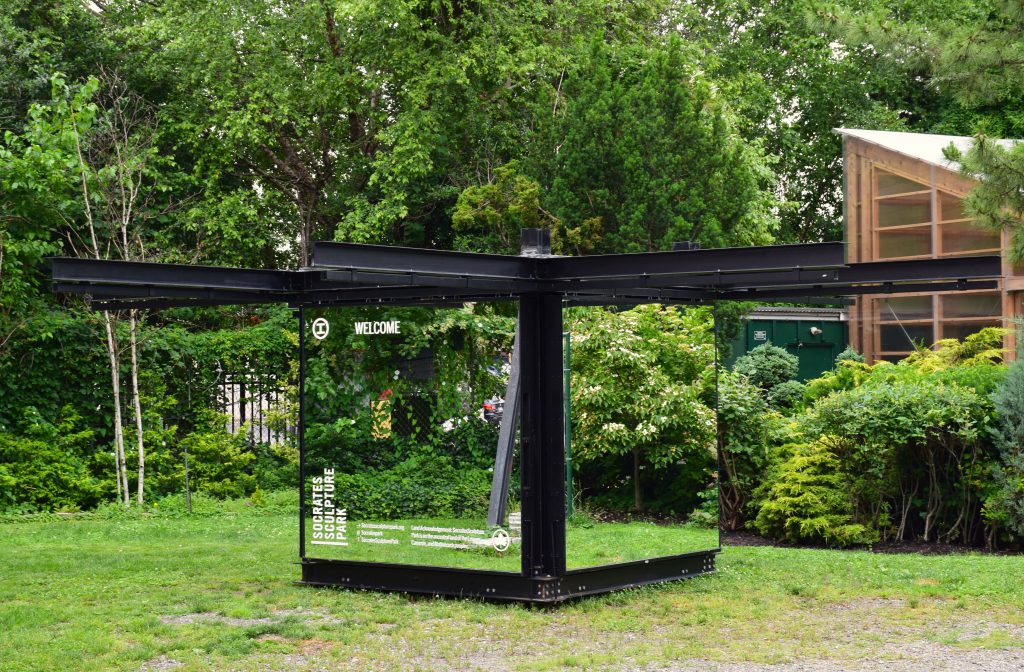
- In 2024, a two-story building called The Cubes opened in the park. Designed by the architecture firm LOT-EK, it houses spaces for workshops, exhibitions, and community events.
- The park regularly hosts free outdoor movie screenings at sunset, yoga classes, farmers’ markets, and celebrations for local residents.
- The park works closely with the Noguchi Museum, located just a few minutes’ walk away.
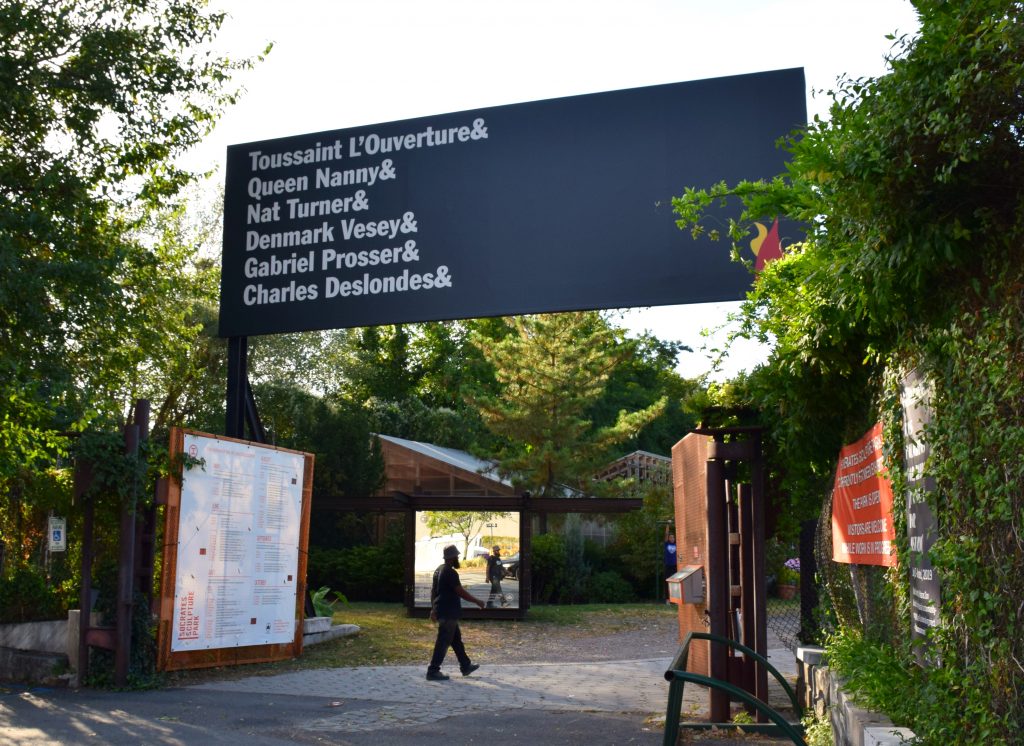
History of Socrates Sculpture Park
In the early 1980s, an abandoned industrial site along the East River was covered with construction debris. Sculptor Mark di Suvero, who worked nearby, decided to transform the area into a place where artists could create and exhibit large-scale works outdoors.
In 1985, the foundation he established reached an agreement with the city to lease the site for just one dollar a year. The project was initially intended to be temporary, but artists, volunteers, and local residents actively took part in clearing the land. The first exhibition opened here in September 1986, turning the former landfill into a public sculpture park.
Over time, the space became more than just an exhibition venue: it also developed into a gathering place for local residents. Free art classes for children, workshops, and outdoor film screenings were introduced. In 1993, the city officially designated the site as a park, protecting it from development.
In the following years, the park expanded and became known for exhibitions featuring contemporary artists from around the world. Visitors can not only see completed sculptures but also watch new works being created. Artists are provided with studio space, equipment, and technical assistance.
In 2012, the park was damaged by Hurricane Sandy, which flooded the grounds and damaged the waterfront. Following restoration, the space continued to develop. In 2024, a new two-story building called The Cubes opened, providing facilities for art classes and community events.
Today, Socrates Sculpture Park remains a free cultural space where contemporary art coexists with walking areas, educational programs, and community activities.
Collection and exhibitions at Socrates Sculpture Park
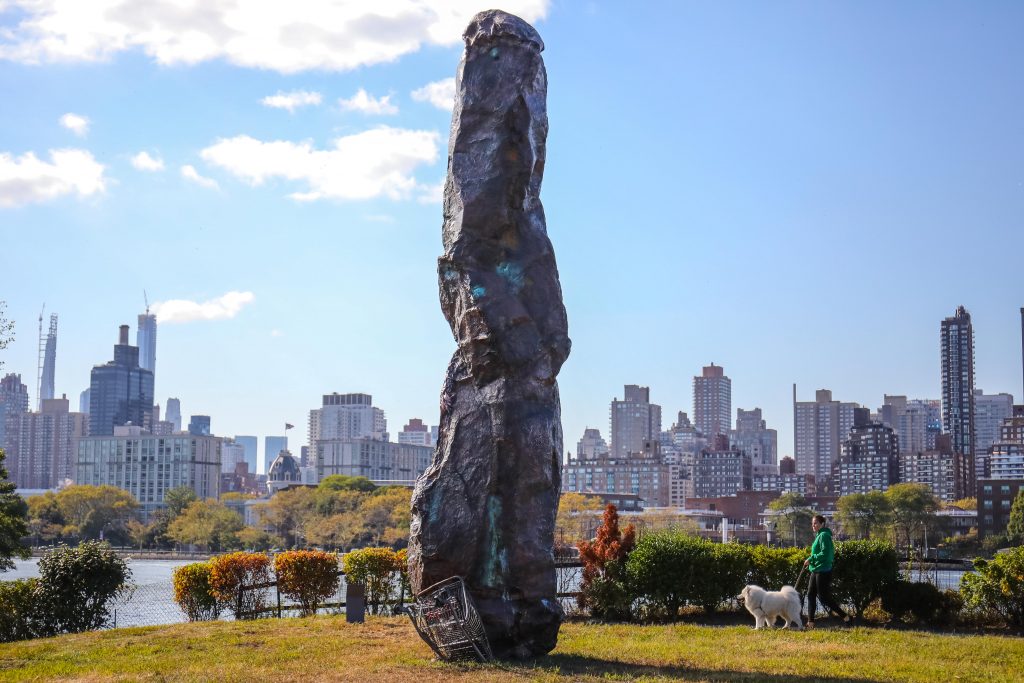
The park doesn’t have a permanent collection — its space is constantly changing. Each season, new temporary installations, created specifically for the open space, appear. Artists experiment with scale, materials, and interaction with nature.
In recent years, the park has hosted the following exhibitions:
- “Planeta Abuelx” (2022) — an exhibition of Latin American artists about memory and the connection between generations.
- “Monuments Now” (2020–2021) — a project about rethinking monuments and public symbols, which involved authors such as Jeffrey Gibson and Paul Ramírez Jonas.
- “The Socrates Annual” — an annual exhibition presenting new artists selected through a competition.
Many of the works are created from recycled materials and interact with the environment — rusting, becoming covered in moss, or moving in the wind, turning the park into a constantly living organism.
What to See Near Socrates Sculpture Park
A visit to Socrates Sculpture Park can easily be combined with a walk around Astoria. Just a few minutes away is the Noguchi Museum, a museum and sculpture garden dedicated to artist and designer Isamu Noguchi. The collection features his works in stone, wood, and metal, and the exhibition extends into a small outdoor garden.
Nearby, the Welling Court Mural Project offers an entire gallery of street art. The facades of residential and industrial buildings are decorated with large murals and graffiti created by artists from around the world.
Another interesting destination in the neighborhood is the Museum of the Moving Image, dedicated to film, television, and digital media. Visitors can see costumes, props, and filmmaking equipment, learn how movies are made, and try their hand at animation or sound design.
For a more relaxing stroll, head to Rainey Park along the East River. It features green lawns, walking paths, and beautiful views of the river and Manhattan.