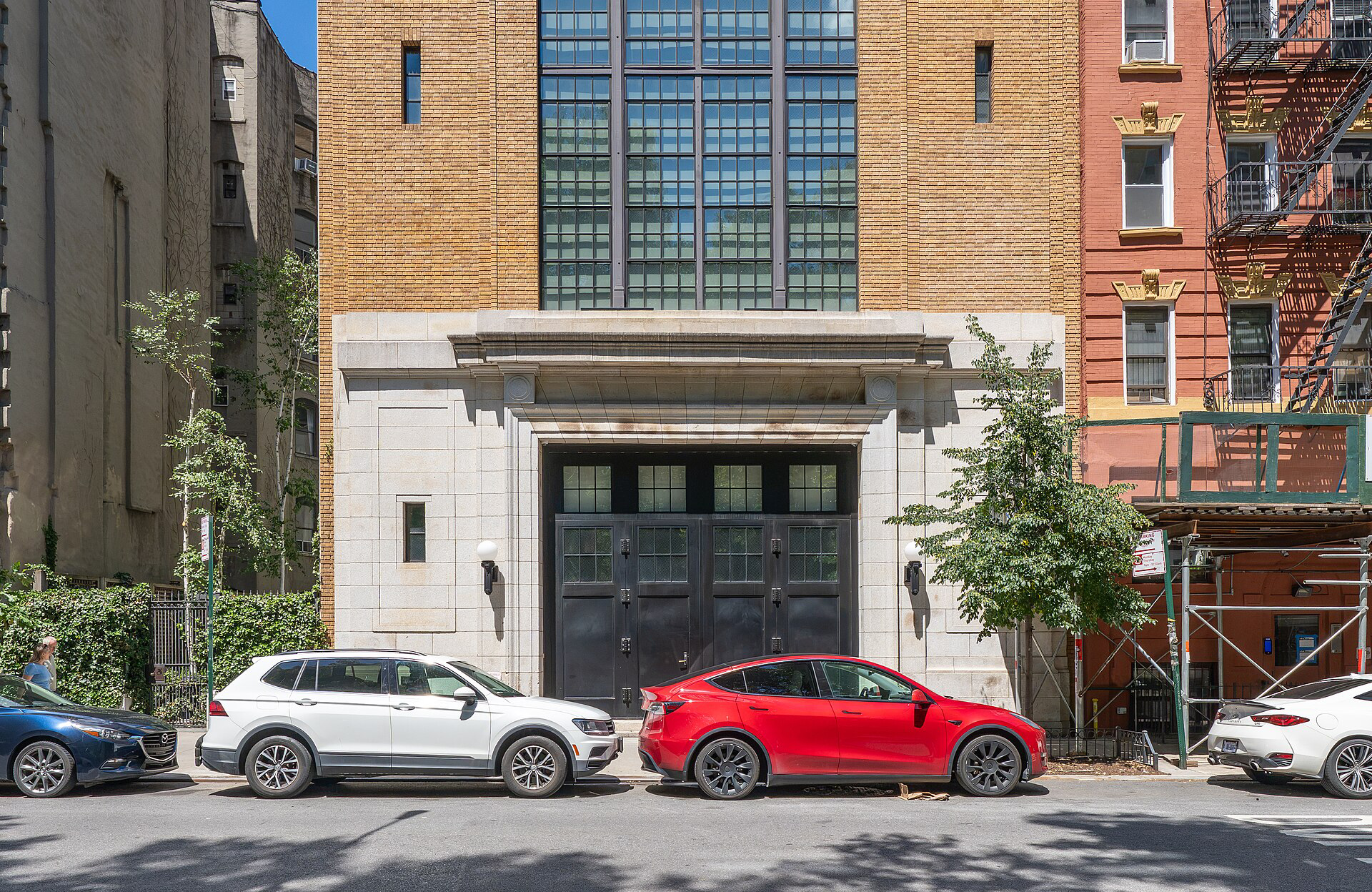
The Brant Foundation is an art gallery established by American art collector and publisher Peter Brant. He collects contemporary art and organizes exhibitions dedicated to a range of artists. In New York, the foundation occupies the former studio of Walter De Maria, an American artist known for his unusual, large-scale installations. There is no permanent collection on display: exhibitions change regularly, each focusing on a particular artist or theme. Visits are available by appointment only.
Interesting Facts About The Brant Foundation in New York
- The Brant Foundation has faced criticism over concerns that it could be used as a tax vehicle or investment project. The foundation rejects these accusations and emphasizes that its primary mission is to introduce the public to contemporary art.
- The foundation’s building was once a Con Edison substation before becoming the property of artist Walter De Maria, known for works such as The Lightning Field and The New York Earth Room.
- In 2019, The Brant Foundation opened its exhibition space in New York. The foundation is headed by Allison Brant, the collector’s daughter.
- The foundation awarded Bard College a $1 million grant to support research in curatorial studies and art history.
- Private museums established by major art collectors have become a notable phenomenon in the art world. Artforum magazine has noted that a whole community of such spaces has emerged along the East Coast of the United States.
Who Is Peter Brant?
Peter Brant is an American entrepreneur, publisher, and contemporary art collector. He was born in New York City in 1947 and built his career in the paper industry, turning his family business into a major newsprint producer. Alongside his business ventures, he collected art, a passion he developed at the age of 17.
In the late 1960s, Brant met Andy Warhol. The two became friends and collaborators: Brant helped publish some of the artist’s work, including a series of prints depicting Mao Zedong. Over time, Brant’s collection grew to include works by Jean-Michel Basquiat, Jeff Koons, Julian Schnabel, and other prominent contemporary artists.
In addition to collecting art, Brant built a career in publishing. He owned the magazines Interview, Art in America, and ARTnews, which focus on art and culture. In 1996, he established The Brant Foundation to introduce the public to contemporary art and create opportunities for its study.
History of The Brant Foundation
The foundation’s first location opened in 2009 in Greenwich, Connecticut. It was housed in an early 20th-century building that Brant decided to preserve and transform into a center for the study of art. The design aimed to highlight the building’s historic architectural features.
The second location opened in New York City. In 2014, Brant acquired a building on East 6th Street that had previously served as the home and studio of artist Walter De Maria, known for his large-scale sculptures and installations. After renovations, the building opened to the public on March 6, 2019, with an exhibition of works by Jean-Michel Basquiat.
We have also written about Walter De Maria’s works, The Earth Room and The Broken Kilometer.
Today, The Brant Foundation organizes temporary exhibitions dedicated to individual artists and themes in contemporary art. These exhibitions feature works from Peter Brant’s collection, including pieces by artists with whom he shared personal friendships and professional collaborations.
Architecture of The Brant Foundation
In Greenwich, the foundation occupies a former fruit-cooling warehouse built in the early 20th century on the Conyers estate. The building was constructed from stones collected from local fields. During its conversion into an exhibition space, the original exterior stone walls were preserved, while the interior was transformed into gallery spaces. One unusual interior feature is a concrete floor with a large circular opening, which artist Urs Fischer proposed creating for the center’s first anniversary.
The New York location is housed in a former Con Edison electrical substation, where artist Walter De Maria also lived and worked. The architectural firm Gluckman Tang converted the building into an exhibition space covering approximately 1,500 square meters (16,150 square feet). The galleries span four floors, while the rooftop features a terrace and gardens designed by the landscape architecture firm Madison Cox Associates. Some original features, including the metal staircases, were preserved during the renovation.
The lobby features an unusual metal hatch in the ceiling, used to hoist large artworks into the building. It allows objects weighing up to 3.6 metric tons (approximately 8,000 pounds) to be transported to the upper floors when they cannot fit in a conventional elevator.


Collection and Exhibitions at The Brant Foundation
Peter Brant’s collection focuses on contemporary art. It includes works by Andy Warhol, Jean-Michel Basquiat, Jeff Koons, Dan Flavin, Urs Fischer, Richard Prince, Mike Kelley, and many other artists. Brant collects works from different periods, allowing visitors to trace how individual artists’ styles and practices evolved throughout their careers.
The Brant Foundation has no permanent exhibition. Instead, its shows change regularly, focusing on individual artists, movements, or themes. The New York location opened in 2019 with an exhibition dedicated to Jean-Michel Basquiat, organized in collaboration with the Fondation Louis Vuitton in Paris.
Later that year, the foundation presented Third Dimension, an exhibition devoted to sculptures and installations by more than twenty artists. In 2023, visitors were able to see a major Andy Warhol retrospective featuring more than one hundred works. That autumn, the exhibition Basquiat x Warhol opened, exploring the collaboration between the two artists.
In 2024, the foundation presented Mike Kelley’s Singles’ Mixer, followed by a major exhibition dedicated to Kenny Scharf, featuring more than seventy paintings, sculptures, and other objects. In 2026, the foundation held an exhibition exploring Keith Haring’s early career and his work from the beginning of the 1980s.
In addition to exhibitions, the foundation organizes educational programs and events that help visitors learn more about contemporary art.