When you hear the word “New York,” you probably picture Wall Street, world-class museums and auction houses, skyscrapers, and Broadway theaters. But beyond culture and finance, New York is also a global political center that the entire world recognizes.
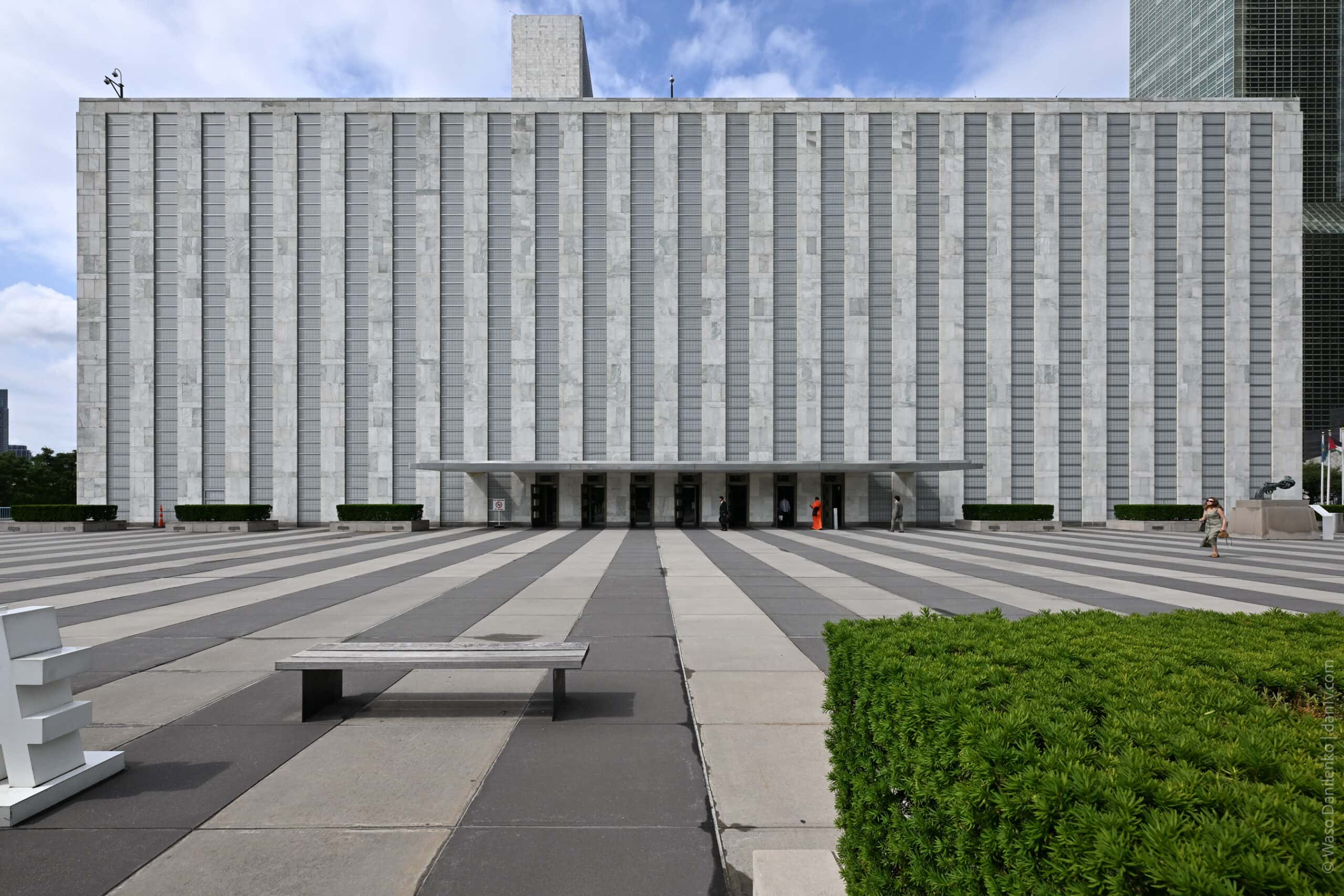
On the banks of the East River in Manhattan stands the United Nations Headquarters — a 39-story building that serves as the home of the UN. What many don’t know is that anyone can visit the UN complex, including the iconic General Assembly Hall.
Interesting facts about the UN Headquarters in New York
- The UN headquarters is not the United States. The 7-hectare site in Manhattan is international territory. Formally, American laws do not apply here — the UN has its own police force, its own postal service, and even its own postage stamps.
- The land was purchased with Rockefeller money. In 1946, John D. Rockefeller Jr. donated $8.5 million to purchase the site along the East River. Previously, the site had housed slaughterhouses.
- An international team of 11 architects worked on the project, including Le Corbusier (France) and Oscar Niemeyer (Brazil). The American Wallace Harrison served as chief architect.
- Construction took only seven years. Construction of the complex began in 1948, and it welcomed its first employees in 1952.
- The Secretariat is one of the world’s first glass skyscrapers. The 39-story Secretariat Tower became an icon of modernism and influenced all of New York’s post-war architecture. It was here that the fashion for glass facades originated.
- 193 national flags are arranged alphabetically in English along the main entrance.
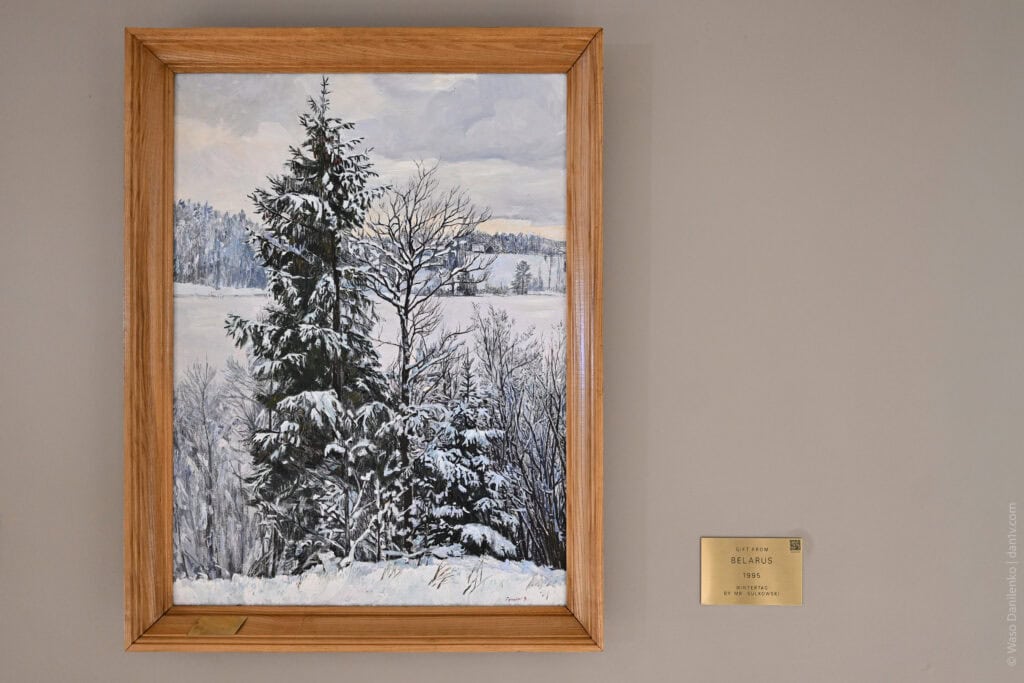
- The UN complex houses hundreds of works of art donated by member states: stained glass windows by Marc Chagall, tapestries based on Picasso paintings, and sculptures from around the world.
- In the UN Garden stands the “Peace Bell,” a gift from Japan in 1954. It was cast from coins collected by children from 60 countries. It is rung every year on the first day of autumn.
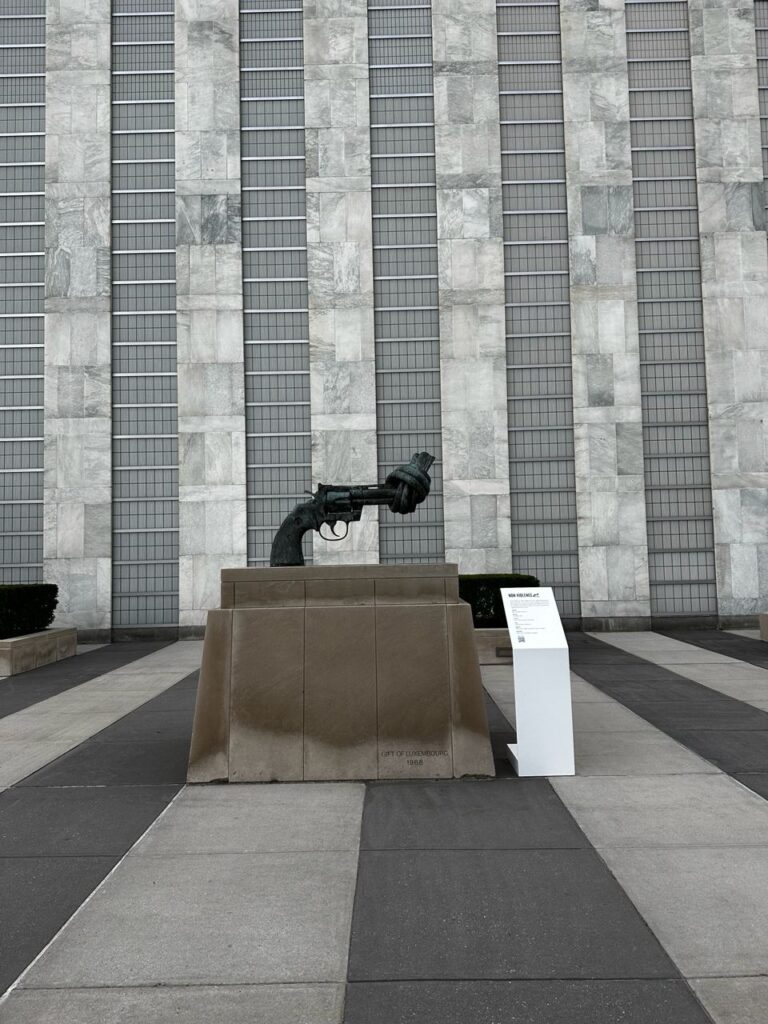
- The bronze figure of a pistol with a knotted barrel is one of the most recognizable symbols of the UN. It was a gift from Luxembourg in 1988. The official name is “Non-Violence.”
- The cafeteria is open to tourists. You can take a tour and have lunch at the UN cafe; the menu rotates depending on the country currently holding the UN Presidency.
- You don’t need a visa to enter. Despite its “international status,” citizens of most countries can enter with just an ID, but only on an official tour.
- There’s a Silent Room for meditation. This small, quiet room, free of religious symbols, is open to any employee or visitor.
The History of the UN Headquarters in New York
It’s hard to believe, but the site where the headquarters of one of the planet’s most important international organizations is located today was a veritable industrial slum in the 1940s. Slaughterhouses, breweries, small factories, and warehouses operated along the East River, and a train ferry dock was nearby. The smell was just as bad.
When the question of a permanent location for the UN headquarters arose at the General Assembly in 1946, a real competition ensued. Dozens of cities competed to host the organization — Philadelphia, Boston, San Francisco, Geneva (supported by a powerful delegation seeking to return to the old League of Nations building), and there was even an exotic proposal to locate the headquarters on a ship on the high seas.
In December 1946, when the vote was almost tilted in favor of the other city, the wealthy philanthropist and developer John D. Rockefeller Jr. intervened: he personally purchased the option for a site along the East River from developer William Zeckendorf for $8.5 million and donated the land to the UN the very next day. The General Assembly voted overwhelmingly in favor.
The Rockefeller family had long been closely associated with the neighborhood. It was they who built Rockefeller Center nearby in the early 1930s:
Nelson Rockefeller, John D. Rockefeller Jr.’s son and future Governor of New York, actively lobbied for the UN to be located in Manhattan, coordinating efforts with Mayor William O’Dwyer and New York City’s leading construction boss, Robert Moses.
Demolition of the slaughterhouses began in August 1946. Construction began in October 1949. US President Harry Truman personally laid the foundation stone for the Secretariat on UN Day, October 24, 1949.
Incidentally, while the UN headquarters building was under construction, meetings were held in the building that now houses the Queens Museum:
How the UN Complex in New York is Organized
The UN complex consists of four main structures:
Secretariat Building
This is the main tower, 39 stories tall and 154 meters high. It is home to approximately 7,000 staff and the Secretary-General’s office. The east and west facades are made up of 5,400 bluish-green windows, equivalent to 28,000 square meters of glass. This is more than any other building in the world at the time of its construction. The north and south ends are clad in white Vermont marble.
General Assembly Hall
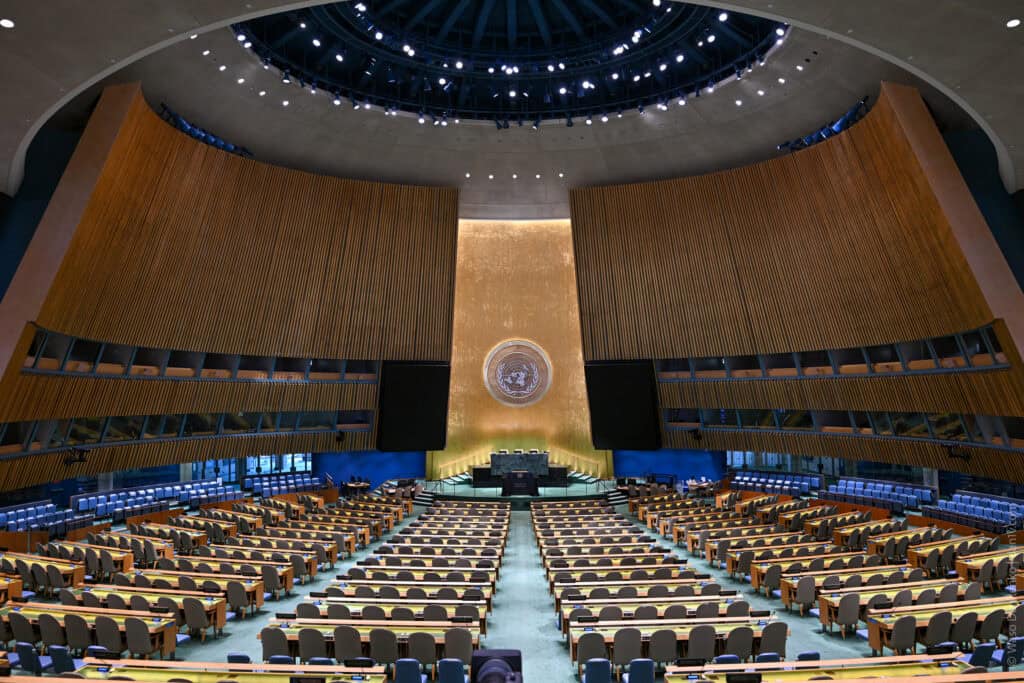
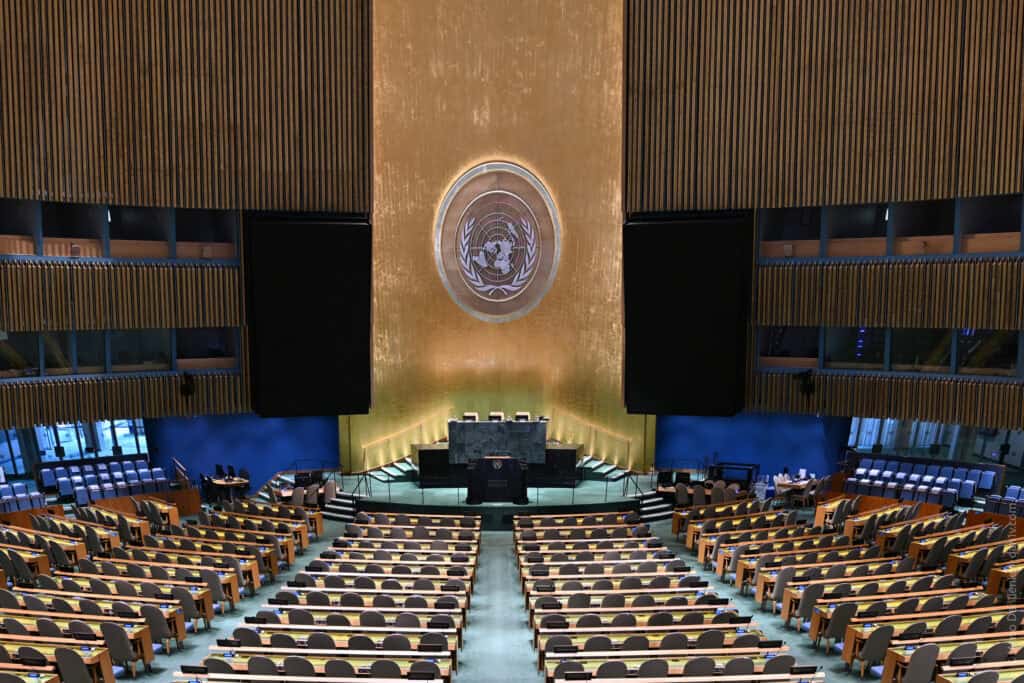
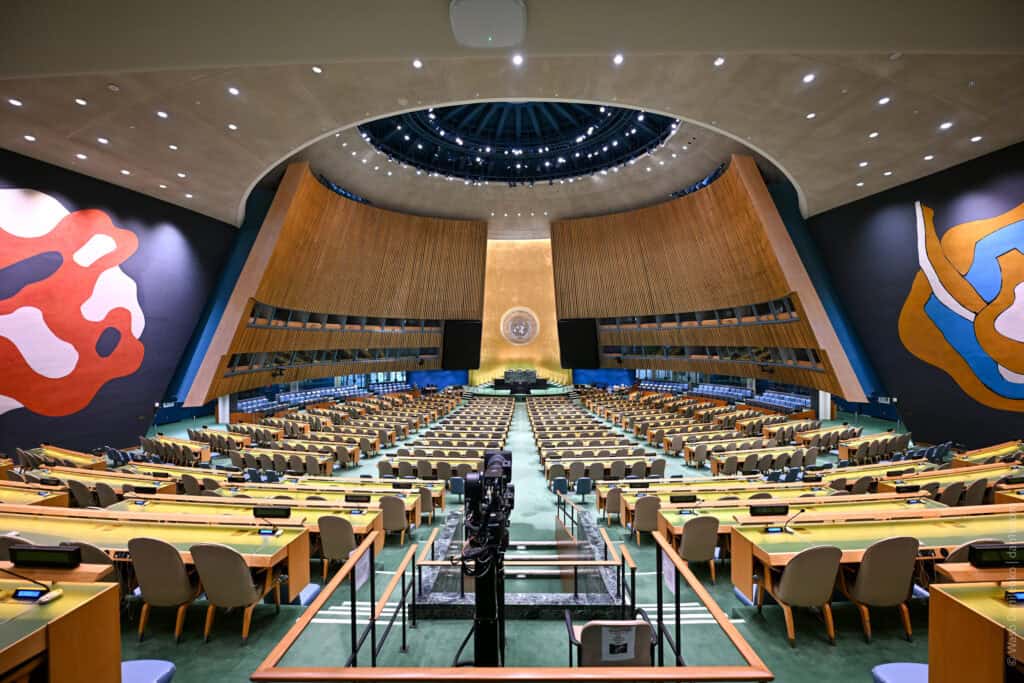
A squat, domed building with a 1,800-seat hall. This is the “parliament” of all humanity — here, all 193 countries have an equal voice, regardless of size or military might. It discusses global issues such as climate, poverty, and human rights.
However, its decisions are only advisory in nature and do not obligate anyone to anything. Once a year in September, the leaders of all member states come here.
Conference Building
It connects the Secretariat Tower with the General Assembly Hall. It houses three famous Council Chambers: the Security Council, the Economic and Social Council (ECOSOC), and the Trusteeship Council. Each was a gift from a member state.
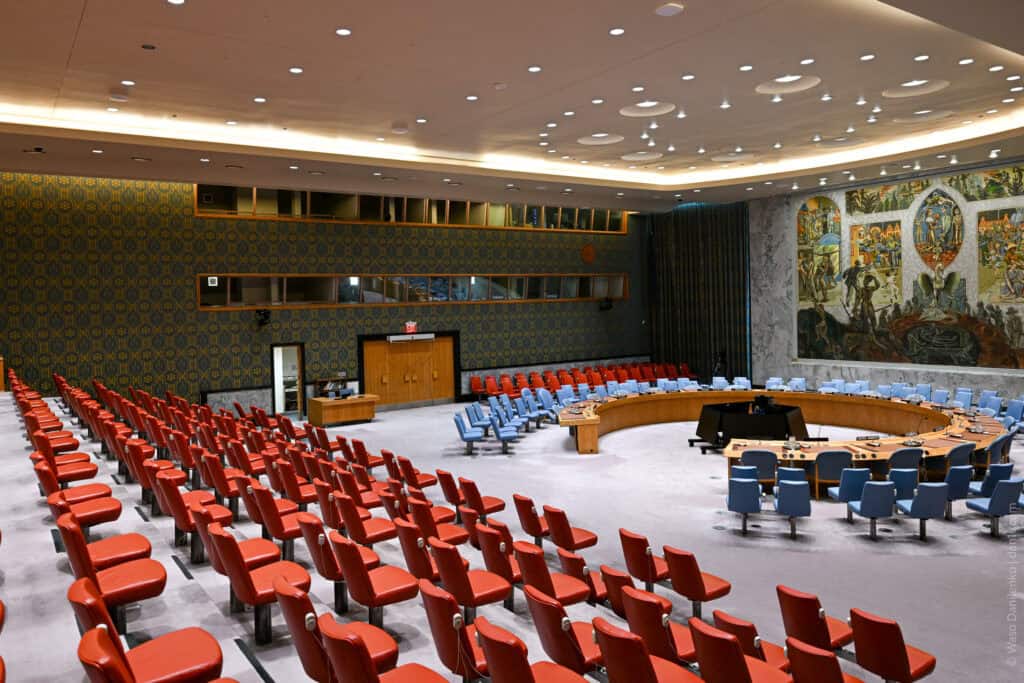
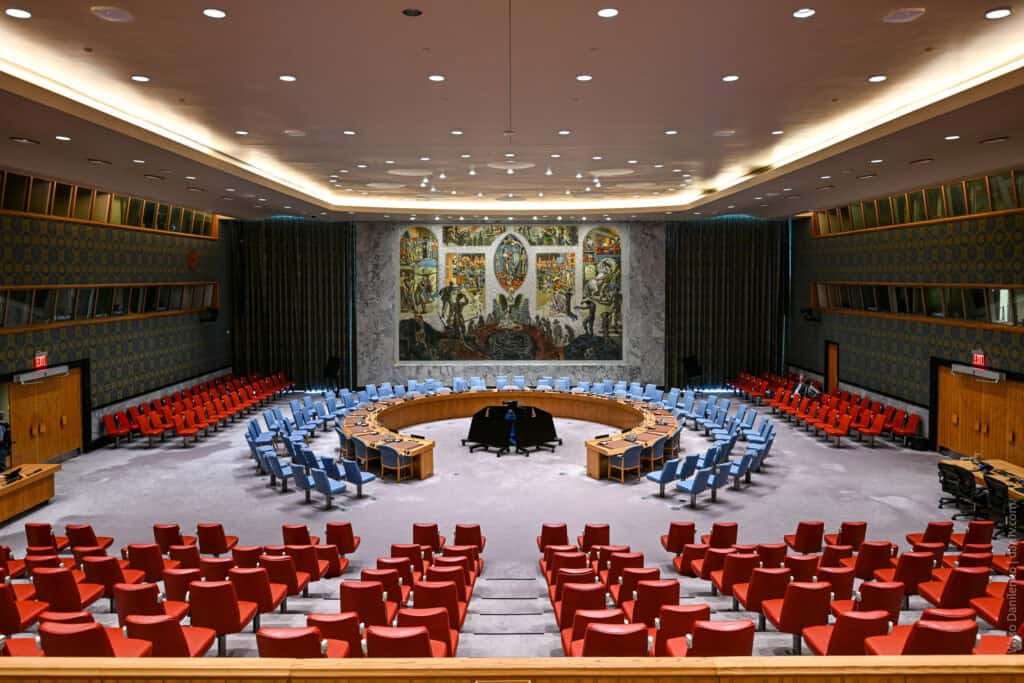
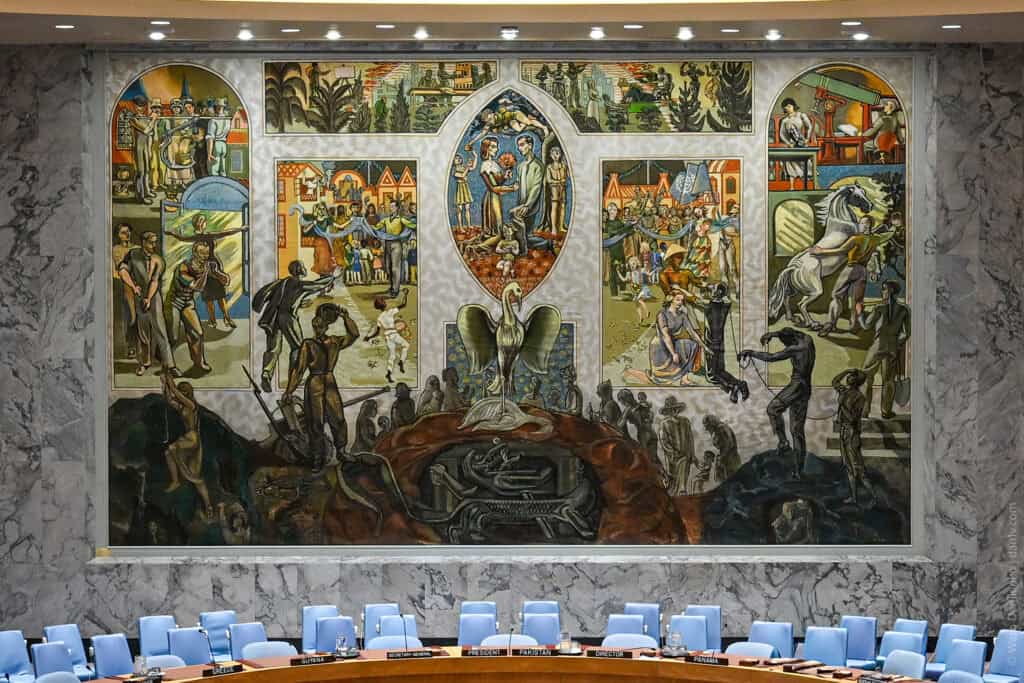
Security Council Chamber (gift from Norway)
Fifteen member states meet here, including five permanent members (USA, Russia, China, the United Kingdom, and France). The Council has primary responsibility for maintaining international peace and security and is the only UN body whose resolutions are legally binding on all countries.
It is distinguished by a mural by Norwegian artist Per Krogh depicting symbols of peace and freedom.
ECOSOC Chamber (gift from Sweden)
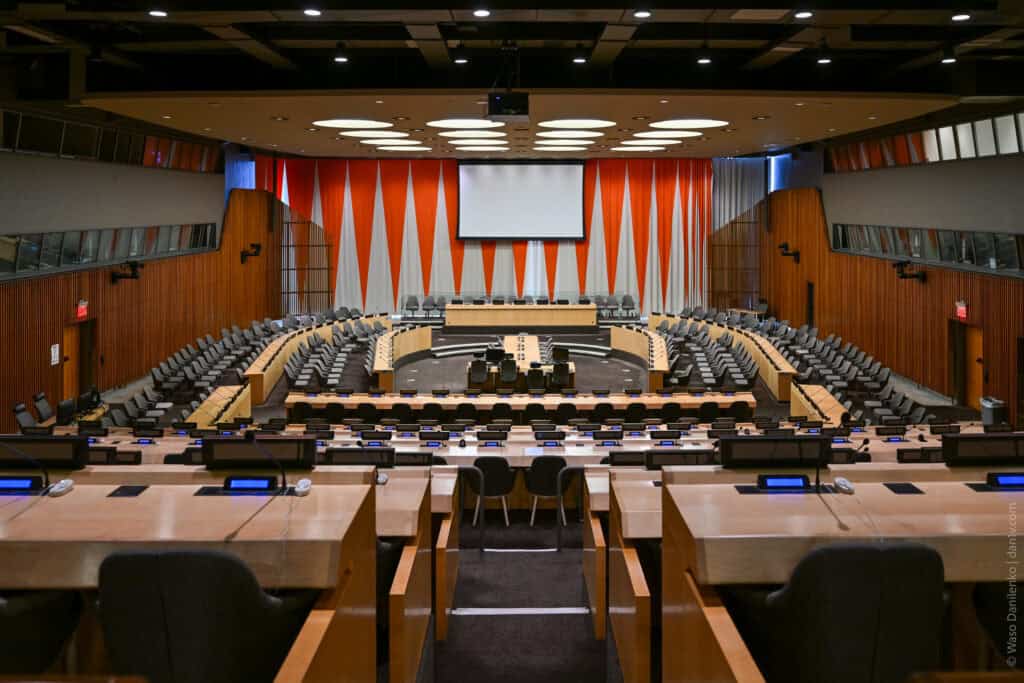
This is the seat of the Economic and Social Council, which coordinates international cooperation in the fields of economics, social policy, education, healthcare, and culture.
Unlike the Security Council, it is the seat of 54 member states, elected on a rotating basis, and its decisions are advisory. The interior is designed in a strict Scandinavian aesthetic—light wood and minimalist forms.
Trusteeship Council Chamber (gift from Denmark)
Historically used to oversee the trust territories preparing for independence. After the last such territory gained sovereignty in 1994, the council suspended its work.
Today, the chamber is used for open debates and informal meetings. It features warm wood paneling and a sculpture by Danish artist Henning Kjær.
Dag Hammarskjöld Library
This last building to be constructed, opened in 1961. It is named after the second UN Secretary-General, who died tragically in a plane crash. Contains over 400,000 books, 80,000 maps and the world’s largest collection of UN documents.

Art at the UN Headquarters
The UN Headquarters is, among other things, one of the largest and least known art museums in New York. Here are a few key works:
“Knotted Gun” (Non-Violence)
The first thing visitors see upon entering the UN grounds is a bronze revolver with its barrel tied in a knot. The sculptor was Swedish artist Carl Fredrik Reutersvärd. In December 1980, he learned of John Lennon’s assassination and was so shocked that he created the sculpture.
The gun is cocked and ready to fire, but it cannot because its barrel is twisted into a knot. The sculpture was donated to the UN by Luxembourg in 1988 and has become one of the organization’s main symbols.
Marc Chagall’s Stained Glass
In 1964, Marc Chagall personally brought a stained glass window he designed to the UN Headquarters. The work was created in memory of the late Secretary-General Dag Hammarskjöld and the 15 UN staff members who died in a plane crash over the Congo in 1961 while en route to negotiate a ceasefire.
The stained glass window is called “Peace” and is executed in Chagall’s signature style — blue, yellow, and green hues, flying figures, angels, and flowers. Today, the glass is damaged, and remarkably, no one knows exactly how it happened.
“War and Peace” by Candido Portinari
The two enormous panels by the Brazilian artist Candido Portinari are perhaps the most monumental and emotionally powerful works in the collection. They hang in the hall of the North Wing opposite the General Assembly Hall.
The left panel depicts war: dark blue tones, burning cities, horsemen, and suffering people. The right panel depicts peace: pastel colors, children playing and singing, women, and men harvesting.
Picasso’s Guernica Tapestry
From 1985 to 2009, a massive tapestry replica of Picasso’s Guernica, one of the most powerful anti-war paintings in art history, hung at the entrance to the Security Council Chamber. The tapestry was woven from the original painting by artist Jacqueline de la Baume Dürbach. In 2009, it was returned to Nelson Rockefeller’s heirs, who had originally loaned it to the UN.
Sculptures by Henry Moore and Barbara Hepworth
The UN Gardens feature two large sculptures by prominent British sculptors. Henry Moore’s “Reclining Figure” found a special place in the UN collection: Moore admired Dag Hammarskjöld so much that he personally proposed erecting the sculpture in his honor. Barbara Hepworth’s “Unified Form” is one of the rare works in the UN collection created by a female artist.
“Sphere Within a Sphere” by Arnaldo Pomodoro
In 1996, Italy donated a bronze sculpture by Arnaldo Pomodoro to the UN—a large sphere with another sphere visible inside, like the mechanism of the world. The same series of sculptures stands in front of the UN headquarters in Geneva, near the Vatican, at Trinity College Dublin, and in front of the Guggenheim Museum.
Tapestry “Chernobyl” by Alexander Kishchenko
On one of the floors of the UN hangs a huge, 10-meter-long tapestry, “Chernobyl.” It was donated by Minsk in memory of the 1986 tragedy.
Practical Information
Price: $26 per person
Booking: Available on the United Nations website
Adress: 405 E 45th St, New York, NY 10017