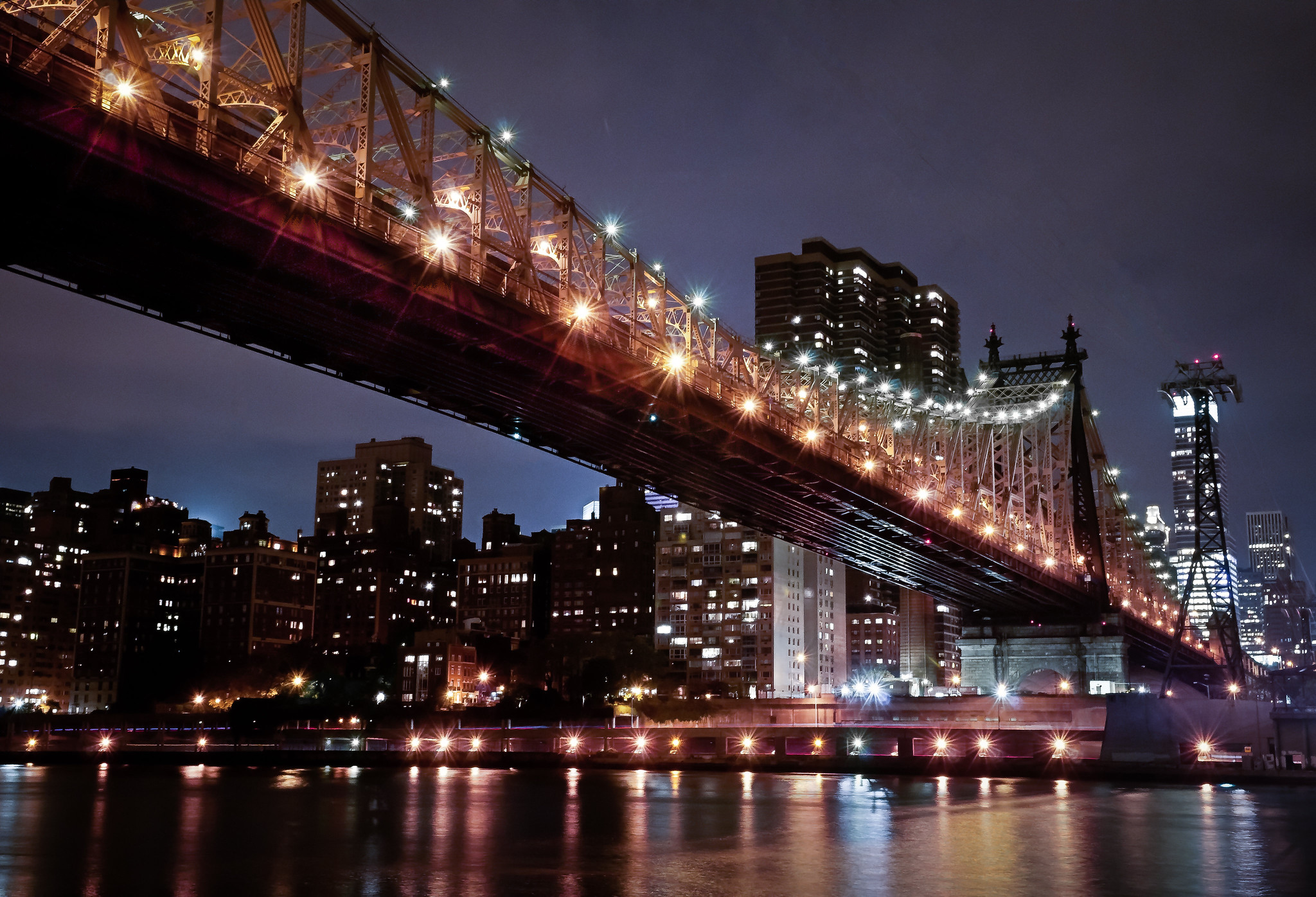
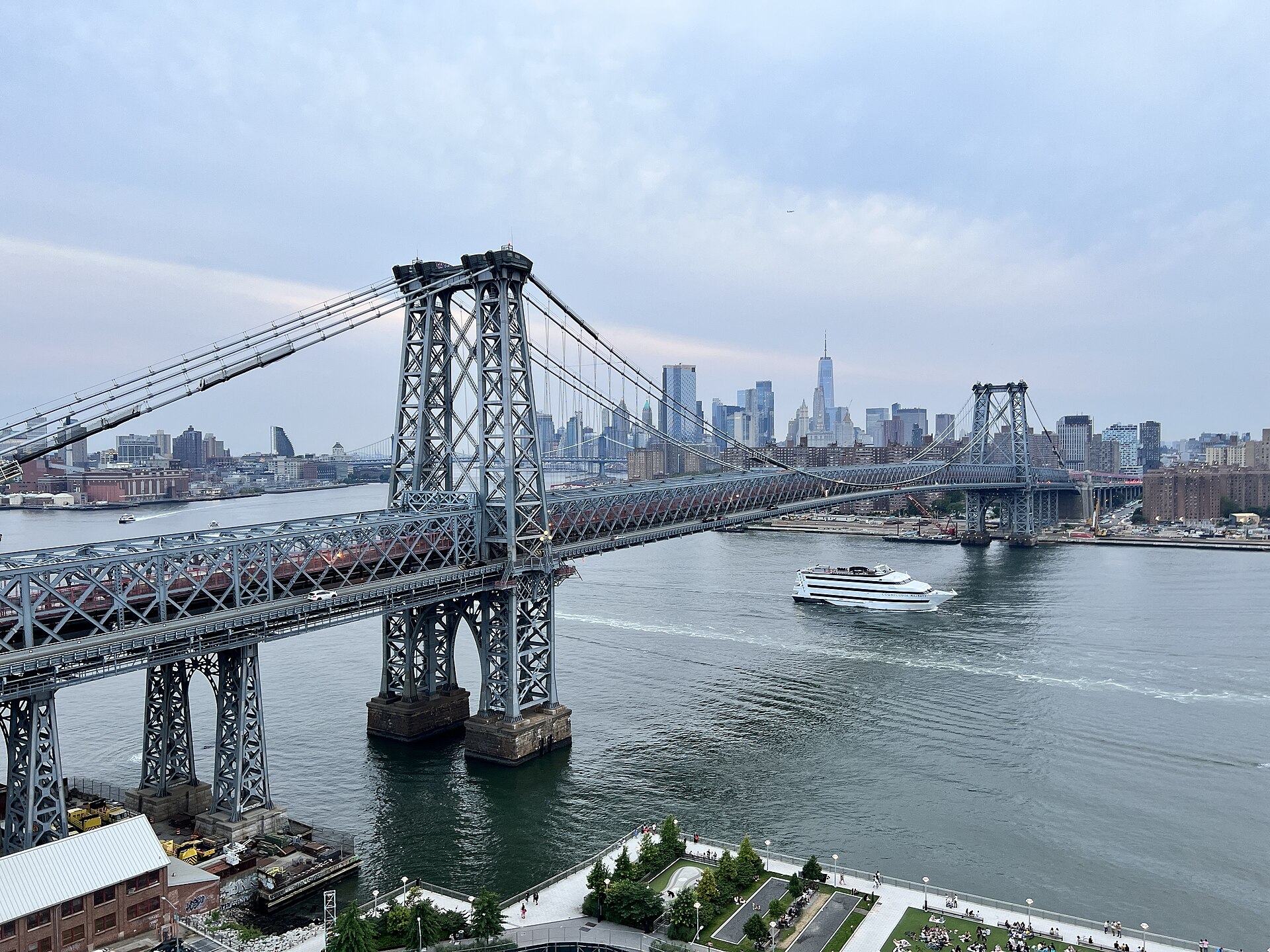
The Williamsburg Bridge connects the Lower East Side of Manhattan with northern Brooklyn. It is the second bridge built across the East River and was originally conceived as a competitor to the Brooklyn Bridge. It did turn out to be longer and remained the longest suspension bridge in the world for twenty years. However, critics were not impressed by its appearance, and more than a century later, opinions about its beauty have hardly changed.
At the same time, the bridge has stories that are much more interesting than its appearance. For example, this was where one of the greatest musicians of the twentieth century practiced the saxophone for two consecutive years.
Interesting Facts About the Williamsburg Bridge
- The main span of the Williamsburg Bridge is 488 meters, just 1.4 meters longer than that of the Brooklyn Bridge. That was enough for the bridge to be considered the longest suspension bridge in the world from 1903 to 1924.
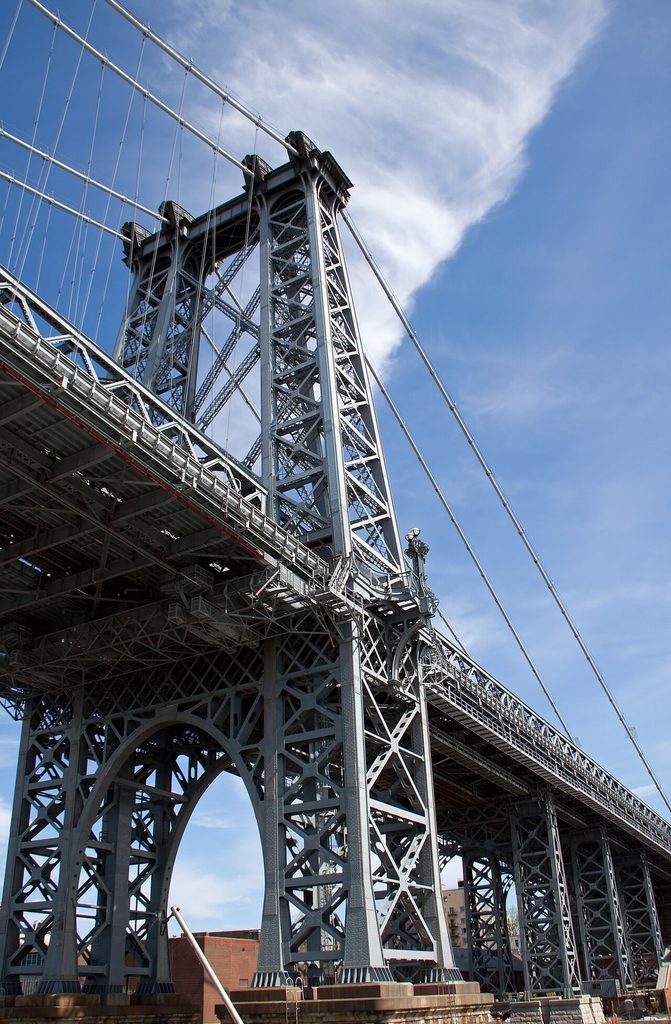
- The Williamsburg Bridge was the first major suspension bridge with steel towers. Before that, such towers were usually built of stone.
- The bridge’s four main cables were made of ordinary steel without a protective zinc coating to save money. Decades later, this decision had to be corrected at a considerable cost.
- In 1959–1961, saxophonist Sonny Rollins, who lived nearby, would come to the bridge’s pedestrian walkway to practice so that he would not disturb his neighbors. He later named his album The Bridge after these practice sessions.
- In 1988, inspectors discovered serious corrosion in the supporting structures. The bridge was completely closed, including the subway, and its future was debated up to the possibility of demolition.
- J, M, and Z subway lines cross the bridge, and there are separate pedestrian and bicycle paths on both sides.
Architecture of the Williamsburg Bridge
Chief engineer Leffert Buck was given a straightforward task: the new bridge had to be larger and cheaper than the Brooklyn Bridge. So Buck decided to abandon many of the solutions used by the Roeblings when they built the Brooklyn Bridge and replace stone with steel.
The Brooklyn Bridge has massive granite towers with Gothic arches, whose construction took years. The Williamsburg Bridge, by contrast, used lightweight steel lattice towers about 100 meters high. Steel is lighter than stone, so it does not require such massive foundations, and the structures themselves can be assembled much faster.
On a typical suspension bridge, the main cables support not only the central span but also the side spans between the towers and the shore. The Williamsburg Bridge is different: its cables run directly from the tops of the towers to the shore anchorages, while the side spans stand on their own steel supports. This is why the bridge looks so unusual: in the center, the cables form a smooth curve, while toward the ends they follow almost straight lines.
The Williamsburg Bridge was designed according to the prevailing ideas of the time about how a suspension bridge should be constructed. Most of the rigidity was supposed to come from a massive steel structure rather than from the cables themselves. It ended up being about 12 meters high and became one of the bridge’s most distinctive visual features.
Architect Henry Hornbostel was brought in after the main engineering decisions had already been made. He was left to work on the details: the towers, railings, lamps, and the design of the approaches. As a result, he could no longer change the overall appearance of the bridge — its visual character had been almost entirely determined by the engineers.
History of the Williamsburg Bridge
By the 1890s, the Brooklyn Bridge could no longer handle the traffic. It had been designed in the 1870s for carriages and pedestrians, but by the end of the century, streetcars, cable cars, and huge crowds were crossing it every day. At the same time, the bridge connected Manhattan only with central Brooklyn. The industrial neighborhoods to the north, including Williamsburg, Greenpoint, and Bushwick, with their sugar factories, breweries, and shipyards, still depended on ferries. So in 1895, the city approved the construction of a second bridge across the East River. It was planned between Delancey Street in Manhattan and Broadway in Williamsburg.
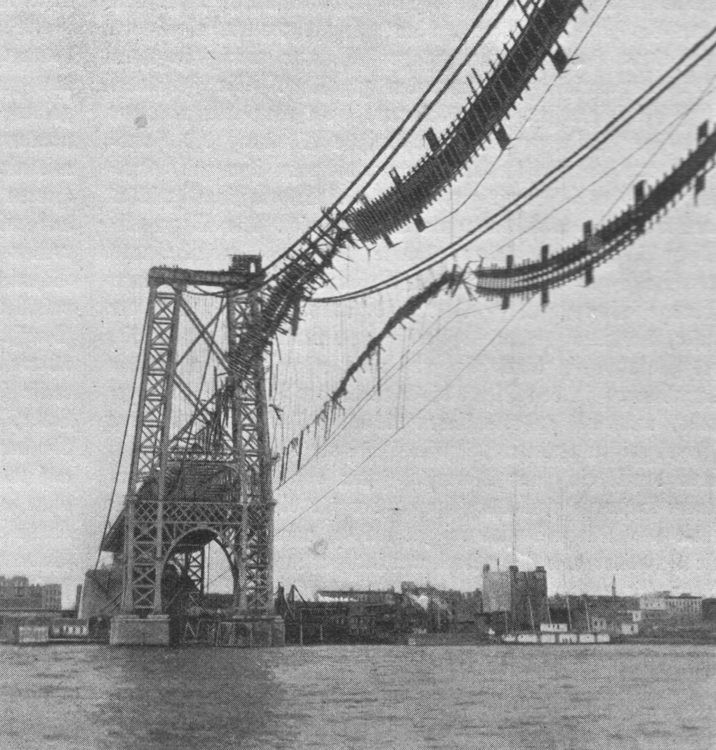
Construction began in 1896. In November 1902, temporary wooden structures caught fire on the Manhattan tower. The fire hoses could not reach that height, so the fire damaged some of the cables that had already been installed. Despite this, the bridge opened on December 19, 1903. The opening was celebrated with a parade, a speech by the mayor, and fireworks. The event was filmed by Thomas Edison’s studio, and this short recording became one of the early films documenting a public event in New York City. Newspapers acknowledged that the bridge was useful and sturdy, but almost no one considered it beautiful.
The Manhattan end of the bridge led directly to Delancey Street, in the heart of the Lower East Side, where hundreds of thousands of Jewish immigrants from the Russian Empire and Austria-Hungary lived at the time. The bridge gave them an opportunity to move to Williamsburg, where housing was cheaper and more spacious, while Manhattan could still be reached on foot or by streetcar for just a few cents. Many people did move across the bridge during its first years, and American newspapers nicknamed it the “Jewish Highway.” The Hasidic neighborhood of South Williamsburg that exists today developed much later: Satmar Hasidim began settling there in large numbers only after World War II.
By the 1980s, the bridge was already about 85 years old, and its condition had been largely neglected for decades. The ungalvanized wires inside the main cables were rusting, water was accumulating beneath the protective wrapping, and the steel structures under the roadway were suffering from the salt used to treat the streets in winter. On April 12, 1988, inspectors discovered serious damage to the supporting structures, and the bridge was closed that same day — completely, including automobile traffic, pedestrians, and the subway. About 250,000 people used the crossing every day, so the closure became a major problem for the city. Demolishing the bridge and building a new one was even discussed, but the city ultimately decided to preserve it and carry out a complete restoration. The repairs lasted more than twenty years and cost approximately one billion dollars.
The Williamsburg Bridge in Pop Culture
In the summer of 1959, 28-year-old Sonny Rollins was already considered one of the best tenor saxophonists of his time. But he was dissatisfied with his own playing and decided to temporarily leave the stage so he could practice more. Rollins lived on Grand Street on the Lower East Side, but he could not play at home for hours every day: the old building had thin walls, and his neighbors were unlikely to appreciate a daily concert. So he found a place nearby — the pedestrian walkway of the Williamsburg Bridge. The noise from the trains drowned out the sound of his saxophone, allowing Rollins to practice in peace.
For the next two years, he came to the bridge almost every day and played there for hours, sometimes for 15 or 16 hours at a time. In November 1961, Rollins returned to the stage, and soon afterward he released the album The Bridge — a direct reference to the place where he had spent those two years. The story later became one of the most famous stories associated with the Williamsburg Bridge. Rollins died on May 25, 2026, at the age of 95. Since 2017, there has been a campaign to rename the bridge in his honor, but officially it is still called the Williamsburg Bridge.
The bridge has also appeared in several films. In the film noir The Naked City (1948), the final chase ends on its tower. In the romantic comedy Crossing Delancey (1988), which is set on the Jewish Lower East Side, the bridge is even referenced in the title. And in The Amazing Spider-Man (2012), the Lizard throws cars off the bridge here.
Visitors’ Information
📍 Williamsburg Bridge / New York City, United States