The International Center of Photography, or ICP for short, is located on the Lower East Side, just a few minutes from the neighborhood’s boutiques and coffee shops. Through photography, it tells stories of war, migration, fashion, protests, and everyday life.
The center was founded in the 1970s as a tribute to the legacy of renowned photographer Robert Capa. Today, it serves as a museum, school, and archive that has collected photographs for more than half a century. Visitors can explore works from legendary 20th-century magazines, exhibitions on contemporary visual culture, and projects by emerging photographers. If you’d like to learn photography yourself, the building also houses studios, laboratories, and classrooms offering courses.
Fun Facts about The International Center of Photography
- The ICP often goes beyond traditional photography — working with VR, video art, interactive installations, digital collages, and even TikTok aesthetics, exploring how visual culture evolves in the 21st century.
- ICP is known for responding to contemporary events. For example, in 2020, it presented Global Images for Global Crisis, a show featuring global visual responses to the pandemic, BLM protests, the climate crisis, and migration.
- Though based in New York, ICP actively collaborates with photographers worldwide. Its exhibitions travel to museums across Europe, Asia, and Latin America, and its educational programs are accessible online and internationally.
- The ICP’s collection includes daguerreotypes (one of the earliest forms of photography), WWII-era photos, contemporary digital and color prints, and archives of renowned photographers.
- Among its rare holdings are early 20th-century magazine issues such as Life, Picture Post, Vu, Regards, Lilliput, and more — publications that first featured some of the century’s most iconic photo stories.
History and Development of The International Center of Photography
Founded in 1974 by Cornell Capa, the International Center of Photography (ICP) has become one of the world’s leading institutions dedicated to the art of photography. Over its history, ICP has held more than 500 exhibitions, presenting the work of over 3,000 photographers and artists in both solo and group shows.
ICP was established to preserve and carry forward the tradition of concerned photojournalism — a concept championed by Robert Capa, the legendary photographer and Cornell’s brother. After Robert Capa’s tragic death in the 1950s, Cornell founded the International Fund for Concerned Photography in 1966. By 1974, the fund needed a permanent home — and thus the ICP was born.
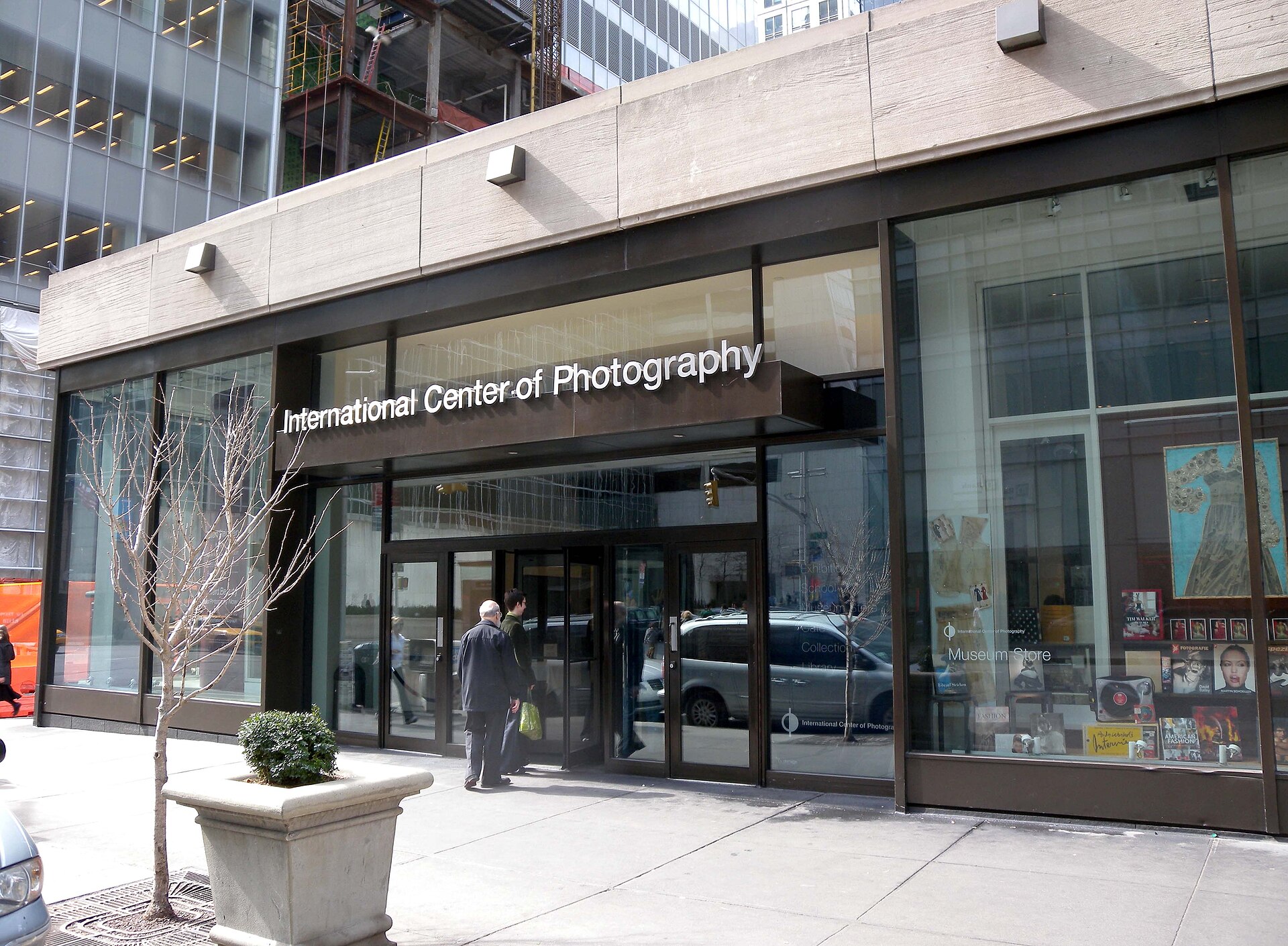
The ICP originally opened in the historic Willard Straight House at 1130 Fifth Avenue at East 94th Street in New York City. By 1985, the ICP expanded and moved to Midtown, occupying a space at 1133 Avenue of the Americas. The ICP School was established across the street, allowing the institution to separate its educational and exhibition activities.
In 2015, ICP’s collections, archives, and research center were moved to Mana Contemporary, a cultural hub in New Jersey. The museum reopened at a new site at 250 Bowery, while the School continued to operate in Midtown.
In 2020, aiming to bring the museum and school under one roof, ICP opened a new state-of-the-art center at 84 Ludlow Street / 79 Essex Street. For the first time in decades, the ICP School and Museum were reunited in a single space, creating greater synergy between education, exhibitions, and research.

Collection and Exhibitions at The International Center of Photography
ICP’s permanent collection includes more than 200,000 photographs and related objects, spanning early photography to contemporary works. Since its founding, the collection has grown thanks to acquisitions, donations, and bequests from photographers and collectors alike.
The collection covers the entire history of photography — from daguerreotypes to gelatin silver prints and digital chromogenic prints. A particular strength is its documentary photography from the U.S. and Europe from the 1930s to the 1990s.
Notable photographers represented in the collection include W. Eugene Smith, Henri Cartier-Bresson, Robert Capa, photographers from the Farm Security Administration, Alfred Eisenstaedt, Lisette Model, Gordon Parks, James Van Der Zee, Louise Ozell Martin, and Garry Winogrand. In recent years, the collection has expanded with works by contemporary photographers such as Carrie Mae Weems, Justine Kurland, Katy Grannan, Vik Muniz, and Susan Meiselas.
The ICP also holds a significant archive of illustrated magazines, especially rare interwar publications such as Vu, Regards, Picture Post, Lilliput, Berliner Illustrirte Zeitung, Arbeiter-Illustrierte-Zeitung, and Life.


Examples of Recent and Notable Exhibitions at The International Center of Photography:
- “But Still, It Turns” (2021) — an exploration of contemporary documentary photography, curated by Paul Graham.
- “ICP Concerned: Global Images for Global Crisis” (2020) — a visual response to the pandemic, protests, and climate change.

- “Tyler Mitchell: I Can Make You Feel Good” (2020) — the first solo exhibition by the photographer famous for shooting Beyoncé’s Vogue cover.

Architecture of the International Center of Photography (ICP)
Unlike ICP’s previous locations, which were housed in historic buildings, its current home at 84 Ludlow Street was purpose-built for the museum. The building is part of the new Essex Crossing development on the Lower East Side and was originally designed as a shared space for the museum, photography school, and library.
The project was designed by the architecture firm Gensler, with interiors by Lemay + Escobar. The four-story building occupies an entire block between Ludlow and Essex Streets. It has two entrances, allowing visitors to walk through from one street to the other. The main entrance is on Essex Street, where a wide staircase connects the museum with the educational spaces.
The ground floor houses the entrance and café, while the second floor contains the exhibition galleries and library. The upper floors are dedicated to classrooms, photography studios, laboratories, and student facilities.
One of the building’s main features is its glass façade, which allows passersby to see what is happening inside. The exhibition galleries cover approximately 1,000 square meters. Their lighting can be adjusted using a special system of fixtures concealed behind a metal structure. This makes it possible to create different atmospheres and tailor the lighting to specific photographs and exhibitions.