There is one photograph of New York that almost everyone who has studied photography even a little knows. And yet, it is almost impossible to recognize the city in it. It is shown during the first year of almost every photography program, printed in art history textbooks, and presented by good tour guides on walks through Downtown, standing exactly where the photograph was taken.
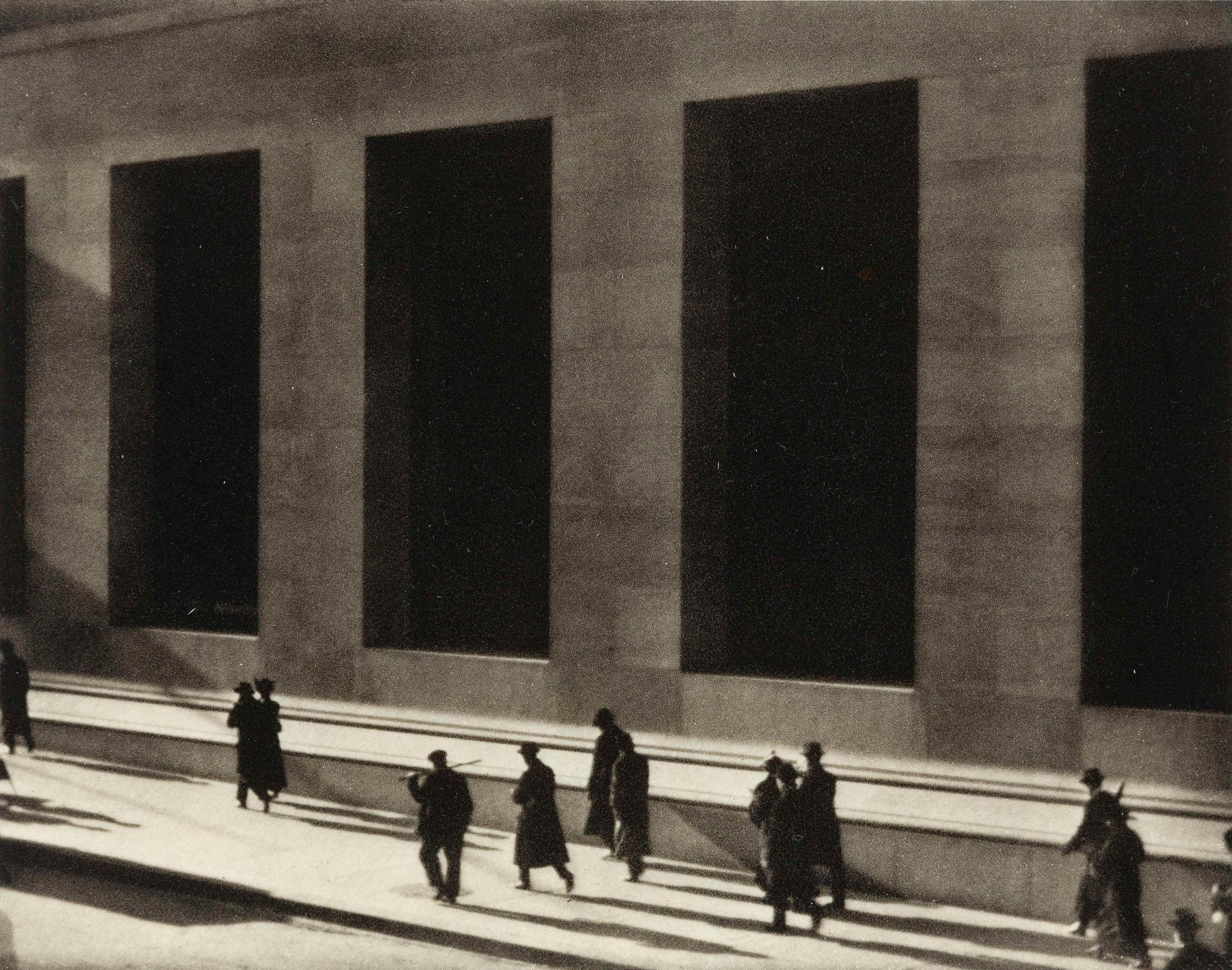
This is Paul Strand’s “Wall Street,” taken in 1915. It shows a wall of pale marble, a row of black windows, several figures with long shadows at the bottom, and… nothing else.
To understand how shocking this photograph was 111 years ago, you need to remember what fine art photography looked like at the time: most likely, a woman in white standing beside a pond, photographed through gauze. Strand, however, produced a sharp, stark, high-contrast print with nothing conventionally “beautiful” in it: a wall, “holes,” and the backs of passersby. For the first time, a person in the frame became an element of the composition rather than the subject.
Historian Milton Brown wrote that this photograph turned American photography toward both stark realism and abstraction, toward the city and toward the aesthetics of the machine. All subsequent urban photography, from twentieth-century street photography to today’s smartphone snapshots of “a figure against a façade,” uses the same approach.
The fact that the famous photograph barely exists in physical form has only added to its legendary status. There are only two known vintage prints: one, along with the negative, is held by the Philadelphia Museum of Art, and the other is at the Whitney Museum in New York. At the same time, reproductions of the photograph can be found in almost every textbook.
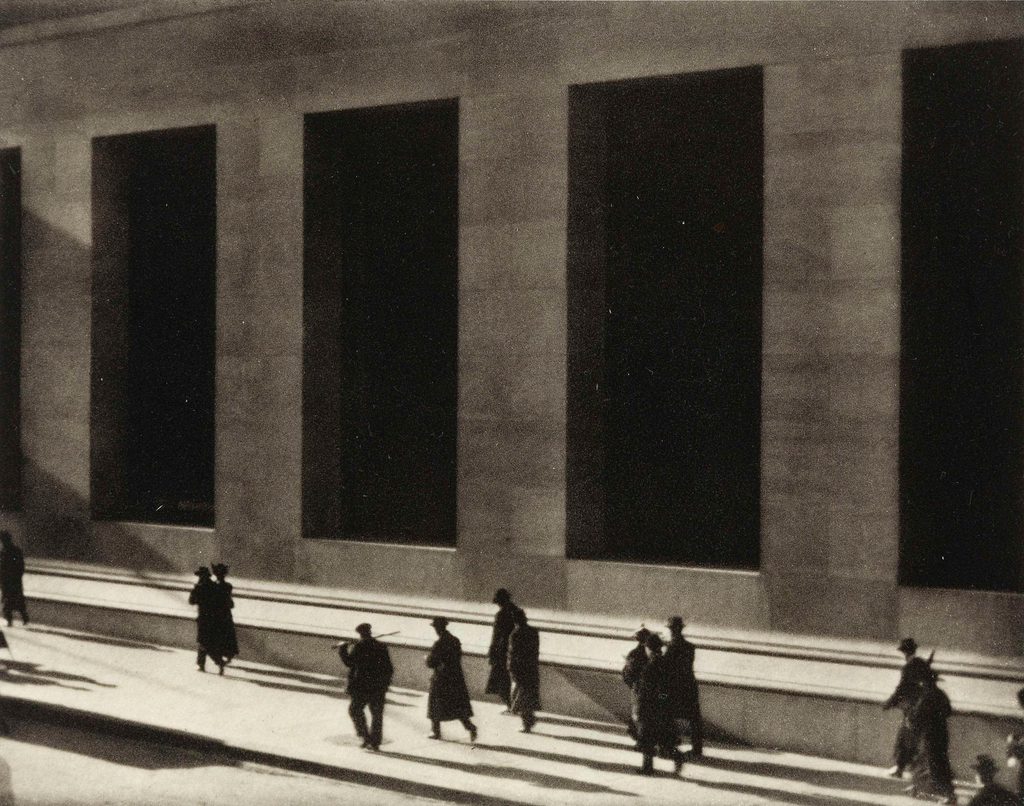
📍 The façade of the House of Morgan, 23 Wall Street, New York, NY 10005 (photograph taken from the steps of Federal Hall).
Architects: Trowbridge & Livingston. Completed in 1914.