Hauser & Wirth, also known as the “Swiss mega-gallery,” has three locations in New York, and all of them are free to visit, with no tickets or reservations required. Yet almost no one comes in. This is perhaps one of the main paradoxes of Chelsea: between Tenth and Eleventh Avenues stand museum-level exhibition spaces showing works by Louise Bourgeois, Philip Guston, Alexander Calder, and Cindy Sherman, while most people simply walk past along the High Line.
The gallery really does look like a place where people come only to buy art. But you can visit these spaces completely free of charge, and that is precisely what they are open for.
Interesting Facts About Hauser & Wirth
- The gallery was founded in Zurich in 1992 by a family partnership: Iwan Wirth, his future wife Manuela Hauser, and her mother Ursula Hauser. In 2000, a fourth partner and president, Marc Payot, joined the business.
- The first exhibition took place in an apartment on the ground floor of Iwan Wirth’s Art Deco villa in central Zurich. It featured Alexander Calder and Joan Miró.
- Today, the gallery has 18 locations in Switzerland, the United Kingdom, the United States, Spain, France, Monaco, and Hong Kong. It represents more than 90 artists and estates.
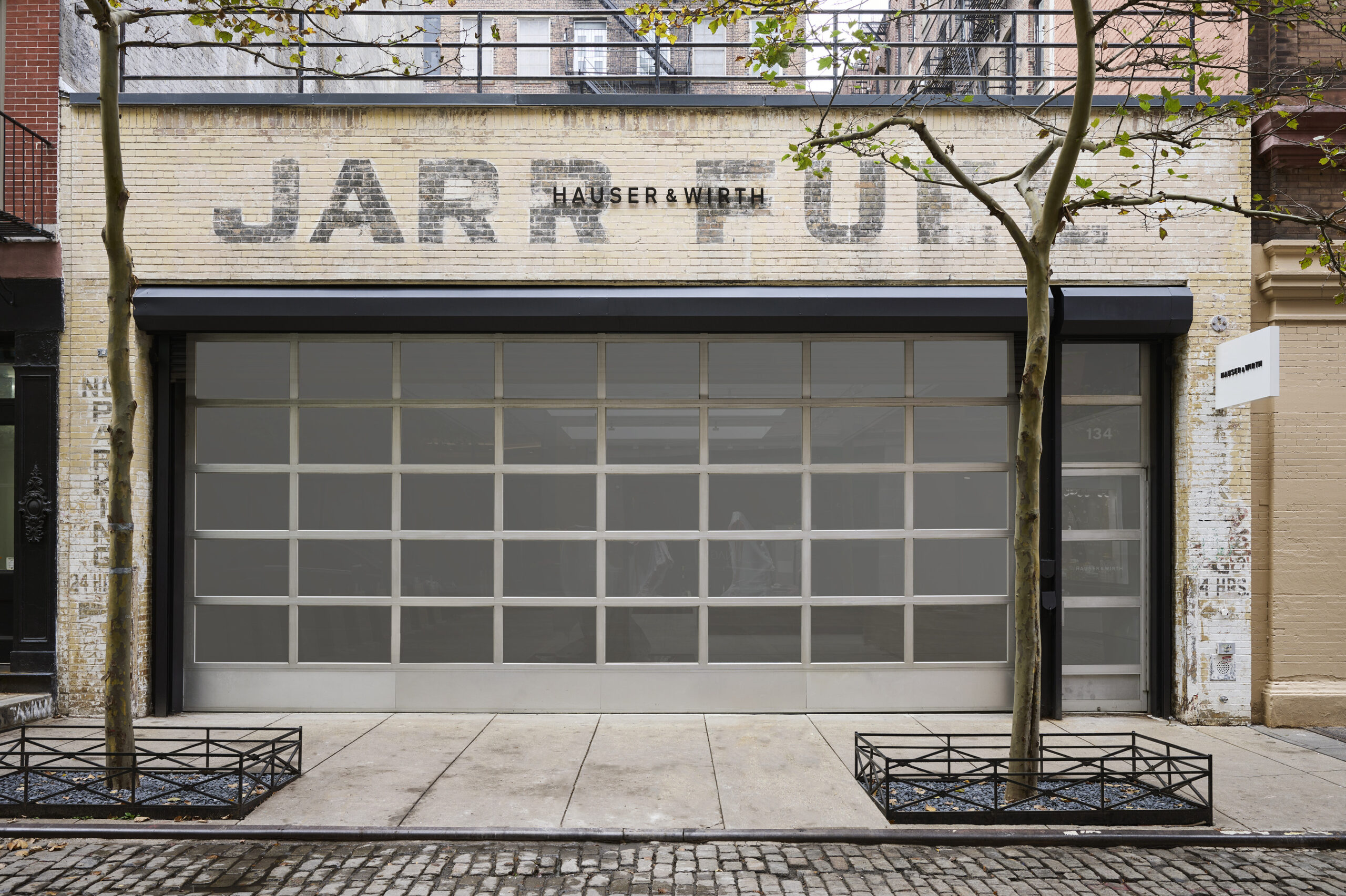
- There are currently three New York locations: 542 West 22nd Street (the flagship, a purpose-built structure), 443 West 18th Street (limited-edition prints, bookstore, and publishing house), and 134 Wooster Street (SoHo). All three are free to visit, with no reservations or tickets required.
- The first New York location opened in September 2009 in a townhouse on East 69th Street. In 2025, the Wirths sold the building to a developer for $10.5 million and left the Upper East Side.
- In 2015, Iwan and Manuela Wirth took first place in the ArtReview Power 100 ranking. It was only the second time in the history of the list that gallery owners had topped it; before them, the only other gallerist to do so was Larry Gagosian.
- In 2025, they ranked 57th on the same list. The British division of the gallery reported a nearly 90 percent decline in profit before tax.
- Estates represented by the gallery include Louise Bourgeois, Philip Guston, Jack Whitten, Arshile Gorky, Dieter Roth, Eva Hesse, and others.
- In addition to the galleries, the Wirth family owns the hospitality company Artfarm, which operates restaurants, pubs, and hotels in London, Scotland, Los Angeles, and, since 2024, SoHo.
The History of the Buildings That Now House Hauser & Wirth
Hauser & Wirth rarely builds galleries from scratch. Much more often, it takes over buildings with their own histories and adapts them for art. In New York, this principle is particularly evident.
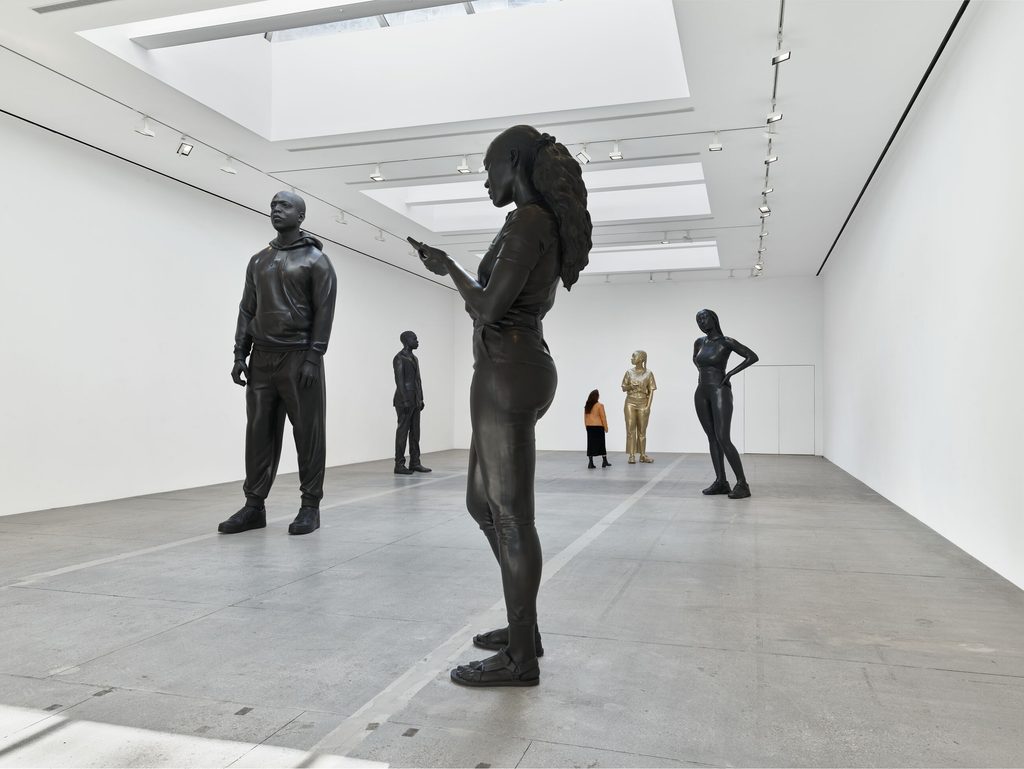
The flagship at 542 West 22nd Street, which opened in 2020, was a rare exception: it is the only Hauser & Wirth gallery building in New York constructed from the ground up. Designed by Annabelle Selldorf, the building continues Chelsea’s industrial architectural tradition, with a dark gray brick facade, spacious column-free galleries, and enormous folding glass doors.
Next door, at 548 West 22nd Street, the gallery operated temporarily from 2018 to 2020. Before Hauser & Wirth, the building housed the Dia Center for the Arts, whose opening in 1987 was one of the events that helped transform industrial Chelsea into New York’s main gallery district. Another former Hauser & Wirth location was 511 West 18th Street, where the gallery occupied a former industrial building from 2013. The building was connected to the legendary Roxy nightclub. Traces of its past remained inside: after the club’s interiors were dismantled, the arches of the old roller rink were discovered beneath the concrete floor.
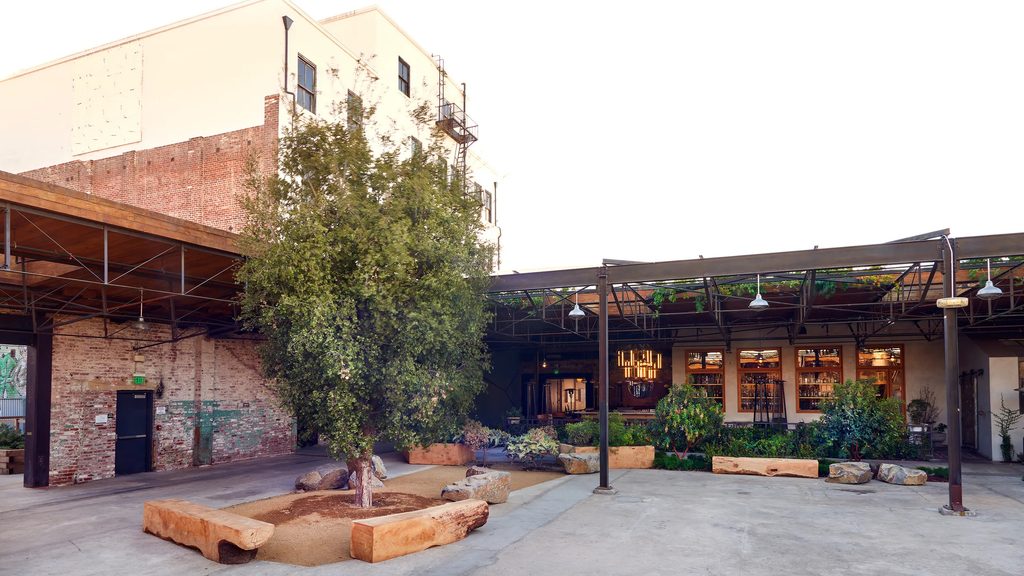
Today, at 443 West 18th Street, the gallery occupies a 1920 building constructed for the Consolidated Gas Company. It houses the Editions space, a bookstore, Hauser & Wirth Publishers, the editorial offices of Ursula, an amphitheater, and the Roth Bar. At 134 Wooster Street, the gallery adapted a former 1920 truck garage, one of the few surviving one-story industrial buildings in the historic SoHo district.
Hauser & Wirth also once had a location on the Upper East Side at 32 East 69th Street, an 1880 townhouse that previously housed the Martha Jackson Gallery. Hauser & Wirth opened its space there in 2009 by recreating Allan Kaprow’s famous happening Yard, which had originally taken place in the same courtyard in 1961. In 2024, the gallery left the townhouse, and the building was subsequently sold to a developer.
The History of the Family Behind Hauser & Wirth
Three figures stand behind Hauser & Wirth: Ursula Hauser, her daughter Manuela, and Iwan Wirth. The story of the gallery begins not with the art market, but with a family business and private collecting.
Ursula Hauser was a co-owner of the Swiss household appliance retail chain Fust. Her capital provided the financial foundation for the gallery, but Ursula was not simply an investor: for many years, she collected art, particularly works by women artists who had long been overlooked by the mainstream market. This collection helps explain Hauser & Wirth’s interest in forgotten and undervalued women artists. The gallery’s magazine, Ursula, is named after her.
Iwan Wirth entered the gallery business as a teenager. Born in 1970 in St. Gallen, he opened his own gallery at the age of sixteen and began working as a private dealer in Zurich in 1990. In 1992, at the age of 22, he founded Hauser & Wirth together with Manuela Hauser and Ursula Hauser. He later married Manuela, and the couple have four children.
There is another interesting detail in Wirth’s history: from 2000 to 2009, he ran the New York gallery Zwirner & Wirth together with David Zwirner. Today, their galleries are considered competitors, but they began as partners.
Another important figure is Marc Payot, who joined the gallery in 2000 and became its partner and president. Hauser & Wirth later began moving noticeably beyond the traditional gallery model: exhibition spaces were joined by restaurants, hotels, bookstores, gardens, and educational programs. It is no longer simply a place where art is sold, but an entire cultural ecosystem — and that is largely how the gallery looks today.
In 2015, Iwan and Manuela Wirth topped the ArtReview Power 100 ranking. It was only the second time in the history of the list that a gallerist had taken first place. They ranked ahead of Ai Weiwei and David Zwirner, while ArtReview noted that the Wirths had effectively changed the model for selling and promoting art.
Ten years later, the picture looks considerably less impressive. According to the accounts of Hauser & Wirth’s British division for 2024, its revenue fell from £143.9 million to £68.3 million, while profit before tax dropped from £9.3 million to £1.16 million. In other words, revenue fell by more than half, while profit declined by approximately 87 percent. The gallery attributed this primarily to a decline in secondary-market sales. At the same time, according to Hauser & Wirth representatives, the British operations account for only a small portion of the global business, and the full picture cannot be seen because the Swiss parent company does not publish consolidated financial statements.
Hauser & Wirth also showed other signs of restructuring. In 2025, Iwan and Manuela Wirth moved back from the United Kingdom to Switzerland, the opening of a second London flagship on South Audley Street was postponed, and the townhouse on East 69th Street in New York was sold. In the 2025 ArtReview Power 100 ranking, the Wirths and Marc Payot placed 57th, compared with first place ten years earlier.
But this does not look like an attempt to simply scale back the business. Hauser & Wirth continues to open new locations: a space in Palo Alto is scheduled to open in October 2026, while an opening in Palermo has been announced for 2030.
Hauser & Wirth Gallery — and Everything Around It
Hauser & Wirth is one of the largest galleries in the world, representing more than ninety artists and estates, from modern classics such as Louise Bourgeois and Arshile Gorky to living stars such as Cindy Sherman and Mark Bradford. It is important to understand that what you see inside is not a permanent collection, but three or four temporary projects that change every month and a half to two months. So before each visit, it is worth checking what is currently on view.
The estates of deceased artists are a separate story. The logic is cynically simple: a living artist can leave for a competitor and produces a limited number of works, while an estate does not go anywhere. The total body of work is known and finite, and its value usually only increases.
But the most interesting thing about Hauser & Wirth is that it has long outgrown the format of “a room with paintings for sale.” A small empire has grown around its exhibitions, complete with its own publishing house, magazine, historic bar, restaurant, and nearly two dozen locations around the world:
- The publishing house has operated since 1992, the same year the gallery was founded, and publishes more than twenty books a year: monographs, catalogues raisonnés, and artists’ books. It has its own headquarters and bookstore in central Zurich, and its books regularly appear on annual lists of the best art publications by The New York Times and ARTnews.
- The magazine Ursula has been published since 2018, roughly quarterly, and is distributed free of charge in the galleries. It is not an advertising brochure: it features essays, fiction, poetry, and interviews, often with no connection to the exhibitions currently on view.
- Roth Bar. In 1997, artist Dieter Roth agreed to an exhibition at Hauser & Wirth on one condition: a functioning bar had to be part of the exhibition. That is exactly what happened. Together with Roth’s son, the gallery built a real bar where every bottle consumed became part of the installation, while conversations among visitors were recorded. Since then, Roth Bar has become a permanent element of the gallery. Versions exist in Zurich, Somerset, St. Moritz, and New York (currently at 443 West 18th Street), and they are still built by the artist’s descendants.
- Manuela restaurant. The New York location opened in 2024 directly across from the gallery. Its walls display more than forty-five works, including Louise Bourgeois’s bronze Spider, works by Cindy Sherman, and two photographs of Basquiat by Andy Warhol. The bar and chandelier were created specifically for the space by artist Mika Rottenberg. Essentially, it is a free group exhibition for which you pay the price of dinner — the cheapest way to see Bourgeois in SoHo. You can also simply come in for a drink.
- Education. Hauser & Wirth offers free tours for schools and nonprofit groups, partnerships with universities (in New York, with Hunter College; in Los Angeles, with Cal State LA), and artist residencies in Somerset.
- Eighteen locations around the world. The flagship is the building on West 22nd Street in New York, constructed from scratch in 2020. Beyond that, the gallery has locations in London, Hong Kong, Los Angeles, Paris, Basel, and, from 2026, Palo Alto. More interestingly, some locations are not in traditional art centers but in places where collectors go on vacation: Gstaad, St. Moritz, Monaco, and Menorca. The logic is simple: if the client does not come to the gallery, the gallery goes to the client. The clearest example is the Southampton location on Long Island. It opened in 2020, when wealthy New Yorkers left the city to wait out COVID, and closed as soon as everyone returned to the city.
Visitor’s Information
📍Hauser & Wirth / 542 W 22nd St, New York, NY 10011
📍Hauser & Wirth Bookshop / 443 W 18th St, New York, NY 10011
📍Hauser & Wirth / 134 Wooster St, New York, NY 10012
Free entry, no need for booking