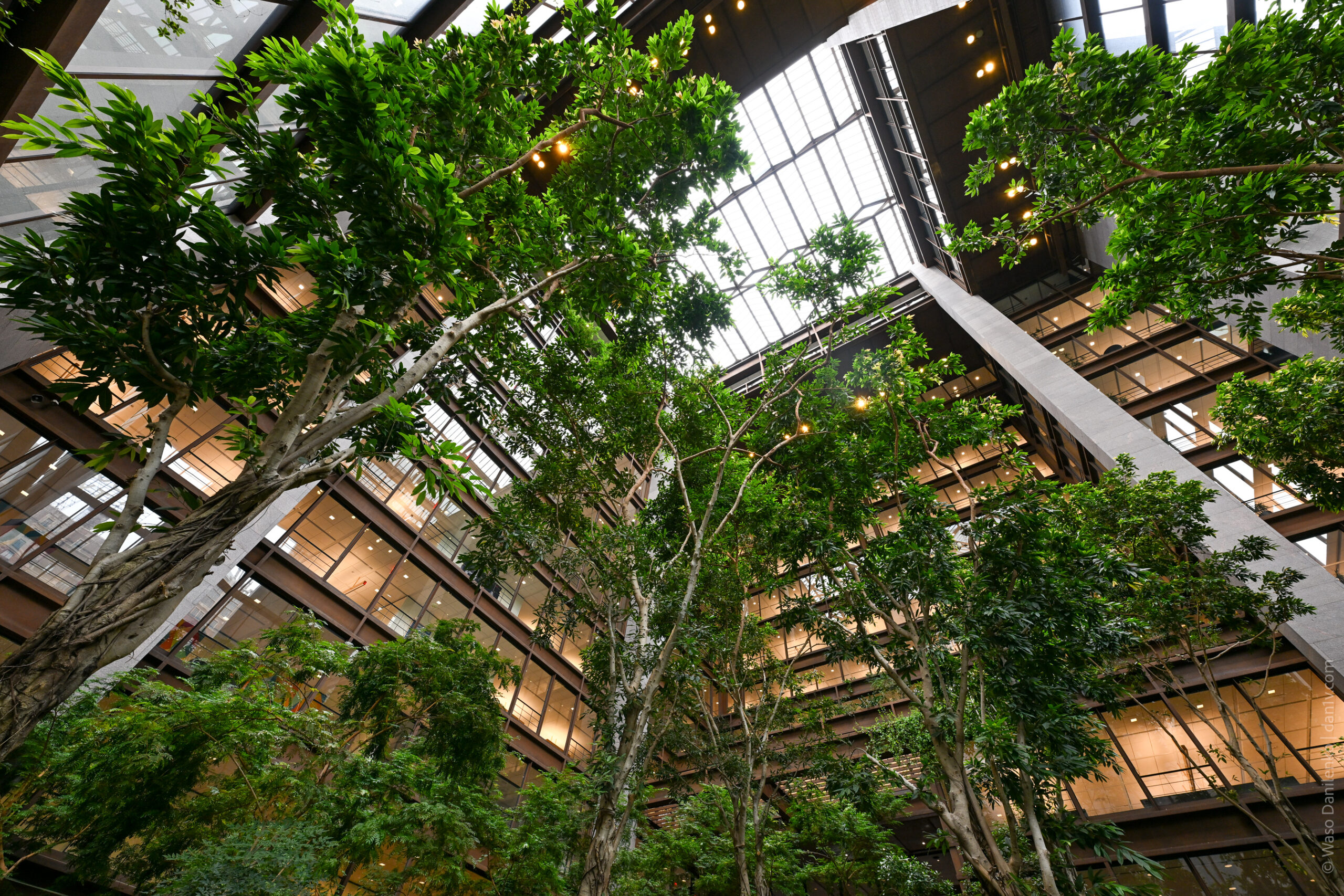
What is the greenest place in Manhattan, aside from Central Park? Or the most heavily guarded garden in New York City? Or the home of one of the wealthiest art galleries in the United States?
Let me introduce you to the Ford Foundation, a private American philanthropic organization established in 1936 by the Ford family. When it was founded, the foundation had a budget of just $25,000. After the death of Edsel Ford, Henry Ford’s son, however, the foundation received nearly 95% of the shares of the automotive giant.*
* There is an important detail. If such wealth had been transferred directly to the heirs, the estate tax would likely have forced them to sell a significant portion of their holdings, potentially losing control of the company. Instead, they adopted an elegant solution: 95% of the non-voting shares were donated to the Ford Foundation. Those shares would eventually generate billions of dollars for the foundation, while the remaining 5% of voting shares stayed with the Ford family, allowing them to retain control of the automotive empire.
By 1974, the Ford Foundation had sold its shares completely and became an independent organization, no longer formally connected to the Ford Motor Company. Today, its endowment — the investment portfolio whose returns fund its work — is worth approximately $17 billion, making it one of the five largest private foundations in the United States.
Its mission is to strengthen democratic values while reducing poverty and inequality.
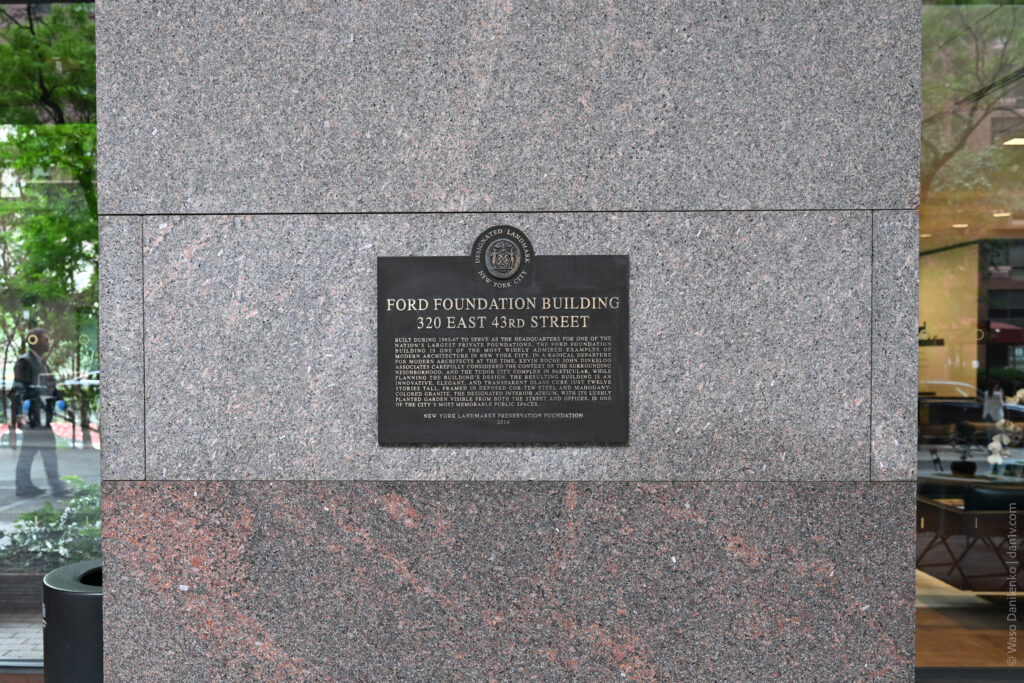
Interestingly, in 1989 the foundation’s board decided to support civil society institutions in the Soviet Union and Eastern Europe. Its Moscow office opened in January 1996, and over the years it invested approximately $140 million in journalism, culture, education, and civil society initiatives. In April 2009, after losing nearly one-third of its assets during the global financial crisis, the foundation announced the closure of its offices in Russia.
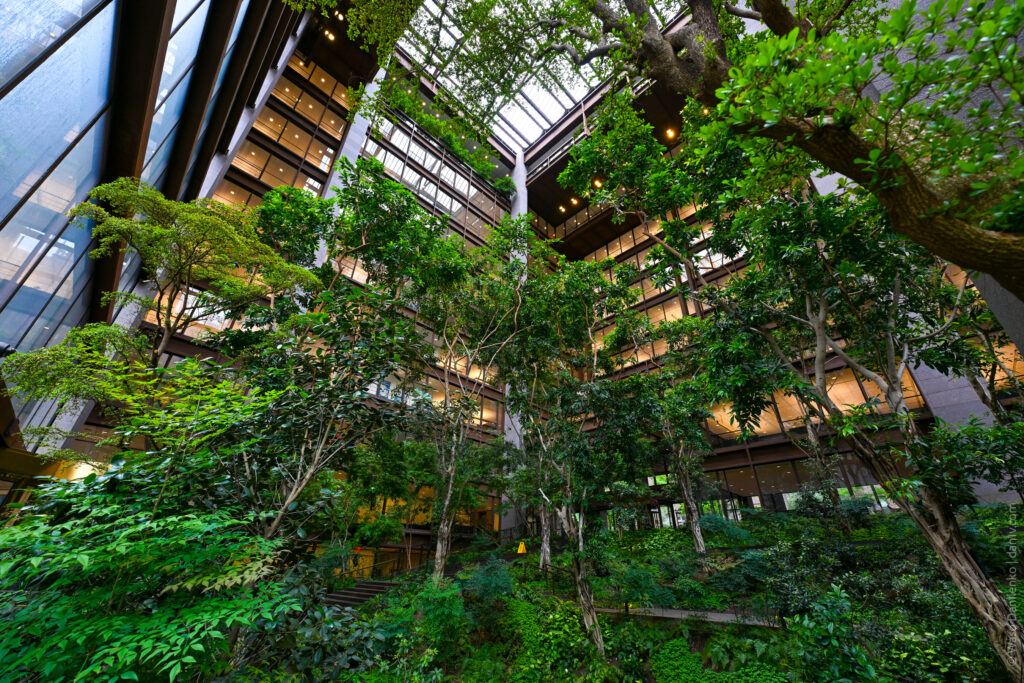
The foundation’s current headquarters was completed in 1967 by the architectural firm of Kevin Roche and John Dinkeloo. Dinkeloo had previously worked with Eero Saarinen, and after Saarinen’s death, Roche and Dinkeloo inherited his architectural practice. The Ford Foundation headquarters became one of their first major independent commissions. (I recently wrote about another of their buildings, the USUN headquarters.)
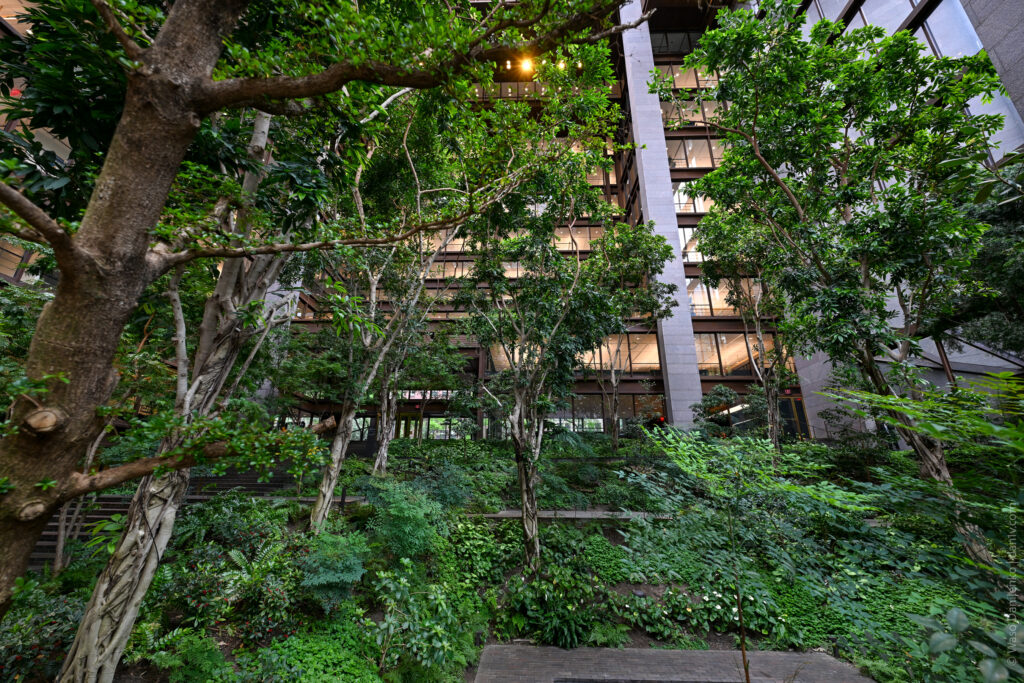
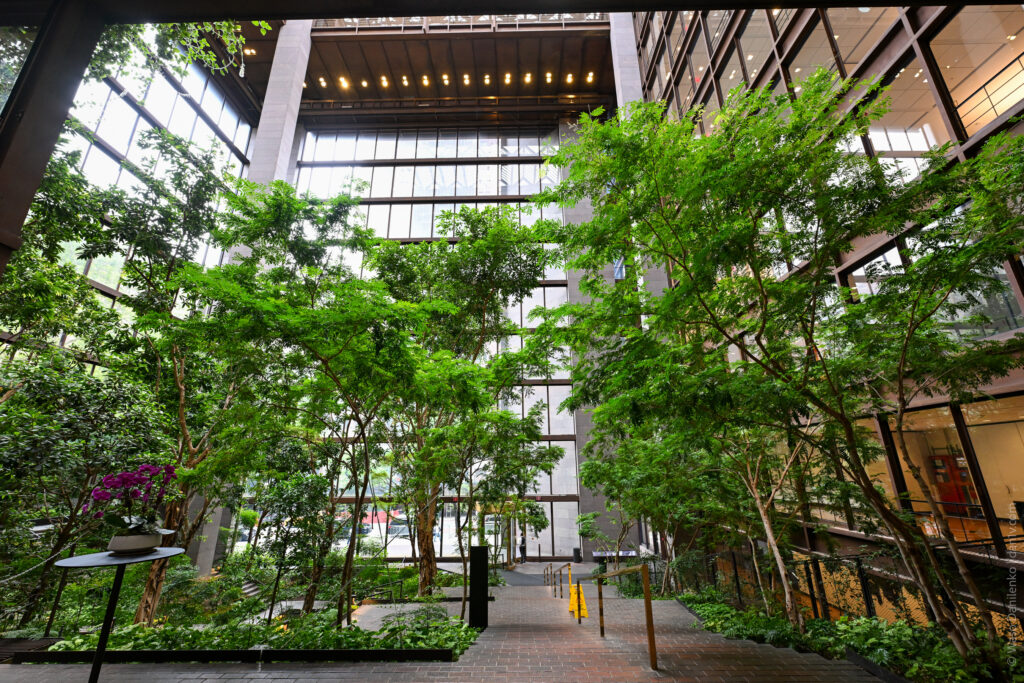
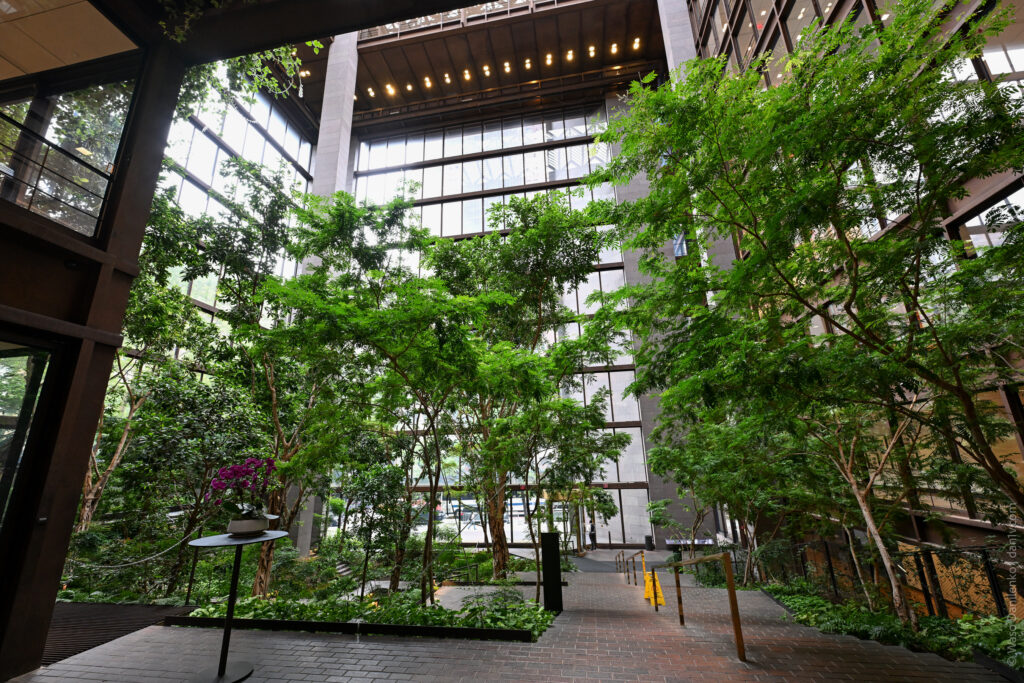
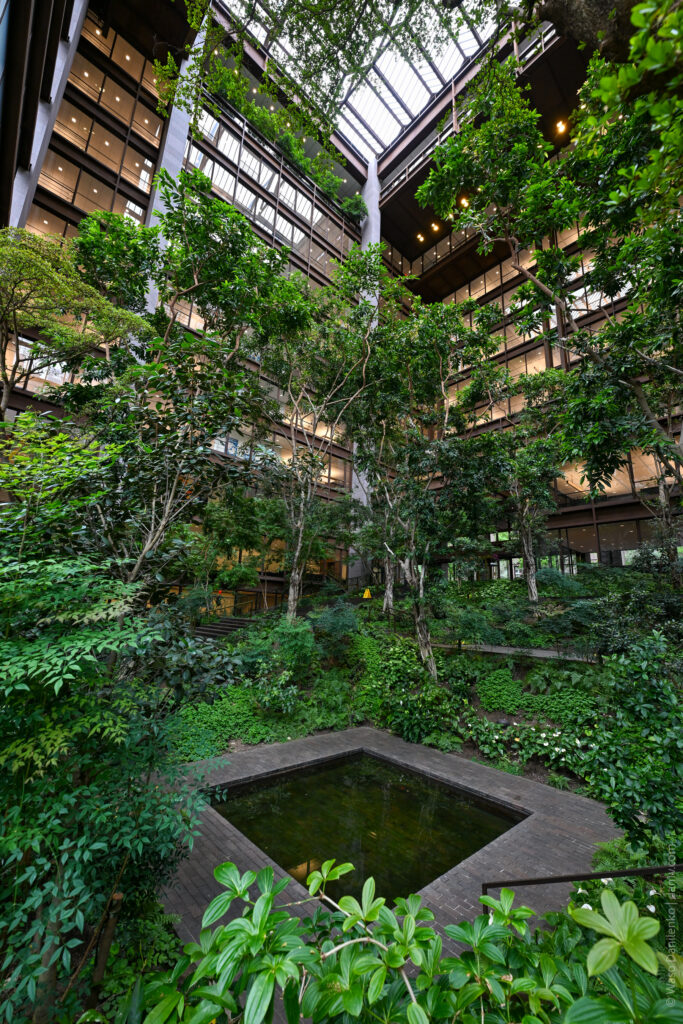
The building’s defining feature is its spectacular 53-meter-high atrium, which contains a lush tropical garden. In 2018, the landscape was refreshed by landscape architect Raymond Jungles — a name that could not be more appropriate. The garden contains around forty species of trees, vines, and shrubs, along with a reflecting pool and a fountain. A dedicated visitor walkway winds through the entire atrium, allowing guests to experience every corner of this remarkable indoor landscape.
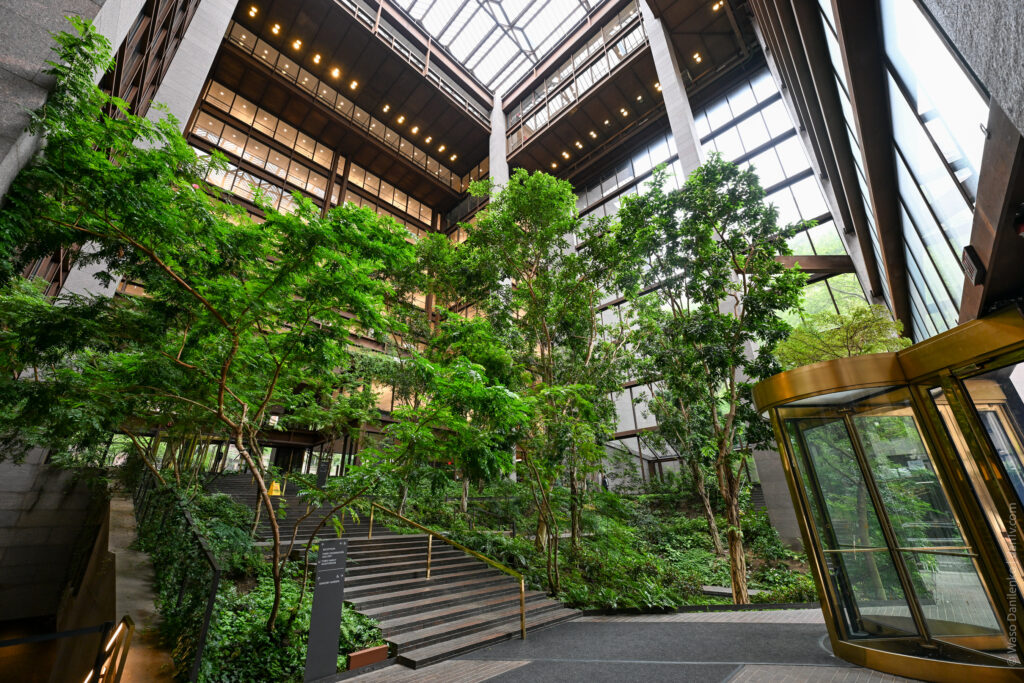
One amusing detail is that the atrium is watched over by around five impeccably dressed security guards wearing suits, earpieces, and sunglasses. You will never get lost in the garden, never feel alone, and there will always be someone nearby if you feel like starting a conversation.
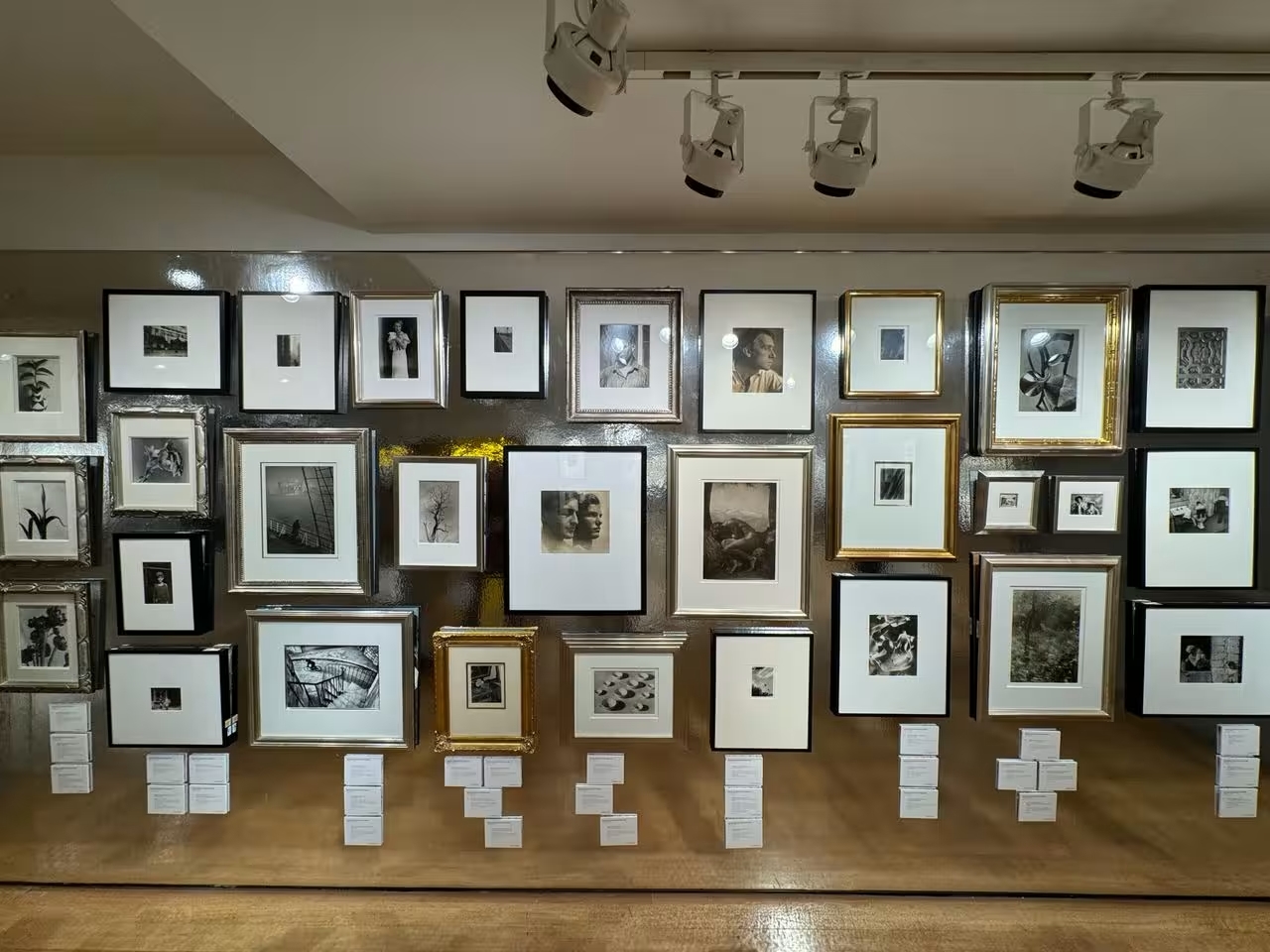
Perhaps most importantly, in the spring of 2019 the Ford Foundation opened its own gallery. Unlike the Soloviev Foundation, it does not maintain a permanent collection. Instead, it presents only temporary exhibitions, hosting three shows each year.
Despite the variety of artistic styles and installations, every exhibition revolves around the same broad theme: injustice and the many ways of representing it — whether racial, gender-based, economic, environmental, or related to migration.
On August 12, the gallery will open Never The Same River, a reference to the saying that no one can step into the same river twice. The exhibition explores water as a boundary, as well as questions of bodily autonomy and migration. Six artists examine who has the authority to define a person when institutions attempt to assign bodies a place, a status, and a border.
Visitor Information
📍 Ford Foundation / 320 E 43rd St, New York, NY 10017
Admission is free, but visitors must complete an online registration form in advance.
Hours: The atrium is open from 11:00 AM to 6:00 PM. Be sure to review the visitor guidelines in advance at fordfoundation.org.